Seasonings · Profile
Adobo Seasoning: What’s in It, Where the Name Comes From, and How to Use It
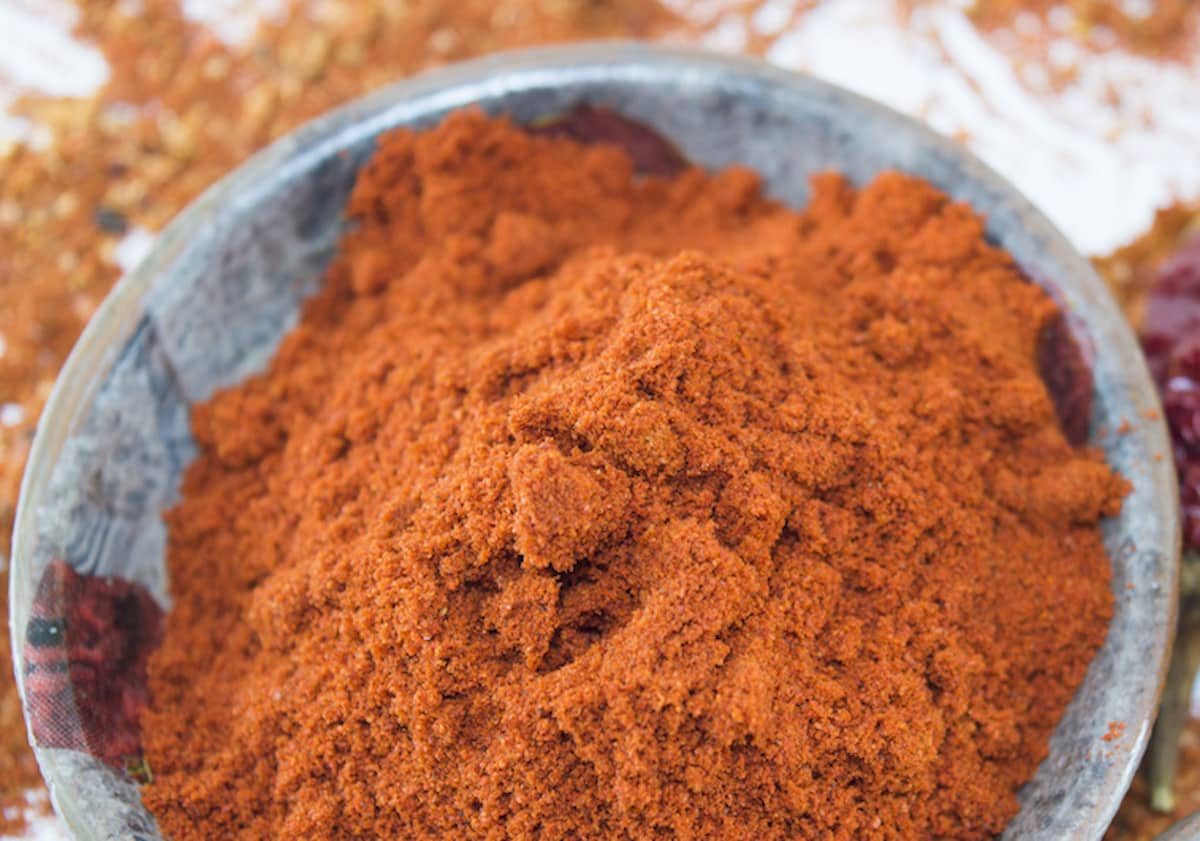
Adobo seasoning is a dry, salt-based blend of garlic, oregano and black pepper, often with turmeric for color and sometimes cumin or other spices. In the United States it is best known as a Puerto Rican pantry staple, sold in shakers and big jars and sprinkled on meat, fish and vegetables before cooking. The word adobo also names wet marinades and sauces across the Spanish-speaking world and a braised dish in the Philippines, which is a different thing. This page covers the dry blend: what is in it, where the name comes from, the compounds behind the flavor, and how to buy and use it.
At a glance
| What it is | A dry, salt-based seasoning blend12 |
| Typical components | Garlic, pepper, salt and oregano in most blends; turmeric in Goya’s12 |
| Fixed recipe? | No; homemade versions vary widely2 |
| Main flavor drivers | Salt; garlic; carvacrol and thymol from oregano; piperine from black pepper134 |
| Salt | Goya’s version lists salt first, at 520 mg sodium per 1/4 teaspoon (23% of the Daily Value)1 |
| MSG | Not on the ingredient list of Goya’s Adobo with Pepper; check other labels15 |
| Forms sold | Shakers and large jars; homemade. PepperScale notes a wet form (adobo mojado) as well as the dry (adobo seco)6 |
| Heat | Mild: PepperScale says original Goya adobo gets its only heat from black pepper6 |
Measured values
1 figure, sourced| Measure | Value | Scope | Source |
|---|---|---|---|
| Sodium Nutrient | 520 mg per 1/4 teaspoon (1.5 g) serving | Goya Adobo All-Purpose Seasoning with Pepper, manufacturer label | trade.goya.com |
Each figure is quoted as its source states it, with the samples or standard it applies to. Where sources differ, both are shown; nothing is averaged. All measured values
What is in it
| Blend | Ingredients, in order given | Source |
|---|---|---|
| Goya Adobo All-Purpose Seasoning with Pepper | Salt, garlic, tricalcium phosphate (anticaking agent), black pepper, oregano, turmeric | 1 |
| Chef Mario Juan’s house adobo (as described by TASTE) | Kosher salt, garlic, ají dulce, cumin, dried oregano, fresh oregano brujo and coriander; quantities not given | 2 |
| Most commercial blends, per TASTE | Garlic, pepper, salt and oregano, with newer versions offering organic spices and less sodium | 2 |
The Goya label is salt first, and its 1/4 teaspoon serving weighs 1.5 g.1 In Mario Juan’s kitchen, TASTE reports, the spices are ground, toasted and mixed into the salt, and a batch is used within a couple of weeks.2 Onion powder and cumin appear in some homemade versions but not on the Goya label above.12
MSG. FDA considers MSG generally recognized as safe, and when it is added it must appear on the ingredient list as “monosodium glutamate”; it cannot be hidden under “spices and flavoring.”5 So the ingredient list tells you whether a given jar has it. Goya’s Adobo with Pepper, as listed on Goya’s own trade page, does not.1
Where the name comes from
Adobo comes from the Spanish verb adobar, to marinate.26 The Real Academia Española’s dictionary defines adobo as the act of marinating, as a broth or sauce used to season food, and specifically as a broth of vinegar, salt, oregano, garlic and pimentón used to season and preserve meat.7 Britannica likewise describes adobo as a marinade typically made with vinegar and seasonings such as salt, garlic, black pepper, oregano and paprika.8
The dry blend in a shaker leaves out the vinegar: Goya’s label lists none.1 PepperScale distinguishes a wet rub, adobo mojado, from the dry adobo seco, and says most people who say adobo seasoning mean the Puerto Rican-style dry version.6 TASTE dates Goya’s version to 1966, from a company it says Spanish immigrants started in the United States in 1936, and describes the blends as synonymous with Puerto Rican flavors.2
Other adobos. Britannica pictures chipotle chiles preserved in a tomato-based adobo sauce, the canned “chipotles in adobo” familiar from Mexican cooking, and the Filipino dish of pork adobo, made with pork belly, bay leaves, soy sauce, vinegar and spices.8 Neither is the same as the dry seasoning. Filipino chefs and food historians have argued that the Philippine dish is indigenous and pre-Hispanic and have debated its Spanish name, ABS-CBN’s ANCX reported in 2019.9 Early written records of the dish were not in any source we could open.
Flavor and the compounds behind it
Adobo seasoning tastes salty and garlicky first, with oregano’s herbal edge and a mild bite from black pepper. That description is ours. PepperScale likewise calls original Goya adobo mild, with black pepper its only source of heat.6 The chemistry belongs to the individual ingredients:
| Ingredient | What it contributes | Source |
|---|---|---|
| Salt | Saltiness; the first ingredient on the Goya label | 1 |
| Oregano | Carvacrol and thymol, together about 78–85% of Origanum vulgare oil | 3 |
| Black pepper | Pungency and flavor, principally from piperine | 4 |
| Turmeric | Yellow color, from curcumin | 10 |
How adobo seasoning is used
Goya suggests a shake before cooking on meat, chicken, fish and vegetables.1 TASTE’s writer describes it shaken onto pork chops before grilling, stirred into mashed potatoes and added to vegetables as they sauté.2 PepperScale calls it the usual dry rub for most versions of pernil asado, the Puerto Rican roast pork shoulder, and reminds cooks that commercial blends often contain salt.6 Beyond those, cooks use it in rice and beans, on eggs, in burger and meatball mixes, and in place of salt in marinades with citrus juice or vinegar. That last list is common practice, not a sourced finding. See good Mexican spices for chicken.
Because the blend is mostly salt, treat it as the salt in a recipe: season with adobo first and taste before adding more salt.
Buying and quality
Read the label for three things: where salt falls in the list, whether MSG is listed, and which spices beyond garlic and oregano are included (cumin, turmeric, onion, chile). Reduced-sodium and organic versions exist, according to TASTE.2 A homemade blend lets you set the salt level.
Storage
Mario Juan keeps his house blend at room temperature and uses it within a couple of weeks, TASTE reports.2 For commercial blends no regulator or standards body we found gives a shelf life. Keep the jar closed, away from heat, light and stovetop steam; that is common practice, not a measured rule.
Safety
- Sodium. At 520 mg per quarter teaspoon, a full teaspoon of Goya’s blend carries about 2,080 mg of sodium (4 × 520 mg), close to FDA’s Daily Value of less than 2,300 mg a day.111
- MSG. FDA says it has received reports of symptoms such as headache and nausea after foods containing MSG but could never confirm that MSG caused them, and that in placebo-controlled studies of people who reported sensitivity, reactions could not be triggered consistently.5 The reports that do exist involve 3 grams or more taken without food; a typical serving of food with added MSG contains less than 0.5 grams.5 See monosodium glutamate.
- Lead in spices. A New York City health department review of 1,496 spice samples from 41 countries, collected from 2008 to 2017, found detectable lead in more than half and above 2 parts per million in more than 30%, with higher average levels in spices bought abroad.12 The abstract does not break results out by blend.
Health claims
Claims that adobo seasoning aids digestion, helps manage blood sugar or slows cancer could not be traced to any study of the blend. This page makes no health claim for it.
Substitutes and comparisons
- Adobo seasoning substitutes
- Sazón seasoning (and sazón substitutes), adobo’s frequent partner on the same shelf
- All-purpose seasoning and seasoned salt
- MSG vs. salt and cooking with MSG
The individual ingredients: garlic powder, oregano, Mexican oregano, black pepper, turmeric, cumin, onion powder and table salt. For the chile used in adobo sauce, see chipotle powder.
Footnotes
-
Goya Foods, “Adobo All-Purpose Seasoning with Pepper”, trade product page. trade.goya.com · Merchant ↩ ↩2 ↩3 ↩4 ↩5 ↩6 ↩7 ↩8 ↩9 ↩10 ↩11 ↩12 ↩13
-
Alicia Kennedy, article on adobo seasoning, TASTE, 2018. tastecooking.com · Publication ↩ ↩2 ↩3 ↩4 ↩5 ↩6 ↩7 ↩8 ↩9 ↩10 ↩11 ↩12
-
Lombrea et al., “A Recent Insight Regarding the Phytochemistry and Bioactivity of Origanum vulgare L. Essential Oil”, International Journal of Molecular Sciences, 2020. mdpi.com · Peer-reviewed ↩ ↩2
-
“Black pepper”, Encyclopaedia Britannica. britannica.com · Reference work ↩ ↩2
-
“Questions and Answers on Monosodium glutamate (MSG)”, U.S. Food and Drug Administration. fda.gov · Regulator ↩ ↩2 ↩3 ↩4
-
Matt Bray, “What Is Adobo Seasoning? The Story Behind The Spice”, PepperScale, 2020. pepperscale.com · Publication · PepperScale is also owned by Matt Bray, the editor of this site. ↩ ↩2 ↩3 ↩4 ↩5 ↩6
-
“adobo”, Diccionario de la lengua española, Real Academia Española. dle.rae.es · Reference work ↩
-
Laura Payne, “Adobo”, Encyclopaedia Britannica. britannica.com · Reference work ↩ ↩2
-
Barbara Mae Naredo Dacanay, “There’s nothing Spanish about adobo”, ABS-CBN ANCX, 2019 (article summary). abs-cbn.com · Publication ↩
-
“Turmeric: Usefulness and Safety”, National Center for Complementary and Integrative Health. nccih.nih.gov · Regulator ↩
-
“Sodium in Your Diet”, U.S. Food and Drug Administration. fda.gov · Regulator ↩
-
Hore et al., “A Spoonful of Lead”, Journal of Public Health Management and Practice, 2019. scholars.mssm.edu · Peer-reviewed ↩