Cooking · Dish guide
Good Spices for Fajitas: Chile, Cumin, Garlic, Lime and What Each One Does
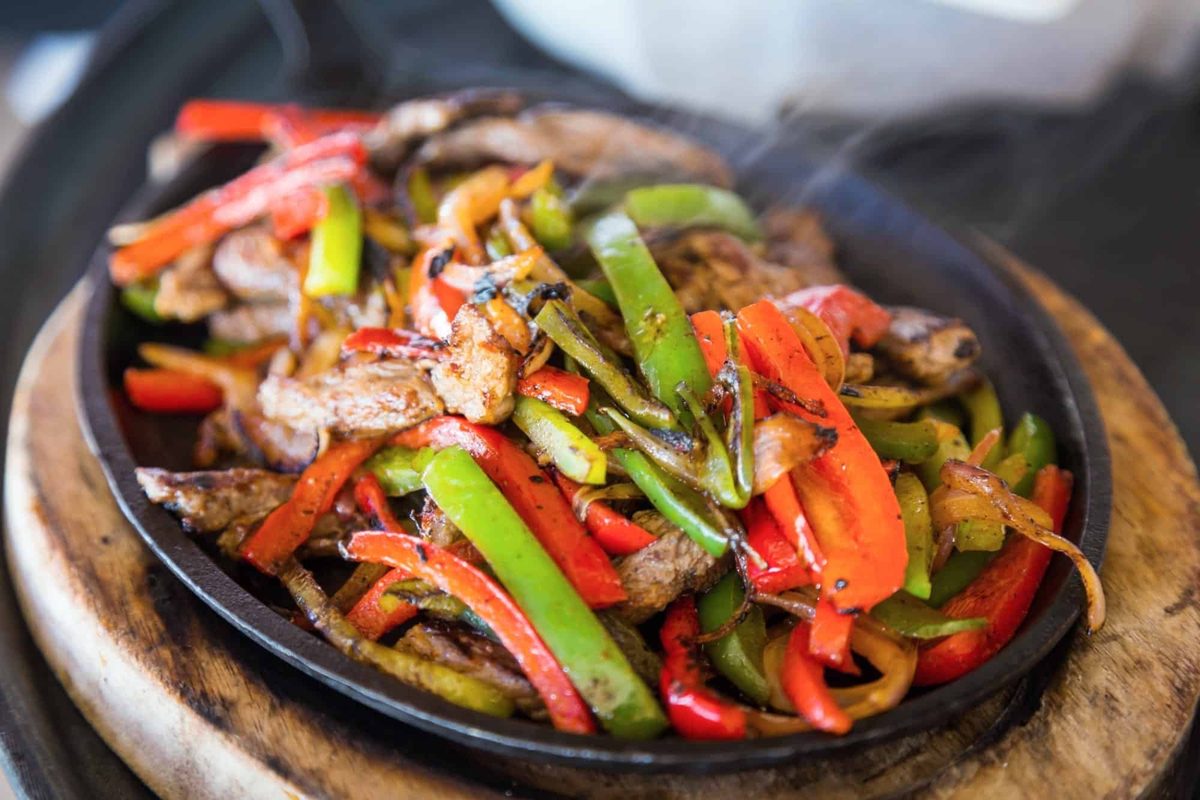
Fajita seasoning is short: chile, cumin, garlic, onion, salt and something sour. The USDA’s purchasing specification for fajita seasoning lists salt, black pepper, cumin, oregano, garlic, onion, red pepper and natural lime flavor,1 and America’s Test Kitchen’s weeknight chicken fajitas season the meat with just chili powder, cumin, salt and pepper, then finish with lime juice.2 This page covers what each seasoning does, how a homemade mix compares with a packet, and the safe temperatures for beef, chicken and shrimp. Quantities appear only where a named recipe or label gives them.
Where fajitas come from
The Austin Chronicle’s history of the dish, drawing on Homero Recio’s 1984 study, traces fajitas to the ranch lands of South and West Texas, with anecdotal evidence going back to the 1930s. Beef byproducts, including the skirt steak, were given to Mexican vaqueros as part of their pay; fajitas, or arracheras, were grilled skirt steak.3 The first commercial fajita taco stand opened in 1969, and the same year a restaurant in Pharr began serving fajitas on a sizzling platter with warm flour tortillas.3 Skirt steak is the original cut; McCormick’s packet directions use chicken breast or beef sirloin.34 A widely repeated story that the name comes from faja, Spanish for a sash or belt, is plausible but we did not find a source for it.
At a glance
| Seasoning | Job in fajitas | In which named source |
|---|---|---|
| Chile (chili powder or pure ground chile) | Heat, color, earthy chile flavor | ATK; USDA spec; McCormick label214 |
| Cumin | Warm, earthy note | ATK; USDA spec; McCormick label214 |
| Garlic | Savory depth | USDA spec; McCormick label14 |
| Onion | Sweetness when cooked; savory depth | Sliced onion in ATK; onion in the USDA spec and McCormick label214 |
| Salt and black pepper | Seasoning | ATK; USDA spec21 |
| Oregano | Herbal note | USDA spec1 |
| Lime (juice or dried) | Sourness | ATK (juice); USDA (lime flavor); McCormick (citric acid, lime juice concentrate)214 |
| Paprika | Red color | McCormick label4 |
The core seasonings
Chile: chili powder or pure chile powder
Two different products share nearly the same name. American chili powder is a blend: Saveur describes it as dried chiles, usually ancho, with oregano, cumin, garlic and sometimes salt,5 and the USDA spec lists ground chili pepper, cumin, oregano, salt and garlic powder.1 The blend is a Texas invention; William Gebhardt registered his Eagle Brand Chili Powder trademark in 1896.6 A pure chile powder, such as ancho powder or chipotle powder, is just one ground chile. Chipotle brings smoke: Katzer notes the name now means smoked jalapeños almost exclusively.7
Either works in fajitas. ATK uses 1 teaspoon chili powder for two chicken breasts.2 Heat comes from capsaicinoids, chiefly capsaicin and dihydrocapsaicin.8 Using chili powder means some cumin, oregano and garlic arrive with it. See chili powder, paprika vs. chili powder and Mexican oregano.
Cumin
Cumin is in all three named sources: ATK uses 1/2 teaspoon ground cumin,2 and it appears in the USDA spec and on McCormick’s label.14 PROSEA describes its flavor as strong, warm, pungent and persistent, and notes that only small quantities are needed.9 See cumin uses and too much cumin.
Paprika
McCormick’s fajita mix lists paprika among its spices.4 It is there mainly for color: the red comes from carotenoids, mainly capsanthin and capsorubin.10 Whether it adds sweetness is a flavor judgment rather than a sourced fact. See paprika.
Garlic
Garlic is in the USDA spec and on McCormick’s label.14 Powder is the practical form for a dry rub. ATK notes that garlic powder straight from the jar has not developed its full flavor until water activates it,11 and in our judgment a short rest on the moist meat lets that happen before cooking. See garlic powder vs. garlic.
Onion
ATK cooks one sliced onion with a red bell pepper alongside the chicken,2 and onion appears in both the USDA spec and McCormick’s mix.14 The sweetness that cooked onion adds is our kitchen judgment rather than a sourced claim. See onion powder vs. onion.
Salt
ATK seasons the meat with 1/2 teaspoon salt in the spice mix.2 Salting the meat before it cooks gives the salt time to work: ATK explains that salt draws out juices that form a brine the meat reabsorbs.12 Packets carry plenty of it already; McCormick’s fajita mix has 250 mg sodium per 1.5 teaspoons.13 See table salt and kosher salt.
Lime: flavor, not tenderness
Lime gives fajitas their sour edge, and both the USDA spec and McCormick’s mix build it into the seasoning.14 ATK stirs in 4 teaspoons of lime juice off the heat, after cooking.2
A common claim says lime juice tenderizes skirt steak. ATK’s marinade testing says otherwise: acids such as citrus juice do weaken collagen, but only at the surface, and left too long they turn the outer layer mushy rather than tender. ATK uses acids sparingly and only for short marinating times.14 So for a long marinade, keep the lime light, or add it at the end as ATK’s recipe does.
Homemade vs. packet
| ATK weeknight chicken fajitas2 | USDA fajita seasoning spec1 | McCormick Fajita Seasoning Mix4 | |
|---|---|---|---|
| Chile | 1 tsp chili powder | Red pepper | Chili pepper, paprika |
| Cumin | 1/2 tsp | Yes | Yes |
| Garlic, onion | Sliced onion (cooked with the meat) | Yes | Yes |
| Other spices | Black pepper | Black pepper, oregano | Not itemized |
| Sour element | 4 tsp lime juice, added at the end | Natural lime flavor | Citric acid, lime juice concentrate |
| Also | Salt, cilantro | Salt | Salt, sugar, corn starch |
The USDA list is a minimum (“should include, but is not limited to”), and it calls for a reddish orange, free-flowing blend.1 See fajita seasoning, fajita seasoning substitutes and fajita vs. taco seasoning.
Toppings
Sour cream and Mexican crema are both used as cool, creamy toppings. We did not find a source comparing the two or measuring how much dairy tames chile heat, so both points are left as kitchen practice.
Safe internal temperatures
Per FoodSafety.gov:15
| Protein | Minimum internal temperature |
|---|---|
| Beef steak (skirt, flank, sirloin) | 145°F (63°C), then rest 3 minutes |
| Chicken | 165°F (74°C) |
| Shrimp | Cook until the flesh is pearly or white, and opaque |
Related
- Taco seasoning and spices for taco meat
- Best spices for steak and good spices for chicken
- Best spices for chili
- The master list of herbs and spices
Footnotes
-
Commercial Item Description A-A-20001C, Spices and Spice Blends, USDA Agricultural Marketing Service, 2023. ams.usda.gov · Regulator ↩ ↩2 ↩3 ↩4 ↩5 ↩6 ↩7 ↩8 ↩9 ↩10 ↩11 ↩12 ↩13 ↩14 ↩15
-
“Weeknight Skillet Chicken Fajitas”, America’s Test Kitchen, 2013. americastestkitchen.com · Publication ↩ ↩2 ↩3 ↩4 ↩5 ↩6 ↩7 ↩8 ↩9 ↩10 ↩11 ↩12
-
Virginia B. Wood, “Fajita History”, The Austin Chronicle, 2005. austinchronicle.com · Publication ↩ ↩2 ↩3
-
McCormick Fajita Seasoning Mix, product page. mccormick.com · Merchant ↩ ↩2 ↩3 ↩4 ↩5 ↩6 ↩7 ↩8 ↩9 ↩10 ↩11 ↩12 ↩13
-
“Chili Powder”, Saveur, 2009. saveur.com · Publication ↩
-
Mexican Foods Company Collection (Gebhardt), UTSA Libraries Special Collections. lib.utsa.edu · Reference work ↩
-
“Paprika and Mexican chiles (Capsicum annuum)”, Gernot Katzer’s Spice Pages. gernot-katzers-spice-pages.com · Reference work ↩
-
Bosland and Walker, “Measuring Chile Pepper Heat”, Guide H-237, New Mexico State University, 2010. pubs.nmsu.edu · Reference work ↩
-
P.C.M. Jansen, “Cuminum cyminum”, PROSEA. uses.plantnet-project.org · Reference work ↩
-
“Paprika extract”, Chemical and Technical Assessment for the 77th JECFA, FAO. fao.org · Regulator ↩
-
Carolyn Grillo, “For Great Garlic Bread, Hydrate Your Garlic Powder First”, America’s Test Kitchen, 2021. americastestkitchen.com · Publication ↩
-
“Salting Meat”, America’s Test Kitchen. americastestkitchen.com · Publication ↩
-
McCormick Fajita Seasoning Mix, 1.12 oz, ShopRite product listing. shoprite.com · Merchant ↩
-
“Marinating Myths”, America’s Test Kitchen. americastestkitchen.com · Publication ↩
-
“Cook to a Safe Minimum Internal Temperature”, FoodSafety.gov. foodsafety.gov · Regulator ↩