Spice Substitutes · Substitutes
Fennel Pollen Substitutes, Ranked by the Job the Pollen Is Doing
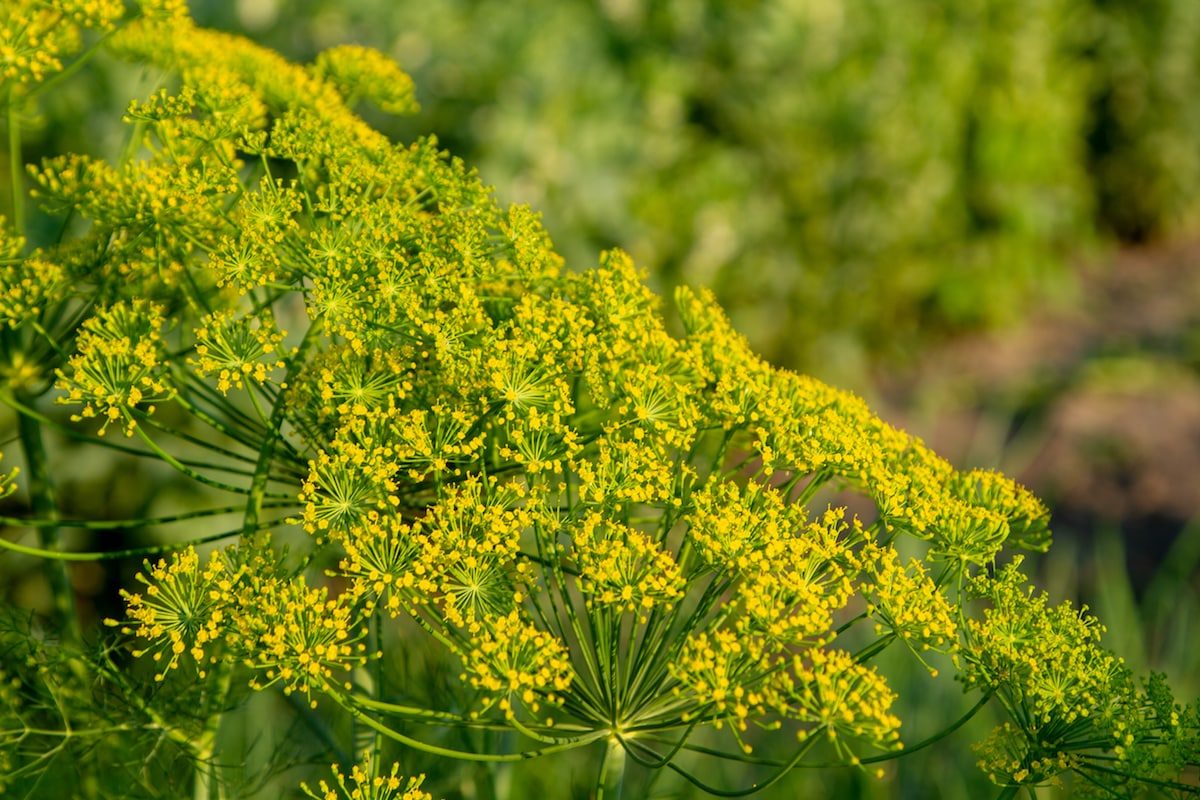
Fennel pollen is the yellow pollen that coats the flowers of wild fennel.1 America’s Test Kitchen (ATK) found it sold by boutique vendors for as much as $20 an ounce, against about $5 an ounce for fennel seed, and recommends saving it as a finishing touch.2 Tasting Table notes that a very small amount is usually enough.3 So most of the time a substitute has one job: to stand in for a pinch scattered over a dish at the end. What works best depends on whether you need that finishing dust, a seasoning that gets cooked in, a sweet licorice note for baking, or a fresh green fennel flavor.
Quick answer
| What fennel pollen is doing | Best substitute | Starting amount, per pinch of pollen | Treatment |
|---|---|---|---|
| Finishing dust on a hot dish (pork, fish, pasta, soup) | Fennel seed, finely ground and sifted | An equal pinch, then more to taste | Method |
| Seasoning cooked into a rub, sauce or braise | Ground fennel seed | An equal pinch, then more to taste | Method |
| Sweet licorice note in baking | Ground anise seed | About half a pinch | Method |
| Fresh, green fennel note at the end | Fennel fronds, finely chopped | A small scattering, to taste | Method |
Every amount on this page is a starting point. None is a measured equivalence.
How the ratios on this page are labeled
- Computed: based on a measurable physical relationship, with the source named.
- Attributed: a named source publishes this ratio. We quote it as theirs.
- Disputed: named sources give different answers to the same swap. We show each one and do not average them.
- Method: we found no published ratio. We give a direction and a cautious starting point, and say so.
We found no credible source that publishes a ratio for any fennel pollen substitute. Ratios such as “two parts fennel seed for one part pollen” circulate online, but we could not trace any of them to a test or a named cook. We also found no published analysis of the flavor compounds in fennel pollen itself, so the comparisons below rest on the chemistry of the substitutes and on how tasters describe the pollen.
What you are trying to replace
ATK’s tasters found fennel pollen to have hints of licorice and citrus and a honeyed, marshmallow-like sweetness, while fennel seed tasted of licorice and little else.2 Tasting Table warns that too much pollen turns a dish perfumy.3 Any substitute will give you the licorice. The citrus and honey are what you lose.
If fennel pollen is a finishing dust
This is the classic use: a pinch over vegetables, pork, fish or grilled meat, stirred into oil for bread, or over pasta and creamy soups.2
1. Fennel seed, finely ground and sifted
Fennel seed comes from the same plant, Foeniculum vulgare.4 PROSEA reports that anethole makes up as much as 70 to 80 percent of sweet fennel’s oil and gives it its anise fragrance and sweet taste.4 Bitter fennel, the other main type, smells pungent and tastes like camphor,4 so choose seed sold as sweet fennel when you can. Because no one has analyzed the pollen’s aroma, we cannot say how much of its flavor is anethole. ATK’s comparison suggests it is not the whole story.2
To get closer to the pollen’s fine texture, grind the seed as finely as you can and shake it through a fine sieve. Toasting the seed lightly first adds a rounder, warmer note. Both steps are our kitchen judgment, not tested methods.
Ratio (Method): No published ratio. Start with the same pinch of ground seed you would have used of pollen, taste, and add more. The seed is less complex than the pollen, so you may want a little more, but adding more licorice will not bring back the citrus or honey.
Grinding conversion (Computed): McCormick’s conversion is 1 teaspoon fennel seeds to 1 1/4 teaspoons ground fennel.5 That is a volume figure for grinding, useful if you are measuring seed to grind. It says nothing about strength.
2. A little lemon zest with the ground seed
Kitchen judgment only: a few gratings of lemon zest over the dish along with the ground fennel seed can stand in for the pollen’s citrus note. No source tests this.
If fennel pollen is cooked into the dish
In dry rubs and in sauces or braises where the pollen goes in before cooking, its finer points tend to get lost in the other flavors. Ground fennel seed does the job here with little compromise, in our judgment.
Ratio (Method): No published ratio. Start with an equal amount of ground fennel seed and adjust at the end of cooking.
If fennel pollen is a sweet note in baking
Ground anise seed
Anise seed, Pimpinella anisum, has an oil that is 80 to 95 percent anethole, which PROSEA calls its character-impact compound.6 That gives it the sweet licorice note that fennel pollen brings to muffins, breads and fruit pies. It is a different plant, though. ATK found that the licorice flavor of anise seed, fennel seed and star anise comes from high levels of trans-anethole, and its tasters still noticed when one spice was swapped for another.7
Ratio (Method): No published ratio for anise in place of fennel pollen. The Spice House calls anise closer in flavor to fennel but stronger, and suggests starting with half to three quarters as much anise as fennel.8 Since that advice is for fennel in general, not pollen, treat it as a direction: start with about half the amount of pollen and taste.
If fennel pollen is a fresh, green note
Fennel fronds
The feathery leaves of the fennel plant are easy to find attached to bulb fennel. University of Illinois Extension says both herb fennel and bulb (Florence) fennel have an anise or licorice flavor.9 Fronds are leaves, not the flowers that produce pollen,1 so they taste greener and more herbal. Forager Chef’s Alan Bergo finds that young, deeply colored bronze fennel fronds taste of licorice, while older fronds turn green and more vegetal.10 Choose the youngest, most fragrant fronds you can find.
Ratio (Method): No published ratio. Chop them finely and scatter them over the finished dish to taste. Add them at the end: they are a fresh herb, and in our judgment they lose their aroma with long cooking.
If you grow fennel
Bergo notes that the whole fennel plant is edible, from flowers and pollen to fronds and seeds.10 If your plants are in flower, you can collect your own pollen. Tasting Table describes shaking the flower heads into a bag, and says a quarter teaspoon from one flower head counts as a large yield.3
Seeds that are not good matches
Caraway and dill seeds are sometimes suggested. Neither is mainly an anethole spice. PROSEA names carvone and limonene as the principal components of caraway oil,11 and gives dill fruit oil as up to 70 percent limonene and up to 60 percent carvone.12 Britannica describes caraway’s aroma as reminiscent of anise, with a warm, slightly sharp taste.13 Either one will add a seed flavor of its own rather than fennel’s sweetness. In our judgment they are a last resort in savory dishes and a poor choice in baking.
What isn’t known
- No published study has measured the aroma compounds of fennel pollen, so there is no chemical basis for comparing its strength with any substitute.
- No credible source gives a tested ratio for fennel seed, anise or fennel fronds in place of fennel pollen.
- Fennel pollen prices vary widely by seller and date. The ATK figures above are one snapshot, not a market price.
Related
- Fennel pollen, fennel pollen uses and fennel pollen vs. fennel seed
- Fennel seed, fennel seed substitutes and fennel seed vs. anise seed
- Anise seed and anise seed substitutes
- Bronze fennel, fennel vs. dill, caraway seeds, dill
Footnotes
-
“Eat This Word: Fennel Pollen”, James Beard Foundation, 2011. jamesbeard.org · Publication ↩ ↩2
-
“Fennel Pollen: What It Is & How to Use It”, America’s Test Kitchen. americastestkitchen.com · Publication ↩ ↩2 ↩3 ↩4
-
Lucy Clark, “What Is Fennel Pollen And How Can It Be Used?”, Tasting Table, 2022. tastingtable.com · Publication ↩ ↩2 ↩3
-
Purwaningsih, Harmida and M. Brink, Foeniculum vulgare, Plant Resources of South-East Asia (PROSEA). uses.plantnet-project.org · Reference work ↩ ↩2 ↩3
-
“How to Grind Your Own Spices”, McCormick. mccormick.com · Merchant ↩
-
L.B. Cardenas and C.C. de Guzman, Pimpinella anisum, PROSEA. uses.plantnet-project.org · Reference work ↩
-
Andrew Janjigian, “Why Anise Seed, Fennel Seed, and Star Anise aren’t Interchangeable”, America’s Test Kitchen, 2020. americastestkitchen.com · Publication ↩
-
“12 Best Fennel Substitutes”, The Spice House, 2018. thespicehouse.com · Merchant ↩
-
“Fennel”, University of Illinois Extension. extension.illinois.edu · Reference work ↩
-
Alan Bergo, “Bronze Fennel”, Forager Chef, 2025. foragerchef.com · Publication ↩ ↩2
-
H. Toxopeus and J.H. Lubberts, Carum carvi, PROSEA. uses.plantnet-project.org · Reference work ↩
-
Nguyen Thi Tâm, C.C. de Guzman and P.C.M. Jansen, Anethum graveolens, PROSEA. uses.plantnet-project.org · Reference work ↩
-
“Caraway”, Encyclopaedia Britannica. britannica.com · Reference work ↩