Spice Comparisons · Comparison
Fennel Seed vs. Anise Seed: Two Plants, One Licorice Compound
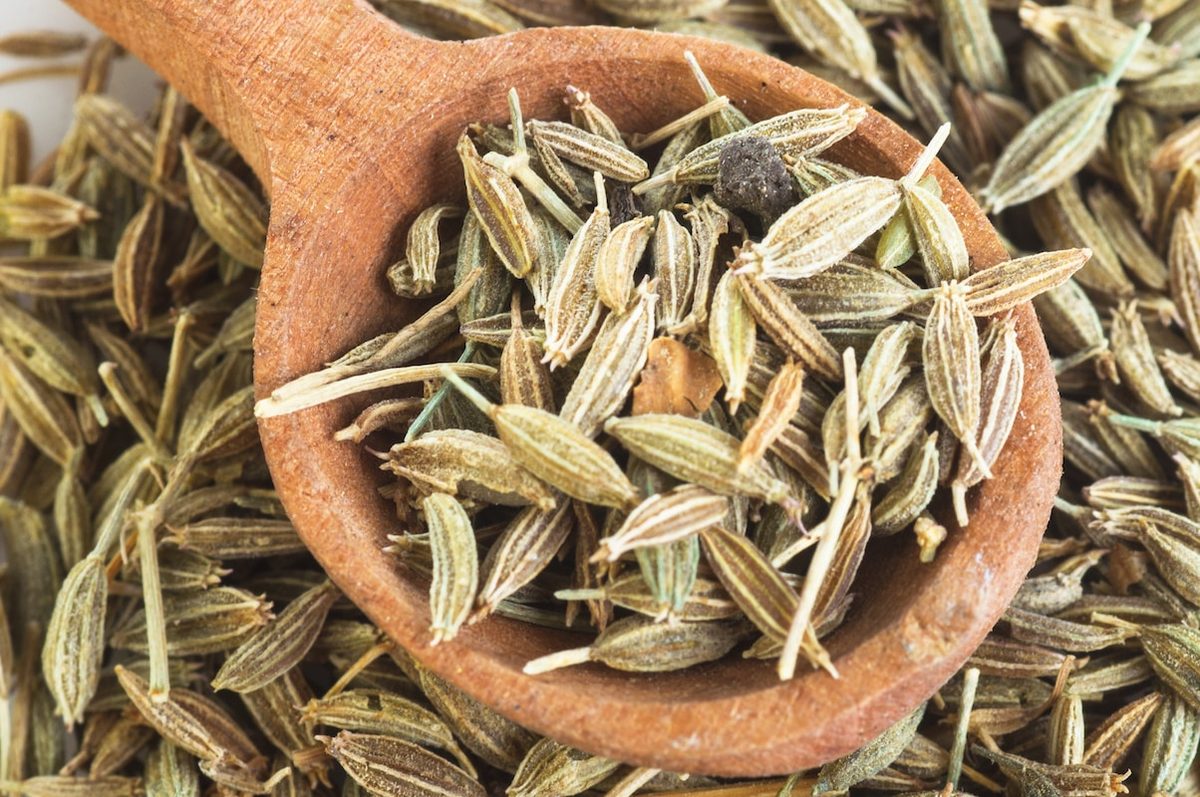
Fennel seed and anise seed come from two different plants in the same family, and both taste of the same compound, anethole.12 Anise carries more of it: its oil is 80–95% trans-anethole, against up to 70–80% in sweet fennel, though those figures come from different samples.12 In the kitchen, anise reads as the stronger, sweeter licorice note and fennel as the lighter one. They can stand in for each other in a dish with many spices, but America’s Test Kitchen’s tasters picked out the swap easily where the seed was the main flavor.3
Side by side
| Fennel seed | Anise seed | |
|---|---|---|
| Species | Foeniculum vulgare4 | Pimpinella anisum5 |
| Family | Apiaceae (carrot/parsley family)6 | Apiaceae7 |
| The plant | A perennial herb about 1 m tall6 | An annual herb to about 0.75 m7 |
| Native range (Kew) | Mediterranean to Ethiopia and western Nepal4 | Southeastern Türkiye to central Israel, and Cyprus5 |
| Part used | The small dry fruit, sold as “seed”6 | The dry fruit, sold as “seed”7 |
| What it looks like | Greenish-brown to yellowish-brown ovals about 6 mm long, five ridges6 | Nearly ovoid, about 3.5 mm long, five ridges7 |
| Main aroma compound | Anethole, up to 70–80% of sweet-fennel oil; fenchone leads bitter fennel1 | trans-Anethole, 80–95% of the oil, with up to 5% estragole2 |
| Essential oil | 3–4% (Britannica); 1.9–3.1% by hydrodistillation (PROSEA)61 | About 2.5% (Britannica); 1.9–3.1% by hydrodistillation (PROSEA)72 |
| Other parts eaten | The stem base and blanched shoots of Florence fennel, eaten as a vegetable6 | No other culinary part described in the sources used here |
| Flavor, as sources describe it | Suggests anise in aroma and taste (Britannica);6 sweet fennel sweet and anise-scented, bitter fennel camphor-like (PROSEA)1 | Resembles licorice (Britannica);7 The Spice House calls it close to fennel but stronger8 |
| Flavor (editorial) | Lighter and greener, faintly bitter at the finish | Rounder, sweeter and more candy-like |
| Typical uses | Pastries, sweet pickles and fish;6 sausage;9 Chinese five-spice10 | Pastries and the German bread Anisbrot; absinthe, anisette and Pernod7 |
| Safety | Contains estragole1 | Up to 5% estragole in the oil2 |
| Cost | No dated, sourced comparison found | No dated, sourced comparison found |
The two anethole ranges come from separate PROSEA entries, each summarizing its own samples. They show which seed tends to carry more, not a measurement of the two side by side.
One compound, several spices
Anethole explains why these two get confused. PROSEA calls trans-anethole the character-impact compound of anise,2 and credits it with sweet fennel’s anise fragrance and sweet taste.1 ATK traces the licorice character of anise seed, fennel seed and star anise to high levels of trans-anethole, and notes that each comes from a different plant with its own secondary compounds.3
- Star anise is a third anethole spice from an unrelated plant: Illicium verum, a tree in the Schisandraceae.11 Its oil is 70–93% trans-anethole.12 See star anise vs. anise seed.
- Tarragon is often grouped with these, but its oil is led by a different compound, methyl chavicol (estragole), at about 77% in one French tarragon oil PROSEA cites.13 See tarragon.
- Licorice is not a relative either. PROSEA notes that anise’s flavor is often confused with licorice, and that anise oil is traditionally used together with licorice in licorice candy.2
How the differences show up in cooking
Strength. The Spice House calls anise closer in flavor to fennel but stronger, and advises using it more sparingly.8 The higher anethole range in anise oil fits that,12 though no study has measured the two seeds’ strength in a dish.
Where the seed is the main flavor. ATK swapped the three anethole spices in a biscotti recipe written for anise seed, and tasters easily picked out the differences.3 In Italian sausage meatballs, with many other spices, the differences were harder to detect.3 That is the practical rule: the more spices in the dish, the safer the swap.
Sweet and savory. Both seeds go both ways. Britannica lists pastries, sweet pickles and fish for fennel,6 and pastries and the bread Anisbrot for anise, along with the anise liqueurs absinthe, anisette and Pernod.7 Illinois Extension notes fennel’s use in sausage.9 In the United States, anise is widely associated with pizzelle and biscotti, and fennel with Italian sausage and tomato sauce; that is common practice rather than something these sources document.
Bitter fennel. PROSEA divides fennel seed into a sweet type and a bitter type with a pungent, camphor-like odor and taste.1 Labels rarely say which is in the jar, so a fennel that tastes harsh next to anise may be the bitter type. That is an inference, not a test.
Mix-ups in the trade and in blends
The confusion is old and commercial. PROSEA notes that fennel and anise fruits are often confused and substituted for each other,1 and that ground anise is adulterated with ground fennel.2 Buying whole seed lets you check: anise is the smaller seed, about 3.5 mm against fennel’s 6 mm.67
Blends show the same overlap. Britannica’s list for Chinese five-spice powder includes fennel seed,10 but McCormick’s Culinary Chinese Five Spice lists anise, cinnamon, star anise, cloves and ginger, with no fennel.14 The Bengali five-seed mix panch phoran uses fennel, both in the version Gernot Katzer says is most printed and in Bong Eats’ recipe;1516 we found no version that uses anise in its place.
Can one stand in for the other?
Yes, best in savory dishes with other spices. These treatments come from our substitute pages.
- Anise in place of fennel (Attributed). The Spice House says to start with half to three quarters of the fennel amount and adjust to taste.8 See fennel seed substitutes.
- Fennel in place of anise (Method). No published ratio was found. Start with the same amount and taste, adding more once the dish has cooked if you want the anise to come through. In a cookie where anise is the flavor you would name, expect a difference.3 See anise seed substitutes.
ATK’s own advice is not to swap them where the flavor matters.3 PROSEA, describing the trade, notes they are often substituted anyway.1 Both are true: the swap works, and attentive tasters notice it.
Safety
Both seeds contain estragole: up to 5% of anise oil per PROSEA,2 and present in fennel, which PROSEA notes is a liver carcinogen in mice.1 The EU’s former Scientific Committee on Food concluded in 2001 that estragole has been demonstrated to be genotoxic and carcinogenic.17 We found no regulatory limit for estragole in either seed sold as a spice. For what regulators say about medicinal use, see fennel seed and anise seed.
What isn’t known
- No study measures the flavor strength of fennel seed against anise seed in a dish; the swap amounts are a merchant’s rule of thumb and our starting point.
- The anethole figures come from separate summaries of different samples; we found no paired analysis of both seeds.
- No dated, sourced price comparison was found.
- We found no source for anise being used in place of fennel in panch phoran or in Italian sausage seasoning.
Related
- Fennel seed, fennel seed substitutes, fennel pollen vs. fennel seed
- Anise seed, anise seed substitutes
- Star anise, star anise vs. anise seed, star anise substitutes
- Caraway seeds vs. fennel seeds, fennel seeds vs. cumin seeds, fennel vs. dill
- Chinese five-spice powder, panch phoran, tarragon
Footnotes
-
Purwaningsih, Harmida and M. Brink, Foeniculum vulgare, Plant Resources of South-East Asia (PROSEA). uses.plantnet-project.org · Reference work ↩ ↩2 ↩3 ↩4 ↩5 ↩6 ↩7 ↩8 ↩9 ↩10 ↩11 ↩12
-
L.B. Cardenas and C.C. de Guzman, Pimpinella anisum, Plant Resources of South-East Asia (PROSEA). uses.plantnet-project.org · Reference work ↩ ↩2 ↩3 ↩4 ↩5 ↩6 ↩7 ↩8 ↩9 ↩10
-
Andrew Janjigian, “Why Anise Seed, Fennel Seed, and Star Anise aren’t Interchangeable”, America’s Test Kitchen, 2020. americastestkitchen.com · Publication ↩ ↩2 ↩3 ↩4 ↩5 ↩6
-
Foeniculum vulgare Mill., Plants of the World Online, Royal Botanic Gardens, Kew. powo.science.kew.org · Reference work ↩ ↩2
-
Pimpinella anisum L., Plants of the World Online, Royal Botanic Gardens, Kew. powo.science.kew.org · Reference work ↩ ↩2
-
“Fennel”, Encyclopaedia Britannica. britannica.com · Reference work ↩ ↩2 ↩3 ↩4 ↩5 ↩6 ↩7 ↩8 ↩9 ↩10
-
“Anise”, Encyclopaedia Britannica. britannica.com · Reference work ↩ ↩2 ↩3 ↩4 ↩5 ↩6 ↩7 ↩8 ↩9
-
“12 Best Fennel Substitutes”, The Spice House, 2018. thespicehouse.com · Merchant ↩ ↩2 ↩3
-
“Fennel”, Herb Gardening, University of Illinois Extension. extension.illinois.edu · Reference work ↩ ↩2
-
Tony Hill, “Five-spice powder”, Encyclopaedia Britannica. britannica.com · Reference work ↩ ↩2
-
Illicium verum Hook.f., Plants of the World Online, Royal Botanic Gardens, Kew. powo.science.kew.org · Reference work ↩
-
Vu Ngoc Lô, Illicium verum, Plant Resources of South-East Asia (PROSEA). uses.plantnet-project.org · Reference work ↩
-
C.C. de Guzman and R.A. Reglos, Artemisia dracunculus, Plant Resources of South-East Asia (PROSEA). uses.plantnet-project.org · Reference work ↩
-
McCormick Culinary Chinese Five Spice, product page, McCormick. mccormick.com · Merchant ↩
-
Gernot Katzer, “Nigella (Nigella sativa L.)”, Gernot Katzer’s Spice Pages. gernot-katzers-spice-pages.com · Reference work ↩
-
“Panch phoron”, Bong Eats, 2017. bongeats.com · Publication ↩
-
Opinion of the Scientific Committee on Food on Estragole, European Commission, 2001. food.ec.europa.eu · Regulator ↩