Spices · Profile
Lampong Pepper: Sumatra’s Hot Black Pepper, Its Origin and Flavor
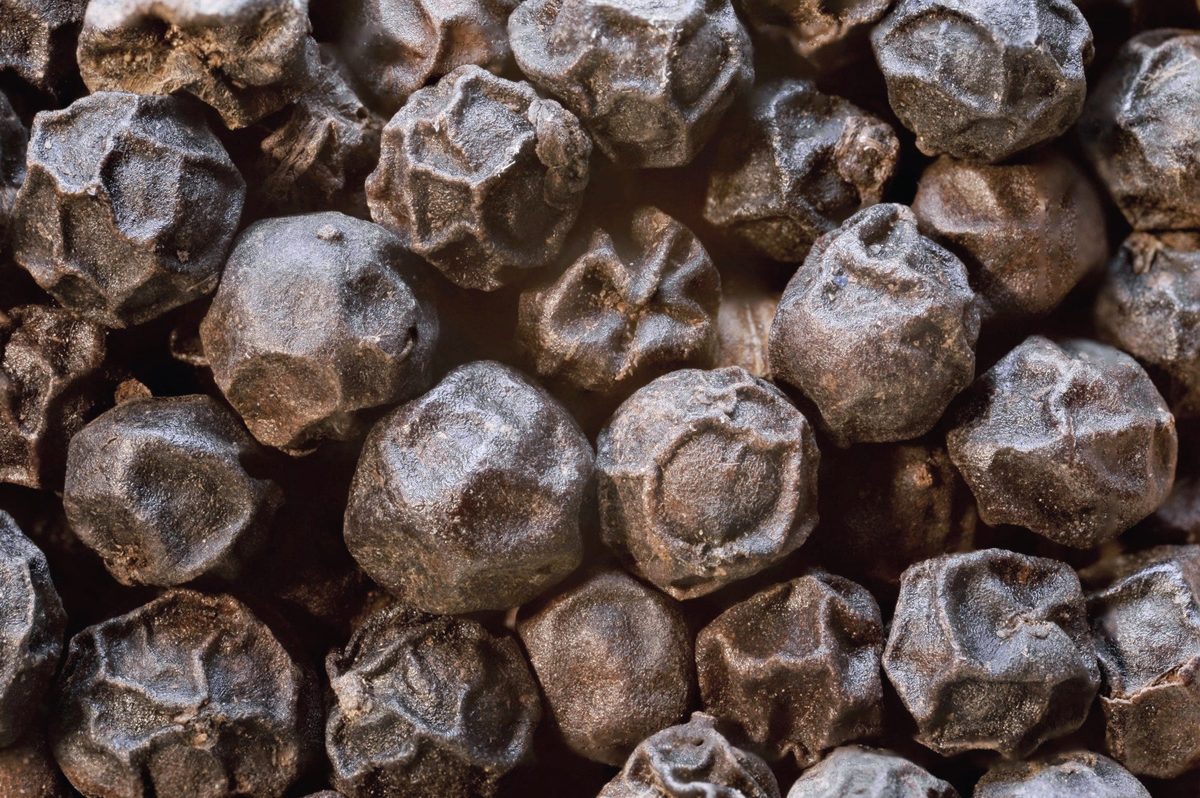
Lampong pepper is black pepper, Piper nigrum, from Lampung, the province at the southern tip of Sumatra in Indonesia.12 Katzer’s Spice Pages spells the name Lampong; Britannica and the International Pepper Community spell the province Lampung.234 In the pepper trade it has a reputation for heat: the International Pepper Community calls Lampung Black Pepper one of the finest pepper varieties “due to its burning pungency, taste and aroma.”3 Since 2016 it has been a registered geographical indication in Indonesia.3
At a glance
| Botanical name | Piper nigrum L.1 |
| Plant family | Piperaceae1 |
| Where it grows | Lampung province, southern Sumatra, Indonesia23 |
| Protected name | Lampung Black Pepper, Indonesian geographical indication certificate handed over 18 July 20163 |
| Growers | More than 100,000 small-scale producers, per the International Pepper Community3 |
| Reputation | Hot; Katzer calls it “pretty hot” and contrasts it with mild Sarawak pepper4 |
| Main pungent compound | Piperine4 |
| Forms sold | Whole and ground black pepper |
Measured values
5 figures, sourced| Measure | Value | Scope | Source |
|---|---|---|---|
| Piperine | 4.9 to 7.7 % | black pepper in general, PROSEA; not specific to LampongNo study comparing piperine in Lampong pepper with other origins was found | uses.plantnet-project.org |
| Essential oil: monoterpene hydrocarbons | up to 80 % of the essential oil | black pepper in general, per Katzer's Spice Pages | gernot-katzers-spice-pages.com |
| Vitamin K Nutrient | 164 µg per 100 g | USDA FoodData Central, ground black pepper (all origins) | fdc.nal.usda.gov |
| Aflatoxin B1, maximum Limit | 5.0 µg/kg | EU Regulation 2023/915, pepper (fruits of Piper species) | eur-lex.europa.eu |
| Total aflatoxins, maximum Limit | 10.0 µg/kg | EU Regulation 2023/915, pepper (fruits of Piper species) | eur-lex.europa.eu |
Each figure is quoted as its source states it, with the samples or standard it applies to. Where sources differ, both are shown; nothing is averaged. All measured values
What it is
Lampong pepper is black pepper sold under the name of the place it grows, the way Tellicherry and Malabar pepper are named for parts of India’s southwest coast. Katzer notes that in the pepper trade, grades are identified by their origin, and names Sarawak in Malaysia and Lampong in Sumatra as the most reputed sources of black pepper in Southeast Asia.4
“Lampong” is also the name of a pepper vine variety. The geographical-indication rules for Cambodia’s Kampot pepper allow two varieties, Kamchay and Lampong (also called Belantoeung).5 That use of the name refers to the planting stock, not to pepper grown in Sumatra.
Where it grows
Britannica describes Lampung as a province of southern Sumatra where most of the population works in agriculture, with coffee among its crops.2 According to the International Pepper Community (IPC), pepper has been one of the province’s main cash crops since the 17th century, and Lampung Black Pepper is grown by more than 100,000 small-scale producers on rich volcanic soils, in a hot climate with 2,000 to 2,500 mm of rain a year.3 The producers’ group that sought the geographical indication represents farmers in the districts of West Lampung, Tanggamus, North Lampung and East Lampung.3
The IPC reported that the certificates for Lampung Black Pepper and Lampung Robusta Coffee were handed over at the Vice-President’s office in Jakarta on 18 July 2016, about two years after the application was filed with Indonesia’s Directorate General of Intellectual Property.3
How pepper reached Sumatra
PROSEA, the Southeast Asian plant reference, records that pepper had reached Southeast Asia as early as 100 BC.6 A story that Indian traders carried it to Sumatra circulates widely, but no source checked for this page names the route or the people involved.
Indonesia in the world pepper trade
AramcoWorld reported in 2021 that Vietnam, Brazil and Indonesia together grow more than 60% of the world’s pepper.7 Katzer describes Indonesia as the former second-largest producer, whose output fell sharply in the 2000s.4 No official figure for Lampung’s share of Indonesian production was found for this page (FAOSTAT could not be reached).
The IPC says Lampung Black Pepper is traded in major consuming markets such as the United States and Europe.3 The often-repeated claims that most Lampong pepper goes to the United States, and that it is the most common black pepper in the United Kingdom, could not be traced to any source.
Flavor
Lampong pepper smells strongly of pepper, with piney, resinous and citrus notes, and it bites hard. That description is editorial. It fits what is known about black pepper’s aroma in general: Katzer reports that black pepper’s essential oil is dominated (up to 80%) by monoterpene hydrocarbons such as sabinene, β-pinene and limonene.4
How hot is it compared with other origins? The sources do not line up neatly:
| Source | What it says |
|---|---|
| International Pepper Community | Lampung Black Pepper is known for its “burning pungency, taste and aroma”3 |
| Katzer’s Spice Pages | Lampong is “pretty hot”; Sarawak pepper is mild and often described as fruity4 |
| Katzer’s Spice Pages | Indian black peppers, especially the Tellicherry grade, are very aromatic and pungent4 |
So Lampong is hotter than Sarawak by these accounts, but no source found here shows it to be hotter than Malabar or Tellicherry pepper. No study comparing the piperine content of Lampong pepper with other origins was found. For black pepper in general, PROSEA gives piperine at 4.9 to 7.7%.6
The pungency comes from piperine, the alkaloid-like compound that is pepper’s pungent principle.4 A common claim says piperine sits in the black outer layer of the peppercorn; Katzer actually rates white pepper, which has that layer removed, as the most pungent form and black and green pepper as more aromatic.4
How to use it
Use Lampong pepper as an everyday black pepper wherever heat matters more than delicate aroma. As kitchen practice:
- At the table and in the grinder, over eggs, grilled meat, potatoes and pasta.
- Whole, in stocks, braises and pickling liquids, strained out before serving.
- Cracked, as a crust on steak, tuna or salmon; see cracked vs. ground black pepper.
- With sweet things such as strawberries or chocolate desserts, in small amounts.
If a dish ends up too hot, see too much pepper.
Buying and quality
Codex sets three grades for whole black pepper by bulk density, light berries, moisture, volatile oil and piperine, whatever its origin.8 Retail jars rarely state these values. A stated origin in Lampung, berries that are uniform, dark and wrinkled, and little dust are reasonable signs of care; that is kitchen judgment.
Storage
Keep whole peppercorns airtight, dark and cool, and grind as needed. No shelf-life figure for whole or ground black pepper from a regulator or standards body was found for this page.
Nutrition and health
USDA’s entry for ground black pepper (all origins) lists 164 µg of vitamin K per 100 g and a tablespoon as 6.9 g.9 That is about 11 µg of vitamin K per tablespoon, roughly 9% of the 120 µg Daily Value, and about 0.67 mg of iron, roughly 4% of the Daily Value.910 A normal sprinkle supplies far less.
Piperine and curcumin. In a 1998 study, 20 mg of piperine taken with 2 g of curcumin raised curcumin’s bioavailability in human volunteers by 2000%.11 NCCIH says combining curcumin with piperine is one way to improve curcumin’s bioavailability, and cautions that highly bioavailable curcumin products may harm the liver.12 That is a finding about supplements, not about seasoning food with pepper. See turmeric.
Britannica notes that pepper has a limited medicinal use as a carminative, to relieve gas.13 Claims that Lampong pepper prevents Alzheimer’s disease, type 2 diabetes, heart disease or cancer, or improves gut bacteria, were not supported by any regulator summary or systematic review found for this page, and none is made here.
Safety
EU law caps aflatoxin B1 at 5.0 µg/kg and total aflatoxins at 10.0 µg/kg in pepper, defined as the fruits of Piper species, black and white pepper included.14 In the United States, the CDC found the strain behind a 2009 to 2010 Salmonella Montevideo outbreak in samples of black and red pepper; see black pepper for the record.15
Comparisons and related pages
- Other named peppers: Tellicherry pepper, Malabar pepper, Kampot pepper
- The same vine: black pepper, green peppercorns, white peppercorns
- Black pepper substitutes
- White vs. black pepper
- Long pepper vs. black pepper
Footnotes
-
Piper nigrum L., Plants of the World Online. powo.science.kew.org · Reference work ↩ ↩2 ↩3
-
Lampung (Britannica Editors, revised by Kenneth Pletcher), Encyclopaedia Britannica. britannica.com · Reference work ↩ ↩2 ↩3 ↩4
-
Geographical Indication of Lampung Black Pepper (pepper news, 7 September 2016), International Pepper Community (intergovernmental organization of pepper-producing countries). ipcnet.org · Regulator ↩ ↩2 ↩3 ↩4 ↩5 ↩6 ↩7 ↩8 ↩9 ↩10 ↩11
-
Black Pepper (Piper nigrum), Gernot Katzer’s Spice Pages. gernot-katzers-spice-pages.com · Reference work ↩ ↩2 ↩3 ↩4 ↩5 ↩6 ↩7 ↩8 ↩9 ↩10
-
Product specification of the PGI Poivre de Kampot, eAmbrosia, the EU geographical indications register, European Commission. ec.europa.eu · Regulator ↩
-
Piper nigrum (PROSEA), Plant Resources of South-East Asia, via Pl@ntUse. uses.plantnet-project.org · Reference work ↩ ↩2
-
Jeff Koehler, “Spice Migrations: Pepper”, 2021, AramcoWorld. aramcoworld.com · Publication ↩
-
Standard for Black, White and Green Peppers, CXS 326-2017, Codex Alimentarius Commission, FAO/WHO. fao.org · Standard ↩
-
Spices, pepper, black (FDC 170931), USDA FoodData Central. fdc.nal.usda.gov · Regulator ↩ ↩2
-
Daily Value on the Nutrition and Supplement Facts Labels, U.S. Food and Drug Administration. fda.gov · Regulator ↩
-
Shoba et al., “Influence of Piperine on the Pharmacokinetics of Curcumin in Animals and Human Volunteers”, Planta Medica, 1998. thieme-connect.com · Peer-reviewed ↩
-
“Turmeric: Usefulness and Safety”, 2025, National Center for Complementary and Integrative Health (NIH). nccih.nih.gov · Regulator ↩
-
Black pepper (Britannica Editors, revised by Sohini Dasgupta, updated 11 Sep 2026), Encyclopaedia Britannica. britannica.com · Reference work ↩
-
Commission Regulation (EU) 2023/915, EUR-Lex. eur-lex.europa.eu · Regulator ↩
-
2010 Salmonella Outbreak Linked to Red and Black Pepper/Italian-Style Meats (posted 4 May 2010), Centers for Disease Control and Prevention (archived). archive.cdc.gov · Regulator ↩