Spice Substitutes · Substitutes
Madras Curry Powder Substitutes: Rebuilding the Curry Base and the Heat
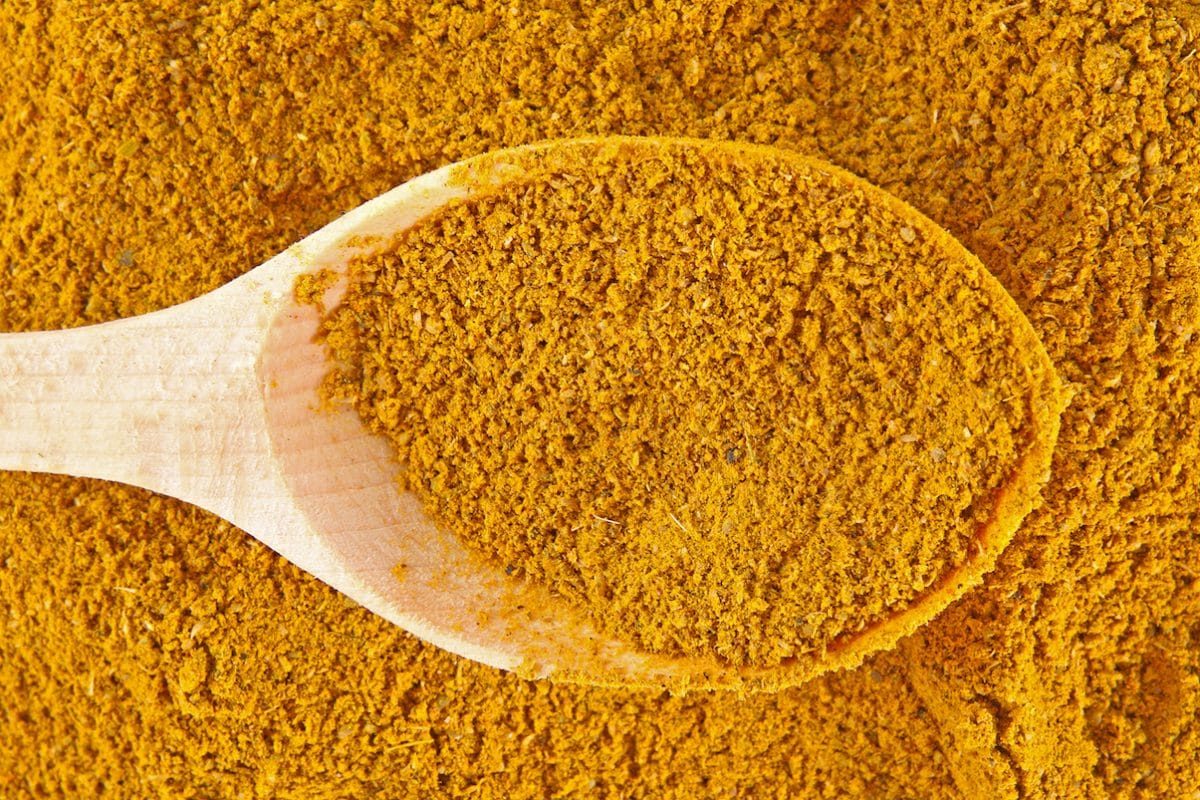
Madras curry powder is curry powder with chile added for heat, sold under the old name of the city now called Chennai.1 Britannica says curry powder was adapted by British settlers in India, while in Indian home cooking the spice mixtures are called masala and made at home.2 Historian Julia Fine traces Madras curry powder to that British trade, and notes that it was often promoted as spicier than the Bengal and Bombay styles.3
There is no fixed recipe. The USDA’s purchase specification says plain curry powder should include turmeric, coriander, fenugreek, cinnamon, cumin, black pepper, ginger and cardamom, and it names no chile.4 One merchant’s Madras blend uses most of those plus mustard seed and red chile flakes.5 Food writer and cookbook author Dan Toombs puts it simply: a Madras curry powder is a spice blend like any curry powder that also has dried chiles in it for a spicy kick.6
So a substitute has two jobs: the curry base (turmeric, coriander, cumin, fenugreek and warm spices) and the heat. Regular curry powder covers the first, and a little chile covers the second.
Quick answer
| What Madras curry powder is doing | Best substitute | Starting amount, per 1 tablespoon Madras curry powder | Treatment |
|---|---|---|---|
| Curry base plus heat, in most recipes | Regular curry powder plus cayenne | 1 tablespoon curry powder plus 1/8 teaspoon cayenne, then taste | Method |
| Same job, with whole spices on hand | Homemade Madras curry powder | 1 tablespoon of your blend | Attributed (recipe) |
| Heat and color for grilled meat or a marinade | Tandoori masala | 2 teaspoons, then taste and adjust salt | Method |
| No curry powder at all | Garam masala plus turmeric and chile | 2 teaspoons garam masala, 1 teaspoon turmeric, a pinch of cayenne | Method |
| South Indian dal or vegetables | Sambar powder | 2 teaspoons, then taste and adjust salt | Method |
The rest of the page explains each choice.
How the ratios on this page are labeled
Every ratio carries one of four labels.
- Computed: based on a measurable physical relationship, with the source named.
- Attributed: a named source publishes this ratio. We quote it as theirs.
- Disputed: named sources give different answers to the same swap. We show each one and do not average them.
- Method: we found no published ratio. We give a direction and a cautious starting point, and say so.
We found no credible source that publishes a ratio for substituting anything for Madras curry powder. The one Attributed entry is a published recipe for making the blend yourself. Every other amount is a starting point for tasting.
Start low with the heat in particular. Chile heat comes from compounds called capsaicinoids,7 and how much of it a Madras blend carries depends on how much chile, and which chile, the maker uses. We found no published heat measurement for any Madras curry powder. World Spice Merchants rates its own blend 2 on a scale of 5.5
If you need the curry base plus heat
1. Regular curry powder plus cayenne or chile flakes
This is the most direct swap. Curry powder already carries the base: the USDA’s list for it includes turmeric, coriander, fenugreek, cumin and warm spices.4 The compounds behind the curry character come along with it. Turmeric’s yellow comes from curcumin,8 and PROSEA credits sotolon with fenugreek’s characteristic curry aroma.9 What plain curry powder may lack is heat, since the USDA’s minimum list includes no chile.4 Toombs notes that his Madras blend made without the chiles is still a good curry powder,6 which is the same idea in reverse.
Where it falls short: curry powders vary by brand, and some already contain chile. Check the label before you add more.
Ratio (Method): We found no published ratio. Use the same amount of curry powder as the Madras powder called for, and add about 1/8 teaspoon of cayenne per tablespoon. Toombs advises adding chili powder gradually, to taste, to get the heat you want.6 Red pepper flakes work too, though they add visible flecks.
Bloom the spices in the cooking fat before adding liquid. America’s Test Kitchen says ground spices added straight to liquid can taste bland and musty, and that blooming takes from 30 seconds to several minutes.10
2. Make your own
If you have whole spices, you can make the real thing. Toombs’s homemade hot Madras curry powder is one published recipe:6
| Ingredient | Amount |
|---|---|
| Coriander seeds | 6 tablespoons |
| Cumin seeds | 6 tablespoons |
| Black peppercorns | 4 tablespoons |
| Fenugreek seeds | 3 tablespoons (Toombs later said 2 in a reader comment) |
| Fennel seeds | 2 tablespoons |
| Black mustard seeds | 2 tablespoons |
| Turmeric powder | 2 tablespoons |
| Hot chili powder (optional) | 2 tablespoons |
| Kashmiri dried chiles | 8 |
| Cardamom pods | 15 |
| Curry leaves | 20 |
| Indian bay leaves | 4 |
| Star anise | 3 |
| Cinnamon or cassia bark | One 5-inch piece |
Toombs says the blend can be made as spicy or mild as you like, and suggests a milder chili powder and fewer dried chiles for a gentler version.6
Ratio (Attributed, recipe): The proportions above are Toombs’s. Use your blend in the same amount as the Madras powder in your recipe; that 1:1 is our starting point, not his.
If you need heat and color for grilled meat or a marinade
Tandoori masala
Tandoori masala takes its name from the tandoor, a clay oven, and Anjula Devi blends it with yogurt for a marinade.11 It shares much of the curry base. Anjula Devi’s recipe starts with coriander and cumin seeds,11 and cookbook author Anupy Singla’s homemade version adds Kashmiri chiles, fenugreek, cinnamon and other warm spices.12
Where it falls short: it can add salt and a red color. Woodland Foods lists salt first on its tandoori blend, with lemon peel, beet powder and paprika also on the label.13 Singla found Red 40 dye on one store blend’s label.12 Woodland’s label does not name turmeric, though Singla’s recipe includes it,1213 so the dish may come out redder and less yellow.
Ratio (Method): No published ratio was found. Start with about two-thirds as much tandoori masala as Madras powder, taste, and adjust the salt before adding more.
If you have no curry powder at all
Garam masala, plus turmeric and chile
Garam masala is a spice blend used across the Indian subcontinent.14 Its spices overlap with curry powder’s warm side: Bong Eats gives its most basic Bengali form as cardamom, cinnamon and cloves.15 The Spice House notes that garam masala is warming but not hot like chili peppers,16 and that basic Bengali version has no turmeric, so you need to add both color and heat.
Where it falls short: in our judgment, garam masala leans on the sweet, warm spices, while a Madras blend leans on coriander, cumin and fenugreek. How far apart they are depends on the version you have.
Ratio (Method): No published ratio was found. For each tablespoon of Madras powder, start with about 2 teaspoons garam masala, 1 teaspoon ground turmeric and a pinch of cayenne. Taste and adjust.
If you’re cooking South Indian dal or vegetables
Sambar powder
Sambar powder is a South Indian blend used to make sambar.17 All three recipes compared on our sambar powder page, from Saveur, Tarla Dalal and Dassana Amit, contain coriander seed, dried red chiles, fenugreek, curry leaves, asafoetida and chana dal, and two of them add turmeric.181917 That gives it the coriander, fenugreek and chile of a Madras blend.
Where it falls short: it carries dals and asafoetida, which neither the World Spice blend nor Toombs’s recipe contains,56 and some recipes are salted. Saveur’s version includes 3 tablespoons of kosher salt.18
Ratio (Method): No published ratio was found. Start with about two-thirds as much sambar powder as Madras powder, check the label for salt, taste, and add more.
What isn’t known
- No credible published ratio for any Madras curry powder substitute was found.
- No published heat measurement for any Madras curry powder was found, so the cayenne amount above is a guess at the low end, not a match.
- How much chile a commercial Madras powder contains is not published on the product pages we checked; ingredient lists give no proportions.
- A widely repeated claim says Madras curry powder started Britain’s love of Indian food. No source we read supports it.
Related
- Madras curry powder and Madras curry powder vs. curry powder
- Curry powder, is curry powder spicy? and cooking with curry powder
- Cayenne pepper and red pepper flakes
- Tandoori masala, garam masala and sambar powder
- Vindaloo vs. Madras curry powder and too much curry powder
Footnotes
-
“Chennai”, Encyclopaedia Britannica. britannica.com · Reference work ↩
-
“Curry”, Encyclopaedia Britannica, 2026. britannica.com · Reference work ↩
-
Julia Fine, “From Delhi to Durban: The Many Homes of Madras Curry Powder”, Diaspora Co., 2022. diasporaco.com · Merchant ↩
-
Commercial Item Description A-A-20001C, Spices and Spice Blends, USDA Agricultural Marketing Service, 2023. ams.usda.gov · Regulator ↩ ↩2 ↩3
-
“Madras South Indian Curry”, World Spice Merchants (product page). worldspice.com · Merchant ↩ ↩2 ↩3
-
Dan Toombs, “Homemade hot Madras curry powder”, Great Curry Recipes (The Curry Guy), 2015, updated 2023. greatcurryrecipes.net · Publication ↩ ↩2 ↩3 ↩4 ↩5 ↩6
-
Bosland and Walker, “Measuring Chile Pepper Heat”, New Mexico State University, 2010. pubs.nmsu.edu · Reference work ↩
-
“Turmeric: Usefulness and Safety”, National Center for Complementary and Integrative Health, 2025. nccih.nih.gov · Regulator ↩
-
Tawan and Wulijarni-Soetjipto, Trigonella foenum-graecum, Plant Resources of South-East Asia (PROSEA). uses.plantnet-project.org · Reference work ↩
-
“How to Bloom Spices”, America’s Test Kitchen, 2023. americastestkitchen.com · Publication ↩
-
Anjula Devi, “Tandoori Masala”, in 15-Minute Indian, via ckbk. app.ckbk.com · Publication ↩ ↩2
-
Anupy Singla, “Why Your Tandoori Masala Doesn’t Need to be Bright Red”, Indian As Apple Pie, 2013. indianasapplepie.com · Merchant ↩ ↩2 ↩3
-
“Tandoori Spice Blend”, Woodland Foods (product page). shop.woodlandfoods.com · Merchant ↩ ↩2
-
“How to make garam masala”, Great British Chefs, 2025. greatbritishchefs.com · Publication ↩
-
“Bengali Garam Masala”, Bong Eats, 2016. bongeats.com · Publication ↩
-
“Garam Masala Substitute”, The Spice House, 2018. thespicehouse.com · Merchant ↩
-
Dassana Amit, “Sambar Powder Recipe”, Dassana’s Veg Recipes, 2026. vegrecipesofindia.com · Publication ↩ ↩2
-
“Sambar Masala”, Saveur, 2014. saveur.com · Publication ↩ ↩2
-
Tarla Dalal, “Sambhar Masala Powder”, TarlaDalal.com. tarladalal.com · Publication ↩