Seasonings · Profile
Tandoori Masala: What’s in It, Where the Red Comes From, and How to Use It
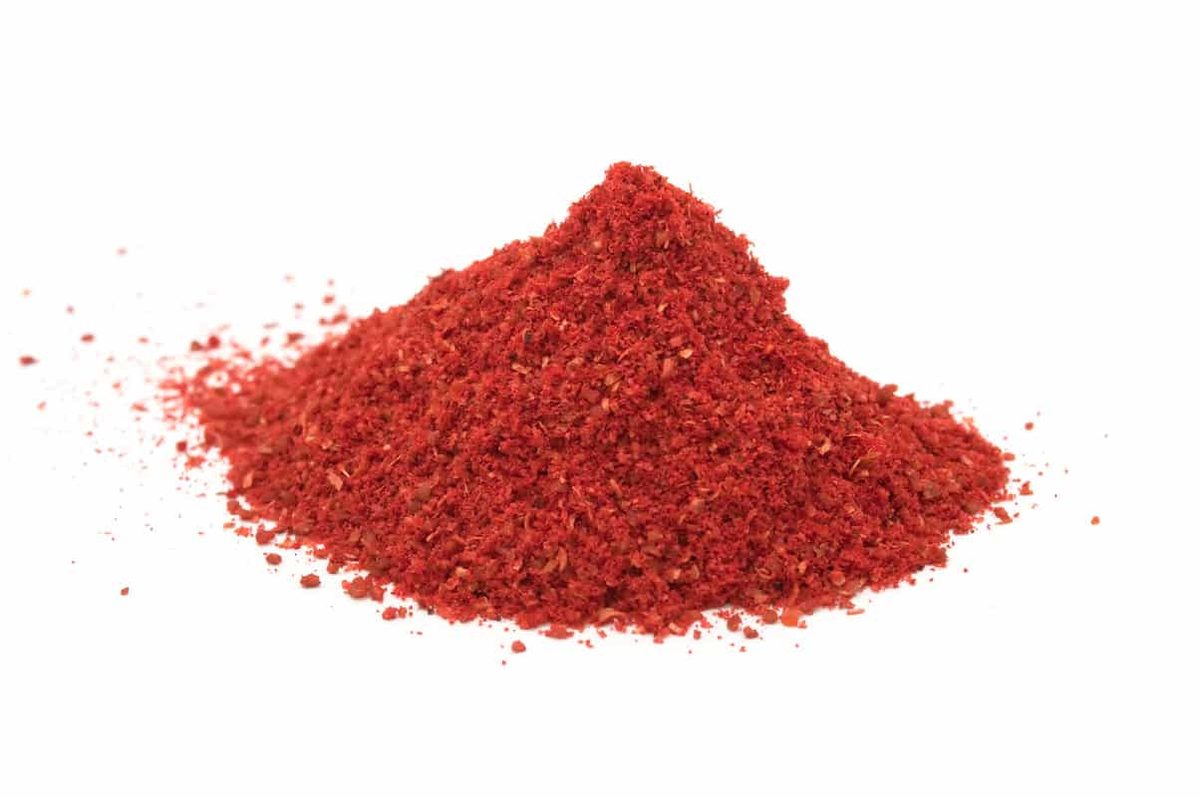
Tandoori masala is a ground spice blend made to be stirred into yogurt and used as a marinade for meat cooked in a tandoor, the clay oven that gives the blend its name.1 Recipes vary, but most build on coriander and cumin with chile, warm spices and something red. That red is where blends differ most: it can come from chiles, paprika or beet powder, or from synthetic dye.23 This page covers what goes into tandoori masala, where the color comes from, the history that is documented, and how to use, buy and store it.
At a glance
| What it is | A ground spice blend, usually mixed with yogurt as a marinade1 |
| Name | From the tandoor, a clay oven; “tandoori” names the cooking method1 |
| Common ingredients | Coriander, cumin, chile or paprika, fenugreek, cinnamon, plus others by recipe123 |
| Color | From chiles, paprika, turmeric or beet powder; some store blends use Red 4023 |
| Heat | Depends on the chile used; capsaicinoids carry the heat4 |
| Official standard | None found; the USDA spice-blend specification does not include it5 |
| Keeps | Up to 6 months (Anupy Singla)2 |
What is in it
No single recipe exists. Three published versions show the range:
| Version | What is listed | Color source | Source |
|---|---|---|---|
| Anjula Devi, 15-Minute Indian (2025) | Starts with 8 tbsp coriander seeds and 10 tbsp cumin seeds; whole spices dry-roasted 4 to 5 minutes, ground spices stirred in off the heat | Not visible in the excerpt checked | 1 |
| Anupy Singla, Indian As Apple Pie (2013) | Whole Kashmiri chiles (1 cup), coriander, cumin, peppercorns, cloves, cardamom, fenugreek, cinnamon and carom seeds; ground ginger, garlic, turmeric, unsmoked paprika and optional nutmeg | Chiles, turmeric and paprika | 2 |
| Woodland Foods Tandoori Spice Blend (label) | Salt, spices (including coriander, fenugreek, cinnamon, nutmeg), lemon peel, beet powder, tomato powder, paprika, garlic, cayenne, canola oil | Beet powder and paprika | 3 |
The two home recipes lean heavily on coriander and cumin; the Woodland label leads with salt.13 Fenugreek and cinnamon appear in both the Singla recipe and the Woodland label.23
Where the red comes from
The bright red associated with tandoori chicken is not built into the spices. Anupy Singla, a cookbook author who also sells spices, writes that the blend was originally made with a leaning toward turmeric and paprika, which gives a yellowish orange-red rather than a vivid red, and that the bright red of some store-bought blends comes from food dyes such as Red 40, which she found on one blend’s ingredient list.2 Woodland Foods colors its blend with beet powder and paprika instead.3 So the color on the plate says more about the blend chosen than about the dish. Check the label if you want to avoid synthetic dyes.
Flavor and the compounds behind it
Anjula Devi describes tandoori masala as pungent and complex, made of sweet aromatics and many less pungent spices.1 The aroma compounds belong to the individual spices:
| Spice | What has been measured or described | Source |
|---|---|---|
| Coriander seed | Linalool, 60 to 80% of the essential oil (review) | 6 |
| Cumin | Cuminaldehyde, 20 to 72% of the essential oil | 7 |
| Fenugreek | Strong, sweetish and somewhat bitter, with a characteristic curry aroma | 89 |
| Chile | Heat from capsaicinoids, chiefly capsaicin and dihydrocapsaicin | 4 |
| Turmeric | Curcumin gives it its yellow color | 10 |
No analysis of a tandoori masala blend as a whole was found.
History
What is documented concerns tandoori chicken and the restaurant most closely tied to it. Kundan Lal Gujral and Kundan Lal Jaggi, two cooks from Peshawar, in what is now northwest Pakistan, came to New Delhi after the 1947 Partition and opened a restaurant called Moti Mahal.11 Anupy Singla credits Moti Mahal with changing how the tandoor was used, since it was traditionally an oven for breads such as naan, and credits Gujral with first cooking marinated chicken in it.2 That is her account; NPR’s reporting focuses on a separate dispute, between the two founders’ families, over who invented butter chicken.11
Claims that tandoori chicken dates to the 1920s, or that it became popular in the United States in the 1960s, could not be traced to a source.
How tandoori masala is used
The core use is a yogurt marinade. Anjula Devi notes that blended with yogurt, the masala makes a marinade.1 Chicken, lamb, fish, paneer and vegetables all take it; that list is common practice rather than a sourced finding.
The oven. A tandoor runs far hotter than a home oven. Anupy Singla puts it at up to 900°F.2 At home, cooks commonly use the hottest oven setting, the broiler or a grill instead.
Butter chicken. NPR describes butter chicken as tandoori-roasted chicken doused in buttery tomato sauce.11 Tandoori masala seasons the chicken; the sauce is a separate step.
Technique. Anjula Devi dry-roasts the whole spices before grinding.1 Taste the marinade for salt before adding any if the blend contains salt, as the Woodland blend does.3
Buying and quality
The USDA’s specification for spice blends names fifteen blends and tandoori masala is not among them,5 and no other standard was found. Read the ingredient list for three things: whether salt comes first, how the blend is colored, and whether it includes the warm spices (cinnamon, cloves, cardamom) you expect.23
Storage
Anupy Singla says her homemade blend will last up to 6 months.2 That is one author’s guidance, not a measured shelf life. The University of California Cooperative Extension lists air, light, moisture and heat as what speeds flavor and color loss in spices.12 America’s Test Kitchen suggests the smell test: if it still smells strong, it is probably still potent.13
Safety
Lead in spices generally. A New York City health department review of 1,496 spice samples collected from 2008 to 2017 found detectable lead in more than half.14 The abstract does not break the results out by blend.
Health claims
Lists crediting tandoori masala with helping weight loss, relieving constipation or fighting cancer through capsaicin could not be traced to any regulator or systematic review, and this page makes no such claims.
Substitutes and comparisons
- Tandoori masala substitutes
- Tandoori masala vs. garam masala (see also garam masala)
- Tikka masala, the blend for the sauced dish
The individual spices: coriander, cumin, fenugreek, paprika, cayenne pepper, turmeric, cinnamon, cloves, cardamom, nutmeg, ginger, black pepper and garlic powder.
Footnotes
-
Anjula Devi, “Tandoori Masala”, 15-Minute Indian, 2025, via ckbk. app.ckbk.com · Publication ↩ ↩2 ↩3 ↩4 ↩5 ↩6 ↩7 ↩8 ↩9
-
Anupy Singla, “Why Your Tandoori Masala Doesn’t Need to be Bright Red”, Indian As Apple Pie, 2013. indianasapplepie.com · Merchant ↩ ↩2 ↩3 ↩4 ↩5 ↩6 ↩7 ↩8 ↩9 ↩10 ↩11
-
Woodland Foods, Tandoori Spice Blend, product page. shop.woodlandfoods.com · Merchant ↩ ↩2 ↩3 ↩4 ↩5 ↩6 ↩7 ↩8 ↩9
-
Bosland and Walker, “Measuring Chile Pepper Heat”, Guide H-237, New Mexico State University, 2010. pubs.nmsu.edu · Reference work ↩ ↩2
-
Commercial Item Description A-A-20001C, Spices and Spice Blends, USDA Agricultural Marketing Service, 2023. ams.usda.gov · Regulator ↩ ↩2
-
Al-Khayri et al., “Essential Oil from Coriandrum sativum: A Review”, Molecules, 2023. mdpi.com · Peer-reviewed ↩
-
P.C.M. Jansen, Cuminum cyminum, Plant Resources of South-East Asia (PROSEA). uses.plantnet-project.org · Reference work ↩
-
“Fenugreek”, Encyclopaedia Britannica. britannica.com · Reference work ↩
-
C.S. Tawan and N. Wulijarni-Soetjipto, Trigonella foenum-graecum, Plant Resources of South-East Asia (PROSEA). uses.plantnet-project.org · Reference work ↩
-
“Turmeric: Usefulness and Safety”, National Center for Complementary and Integrative Health, 2025. nccih.nih.gov · Regulator ↩
-
Diaa Hadid and Omkar Khandekar, “Who cooked up butter chicken? A court seeks the answer”, NPR, 2024. kpbs.org · Publication ↩ ↩2 ↩3
-
Anna Martin, “Add a Little Spice to Your Life! Part II”, University of California Cooperative Extension, San Joaquin County, 2002. ucanr.edu · Reference work ↩
-
“Keeping Spices and Dried Herbs Fresher Longer”, America’s Test Kitchen. americastestkitchen.com · Publication ↩
-
Hore et al., “A Spoonful of Lead: A 10-Year Look at Spices as a Potential Source of Lead Exposure”, Journal of Public Health Management and Practice, 2019. scholars.mssm.edu · Peer-reviewed ↩