Cooking · Cooking with
Cooking With Curry Powder: Bloom It, Read the Label, Match the Dish
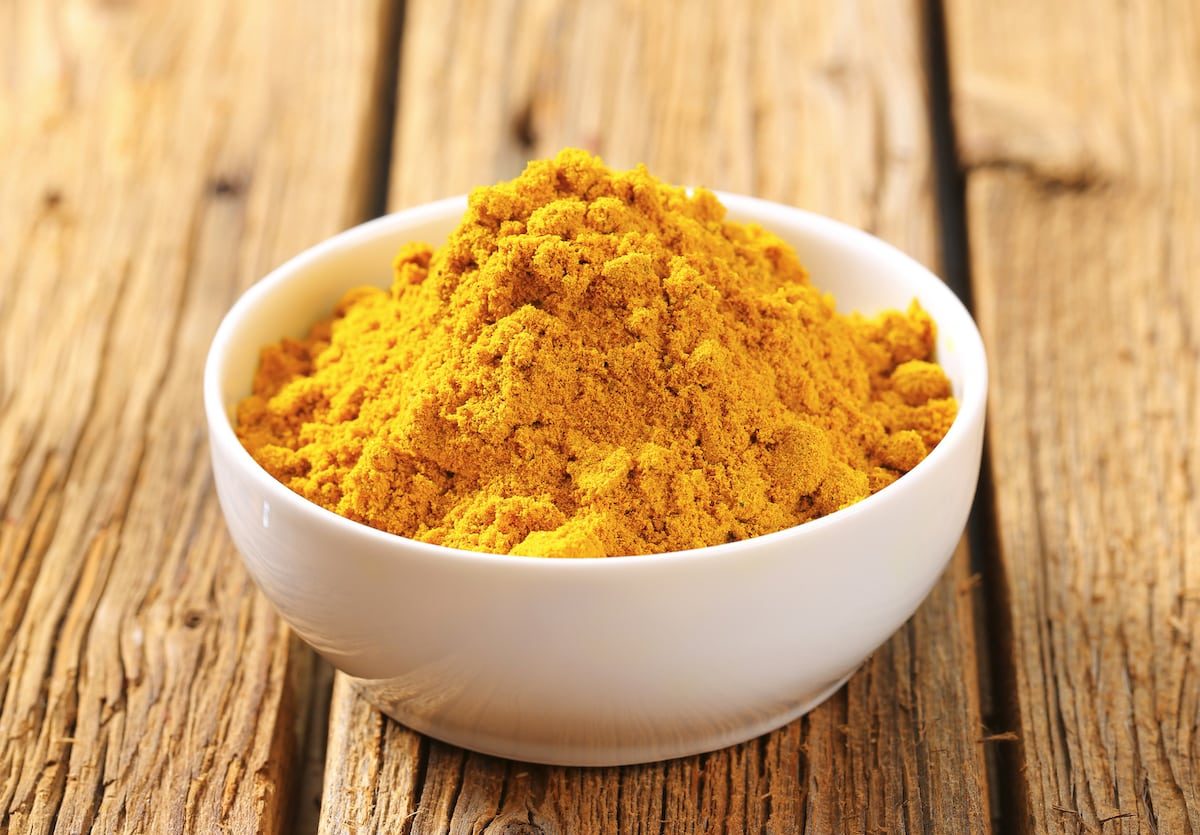
Curry powder is a ready-made blend, and the single biggest difference between a flat curry and a good one is what happens in the first few minutes: whether the powder gets cooked in fat before any liquid goes in. America’s Test Kitchen is blunt that dumping powdered spices straight into the pot gives a curry with a bland, musty flavor.1 This page covers that technique, how to read a label, how much to use, and where curry powder fits and where it doesn’t.
At a glance
| Question | Short answer |
|---|---|
| First step | Sauté onions or other fresh aromatics in fat, then bloom the powder in that fat.1 |
| How long to bloom | ATK: 30 seconds to several minutes.1 The Spice House: 30 to 60 seconds in hot oil for its blend.2 |
| Biggest risk | Ground spices burn fairly quickly and taste scorched.1 |
| Then | Add the saucy ingredients and bring to a simmer.1 |
| How much | The Spice House suggests about 1 to 2 teaspoons per serving of its homemade blend.2 No standard exists. |
| Is it hot? | Only if it contains chile; read the label.345 |
Bloom it in fat first
ATK’s method for curry powder, chili powder and other ground spices runs in three steps. First, sauté fresh aromatics such as onions in fat. Then cook the curry powder in that fat. Then add the liquid ingredients and bring everything to a simmer.1 ATK explains that many of the flavor compounds in spices are fat-soluble, which is why heating them in fat brings out their flavor.1
Watch the pan. ATK says ground spices burn fairly quickly and leave a scorched flavor,1 and NPR’s guide to Indian tempering puts it plainly: there is no way of saving a burned tempering.6 If the powder scorches, wipe out the pan and start that step again.
Recipes vary on timing:
| Source | Bloom time | Context |
|---|---|---|
| America’s Test Kitchen1 | 30 seconds to several minutes | Ground spices in general |
| The Spice House2 | 30 to 60 seconds in hot oil | Its toasted curry powder |
| Hank Shaw7 | A couple of minutes, stirring often | Jamaican curry powder for curry shrimp |
What about mixing it with liquid first?
A common tip says to stir curry powder into yogurt, coconut milk or stock before it goes into the dish. We found no tested source for doing that in place of blooming, and ATK’s method puts the liquid in after the powder has cooked in fat.1 Some cooks wet the powder into a paste so it is less likely to scorch in the pan; that is kitchen practice, not a sourced finding.
Long simmering changes the blend
Once the liquid is in, a curry usually simmers. That is not neutral for every spice in the blend. A 1992 study of household cooking found that black pepper’s pungent compound, piperine, fell by 50 to 60% when pepper was boiled for 15 to 30 minutes as part of a curry powder blend.8 That is one laboratory study, read as an abstract, and it measured one compound. It suggests a long-simmered curry loses some pepper bite, not that curry powder needs long cooking.
Read the label
Ingredient order tells you proportions. US labels list ingredients in descending order of predominance by weight.9 So the first ingredient is the largest.
Turmeric usually leads. The USDA’s purchasing specification lists turmeric first among the ingredients curry powder should include, followed by coriander, fenugreek, cinnamon, cumin, black pepper, ginger and cardamom, and says the list is not limited to those.3 Turmeric is first on both Jamaican labels checked for this site.45 A turmeric-heavy blend is not a tasteless one: turmeric’s own taste is described as bitter, slightly acrid, yet sweet,10 and USDA expects curry powder to taste warm and bitter.3 A common claim says a blend with turmeric listed first will be bland. We found no source that tests that.
Heat depends on chile. The USDA list contains no chile.3 Grace’s mild Jamaican powder lists none either, while Blue Mountain’s lists cayenne.45 Madras powders have a reputation for heat: Julia Fine describes 19th-century recipes “laden with turmeric, chili, and/or cayenne,”11 yet World Spice Merchants rates its own Madras blend only 2 out of 5 for heat.12 Chile, cayenne or red pepper in the ingredient list is the only reliable signal. See is curry powder spicy?.
Choose the style for the dish
There has never been one fixed combination of spices in curry powder.13 Two styles differ in ways that change a dish; for others, see Japanese curry powder and Malaysian curry powder.
| Style | What sets it apart | Read more |
|---|---|---|
| Jamaican | Allspice on both labels checked; Hank Shaw says Jamaican powders use more allspice and turmeric than Indian ones457 | Jamaican curry powder, Jamaican vs. Indian |
| Madras | Marketed historically as the spicier option11 | Madras curry powder |
Where curry powder fits
Britannica describes curry powder as a spice mixture adapted by British settlers in India, and notes that in India the spice mixtures are called masala and are made at home.14 Madhur Jaffrey went further in 1974, writing, as Atlas Obscura quotes her, that “no Indian ever uses curry powder.”13
That makes curry powder a natural fit for dishes that grew up around it. Mulligatawny is one: the Christian Science Monitor describes it as a soup created to cater to officers of the British Raj and says it can be made with commercial curry powder.15 Jamaican curries are another, built on Jamaican curry powder, as in Hank Shaw’s curry shrimp.7 For a regional Indian recipe that names its own spices, use the spices it names. For the blend Indian cooks do keep on hand, see garam masala vs. curry powder.
Making your own
The Spice House publishes a toasted curry powder made from whole coriander, cumin, black pepper, long pepper, fenugreek, brown mustard, cloves, fennel, dill seed, dried chiles, mace, Ceylon cinnamon, cardamom and grains of paradise, toasted in a dry pan over medium heat for about 3 minutes until fragrant and nutty, cooled, ground and sifted.2 Ground turmeric and ginger go in only after the whole spices are ground,2 so they are never toasted. The merchant says toasting warms the spices and releases essential oils.2
| The Spice House’s guidance for its blend2 | |
|---|---|
| Container | Airtight, in a cool, dark place |
| Best flavor | Within 3 months |
| Still usable | Up to about 6 months, with fading flavor |
| Amount | A 1:1 swap for store-bought curry powder, about 1 to 2 teaspoons per serving |
Those are one merchant’s figures for one recipe, not a tested shelf life.
How much to use
No standard amount exists, because no two blends are the same.13 The Spice House’s 1 to 2 teaspoons per serving is a reasonable place to begin with a homemade blend.2 With a store-bought blend that lists chile or cayenne, start at the low end and taste after the curry has simmered. That is a method suggestion, not a measured figure. If you overshoot, see too much curry powder.
Not yet measured
- Whether mixing curry powder with liquid before cooking improves or harms flavor compared with blooming in fat.
- How turmeric’s share in a blend affects how strongly a finished curry tastes.
- A home shelf life for store-bought curry powder measured on curry powder rather than spices in general.
Related
- Curry powder
- Too much curry powder
- Is curry powder spicy?
- Curry paste vs. curry powder
- Garam masala vs. curry powder
- Turmeric vs. curry powder
- Madras curry powder substitute
Footnotes
-
How to Bloom Spices, America’s Test Kitchen, 2023. americastestkitchen.com · Publication ↩ ↩2 ↩3 ↩4 ↩5 ↩6 ↩7 ↩8 ↩9 ↩10
-
Toasted Curry Powder, The Spice House. thespicehouse.com · Merchant ↩ ↩2 ↩3 ↩4 ↩5 ↩6 ↩7 ↩8
-
Commercial Item Description A-A-20001C, Spices and Spice Blends, USDA Agricultural Marketing Service, 2023. ams.usda.gov · Regulator ↩ ↩2 ↩3 ↩4
-
Grace Jamaican Style Mild Curry Powder, label ingredients via Kroger. kroger.com · Merchant ↩ ↩2 ↩3 ↩4
-
Blue Mountain Country Jamaican Curry Powder, label ingredients via H-E-B. heb.com · Merchant ↩ ↩2 ↩3 ↩4
-
Monica Bhide, “The Crackling Spices of Indian Tempering”, NPR, 2011. npr.org · Publication ↩
-
Hank Shaw, “Jamaican Curry Shrimp”, Hunter Angler Gardener Cook, 2022. honest-food.net · Publication ↩ ↩2 ↩3
-
Srinivasan, Sambaiah and Chandrasekhara, “Loss of active principles of common spices during domestic cooking”, Food Chemistry, 1992. agris.fao.org · Peer-reviewed ↩
-
21 CFR 101.4, Food; designation of ingredients, eCFR. ecfr.gov · Regulator ↩
-
Prasad and Aggarwal, “Turmeric, the Golden Spice”, Herbal Medicine: Biomolecular and Clinical Aspects, NCBI Bookshelf. ncbi.nlm.nih.gov · Reference work ↩
-
Julia Fine, “From Delhi to Durban: The Many Homes of Madras Curry Powder”, Diaspora Co., 2022. diasporaco.com · Merchant ↩ ↩2
-
Madras South Indian Curry, World Spice Merchants. worldspice.com · Merchant ↩
-
Rohini Chaki, “The Subversive, Surprising History of Curry Powder”, Atlas Obscura, 2019. atlasobscura.com · Publication ↩ ↩2 ↩3
-
“Curry”, Encyclopaedia Britannica, 2026. britannica.com · Reference work ↩
-
Phyllis Hanes, “British, Indian traditions blend in Mulligatawny Soup”, The Christian Science Monitor, 1985. csmonitor.com · Publication ↩