Seasonings · Profile
Nanami Togarashi: Is It Different From Shichimi? Name, Ingredients and Uses
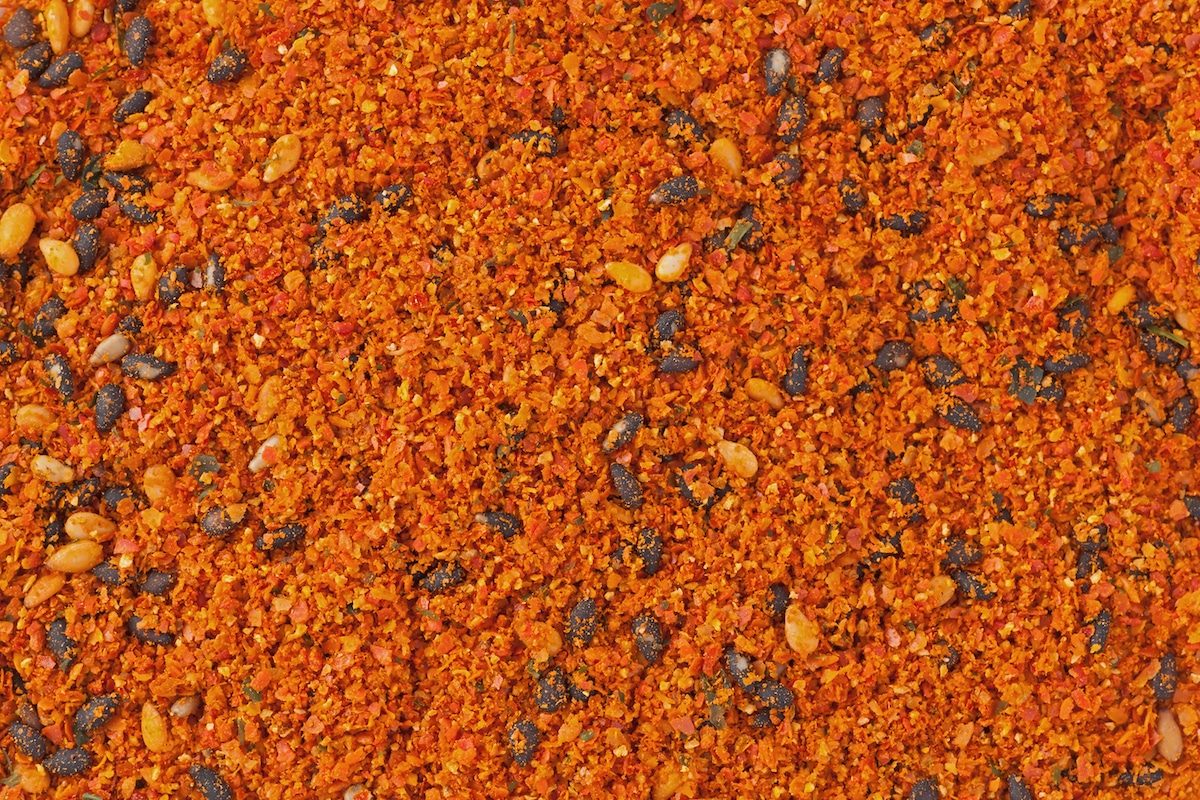
Nanami togarashi is another name for shichimi togarashi, the Japanese table seasoning of chile, sansho pepper, sesame and other aromatics.1 The two names are two readings of the same characters, 七味, “seven flavors.” Japanese speakers say shichimi; nanami is the name used on some packages sold outside Japan.2 What differs from jar to jar is the recipe, not the name. This page explains the naming, compares what is actually in products and recipes sold as nanami togarashi, and covers how to use it. For the blend’s history and its historic makers, see shichimi togarashi.
At a glance
| What it is | Another name for shichimi togarashi, Japanese seven-spice1 |
| Written | 七味 (唐辛子); read shichimi in Japan, also readable as nanami2 |
| Meaning | “Seven flavors”2; togarashi means chile pepper3 |
| Standard ingredients | Chile, sansho and sesame (Nippon.com, for shichimi)4 |
| Origin of the blend | Edo (Tokyo), 16254 |
| Main use | Table condiment for noodle soups, hot pots and grilled skewers15 |
| Allergen | Sesame, in every list below6 |
The name
Tomo, a Japanese blogger based in Niigata, explains that the characters 七味 can be read either shichimi or nanami, but that when they name the spice blend the reading is shichimi, and Japanese people do not call it nanami togarashi.2 Both readings mean “seven flavors.”2 A widely repeated claim says nanami means “seven seas.” Applied to this blend it does not: the characters are the same ones read shichimi, “seven flavors.”2
Why the second name abroad? Tomo reports that S&B’s shichimi has carried the name Nanami Togarashi on bottles sold outside Japan, a point that drew attention on Japanese social media, and passes on another writer’s suggestion that shichimi is too easily confused with ichimi (plain chile) by non-Japanese buyers.2 Tomo does not confirm the reason, and neither can this page. S&B’s Nanami Togarashi is sold in U.S. stores under that name.7
Just One Cookbook lists nanami togarashi simply as another name for shichimi togarashi, along with Japanese seven-spice.1
Is there a difference in ingredients?
A common claim says nanami togarashi has the same seven ingredients as shichimi but more orange peel, which makes it more citrusy. The sources checked for this page do not support that:
| Position | Source |
|---|---|
| Nanami and shichimi contain the same things; the seven ingredients of exported “nanami” differ by country, because hemp seed and poppy seed, common in shichimi, face import rules in some places | Tomo, japanese-products.blog2 |
| The main difference is that nanami togarashi uses a lower ratio of orange peel (about 1 teaspoon instead of 1 tablespoon in her recipe) | Kimberly Killebrew, The Daring Gourmet3 |
| Nanami has more orange peel than shichimi | No source found |
The one recipe source that addresses the ratio says less peel, not more, and the explanation from Japan is that there is no fixed difference at all. We have not found a Japanese maker that sells a product called nanami with a distinct recipe.
What’s in the jar
Three lists, each as its source gives it. The S&B label is the product actually sold as nanami togarashi in the United States.
| Ingredient | S&B Nanami Togarashi (U.S. label)7 | Shichimiya Honpo, Kyoto (shichimi)8 | The Daring Gourmet recipe3 |
|---|---|---|---|
| Red chile | Yes | Yes | 2 Tbsp flakes |
| Sansho (Japanese pepper) | Yes | Yes | 1 tsp sansho or Sichuan pepper |
| Black sesame | Yes | Yes | 2 tsp |
| White sesame | Yes | Yes | 2 tsp |
| Citrus peel | Orange peel | 1 Tbsp orange peel (about 1 tsp for nanami) | |
| Seaweed | Seaweed | Aonori | ½ sheet nori |
| Ginger | Yes | 1 tsp ground | |
| Hemp seed | Yes | ||
| Shiso | Green shiso | ||
| Poppy seed | ½ tsp |
The S&B nanami label has no hemp seed and no poppy seed,7 which fits Tomo’s account of export versions dropping ingredients that face import restrictions.2 It does have ginger, which Shichimiya’s shichimi does not.8 For four more ingredient lists, including Yagenbori’s, see shichimi togarashi.
Flavor
Chile brings the heat; the rest brings aroma. Shichimiya Honpo says that every ingredient in its blend except the chile was chosen for its fragrance.8 Nippon.com describes sansho’s contribution as a numbing kind of heat.4 A blend with orange peel and ginger, like the S&B nanami, tastes bright and zesty up front, then nutty from the sesame, with the chile arriving last and the sansho leaving a light tingle. That description is ours.
History in brief
Nippon.com traces the blend to 1625, when it was devised at Yagenbori, near the Ryogoku bridge in Edo, and says it was first sold at temple and shrine gates on the strength of its supposed medicinal value.4 Nippon.com lists chile, sansho and sesame as the standard members; the rest vary.4 “Nanami” is not a separate tradition with its own origin; it is a different reading of the same name.2 The full history is on the shichimi togarashi page.
How to use it
Just One Cookbook lists ramen, udon and soba, gyudon, tonjiru, yakitori and hot pots as the usual places for it.1 Katzer describes it as mainly a table condiment, sprinkled over noodle soups and hot pots.5
Beyond those, these are cooking judgments rather than sourced findings: it suits eggs, rice, grilled and fried foods, roasted vegetables, buttered popcorn, french fries and avocado. It is best sprinkled on at the table rather than cooked in, since the aroma of the peel and sansho is what you are paying for.
Buying and storage
- Read the label. Products called nanami togarashi and shichimi togarashi vary in what they contain (see the table). Hemp seed and shiso appear in Shichimiya’s shichimi but not on the S&B nanami label.78
- Storage. For her homemade blend, Killebrew advises an airtight container and use within a few weeks for best flavor.3 Just One Cookbook advises keeping shichimi away from humidity and moisture in a cool place.1 No shelf life for commercial blends was found.
Safety
Every list above includes sesame, which the FDA lists among the major food allergens.6
The blends include seaweed (nori or aonori). The NIH Office of Dietary Supplements lists seaweed, including nori, among the best food sources of iodine, and says amounts vary greatly between species.9 No one has published an iodine figure for nanami or shichimi togarashi, so this page does not suggest it as an iodine source.
Health claims
The ingredients of nanami togarashi are often credited with benefits for cholesterol, digestion, arthritis, eczema and thyroid health, and with supplying minerals, vitamins and protein. We found no evidence that the blend, in the amounts sprinkled on food, supplies meaningful nutrients or treats any condition, so this page makes no such claims.
Substitutes and related pages
- Shichimi togarashi, the same blend under its Japanese name, and shichimi togarashi substitutes
- Sansho pepper and sansho pepper substitutes; Szechuan pepper
- Red pepper flakes, black sesame seeds, sesame seeds, ginger
- Furikake and Japanese spices
Footnotes
-
Namiko Hirasawa Chen, “Shichimi Togarashi”, Just One Cookbook. justonecookbook.com · Publication ↩ ↩2 ↩3 ↩4 ↩5 ↩6
-
Tomo, “Nanami Togarashi vs. Shichimi: What’s the Difference?”, japanese-products.blog, 2021. japanese-products.blog · Publication ↩ ↩2 ↩3 ↩4 ↩5 ↩6 ↩7 ↩8 ↩9 ↩10
-
Kimberly Killebrew, “Shichimi Togarashi (Japanese 7 Spice Blend)”, The Daring Gourmet. daringgourmet.com · Publication ↩ ↩2 ↩3 ↩4
-
七味唐辛子の七つ全部言える?, Japan Data, Nippon.com. nippon.com · Publication ↩ ↩2 ↩3 ↩4 ↩5
-
Gernot Katzer, “Sichuan pepper (Zanthoxylum species)”, Gernot Katzer’s Spice Pages. gernot-katzers-spice-pages.com · Reference work ↩ ↩2
-
Food Allergies, U.S. Food and Drug Administration. fda.gov · Regulator ↩ ↩2
-
S&B Nanami Togarashi Assorted Chili Pepper Seasoning, H-E-B (retailer product page). heb.com · Merchant ↩ ↩2 ↩3 ↩4
-
京名物七味唐がらし, Shichimiya Honpo. shichimiya.co.jp · Merchant ↩ ↩2 ↩3 ↩4
-
Iodine: Fact Sheet for Health Professionals, Office of Dietary Supplements, NIH. ods.od.nih.gov · Regulator ↩