Seasonings · Profile
Shichimi Togarashi: Japan’s Seven-Spice Blend, What’s in It and Where It Came From
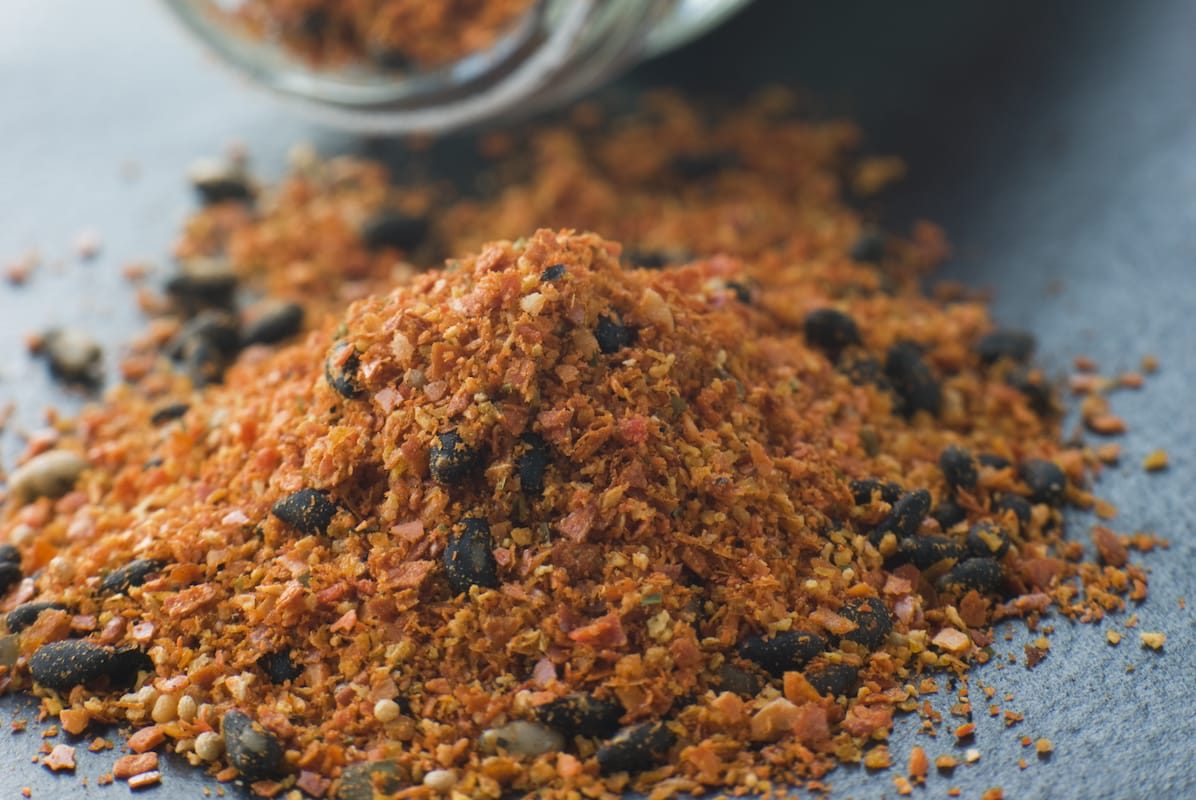
Shichimi togarashi is a Japanese table seasoning of ground chile mixed with sansho pepper, sesame and other aromatics. It is also sold as Japanese seven-spice or nanami togarashi.1 It is traced to a shop in Edo, now Tokyo, in 1625.23 There is no single recipe: the three historic makers each use a different seven. This page sets their ingredient lists side by side, covers the history that can be documented, and explains how the blend is used.
At a glance
| What it is | A blend of chile with sansho, sesame and other ingredients21 |
| Standard ingredients | Chile, sansho and sesame2 |
| Origin | 1625, Yagenbori, Edo (Tokyo)23 |
| Historic makers | Yagenbori (Tokyo), Shichimiya Honpo (Kyoto), Yawataya Isogoro (Nagano)21 |
| Other names | Japanese seven-spice, nanami togarashi1 |
| Related | Ichimi togarashi, chile alone1 |
| Main use | Table condiment for noodle soups, hot pots, rice bowls and grilled skewers14 |
What’s in it
Nippon.com, comparing the blends of the three historic shops, calls chile, sansho and sesame the standard members; the rest vary.2 Here are four published lists, each as its source gives it:
| Ingredient | Yagenbori, Tokyo (maker)5 | Shichimiya Honpo, Kyoto (maker)6 | Just One Cookbook1 | Katzer’s Spice Pages4 |
|---|---|---|---|---|
| Red chile | Yes | Yes | Yes | Yes |
| Roasted red chile | Yes | |||
| Sansho | Yes | Yes | Yes | Yes (as Sichuan pepper) |
| Black sesame | Yes | Yes | White and/or black | Yes |
| White sesame | Yes | White and/or black | Yes | |
| Citrus peel | Mandarin peel (chinpi) | Mandarin orange peel | Tangerine or orange peel | |
| Hemp seed | Yes | Yes | Yes | |
| Poppy seed | Yes | Yes | ||
| Nori or aonori | Aonori | Nori | Nori | |
| Shiso | Green shiso |
Yagenbori’s mandarin peel is made from the peel of the unshu mandarin.5 Just One Cookbook adds that some regional blends use ginger, yuzu peel, shiso or poppy seed.1 None of these lists is “the” recipe; they show the range.
Shichimi, ichimi and nanami
Ichimi is red chile alone; shichimi is chile with other spices.1 Just One Cookbook lists nanami togarashi as another name for shichimi.1 See nanami togarashi.
Not a cousin of five-spice
Despite the similar English names, shichimi has almost nothing in common with Chinese five-spice powder. Britannica lists five-spice as fennel seed, cassia, cloves, star anise and Szechuan pepper.7 Set against the table above, the two blends share nothing but a Zanthoxylum pepper (Szechuan pepper in one, sansho in the other), and five-spice has no chile.
Flavor
Chile brings the heat; everything else brings aroma. Shichimiya Honpo says every ingredient in its blend except the chile was chosen for fragrance, that its blend aims for aroma over heat, and that the quality of the sansho decides the flavor.6 Yagenbori, which uses both raw and roasted chile, says roasting mellows the chile’s heat and brings out a toasty aroma.5 Nippon.com describes sansho’s contribution as a numbing kind of heat.2 PepperScale, which translates the name as “seven-flavored pepper,” calls the blend pretty spicy compared with other Japanese foods.8
To us, a good shichimi tastes bright and citrusy first, then toasty and nutty from the seeds, with the chile arriving last. That is our description.
History
Nippon.com, a Japanese publication, gives the generally told account: in 1625, Karashiya Tokuemon, working near the Ryogoku bridge in Edo, took his cue from herbal medicine (kampo) and blended chile with various other ingredients.2 The district was called Yagenbori after its V-shaped moat, which resembled a yagen, a tool for grinding crude drugs into powder.2 At first the blend was sold at temple and shrine gates on the strength of its supposed medicinal benefits.2 Yagenbori, the shop that still trades under that name, gives the same founding year, 1625, and names Tokuemon as its founder.3 PepperScale gives the same year and shop.8
Nippon.com names Yagenbori, Yawataya Isogoro in Shinshu (Nagano) and Shichimiya Honpo in Kyoto as Japan’s “three great shichimi.”2 Shichimiya Honpo says it was founded in the Meireki era of the Edo period.9
Two claims often repeated could not be traced: that chiles were used only as medicine in Japan until 1625, and that the blend’s popularity took off with soba. This page does not present either as fact.
How shichimi togarashi is used
Just One Cookbook lists ramen, udon and soba, gyudon, tonjiru, yakitori and hot pots as the usual places for it.1 Katzer describes it as mainly a table condiment for noodle soups and hot pots.4 PepperScale adds sushi to the list of dishes it is shaken over.8
These are cooking judgments, not measured facts: it suits anything grilled, fried or rich, including chicken skewers, tempura, karaage, seared tuna, roasted vegetables and buttered popcorn. Sprinkle it on at the table rather than cooking it in. For rice, pair it with furikake or gomasio rather than replacing them.
Buying and storage
Read the ingredient list, since blends differ (see the table above). Just One Cookbook advises keeping it away from humidity and moisture and storing it in a cool place.1 No source gives a shelf life. As a kitchen check, smell it: a blend that smells only of chile has lost much of its character.
Safety
Every list above includes sesame, which the FDA lists among the major food allergens.10 Check the label if you avoid sesame.
Several blends include nori or aonori. The NIH Office of Dietary Supplements lists seaweed, including nori, among the best food sources of iodine, and says amounts vary greatly between seaweeds.11 No one has published an iodine figure for shichimi, so this page does not suggest it as an iodine source.
Health claims
Shichimi was first sold on its supposed medicinal virtues,2 and its ingredients are often credited with benefits for bones, digestion and the thyroid. We found no evidence that the blend, in the amounts sprinkled on food, supplies meaningful vitamins or minerals or treats any condition, so this page makes no such claims.
Substitutes and related pages
A mix of chile flakes, a little ground sansho or Sichuan pepper, sesame and grated citrus zest gets close; no source gives a tested ratio. See shichimi togarashi substitutes, sansho pepper, Szechuan pepper, red pepper flakes, black sesame seeds, poppy seeds, shiso and Japanese spices.
Footnotes
-
Namiko Hirasawa Chen, “Shichimi Togarashi”, Just One Cookbook. justonecookbook.com · Publication ↩ ↩2 ↩3 ↩4 ↩5 ↩6 ↩7 ↩8 ↩9 ↩10 ↩11 ↩12
-
七味唐辛子の七つ全部言える?, Japan Data, Nippon.com. nippon.com · Publication ↩ ↩2 ↩3 ↩4 ↩5 ↩6 ↩7 ↩8 ↩9 ↩10 ↩11 ↩12
-
やげん堀 七味唐辛子本舗, Yagenbori. yagenbori.jp · Merchant ↩ ↩2 ↩3
-
Gernot Katzer, “Sichuan pepper (Zanthoxylum species)”, Gernot Katzer’s Spice Pages. gernot-katzers-spice-pages.com · Reference work ↩ ↩2 ↩3
-
七味について, Yagenbori. yagenbori.jp · Merchant ↩ ↩2 ↩3
-
京名物七味唐がらし, Shichimiya Honpo. shichimiya.co.jp · Merchant ↩ ↩2
-
Tony Hill, “Five-spice powder”, Encyclopaedia Britannica. britannica.com · Reference work ↩
-
Matt Bray, “What Is Shichimi Togarashi? The Story Behind The Spice”, PepperScale, 2022. pepperscale.com · Publication · PepperScale is also owned by Matt Bray, the editor of this site. ↩ ↩2 ↩3
-
七味家本舗, Shichimiya Honpo. shichimiya.co.jp · Merchant ↩
-
Food Allergies, U.S. Food and Drug Administration. fda.gov · Regulator ↩
-
Iodine: Fact Sheet for Health Professionals, Office of Dietary Supplements, NIH. ods.od.nih.gov · Regulator ↩