Spice Substitutes · Substitutes
Sansho Pepper Substitutes: Replacing Its Tingle and Its Citrus
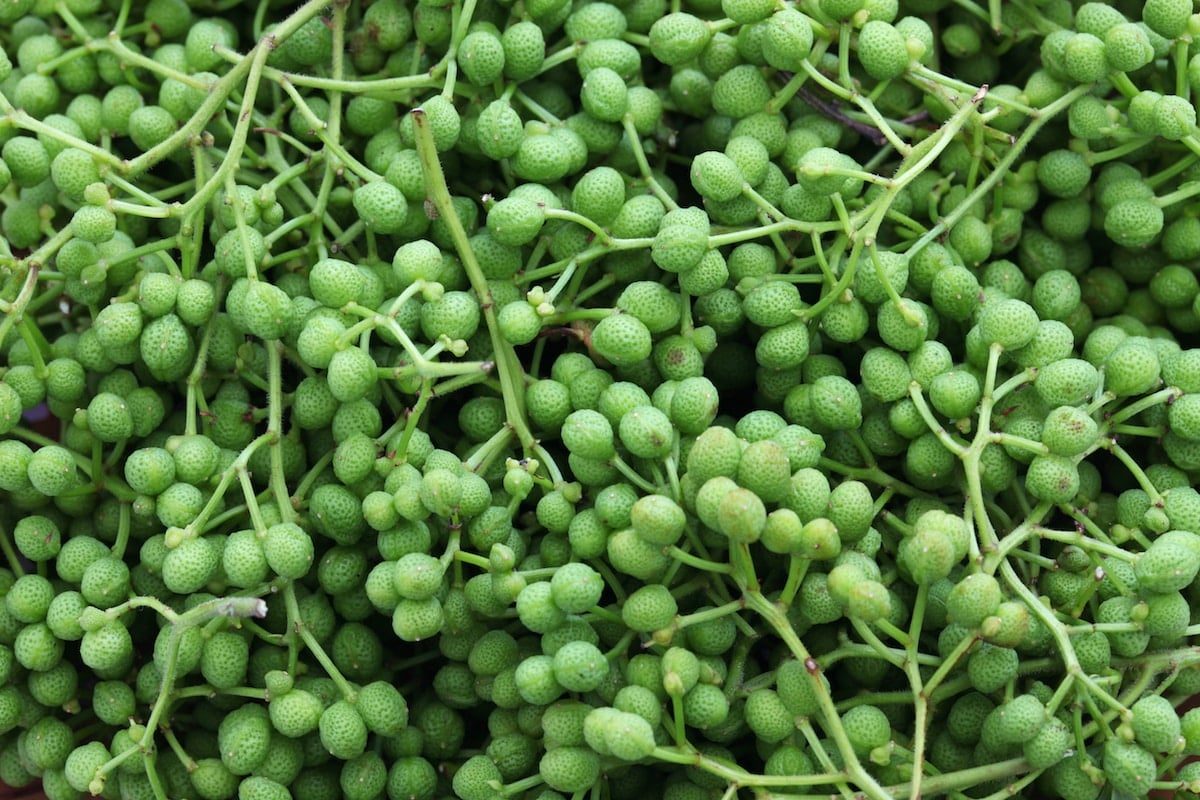
Sansho is the dried fruit husk of Zanthoxylum piperitum, a shrub or tree native from China to South Korea and Japan.12 It is in the rue and citrus family, not the black pepper family.3 Just One Cookbook describes its “strong citrus flavor” with “a pleasant, lasting tingle and a cooling sensation.”4 In Japan it is sprinkled on grilled eel: Just One Cookbook’s unagi don offers ground sansho as an optional topping.5 The Spice House names yakitori and grilled eel as ideal pairings and suggests it to offset fatty flavors in pork or mushrooms.6
A substitute has two things to cover: the tingle and the citrus. Only one spice does both.
Quick answer
| What sansho is doing | Best substitute | Starting amount, per 1 part sansho | Treatment |
|---|---|---|---|
| Tingle and citrus, sprinkled on grilled or rich food | Ground Sichuan pepper | 3/4 part, then taste | Method |
| One ingredient in a homemade shichimi | Sichuan pepper | 1 part | Attributed |
| Citrus and pepper, no tingle | Lemon zest with black pepper, or lemon pepper | A pinch at a time | Method |
| A ready-made sprinkle that contains sansho | Shichimi or nanami togarashi | To taste, as a sprinkle | Method |
How the ratios on this page are labeled
Every ratio carries one of four labels.
- Computed: based on a measurable physical relationship, with the source named.
- Attributed: a named source publishes this ratio. We quote it as theirs.
- Disputed: named sources give different answers to the same swap. We show each one and do not average them.
- Method: we found no published ratio. We give a direction and a cautious starting point, and say so.
The one Attributed figure is from a blend recipe that lists sansho and Sichuan pepper as alternatives. We found no published ratio for replacing sansho on its own.
If sansho is there for the tingle and the citrus
1. Sichuan pepper
Sichuan pepper is the closest substitute because it comes from the same genus and does the same thing. It is the dried fruit husk of several species of prickly ash (Zanthoxylum), in the rue and citrus family;3 Gernot Katzer names Z. bungeanum, Z. simulans, Z. planispinum and Z. armatum as the species most used in China.2 Katzer describes Korean chopi, the same species as Japanese sansho, as “very similar to Chinese jiao.”2
Why it works. Most Zanthoxylum species make pungent compounds called alkamides, chiefly the sanshools, which give these spices their tingling, numbing bite; Katzer reports total amide content up to 3 percent in Z. piperitum.2 The Spice House says sansho and Sichuan pepper “both provide a slight tingle and numbness sensation on the tongue.”6 Their aromas overlap but are not the same. Katzer lists geraniol, linalool, cineol and citronellal in the essential oil of Chinese Sichuan pepper,2 while for unripe Japanese sansho fruit he reports β-phellandrene (42 percent), d-limonene (23 percent) and β-pinene (11 percent) as the main components.2
Where it falls short. Just One Cookbook says the Chinese pepper “has a punchy and strong flavor” while the Japanese pepper “is more delicate.”4 The Spice House calls the two “very different in flavor.”6 Expect a stronger, more numbing result and less of sansho’s lemony lift.
Like sansho, Sichuan pepper is sold as husks with the seeds removed; Katzer notes the seeds are discarded largely for their gritty texture.2 The Woks of Life recommends toasting the peppercorns lightly before grinding, grinding your own, and warns that ground Sichuan pepper loses its potency after a few months.7 It also notes that green Sichuan peppercorns usually give a stronger numbing sensation than red ones,7 so start lower if you have green.
Ratio (Attributed, in a blend): The Daring Gourmet’s shichimi togarashi recipe lists “1 teaspoon sanshō or sichuan peppercorns,”8 treating them as interchangeable at the same amount inside the blend. PepperScale’s homemade shichimi togarashi uses Szechuan peppercorns and no sansho at all: 3 teaspoons, the same amount as its ground red chili.9 That is a recipe amount, not a published swap ratio, so it does not change the 1 part above.
Ratio (Method, on its own): No published ratio was found for using Sichuan pepper in place of sansho as a finishing spice. Because sources describe the Chinese pepper as punchier,4 start with about three quarters as much, taste, and add more. The Woks of Life notes that in small quantities the numbing effect is not noticeable,7 so taste a real bite of the dish, not a lick of the spoon.
2. Other Zanthoxylum peppers
Nepal’s timur (Z. armatum) is one of the species used for Sichuan pepper,2 and it also tingles. Katzer says its aroma “reminds more of rose and cassia than to lemon,” and that the Nepali spice is significantly more pungent than the Chinese ones.2 Use it only if that floral note suits the dish. See timut pepper.
Ratio (Method): No published ratio was found. Start with half as much and taste.
If sansho is there for citrus and pepper only
If you have no Zanthoxylum pepper at all, you can replace the citrus and some of the bite, but not the tingle.
1. Lemon zest and black pepper
Lemon’s aroma is dominated by limonene: one analysis of a cold-pressed lemon oil found limonene at 65.65 percent.10 Limonene is also a main component of unripe sansho fruit, at 23 percent in the figures Katzer reports.2 Black pepper adds bite, but from a different compound: Britannica says its flavor comes principally from piperine.11 Neither tingles. Katzer notes that outside Japan, in teppanyaki, sansho is “often substituted by the cheaper white pepper,”2 which shows the swap is made, though not that it tastes the same. See white peppercorns.
Ratio (Method): No published ratio was found. In our judgment, start with a pinch of finely grated fresh lemon zest and a smaller pinch of ground black or white pepper for each pinch of sansho, then adjust. Fresh zest is more aromatic than dried; that is kitchen judgment.
2. Lemon pepper seasoning
Commercial lemon pepper is mostly salt and black pepper. McCormick’s label lists salt, black pepper, citric acid, onion, sugar and garlic among its ingredients, with lemon oil further down,12 and gives 170 mg of sodium per 1/4 teaspoon.13 That is about 680 mg per teaspoon by arithmetic. Using it as a straight swap for sansho will salt the dish.
Ratio (Method): No published ratio was found. Use a pinch at a time, and cut the dish’s other salt. A homemade mix of zest and pepper (above) avoids the salt.
If you want a ready-made sprinkle
Shichimi or nanami togarashi
These blends contain sansho. S&B’s Nanami Togarashi label lists chili pepper, orange peel, black and white sesame, Japanese pepper, ginger and seaweed,14 and Just One Cookbook lists nanami togarashi as another name for shichimi.15 Nippon.com names sansho as one of shichimi’s standard ingredients, alongside chile and sesame.16 The heat in the blend comes mainly from chile, with sansho in a smaller amount (in The Daring Gourmet’s recipe, 1 teaspoon of sansho to 2 tablespoons of chili flakes8). PepperScale likewise says the heat “comes almost entirely from the red chili pepper,” with sansho adding at most a mild kick.17 So the blend adds more chile heat than tingle.
Ratio (Method): No published ratio was found. Use it as a finishing sprinkle, to taste, in dishes that can take chile heat. It will not stand in for sansho in a delicate dish.
What isn’t known
- No published study compares the tingling strength of sansho and Sichuan pepper, and no source we found gives a ratio for replacing one with the other outside a blend recipe.
- It is often said that sansho has a stronger citrus note than Sichuan pepper. Sources describe sansho as citrusy and the Chinese pepper as punchier,4 but none measures the citrus in both.
- How sanshools relate chemically to piperine, black pepper’s pungent compound, is not covered by the sources reviewed here, so this page makes no claim about it.
Related
- Sansho pepper, Szechuan pepper and Szechuan pepper substitutes
- Timut pepper, white peppercorns, black pepper
- Lemon pepper and lemon pepper substitutes
- Shichimi togarashi, shichimi togarashi substitutes, nanami togarashi
- Japanese spices, too much pepper?
Footnotes
-
Zanthoxylum piperitum (L.) DC., Plants of the World Online, Royal Botanic Gardens, Kew. powo.science.kew.org · Reference work ↩
-
Sichuan pepper (Zanthoxylum species), Gernot Katzer’s Spice Pages. gernot-katzers-spice-pages.com · Reference work ↩ ↩2 ↩3 ↩4 ↩5 ↩6 ↩7 ↩8 ↩9 ↩10 ↩11
-
Petruzzello, Sichuan pepper, Encyclopaedia Britannica. britannica.com · Reference work ↩ ↩2
-
Chen, Sansho Pepper, Just One Cookbook, 2024. justonecookbook.com · Publication ↩ ↩2 ↩3 ↩4
-
Chen, Unagi Don, Just One Cookbook, 2025. justonecookbook.com · Publication ↩
-
Sansho Japanese Pepper, The Spice House. thespicehouse.com · Merchant ↩ ↩2 ↩3
-
Sichuan Peppercorns, The Woks of Life, 2022. thewoksoflife.com · Publication ↩ ↩2 ↩3
-
Killebrew, Shichimi Togarashi (Japanese 7 Spice Blend), The Daring Gourmet. daringgourmet.com · Publication ↩ ↩2
-
Matt Bray, “Homemade Shichimi Togarashi Seasoning”, PepperScale, 2023. pepperscale.com · Publication · PepperScale is also owned by Matt Bray, the editor of this site. ↩
-
Ojeda de Rodríguez et al., Composition of Venezuelan lemon essential oil, Revista de la Facultad de Agronomía (LUZ), 1998. produccioncientifica.luz.edu.ve · Peer-reviewed ↩
-
Black pepper, Encyclopaedia Britannica. britannica.com · Reference work ↩
-
McCormick Lemon & Pepper Seasoning, McCormick. mccormick.com · Merchant ↩
-
McCormick Signature Seasonings Lemon Pepper, label as listed by Stop & Shop. stopandshop.com · Merchant ↩
-
S&B Nanami Togarashi, ingredient list as listed by H-E-B. heb.com · Merchant ↩
-
Chen, Shichimi Togarashi, Just One Cookbook, 2023. justonecookbook.com · Publication ↩
-
七味唐辛子の七つ全部言える? (Japan Data), Nippon.com. nippon.com · Publication ↩
-
Matt Bray, “What Is Shichimi Togarashi? The Story Behind The Spice”, PepperScale, 2022. pepperscale.com · Publication · PepperScale is also owned by Matt Bray, the editor of this site. ↩