Spice Substitutes · Substitutes
Shichimi Togarashi Substitutes: Rebuilding the Heat, the Tingle and the Citrus
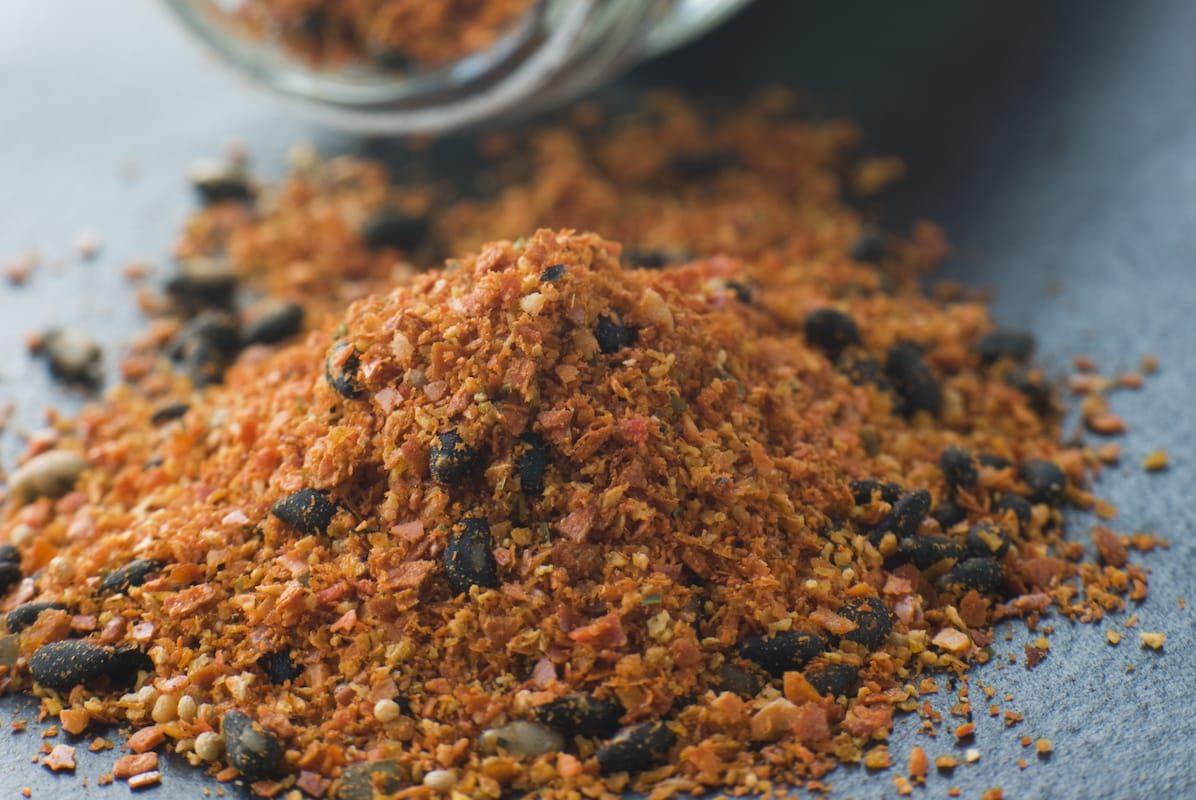
Shichimi togarashi, also sold as Japanese seven-spice, is a Japanese table blend built on chile.1 Nippon.com, comparing the blends of Japan’s historic makers, names chile, sansho and sesame as the standard ingredients and says the rest vary.2 Just One Cookbook lists ramen, udon, soba, gyudon, tonjiru, yakitori and hot pots as where it usually goes.1 It does three things at once: chile heat, the tingling bite of sansho, and the aroma of citrus peel, seeds and seaweed. A substitute needs to cover the parts your dish relies on.
Quick answer
| What the shichimi is doing | Best substitute | Starting amount, per 1 part shichimi | Treatment |
|---|---|---|---|
| All of it, at the table | Nanami togarashi (the same blend under another name) | 1 part | Method |
| All of it, from your pantry | Homemade blend (The Daring Gourmet’s proportions) | 1 part | Attributed |
| Heat only | Ichimi togarashi or red pepper flakes | 1/2 part, then taste | Method |
| Tingle and citrus without much heat | Ground sansho or Sichuan pepper plus orange zest | A pinch | Method |
| Sesame crunch and savor on rice or fish | Furikake plus a pinch of chile | 1 part | Method |
How the ratios on this page are labeled
Every ratio carries one of four labels.
- Computed: based on a measurable physical relationship, with the source named.
- Attributed: a named source publishes this ratio. We quote it as theirs.
- Disputed: named sources give different answers to the same swap. We show each one and do not average them.
- Method: we found no published ratio. We give a direction and a cautious starting point, and say so.
No published source gives a ratio for replacing shichimi with another product. The one Attributed figure here is a recipe for making it.
What shichimi contains
Recipes vary from maker to maker. Three published ingredient lists:
| Ingredient | Shichimiya Honpo, Kyoto (maker)3 | S&B Nanami Togarashi, US label4 | The Daring Gourmet recipe5 |
|---|---|---|---|
| Red chile | Yes | Yes | 2 tablespoons red chili flakes |
| Sansho (Japanese pepper) | Yes | Yes | 1 teaspoon “sanshō or sichuan peppercorns” |
| Citrus peel | Orange peel | 1 tablespoon dried orange peel | |
| White sesame | Yes | Yes | 2 teaspoons |
| Black sesame | Yes | Yes | 2 teaspoons |
| Seaweed | Aonori | Seaweed | ½ sheet roasted nori, crumbled |
| Ginger | Yes | 1 teaspoon ginger powder | |
| Hemp seed | Yes | ||
| Poppy seed | ½ teaspoon | ||
| Green shiso | Yes |
Yagenbori, the Tokyo shop that traces the blend to 1625, lists roasted chile among its ingredients and says roasting mellows the chile’s heat;6 its citrus peel is made from the peel of the unshu mandarin.6 Shichimiya Honpo says that apart from the chile, every ingredient it uses was chosen for aroma.3
Why the sansho matters. Sansho is the fruit of Zanthoxylum piperitum. Like other Zanthoxylum spices, it owes its pungency to compounds called sanshools, and Gernot Katzer reports total amide content as high as 3 percent in this species.7 Nippon.com describes the result as a heat that seems to numb the tongue.2 Chile flakes alone will not reproduce it.
If you need the whole blend
1. Nanami togarashi
This is not really a substitute. Just One Cookbook lists nanami togarashi as another name for shichimi togarashi,1 and Tomo, a Japanese writer, explains that the characters 七味 can be read as both shichimi and nanami.8 Accounts differ on whether products sold under the two names differ. The Daring Gourmet says the two use the same ingredients in slightly different ratios, with nanami using less orange peel.5 Tomo says the contents are the same, though export versions of the blend vary by country.8 No source we found supports the common claim that nanami has a stronger citrus flavor. See nanami togarashi.
Ratio (Method): Use it one to one. Because recipes vary by brand, taste a pinch first.
2. Make your own
You need, at minimum, the three standard ingredients: chile, sansho and sesame.2 Citrus peel and seaweed get you most of the rest.
If you have no sansho, Sichuan pepper is the closest replacement. Katzer describes Korean chopi, the same species as Japanese sansho, as “very similar to Chinese jiao,”7 the Chinese Sichuan pepper, and The Daring Gourmet’s recipe lists “sanshō or sichuan peppercorns” at the same amount.5
Ratio (Attributed): The Daring Gourmet’s recipe: 2 tablespoons red chili flakes, 1 tablespoon dried orange peel, 2 teaspoons each of white and black sesame seeds, 1 teaspoon sansho or Sichuan peppercorns, 1 teaspoon ground ginger, ½ teaspoon poppy seeds and ½ sheet of roasted nori, crumbled.5 It warns that the blend is hot and suggests using less chile to taste.5 Use the result as you would shichimi.
If you need the heat only
1. Ichimi togarashi
Ichimi is red chile on its own.1 It gives shichimi’s heat with none of the tingle or aroma.
Ratio (Method): No published ratio was found. In shichimi the chile is diluted by the other ingredients (in The Daring Gourmet’s recipe it is 6 of about 15½ teaspoons, before the nori5), so pure chile is hotter spoon for spoon. Start with half as much and taste.
2. Red pepper flakes or gochugaru
Ordinary red pepper flakes do the same job as ichimi. They are coarser, and in our judgment their heat is sharper. Korean gochugaru varies in heat; see red pepper flakes substitutes for how hot each is.
Ratio (Method): No published ratio was found. Start with half as much red pepper flakes as the shichimi called for, or the same amount of a mild gochugaru, and taste.
3. PepperScale’s quick mixes
PepperScale offers two pinch-hitter mixes: 1 teaspoon crushed red pepper with 1/4 teaspoon sesame seeds and a pinch of black pepper, or a much spicier version of 1/2 teaspoon cayenne with 1/4 teaspoon each sesame seeds and black pepper.9 It warns that these lose the complexity of the real blend.9 In our reading, the black pepper is there for bite; nothing in either mix gives sansho’s tingle.
Ratio (Attributed formula, Method amount): PepperScale gives the mixes but not how much of each replaces a given amount of shichimi. Start with half the shichimi amount, as above, and taste.
If you need the tingle and citrus
If the dish is delicate (a clear soup, grilled fish) and you want shichimi’s aroma more than its heat, rebuild just that part.
1. Ground sansho or Sichuan pepper, with orange zest
Sansho or Sichuan pepper supplies the numbing bite; dried orange peel or fresh zest supplies the citrus. In our judgment, toasting a little sesame alongside adds back the seed note. See sansho pepper and Szechuan pepper.
Ratio (Method): No published ratio was found. Start with a pinch of ground sansho or Sichuan pepper and a little zest per serving; their bite is easy to overdo.
If you need the seeds and savor
Sometimes shichimi is there for a crunchy, savory sprinkle more than for heat. Other blends built on sesame can stand in, with chile added.
1. Furikake
Just One Cookbook describes furikake as a mixture of bonito flakes, toasted sesame seeds, nori, sugar and salt, with versions that add salmon, shrimp, shiso, egg or wasabi.10 It shares shichimi’s sesame and seaweed but has no chile or sansho, and it is salty. It suits rice, fish and noodles.
Ratio (Method): No published ratio was found. Use 1 part furikake plus a pinch of red pepper flakes, and reduce salt elsewhere in the dish.
2. Dukkah
The Oxford Companion to Food describes dukkah as a crushed dry mixture typically including sesame and coriander seeds, cumin, salt and pepper, and perhaps hazelnut.11 It is usually eaten with bread dipped in olive oil.11 It shares the sesame but tastes of cumin and coriander rather than citrus and sansho, so it is a loose stand-in at best. See dukkah.
Ratio (Method): No published ratio was found. In our judgment it works only where crunch matters more than flavor, as a crust or topping; use 1 part plus a pinch of chile.
3. Za’atar
At its most basic, za’atar is usually sumac, thyme, oregano and sesame seeds.12 Fine Gardening suggests brushing flatbread with olive oil and sprinkling it on.13 Sumac gives it a sour note, which in our judgment can stand in loosely for citrus, but the herbs take it far from Japanese flavors. See za’atar.
Ratio (Method): No published ratio was found. Use 1 part plus a pinch of chile, only where thyme and oregano suit the dish.
Not a substitute: Chinese five-spice powder
The similar English name is misleading. PepperScale calls five-spice an entirely different flavor profile and not a good alternative to shichimi.9 See shichimi togarashi for how little the two blends share.
Allergens
Shichimi and most of its substitutes contain sesame, which the FDA lists among the major food allergens, along with tree nuts and fish.14 Dukkah recipes often include nuts: Food & Nutrition Magazine’s version uses hazelnuts,15 and furikake made with bonito contains fish.10 Check labels if allergies are a concern.
What isn’t known
- No published ratio exists for replacing shichimi with any other blend. Every starting amount above except the homemade recipe is a judgment.
- Whether products sold as nanami togarashi contain more or less citrus than those sold as shichimi is not settled; sources disagree, and recipes vary by brand.85
- A West African blend, tsire, is sometimes suggested as a substitute. No source reviewed here describes its ingredients, so it is not covered.
Related
- Shichimi togarashi and nanami togarashi
- Sansho pepper and sansho pepper substitutes; Szechuan pepper and Szechuan pepper substitutes
- Red pepper flakes, gochugaru
- Furikake, dukkah, za’atar, sesame seeds, black vs. white sesame seeds
- Japanese spices
Footnotes
-
Chen, Shichimi Togarashi, Just One Cookbook, 2023. justonecookbook.com · Publication ↩ ↩2 ↩3 ↩4
-
七味唐辛子の七つ全部言える? (Japan Data), Nippon.com. nippon.com · Publication ↩ ↩2 ↩3
-
京名物七味唐がらし, Shichimiya Honpo. shichimiya.co.jp · Merchant ↩ ↩2
-
S&B Nanami Togarashi, ingredient list as listed by H-E-B. heb.com · Merchant ↩
-
Killebrew, Shichimi Togarashi (Japanese 7 Spice Blend), The Daring Gourmet. daringgourmet.com · Publication ↩ ↩2 ↩3 ↩4 ↩5 ↩6 ↩7
-
七味について (About shichimi), Yagenbori. yagenbori.jp · Merchant ↩ ↩2
-
Sichuan pepper (Zanthoxylum species), Gernot Katzer’s Spice Pages. gernot-katzers-spice-pages.com · Reference work ↩ ↩2
-
Tomo, Nanami Togarashi vs. Shichimi: What’s the Difference?, japanese-products.blog, 2021. japanese-products.blog · Publication ↩ ↩2 ↩3
-
Matt Bray, “What’s A Good Shichimi Togarashi Substitute?”, PepperScale, 2024. pepperscale.com · Publication · PepperScale is also owned by Matt Bray, the editor of this site. ↩ ↩2 ↩3
-
Chen, Homemade Furikake, Just One Cookbook. justonecookbook.com · Publication ↩ ↩2
-
Duqqa, The Oxford Companion to Food, 2014. app.ckbk.com · Reference work ↩ ↩2
-
Za’atar Spice Blend, UC Cooperative Extension Master Food Preservers of El Dorado County. ccfruitandnuts.ucanr.edu · Reference work ↩
-
Belsinger, Za’atar: An Exotic Herb Blend, Fine Gardening, 2010. finegardening.com · Publication ↩
-
Food Allergies, U.S. Food and Drug Administration. fda.gov · Regulator ↩
-
Redmond, Do You Dukkah?, Food & Nutrition Magazine. foodandnutrition.org · Publication ↩