Spices · Profile
Pasilla Powder: Ground Chile Negro, Its Flavor, Heat and Uses
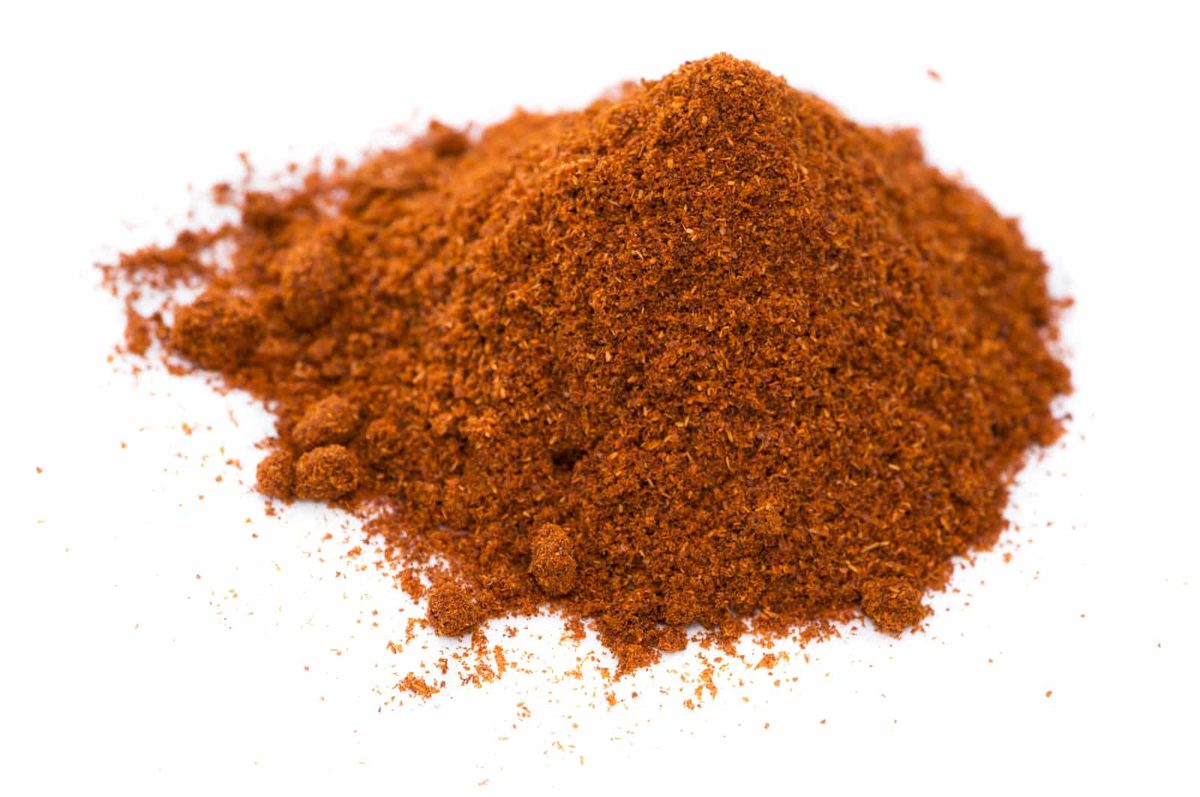
Pasilla powder is ground pasilla chile, a dried chile also called chile negro, whose fresh form is the dark green chilaca.1 The Chile Pepper Institute at New Mexico State University calls pasilla a mild chile and a staple of Mexican cooking, especially for sauces such as moles and salsas.2 This page covers what pasilla is and is not, how hot it is, how it is used, and what USDA data show about its nutrition.
At a glance
| What it is | Ground dried chilaca chile (pasilla, chile negro)13 |
| Botanical name | Capsicum annuum24 |
| Plant family | Solanaceae (nightshade family)5 |
| Domesticated | Mexico; the evidence points to central-east Mexico6 |
| Name | Refers to raisins (pasas), for its texture and smell (CPI)2 |
| Heat | Mild; one general rating gives 1,000–2,500 SHU (see table)213 |
| Key dishes | Moles, table sauces and salsas27 |
| Forms sold | Whole dried pods and ground powder2 |
Measured values
10 figures, sourced| Measure | Value | Scope | Source |
|---|---|---|---|
| Pungency, minimum for dried chilli pepper Limit | 900 SHU or more Scoville heat units | Anything sold as dried chilli pepper under Codex CXS 353-2022 (pasilla is a listed variety)A category threshold, not a measurement of pasilla. No measured Scoville figure for pasilla was found. | fao.org |
| Vitamin B6 Nutrient | 4.23 mg per 100 g | USDA FoodData Central, peppers, pasilla, dried, whole (FDC ID 168579, SR Legacy); no entry for the powder | fdc.nal.usda.gov |
| Vitamin A (RAE) Nutrient | 1,790 µg per 100 g | USDA FoodData Central, peppers, pasilla, dried, whole (FDC ID 168579, SR Legacy); no entry for the powder | fdc.nal.usda.gov |
| Dietary fiber Nutrient | 26.8 g per 100 g | USDA FoodData Central, peppers, pasilla, dried, whole (FDC ID 168579, SR Legacy); no entry for the powder | fdc.nal.usda.gov |
| Iron Nutrient | 9.83 mg per 100 g | USDA FoodData Central, peppers, pasilla, dried, whole (FDC ID 168579, SR Legacy); no entry for the powder | fdc.nal.usda.gov |
| Potassium Nutrient | 2,220 mg per 100 g | USDA FoodData Central, peppers, pasilla, dried, whole (FDC ID 168579, SR Legacy); no entry for the powder | fdc.nal.usda.gov |
| Vitamin C Nutrient | 6.4 mg per 100 g | USDA FoodData Central, peppers, pasilla, dried, whole (FDC ID 168579, SR Legacy); no entry for the powder | fdc.nal.usda.gov |
| Ochratoxin A, maximum Limit | 20 µg/kg | EU Regulation 2023/915, dried Capsicum fruits, whole or ground | eur-lex.europa.eu |
| Aflatoxin B1, maximum Limit | 5.0 µg/kg | EU Regulation 2023/915, dried Capsicum fruits, whole or ground | eur-lex.europa.eu |
| Total aflatoxins, maximum Limit | 10.0 µg/kg | EU Regulation 2023/915, dried Capsicum fruits, whole or ground | eur-lex.europa.eu |
Each figure is quoted as its source states it, with the samples or standard it applies to. Where sources differ, both are shown; nothing is averaged. All measured values
Pasilla, chilaca and the name
Gernot Katzer describes the chile pasilla, also called chile negro, as one of the most common Mexican chiles, and its fresh form, the chilaca, as dark green, almost black; the fresh chile is used much more rarely.1 The Codex international standard for dried chile lists “Pasilla” among the varietal names of chilli pepper it covers.5
CPI says the name refers to the chile’s resemblance to raisins, pasas in Spanish, in texture and smell.2 A widely repeated claim says chilaca comes from a Nahuatl word for “old”; no source opened for this page supports or refutes it.
Not an ancho. Pasilla and ancho are different chiles: Katzer notes that a dried poblano may be an ancho or a mulato,1 while the pasilla is the dried chilaca. Katzer also warns that the same chile cultivar may be sold under different names.1 PepperScale says dried pasillas and anchos are often mislabeled as each other in grocery stores, though the pasilla is much narrower.3 A widely repeated claim says some US growers and stores sell fresh poblanos labeled “pasilla”; no source we could open documents it, so check the shape and color: chilacas are long and slender, poblanos broad and heart-shaped (kitchen judgment).
Not pasilla de Oaxaca. Katzer pictures the pasilla de Oaxaca as a chile that is dried and smoked,1 unlike the ordinary pasilla. Expect smoke from a jar labeled “pasilla de Oaxaca”.
Origin. The species Capsicum annuum is native from the southern United States to Brazil and the Caribbean,8 and four lines of evidence point to its domestication in central-east Mexico.6 Where the chilaca type was developed, which Mexican states grow it now, and whether it traveled abroad in the Columbian exchange were not documented in any source checked for this page.
Flavor
CPI ties the name to a raisin-like smell.2 Ground pasilla tastes dark and dried-fruity, with a slight bitterness and herbal, almost cocoa-like depth; that description is editorial. PepperScale describes it as earthy, sweet and fruity, with hints of cocoa and a little berry.3
How hot is pasilla?
| Scope | Heat | Source |
|---|---|---|
| Pasilla as a pepper type (CPI; no figure given) | “Mild heat level” | NMSU Chile Pepper Institute2 |
| Pasilla in Katzer’s table of Mexican chiles | “low” | Gernot Katzer1 |
| Anything sold as dried chilli pepper under the international standard (pasilla is a listed variety) | 900 SHU or more | Codex CXS 353-20225 |
| Pasilla as a pepper type (general rating; no method stated) | 1,000–2,500 SHU | PepperScale3 |
How to read this:
- Neither CPI nor Katzer gives a number. Both class pasilla as mild or low.
- The Codex threshold is a category boundary, not a measurement of any pasilla.5
- PepperScale’s 1,000 to 2,500 SHU is a general rating, not a measurement. It is the source of the widely repeated figures, and it does not say how the range was arrived at. No measurement of a named lot was found. NMSU notes that HPLC is the most accurate way to measure chile heat and that Scoville taste tests are subjective.9
How it is used
Mole. Mexico’s agriculture ministry says dried ancho, mulato, mirasol, guajillo and pasilla go mainly to the artisanal mole industry.7 Katzer writes that ancho, mulato and pasilla are often called “the holy trinity” and flavor mole rojo, also known as mole poblano.1 El Universal also lists pasilla among the chiles in mole poblano.10 Katzer regards Oaxaca as the home of the moles, with seven classical recipes, and notes that mole negro needs the costly and rare chilhuacle negro.1 See mole powder.
Sauces and salsas. CPI names table sauces and salsas, and notes the peppers are ground into powder for similar uses or as a seasoning.2 Common uses for the powder, as kitchen practice rather than sourced findings:
- Red enchilada sauce, tortilla soup and chili; see best spices for chili.
- Rubs for beef, pork and mushrooms.
- Black beans and lentils.
- Anywhere you want chile flavor and color with little heat.
PepperScale suggests rehydrated pasillas for sauces, stews, soups, salsas and marinades and the powder for rubs, and names red meats such as lamb and beef, cumin, and fire-roasted tomatoes as good partners.3
Technique. Like other ground chiles, pasilla powder burns easily. Warm it briefly in oil over moderate heat, or add it with liquid. Kitchen practice, not a sourced finding.
Buying and quality
- Check the label. Pure pasilla powder lists only pasilla chile. A jar that adds cumin, oregano or salt is a blend.
- Color and aroma. Good powder is very dark brown to nearly black and smells of raisins. Pale, dusty powder has faded. Kitchen judgment.
- Smoked or not. “Pasilla de Oaxaca” is a smoked chile;1 buy it on purpose, not by mistake.
Storage
Keep the powder airtight, dark and cool. No shelf-life figure from a regulator or standards body was found for pasilla powder. For whole dried pasillas, PepperScale says they keep a year or more if stored properly; that is a writer’s guidance for the pods, not a tested figure for the powder.3 When the dried-fruit smell has gone, replace it.
Nutrition and health
USDA FoodData Central has an entry for whole dried pasilla peppers, with one pepper weighing 7 g; it has no entry for the powder and no teaspoon weight.4 Per pepper:
| Nutrient | Per 100 g4 | Per pepper (7 g), computed | % Daily Value per pepper11 |
|---|---|---|---|
| Vitamin B6 | 4.23 mg | about 0.30 mg | about 17% (DV 1.7 mg) |
| Vitamin A (RAE) | 1,790 µg | about 125 µg | about 14% (DV 900 µg) |
| Dietary fiber | 26.8 g | about 1.9 g | about 7% (DV 28 g) |
| Iron | 9.83 mg | about 0.69 mg | about 4% (DV 18 mg) |
| Potassium | 2,220 mg | about 155 mg | about 3% (DV 4,700 mg) |
| Vitamin C | 6.4 mg | about 0.45 mg | under 1% (DV 90 mg) |
A whole pepper is more pasilla than most servings contain; a teaspoon of powder in a dish for four supplies far less.
Capsaicin. The strongest human evidence concerns a prescription skin patch, not chile in food. A 2017 Cochrane systematic review found moderate-quality evidence that a high-concentration (8%) capsaicin patch gave moderate pain relief to a minority of people with postherpetic neuralgia.12 Claims that pasilla helps prevent prostate or breast cancer or fights arthritis were not supported by any source reviewed for this page. No claim is made here that pasilla treats or prevents any disease.
Safety
- Mycotoxins (EU). EU law caps ochratoxin A at 20 µg/kg in dried Capsicum fruits, whole or ground, and sets 5.0 µg/kg for aflatoxin B1 and 10.0 µg/kg for total aflatoxins.13
- Handling. Even mild chile powders irritate eyes; wash hands after handling. Common-sense guidance, not a sourced finding.
Substitutes and comparisons
- Pasilla powder substitutes; PepperScale names ancho as the usual first choice3
- Other Mexican chile powders: ancho powder (and ancho substitutes), guajillo powder, chipotle powder
- Related: chili powder, paprika
Footnotes
-
Gernot Katzer, Paprika and Mexican chiles (Capsicum annuum), Gernot Katzer’s Spice Pages. gernot-katzers-spice-pages.com · Reference work ↩ ↩2 ↩3 ↩4 ↩5 ↩6 ↩7 ↩8 ↩9 ↩10 ↩11
-
Pasilla recipe card, Chile Pepper Institute, New Mexico State University. cpi.nmsu.edu · Reference work ↩ ↩2 ↩3 ↩4 ↩5 ↩6 ↩7 ↩8 ↩9 ↩10
-
Matt Bray, Pasilla Pepper Guide: Heat, Flavor, Pairings, And More, PepperScale, 2024. pepperscale.com · Publication · PepperScale is also owned by Matt Bray, the editor of this site. ↩ ↩2 ↩3 ↩4 ↩5 ↩6 ↩7 ↩8
-
Peppers, pasilla, dried (FDC 168579), USDA FoodData Central. fdc.nal.usda.gov · Regulator ↩ ↩2 ↩3
-
Standard for Dried or Dehydrated Chilli Pepper and Paprika, CXS 353-2022, Codex Alimentarius. fao.org · Standard ↩ ↩2 ↩3 ↩4
-
Kraft et al., Multiple lines of evidence for the origin of domesticated chili pepper, PNAS, 2014. escholarship.org · Peer-reviewed ↩ ↩2
-
Chile seco, Secretaría de Agricultura y Desarrollo Rural, Government of Mexico. gob.mx · Regulator ↩ ↩2
-
Capsicum annuum L., Plants of the World Online, Royal Botanic Gardens, Kew. powo.science.kew.org · Reference work ↩
-
Bosland and Walker, Measuring Chile Pepper Heat, NMSU Guide H-237, 2010. pubs.nmsu.edu · Reference work ↩
-
Nuestro mero mole…¡el mole poblano!, El Universal, 2017. eluniversal.com.mx · Publication ↩
-
Daily Value on the Nutrition and Supplement Facts Labels, FDA. fda.gov · Regulator ↩
-
Derry et al., Topical capsaicin (high concentration) for chronic neuropathic pain in adults, Cochrane Database of Systematic Reviews, 2017. cochrane.org · Peer-reviewed ↩
-
Commission Regulation (EU) 2023/915, EUR-Lex. eur-lex.europa.eu · Regulator ↩