Spice Substitutes · Substitutes
Pasilla Powder Substitutes, Ranked by the Job Pasilla Is Doing
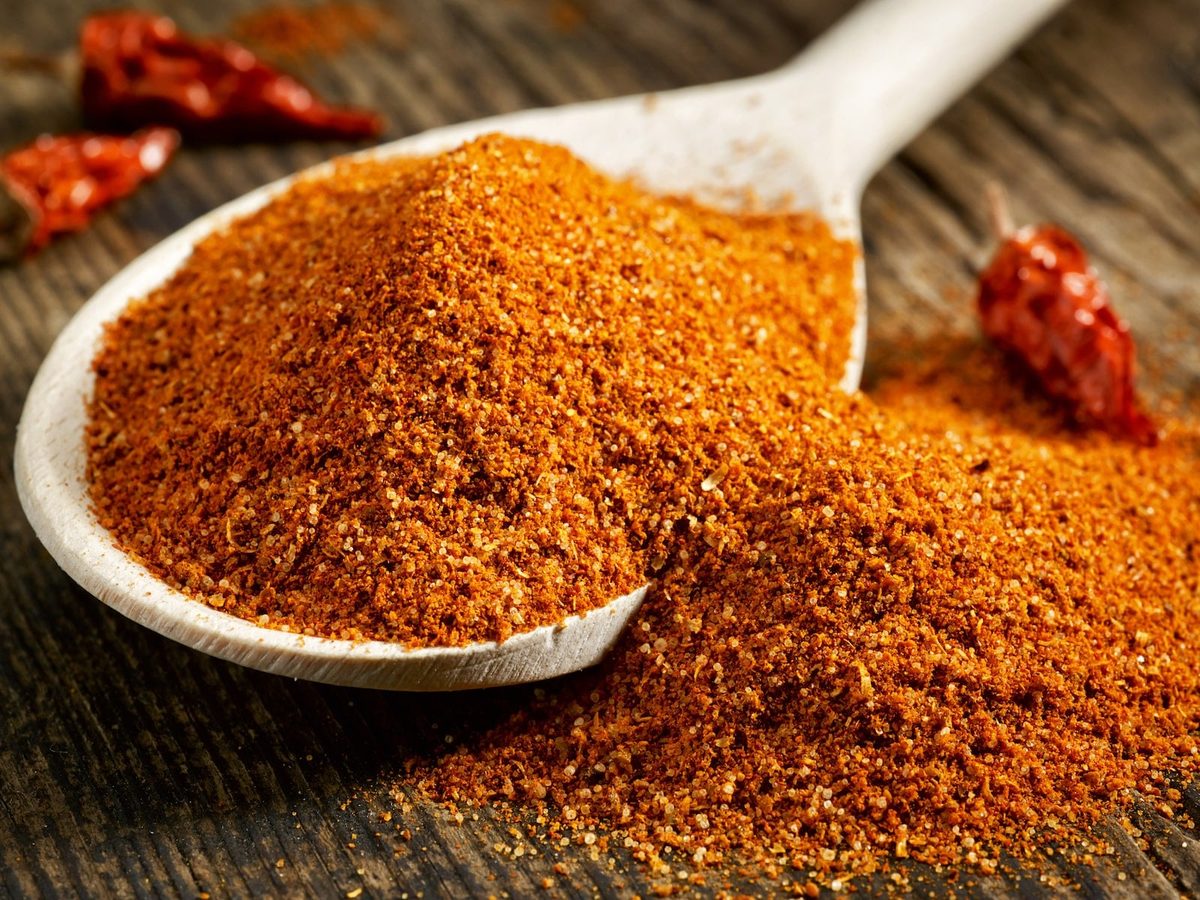
Pasilla is the dried form of the chilaca, a dark, almost black chile, which is why it is also called chile negro.1 The Chile Pepper Institute (CPI) at New Mexico State University rates its heat as mild and says the name refers to a resemblance to raisins in texture and smell.2 It is a sauce chile: CPI calls it a staple for moles, table sauces and salsas,2 and Mexico’s agriculture ministry says pasilla goes mainly to the artisanal mole industry.3 Most recipes use it for dark color and a deep, dried-fruit body rather than heat, so the best substitutes are the other mild, dark chiles that share its place in mole.
Quick answer
| What pasilla is doing | Best substitute | Starting amount, per 1 part pasilla | Treatment |
|---|---|---|---|
| Dark body and dried-fruit depth (mole, dark sauces) | Ancho powder | 1 part by weight, plus a little extra for heat | Attributed (PepperScale) |
| Dark body with a cocoa note (mole) | Mulato powder | A little less than 1 part by weight | Attributed (PepperScale) |
| Mild red chile flavor in salsas, marinades and table sauces | Guajillo powder | 1/2 part, then taste | Attributed (PepperScale) |
| Mild chile that is easy to find | California chile powder | 1 part by weight | Attributed (PepperScale) |
| Chile base in chili or taco meat | Chili powder | 1 part, and cut the recipe’s salt and cumin | Method |
| The smoke of pasilla de Oaxaca | Chipotle powder | 1/4 part, then taste | Method |
The rest of the page explains each choice and how hot each chile is said to be.
How the ratios on this page are labeled
Every ratio carries one of four labels.
- Computed: based on a measurable physical relationship, with the source named.
- Attributed: a named source publishes this ratio. We quote it as theirs.
- Disputed: named sources give different answers to the same swap. We show each one and do not average them.
- Method: we found no published ratio. We give a direction and a cautious starting point, and say so.
PepperScale is the one source we found that publishes ratios for replacing pasilla, and it gives them by weight for the dried chiles.4 Its comparison table also lists heat multiples worked out from the midpoints of its own ranges; those are its arithmetic, not measurements, and are left out here. Mashed gives the reverse swap, pasilla powder in place of ancho, one to one.5 Where no source gives a ratio, the amount is labeled Method.
How hot are pasilla and its substitutes?
All of these are capsaicinoid heat, and NMSU notes that HPLC, which measures capsaicinoids directly, is the most accurate method.6 The figures below describe different things, so they are listed side by side and not combined.
| Chile | Heat | Scope | Source |
|---|---|---|---|
| Pasilla | “Mild heat level” (no number) | Pepper type | NMSU Chile Pepper Institute2 |
| Pasilla | 1,000–1,500 SHU | Pepper type on a scale its author calls necessarily approximate | Dave DeWitt, 20087 |
| Pasilla | 1,000–2,500 SHU | Pepper type, general rating; no method stated | PepperScale8 |
| Pasilla | A listed varietal of chilli pepper; the chilli category starts at 900 SHU | A category boundary in the international standard, not a measurement | Codex CXS 353-20229 |
| Ancho | 1,000–2,000 SHU | Pepper type | NMSU Chile Pepper Institute10 |
| Ancho | 1,000–1,500 SHU | Same approximate scale as pasilla | Dave DeWitt, 2008;7 PepperScale gives the same range4 |
| Mulato | 2,500–3,000 SHU | General rating; no method stated | PepperScale4 |
| California chile | 500–2,500 SHU | General rating; no method stated | PepperScale4 |
| Guajillo (also called mirasol)11 | 2,500–5,000 SHU | General ratings, no method stated | DeWitt, 2008;7 Lisa Sorg, INDY Week, 2015;12 PepperScale4 |
| Chipotle | Usually 5,000–10,000 SHU | Chipotle in general | Mick Vann, The Austin Chronicle, 201213 |
How to read this: ancho and California chile are the substitutes whose figures overlap pasilla’s. CPI’s ancho range runs a little higher than DeWitt’s, but DeWitt puts ancho and pasilla in the same band,7 and PepperScale rates pasilla’s range higher than ancho’s,48 so no source here shows ancho to be hotter than pasilla. The two pasilla ranges, DeWitt’s and PepperScale’s, share a floor and differ at the top; both are shown. Mulato’s single figure sits at the top of PepperScale’s pasilla range, and guajillo and chipotle are hotter by every figure found.
If pasilla is the dark body of a mole or sauce
Gernot Katzer names ancho, mulato and pasilla as the “holy trinity” of chiles that flavor mole poblano,1 and El Universal lists ancho, mulato and pasilla among the chiles in mole poblano.14 If one of the three is missing, the other two are the natural replacements.
1. Mulato powder
Katzer notes that a dried poblano may be sold as an ancho or as a mulato.1 So mulato is not pasilla’s relative but ancho’s, and its place in the mole trinity is what makes it a good stand-in. PepperScale rates mulato a little hotter than ancho, at 2,500 to 3,000 SHU, and describes it as earthy and a bit smokier, with a hint of chocolate that makes it the closest match to pasilla’s cocoa note.4 Whole dried mulatos are easier to find than the powder in our judgment; grind them after removing stems and seeds.
Ratio (Attributed): PepperScale says to use a little less than the pasilla’s weight, then taste as you go.4
2. Ancho powder
An ancho is a dried poblano, and CPI describes it as mild, with sweet, smoky flavors and hints of dried fruit.10 CPI calls ancho a key ingredient in Mexican mole.10 It is the most widely sold of the three. PepperScale calls it the best bet among dried chiles for pasilla: both are earthy, the ancho a little smokier and the pasilla fruitier.4 Expect a sweeter, slightly redder sauce than pasilla gives; that description is ours.
Ratio (Attributed): PepperScale says one for one by weight, plus a little extra if you want to match pasilla’s heat.4 Mashed gives one to one for the reverse swap,5 and DeWitt’s scale puts the two chiles in the same heat band,7 so the figures point the same way.
Check that the jar is pure ground ancho. Saveur notes that the chile in American chili powder is usually ancho,15 but chili powder is a blend (see below).
If pasilla is mild chile flavor in a salsa or marinade
Guajillo powder
Guajillo, also called mirasol, is one of the main chile types grown in Mexico for drying,11 and a 2019 study describes it as the main ingredient for marinades.16 Mexico’s agriculture ministry groups dried ancho, mulato, mirasol, guajillo and pasilla as the chiles that go mainly to the mole industry.3 It is brighter, redder and tangier than pasilla, with less of the raisin-like depth; that description is ours. PepperScale agrees that it is tangier and a little less sweet, with hints of tea and cranberry, and warns that it will not give a mole the same dark, deep base.4 Its heat figures are higher (see the table).
Ratio (Attributed): PepperScale says to start with about half the pasilla amount and taste before adding more.4
California chile powder
PepperScale suggests California chiles as easy to find and close in heat, at 500 to 2,500 SHU, sweet like dried fruit and gently earthy, though without pasilla’s cocoa notes.4
Ratio (Attributed): PepperScale says one for one by weight.4
Cayenne or crushed red pepper, only for heat
PepperScale lists both as a last resort: they match on heat only, not flavor, and should not go in one for one.4
Ratio (Attributed): PepperScale says a few pinches to start, then taste.4
If pasilla is the chile base in chili or taco meat
Chili powder
The USDA’s purchasing specification says chili powder should include ground chili pepper, cumin, oregano, salt and garlic powder.17 It will put a mild chile back into the dish along with seasonings the recipe may already have.
Ratio (Method): No published ratio. Start one for one, then cut back the recipe’s own salt, cumin and oregano and taste before adding more.
If the recipe means pasilla de Oaxaca
Katzer describes the Mexican pasilla de Oaxaca as a chile that is dried and smoked,1 unlike ordinary pasilla. If a recipe names it, the smoke matters.
Chipotle powder
Chipotle is a smoke-dried jalapeño.1 Most chipotles sold in the US are the morita type, according to Mick Vann.13 It is far hotter than ordinary pasilla by every figure found.
Ratio (Method): No published ratio for pasilla de Oaxaca. Start with a quarter of the amount in chipotle powder, make up the rest with ancho or mulato powder for body, and taste.
What isn’t known
- The only published ratios for pasilla substitutes are PepperScale’s, and no study compares the flavor or heat of pasilla with any of them.
- No HPLC measurement of retail pasilla powder was found; the only mulato figure is PepperScale’s general rating.
- It is sometimes said that ancho is a little hotter than pasilla. The figures found do not show that; DeWitt puts them in the same band,7 and PepperScale rates pasilla the hotter of the two.48
- Fresh poblanos are widely said to be sold as “pasillas” in some US stores. No source we opened documents that for a particular market, though Katzer notes in general that the same chile may be sold under different names.1 PepperScale says dried pasillas and anchos are often mislabeled as each other in grocery stores.8 If your “pasilla” is fresh and green, it is not the chile this page is about.
- Ancho and mulato are often said to differ by the ripeness of the poblano at harvest. We found no source that states it.
Related
- Pasilla powder
- Ancho powder and ancho substitutes, guajillo powder
- Chipotle powder and chipotle substitutes
- Chili powder and chili powder substitutes, mole powder
- Paprika substitutes, chile de árbol powder, cayenne pepper
Footnotes
-
Gernot Katzer, Paprika and Mexican chiles (Capsicum annuum), Gernot Katzer’s Spice Pages. gernot-katzers-spice-pages.com · Reference work ↩ ↩2 ↩3 ↩4 ↩5 ↩6
-
Pasilla recipe card, Chile Pepper Institute, New Mexico State University. cpi.nmsu.edu · Reference work ↩ ↩2 ↩3
-
Chile seco, Secretaría de Agricultura y Desarrollo Rural, Government of Mexico. gob.mx · Regulator ↩ ↩2
-
Matt Bray, What’s A Good Pasilla Pepper Substitute?, PepperScale, 2026. pepperscale.com · Publication · PepperScale is also owned by Matt Bray, the editor of this site. ↩ ↩2 ↩3 ↩4 ↩5 ↩6 ↩7 ↩8 ↩9 ↩10 ↩11 ↩12 ↩13 ↩14 ↩15 ↩16 ↩17
-
Lisa Curran Matte, 10 Best Substitutes For Ancho Chile Powder, Mashed, 2021. mashed.com · Publication ↩ ↩2
-
Bosland and Walker, Measuring Chile Pepper Heat, Guide H-237, NMSU, 2010. pubs.nmsu.edu · Reference work ↩
-
Dave DeWitt, Heat Scale Updated, Fiery Foods & Barbecue Central, 2008. fieryfoodscentral.com · Publication ↩ ↩2 ↩3 ↩4 ↩5 ↩6
-
Matt Bray, Pasilla Pepper Guide: Heat, Flavor, Pairings, And More, PepperScale, 2024. pepperscale.com · Publication · PepperScale is also owned by Matt Bray, the editor of this site. ↩ ↩2 ↩3 ↩4
-
Standard for Dried or Dehydrated Chilli Pepper and Paprika, CXS 353-2022, Codex Alimentarius. fao.org · Standard ↩
-
Ancho recipe card, Chile Pepper Institute, New Mexico State University. cpi.nmsu.edu · Reference work ↩ ↩2 ↩3
-
Santiago-López, Ramírez-Meraz and Méndez-Aguilar, HMG14E, híbrido de chile guajillo, Revista Fitotecnia Mexicana, 2020. revistafitotecniamexicana.org · Peer-reviewed ↩ ↩2
-
Lisa Sorg, DISH: Tips on which peppers suit which dish, INDY Week, 2015. indyweek.com · Publication ↩
-
Mick Vann, Chipotle Chiles, The Austin Chronicle, 2012. austinchronicle.com · Publication ↩ ↩2
-
Nuestro mero mole…¡el mole poblano!, El Universal, 2017. eluniversal.com.mx · Publication ↩
-
Chili Powder, Saveur, 2009. saveur.com · Publication ↩
-
Martínez-Damián et al., Intensity of color and bioactive compounds in collections of guajillo chili from Northern Mexico, Revista Mexicana de Ciencias Agrícolas, 2019. cienciasagricolas.inifap.gob.mx · Peer-reviewed ↩
-
Commercial Item Description A-A-20001C, Spices and Spice Blends, USDA Agricultural Marketing Service, 2023. ams.usda.gov · Regulator ↩