Spice Substitutes · Substitutes
Caraway Seed Substitutes, Ranked by the Job Caraway Is Doing
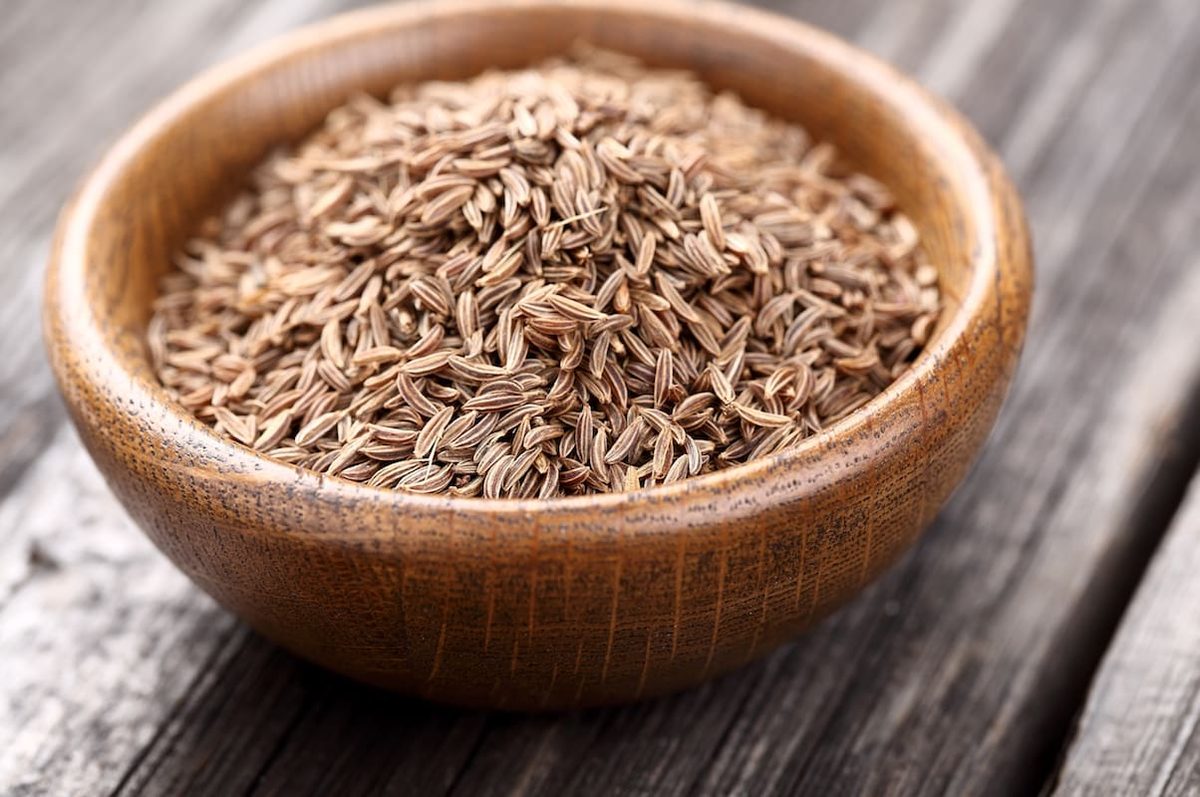
Caraway “seed” is the dried fruit of Carum carvi, a member of the carrot and parsley family (Apiaceae).1 Its essential oil, about 5 percent of the seed, is dominated by two compounds, carvone and limonene; PROSEA gives carvone as 45 to 60 percent of the oil and limonene as 35 to 55 percent, and credits carvone with caraway’s characteristic flavor.23 Britannica describes the aroma as reminiscent of anise, with a warm, slightly sharp taste.2 That pairing explains the substitutes below. One spice matches caraway’s chemistry; others only match the way it reads on the tongue.
Quick answer
| What caraway is doing | Best substitute | Starting amount, per 1 part caraway | Treatment |
|---|---|---|---|
| Seeded rye bread and other baking | Dill seed (or anise seed) | Dill 1 part; anise ½ part, then taste | Method |
| Sauerkraut, cabbage, pork and potatoes | Fennel seed | ¾ part, then taste | Method |
| Ground caraway in a blend (harissa, rubs) | Ground fennel or ground anise; cumin for harissa | ½ to ¾ part | Method |
| Seeds as a visible topping | Nigella seed | 1 part (a different flavor) | Method |
How the ratios on this page are labeled
- Computed: based on a measurable physical relationship, with the source named.
- Attributed: a named source publishes this ratio. We quote it as theirs.
- Disputed: named sources give different answers to the same swap. We show each one and do not average them.
- Method: we found no published ratio. We give a direction and a cautious starting point, and say so.
Every ratio on this page is Method. The Spice House, which names several caraway substitutes, gives no amounts.4 No study we found compares the flavor strength of caraway with any of them.
If caraway is flavoring bread
Britannica lists breads among caraway’s main uses, alongside meat dishes and cheese.2 For rye bread specifically, The Spice House names dill and anise seed as the best substitutes.4
1. Dill seed: the closest chemical match
Dill seed shares caraway’s main compounds. PROSEA reports dill fruit oil containing limonene up to 70 percent and carvone up to 60 percent, and Britannica gives carvone as the principal component of dill’s oil and describes dill’s flavor as “somewhat reminiscent of caraway.”56 No other common spice on this page carries carvone as its main note. Dill seed is a little smaller, broadly oval and light brown, so the look of the bread changes slightly.6
Use the seed, not the leaf. Dill weed’s oil is mostly phellandrene and dill ether rather than carvone, according to PROSEA.5
Ratio (Method): No published ratio was found. Because the chemistry is close, start one for one and adjust after a test loaf.
2. Anise seed
Anise works differently. Its oil is 80 to 95 percent trans-anethole, the compound behind its sweet, licorice-like note.7 That is the “anise” in Britannica’s description of caraway’s aroma, but caraway itself is not built on anethole.23 Anise gives you the sweet side of caraway without its sharper carvone edge. Britannica notes that anise is widely used to flavor pastries.8
Ratio (Method): No published ratio was found. The Spice House says dill and anise are more pungent than fennel and should be used more sparingly.4 Start with half the caraway amount and taste.
If caraway is seasoning sauerkraut, cabbage or pork
Katzer writes that sauerkraut is always flavored with caraway, and calls caraway the spice that gives Southern German and Austrian food its character.9 The Spice House names fennel seed as the best substitute in sauerkraut, with dill or anise also working.4
1. Fennel seed
Fennel is another carrot-family seed.10 Its main compound is the same one that dominates anise: anethole, up to 70 to 80 percent of sweet fennel oil.11 PROSEA notes that fennel and anise fruits are often confused with each other.11 So fennel gives a sweeter, rounder result than caraway, without the carvone.
Ratio (Method): No published ratio was found. Start with three quarters of the caraway amount and taste, because fennel adds a sweetness caraway does not have. That is our kitchen judgment.
2. Dill seed
Dill seed works here for the same reason it works in bread: carvone and limonene.5 It is the substitute to reach for if you want the dish to taste most like caraway rather than like anise.
Ratio (Method): Start one for one, as above.
If caraway is ground into a blend
Katzer notes that caraway matters in North African cooking, mostly in Tunisia, where it goes into harissa.9 For ground caraway, The Spice House suggests ground fennel or ground anise.4
1. Ground fennel or ground anise
Ratio (Method): No published ratio was found. Start with half the caraway amount for anise and three quarters for fennel, then taste.
2. Cumin, for harissa and savory rubs
Britannica describes cumin’s taste as warm and “reminiscent of caraway.”12 It is a related seed, but its oil is led by cuminaldehyde, not carvone, so the dish will taste more of cumin than of caraway.12 The Spice House lists cumin among caraway substitutes.4 In a harissa that already contains chile, garlic and coriander, the difference is less obvious. That last point is our judgment.
Ratio (Method): No published ratio was found for this direction of the swap. Start with half the caraway amount and add more to taste.
If the seeds are mostly for show
Caraway seeds on a rye loaf or a roll are partly decoration. Nigella seed gives a similar look in a darker color: Turkish bread is often studded with it, and Kew notes the seed is used to flavor bread.1314 The Spice House includes nigella in its list of caraway substitutes.4
The flavor is not close. Katzer describes whole nigella as having little smell, becoming vaguely oregano-like when ground or chewed, with an aromatic, slightly bitter taste.13 It belongs to the buttercup family, not caraway’s family.14
Ratio (Method): Start one for one for a topping, and expect a different flavor.
Use with care: star anise
Star anise packs the same anethole as anise and fennel; PROSEA puts trans-anethole at 70 to 93 percent of its oil.15 A whole pod is a lot of flavor for a dish that wanted a teaspoon of caraway, so if you use it at all, use a fragment of a point and taste. That is a cooking judgment, not a measured ratio.
Buy star anise sold for food. In 2003 the FDA advised consumers not to drink teas brewed from star anise after about 40 people became ill, warning that Chinese star anise may contain Japanese star anise, which “has long been recognized as toxic in many countries.”16
What isn’t known
- No published ratio exists for any caraway substitute, as far as we found. Every starting amount above is ours.
- No study compares the flavor strength of caraway with dill seed, fennel, anise or cumin.
- A widely repeated claim says nigella tastes of licorice like caraway. No source we read supports that; Katzer’s description is oregano-like and slightly bitter.13
- Another says nigella was used in Tutankhamun’s time. We could not trace it to a source we could open.
Related
- Caraway seeds and cooking with caraway seeds
- Caraway seeds vs. cumin and caraway seeds vs. fennel seeds
- Dill and dill seed vs. dill weed
- Anise seed, fennel seed and fennel seed vs. anise seed
- Nigella seeds, star anise and star anise vs. anise seed
- Harissa powder and cumin
Footnotes
-
Carum carvi L., Plants of the World Online, Royal Botanic Gardens, Kew. powo.science.kew.org · Reference work ↩
-
Caraway, Encyclopaedia Britannica. britannica.com · Reference work ↩ ↩2 ↩3 ↩4
-
Toxopeus and Lubberts, Carum carvi, PROSEA, via Pl@ntUse. uses.plantnet-project.org · Reference work ↩ ↩2
-
Caraway Seeds Substitute, The Spice House, 2018. thespicehouse.com · Merchant ↩ ↩2 ↩3 ↩4 ↩5 ↩6 ↩7
-
Nguyen Thi Tâm et al., Anethum graveolens, PROSEA, via Pl@ntUse. uses.plantnet-project.org · Reference work ↩ ↩2 ↩3
-
Dill, Encyclopaedia Britannica. britannica.com · Reference work ↩ ↩2
-
Cardenas and de Guzman, Pimpinella anisum, PROSEA, via Pl@ntUse. uses.plantnet-project.org · Reference work ↩
-
Anise, Encyclopaedia Britannica. britannica.com · Reference work ↩
-
Katzer, Caraway, Gernot Katzer’s Spice Pages. gernot-katzers-spice-pages.com · Reference work ↩ ↩2
-
Fennel, Encyclopaedia Britannica. britannica.com · Reference work ↩
-
Purwaningsih et al., Foeniculum vulgare, PROSEA, via Pl@ntUse. uses.plantnet-project.org · Reference work ↩ ↩2
-
Cumin, Encyclopaedia Britannica. britannica.com · Reference work ↩ ↩2
-
Katzer, Nigella, Gernot Katzer’s Spice Pages. gernot-katzers-spice-pages.com · Reference work ↩ ↩2 ↩3
-
Nigella sativa L., Plants of the World Online, Royal Botanic Gardens, Kew. powo.science.kew.org · Reference work ↩ ↩2
-
Vu Ngoc Lô, Illicium verum, PROSEA, via Pl@ntUse. uses.plantnet-project.org · Reference work ↩
-
Teas Made from Star Anise Were Associated With Illnesses Including Seizures, U.S. Food and Drug Administration, 2003. fda.gov · Regulator ↩