Cooking · Profile
French Herbs and Spices: Thyme, Tarragon, Nutmeg, Quatre Épices and the Classic Blends
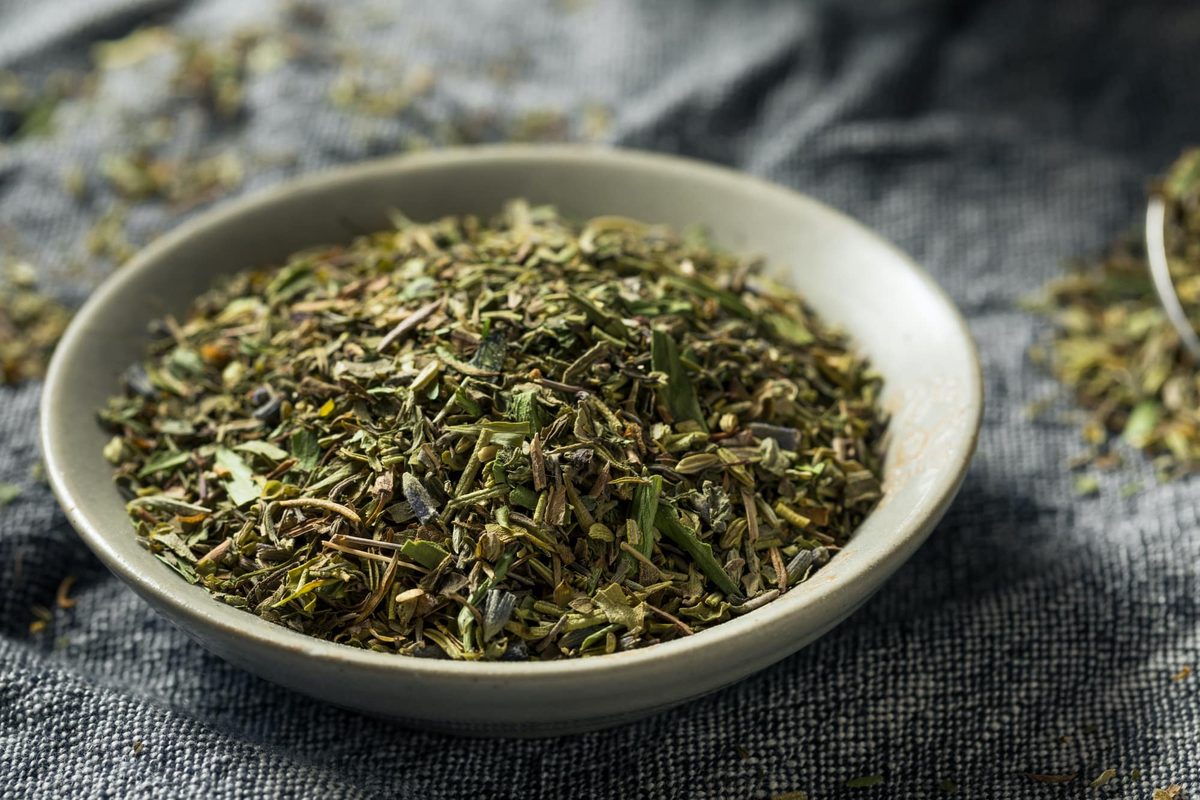
French cooking uses fewer dried spices than many cuisines and more herbs, often bundled or blended: the bouquet garni in the stockpot, fines herbes in the omelet, herbes de Provence on the grill. The spices it does use, chiefly pepper and nutmeg, go into a few classic sauces and the four-spice blend quatre épices. This page covers each, with what the sources say and links to our full profiles.
At a glance
| Herb, spice or blend | What it is | Classic French uses in the sources | Full profile |
|---|---|---|---|
| Thyme | Thymus vulgaris, native to southwestern Europe including France1 | Bouquet garni, for soups, stews, sauces and poaching liquids2 | Thyme |
| Tarragon | Artemisia dracunculus | Béarnaise; fines herbes34 | Tarragon |
| Nutmeg | Myristica fragrans | Béchamel; quatre épices5 | Nutmeg |
| Quatre épices | Ground blend of pepper, nutmeg, cloves and ginger5 | Long-cooked meats, stews, ragoûts, sausages5 | Quatre épices |
| Herbes de Provence | Dried herb blend; Label Rouge: thyme, rosemary, savory, oregano6 | Grilling, marinating, roasting vegetables7 | Herbes de Provence |
| Fines herbes | Fresh herb mix: parsley, chives, tarragon, chervil4 | Omelets, fish, chicken, sauces4 | Fines herbes |
| Marjoram | Origanum majorana, mint family (Lamiaceae)8 | Some commercial herbes de Provence7 | Marjoram |
| Vadouvan | Shallot-based curry blend tied to Puducherry910 | Origins disputed (below)911 | Vadouvan |
Measured values
3 figures, sourced| Measure | Value | Scope | Source |
|---|---|---|---|
| Tarragon essential oil: estragole | 60 to 75 % of the essential oil | scope not stated on source pageFigure is for tarragon, one herb discussed on this roundup page | food.ec.europa.eu |
| Herbes de Provence (Label Rouge): thyme Limit | 19 % of the blend | Label Rouge specification LA 02/03, obtained 2003Composition specification for the Label Rouge product, not a measurement | extranet.inao.gouv.fr |
| Herbes de Provence (Label Rouge): rosemary, savory and oregano, each Limit | 26 to 27 % of the blend | Label Rouge specification LA 02/03, obtained 2003Composition specification; the same specification excludes lavender | extranet.inao.gouv.fr |
Each figure is quoted as its source states it, with the samples or standard it applies to. Where sources differ, both are shown; nothing is averaged. All measured values
Thyme
Thyme is a strong candidate for the herb most associated with French cooking; that is a judgment, not a measured fact. Kew lists France among the places where common thyme is native, within a range covering southwestern Europe and southeastern Italy.1 Its sharp, savory character comes from its essential oil, whose characteristic constituents are thymol and carvacrol.12
Thyme is one of the three herbs in the classic bouquet garni, with parsley and a bay leaf, tied together and added to a soup, stew, sauce or poaching liquid.2 It is also one of the four herbs in Label Rouge herbes de Provence, at 19% (below).6 See thyme, cooking with thyme and English thyme vs. French thyme.
Tarragon
Tarragon is the herb most tied to French sauces. Britannica calls it an essential ingredient in béarnaise, the famous French sauce,3 and Katzer notes that béarnaise also owes part of its flavor to black peppercorns simmered in vinegar.13 PROSEA describes tarragon’s sweet, anise-like scent and peculiar bittersweet flavor,14 which comes largely from estragole, 60 to 75% of the essential oil.15 PROSEA lists France as the largest of the consumption markets it names, at 80 to 100 tonnes a year, ahead of the United States and Germany; it gives no year for the figure.14
University of Illinois Extension notes that tarragon’s flavor is quickly lost when the leaves are dried.16 It is one of the four usual fines herbes, and Britannica lists fish, chicken, stews, sauces and omelets among the dishes they suit.4 Tarragon vinegar is a common use, but no source for it was opened for this page. See tarragon, dried vs. fresh tarragon and tarragon substitutes.
Nutmeg
Nutmeg has a distinctive pungent fragrance and a warm, slightly sweet taste.17 In French cooking its signature role is in béchamel: Katzer calls nutmeg the characteristic flavoring of sauce béchamel, which despite its French name is now common to several European cuisines.5 It is also one of the four spices of quatre épices.5 Grate it fresh into a white sauce at the end; that is common kitchen practice. See nutmeg, cooking with nutmeg and fresh vs. ground nutmeg.
Quatre épices
Quatre épices (“four spices”) is the classic French spice blend. Katzer traces it to baroque-era cooking and gives its usual makeup as nutmeg with much white pepper (some variants use black pepper), cloves and ginger, with allspice and cinnamon as optional additions, all finely ground together.5 Pepper is a main constituent.13 Katzer describes the result as a kind of enhanced, fortified pepper, used mostly for meats cooked or braised for a long time, such as stews and ragoûts, and sometimes for sausages and pastries.5
| Component | Role | Profile |
|---|---|---|
| White pepper (black in some variants) | The main constituent513 | White peppercorns, black pepper |
| Nutmeg | Warm, sweet aroma517 | Nutmeg |
| Cloves | Part of the classic four5 | Cloves |
| Ginger | Part of the classic four5 | Ginger |
| Allspice or cinnamon | Optional5 | Allspice, cinnamon |
No source gives fixed proportions. See our quatre épices page.
Herbes de Provence
Herbes de Provence is a blend of dried Mediterranean herbs named for Provence, though a 2008 report on Label Rouge producers says the herbs sold under the name generally do not come from the region; genuine Provence herbs then held about 5% of the market.18 The one fixed recipe is the Label Rouge specification, obtained in 2003: thyme 19%, with rosemary, savory and oregano at 26 to 27% each, and no lavender.618
Commercial blends range more widely. The Takeout lists rosemary, fennel seeds, thyme, marjoram and savory as common, and says lavender was added to some blends to appease tourists.7 It suggests herbes de Provence for grilling fish, marinating meat and roasting vegetables.7 See herbes de Provence, herbes de Provence uses, cooking with herbes de Provence and lavender.
Fines herbes
Fines herbes is a French mixture of fresh herbs used as a seasoning or garnish. Britannica gives the common ingredients as parsley, chives, tarragon and chervil, and names fish, chicken, stews, sauces and omelets among its uses.4 Jacques Pépin’s fines-herbes omelet uses a tablespoon of parsley plus a tablespoon of chopped chervil, tarragon and chives, beaten into the raw eggs.19 The LSU AgCenter advises adding delicate herbs such as parsley and chives in the last minute or two of cooking.20 Thyme and savory, sometimes listed, are not in Britannica’s four, and the claim that the name refers to the blend’s subtle flavor could not be traced. See fines herbes, fines herbes substitutes, chervil and chives.
Marjoram
Marjoram (Origanum majorana) is a mint-family herb whose native range Kew gives as southern Türkiye and Cyprus.8 Britannica describes a warm, aromatic, slightly sharp and bitterish flavor.21 The Takeout lists it among the herbs common in commercial herbes de Provence, though it is not in the Label Rouge recipe.76 A widely repeated claim that it is more popular in France than anywhere else in the region could not be traced. See marjoram and marjoram vs. oregano.
Vadouvan: a French curry blend, or a Tamil one?
Vadouvan is a shallot-based curry blend tied to Puducherry (formerly Pondicherry), the former French settlement in southern India.910 The Spice House describes it as a sweeter, shallot-based version of masala curry.22 Commercial and published versions typically include cumin, fenugreek, cardamom and mustard.221023
Its French credentials are disputed. A Napa Valley Register column says French cooks adapted the Tamil preserve vadagam, which combined fresh onion with curry leaves, cardamom and other spices.9 The food writer Deepa, at Pâticheri, argues that vadouvan is simply Tamil, that the French left virtually no trace of it in their own cuisine, and that commercial versions differ, using white mustard and sometimes cloves, nutmeg or thyme.11 See vadouvan and vadouvan substitutes.
Related pages
- Thyme, bay leaves and parsley, the bouquet garni herbs
- Tarragon and dried vs. fresh tarragon
- Herbes de Provence and fines herbes
- How to rehydrate herbs
- The master list of herbs and spices
Footnotes
-
Thymus vulgaris L., Plants of the World Online, Royal Botanic Gardens, Kew. powo.science.kew.org · Reference work ↩ ↩2
-
Bouquet garni, Encyclopaedia Britannica. britannica.com · Reference work ↩ ↩2
-
Tarragon (Britannica Editors, updated 8 Oct 2026), Encyclopaedia Britannica. britannica.com · Reference work ↩ ↩2
-
Fines herbes, Encyclopaedia Britannica. britannica.com · Reference work ↩ ↩2 ↩3 ↩4 ↩5
-
Nutmeg and Mace (Myristica fragrans Houtt.), Gernot Katzer’s Spice Pages. gernot-katzers-spice-pages.com · Reference work ↩ ↩2 ↩3 ↩4 ↩5 ↩6 ↩7 ↩8 ↩9 ↩10 ↩11 ↩12
-
Cahier des charges du Label Rouge n° LA 02/03 « Herbes de Provence » (modification request, INAO national committee, 16 Oct 2014), Institut national de l’origine et de la qualité (INAO). extranet.inao.gouv.fr · Regulator ↩ ↩2 ↩3 ↩4
-
What Is Herbs De Provence, Really? (Leah Kaplan, 11 Jan 2025), The Takeout. thetakeout.com · Publication ↩ ↩2 ↩3 ↩4 ↩5
-
Origanum majorana L., Plants of the World Online, Royal Botanic Gardens, Kew. powo.science.kew.org · Reference work ↩ ↩2
-
Vadouvan: Curry with a French accent (Spice People column, by the owners of Whole Spice, Napa), Napa Valley Register. napavalleyregister.com · Publication ↩ ↩2 ↩3 ↩4
-
Vadouvan Curry (product page), World Spice Merchants. worldspice.com · Merchant ↩ ↩2 ↩3
-
How ‘vadouvan’ became French by using and effacing its Tamil Roots (Deepa, 11 Nov 2025), Pâticheri. paticheri.com · Publication ↩ ↩2
-
Thymus vulgaris (PROSEA), S.H. Widodo, Plant Resources of South-East Asia, via Pl@ntUse. uses.plantnet-project.org · Reference work ↩
-
Black Pepper (Piper nigrum L.), Gernot Katzer’s Spice Pages. gernot-katzers-spice-pages.com · Reference work ↩ ↩2 ↩3
-
Artemisia dracunculus (PROSEA), C.C. de Guzman & R.A. Reglos, Plant Resources of South-East Asia, via Pl@ntUse. uses.plantnet-project.org · Reference work ↩ ↩2
-
Opinion of the Scientific Committee on Food on Estragole (1-Allyl-4-methoxybenzene), adopted 26 September 2001, European Commission, Scientific Committee on Food. food.ec.europa.eu · Regulator ↩
-
Tarragon: French, University of Illinois Extension, Herb Gardening. extension.illinois.edu · Reference work ↩
-
Nutmeg (Britannica Editors, updated 17 Aug 2026), Encyclopaedia Britannica. britannica.com · Reference work ↩ ↩2
-
Les vraies herbes de Provence raniment la flamme (Sylvie Carriat, 17 Feb 2008), Réussir Les Marchés. reussir.fr · Publication ↩ ↩2
-
Fine-Herbes Omelet: Conventional and Classic (recipe courtesy of Alfred A. Knopf, 2001, Jacques Pépin), KQED. kqed.org · Publication ↩
-
Flavorful Herbs, LSU AgCenter. lsuagcenter.com · Reference work ↩
-
Marjoram (revised by Sohini Dasgupta), Encyclopaedia Britannica. britannica.com · Reference work ↩
-
Vadouvan Curry (product page), The Spice House. thespicehouse.com · Merchant ↩ ↩2
-
Vadouvan Curry Powder (Leah Colins, 16 Dec 2020), America’s Test Kitchen. americastestkitchen.com · Publication ↩