Spice Comparisons · Comparison
Turmeric vs. Ginger: Two Rhizomes From the Same Family
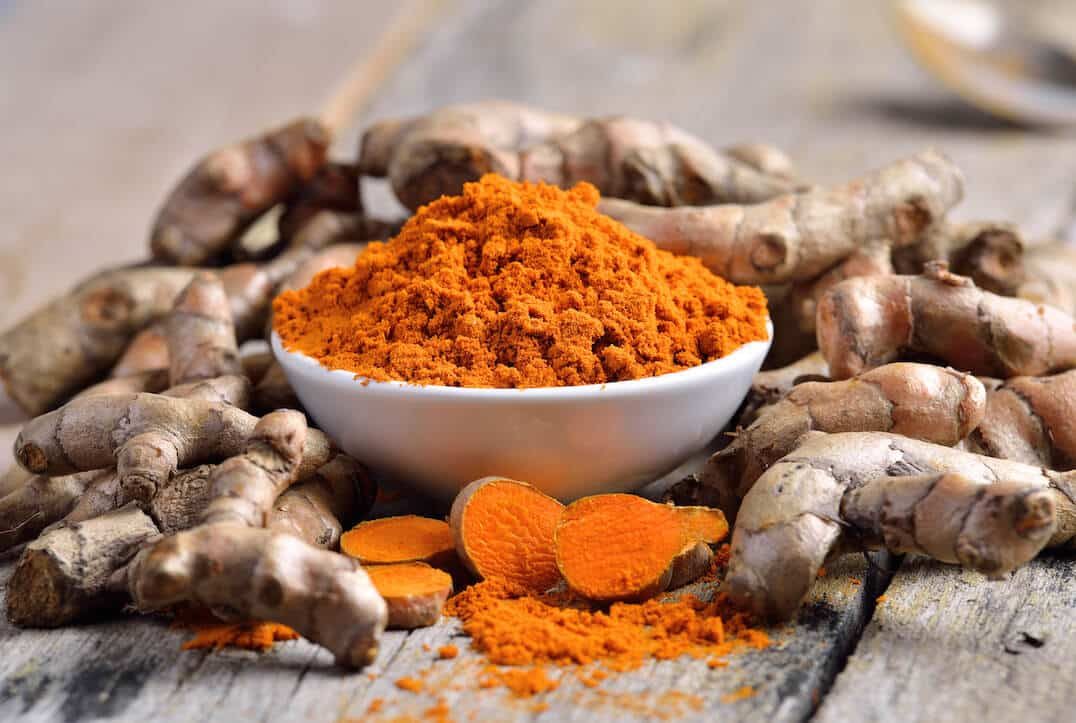
Turmeric and ginger are close relatives. Both are rhizomes, underground stems, of plants in the ginger family, Zingiberaceae: turmeric is Curcuma longa and ginger is Zingiber officinale.12 They do different jobs, though. Turmeric is about color, from curcumin, with a bitter, earthy taste.34 Ginger is about heat and a bright aroma: its pungency comes from gingerols and shogaols, compounds turmeric is not described as having.25 Swap one for the other and the dish changes color, bite or both.
Side by side
| Turmeric | Ginger | |
|---|---|---|
| Species | Curcuma longa1 | Zingiber officinale2 |
| Family | Zingiberaceae (ginger family)13 | Zingiberaceae2 |
| Native range (Kew) | Known only as a cultigen, from southwest India1 | Eastern Himalaya to south-central China2 |
| Part used | Rhizome, fresh or boiled, dried and ground4 | Rhizome, fresh, dried or ground25 |
| Inside the fresh rhizome | Orange (Katzer)6 | No description found in the sources opened |
| Color in food | Yellow, from curcumin3 | None to speak of |
| What makes it pungent | Not described as hot in the sources reviewed | Gingerols and shogaols, non-volatile phenolic compounds25 |
| Aroma compounds | Turmerone, ar-turmerone and zingiberene4 | α-zingiberene, β-zingiberene, ar-curcumene and β-sesquiphellandrene, among others5 |
| Essential oil | 3.0–5.16% in dried rhizomes from three Brazilian growers (one study)7 | Usually 1–3% in the major types of commercial dried ginger (PROSEA)5 |
| Smell and taste of the fresh rhizome | Aromatic and spicy, turning more medicinal when dried (Katzer)6 | Refreshing, lemon-like smell; pungent, warm taste (Katzer)8 |
| Taste of the dried spice | Bitter, slightly acrid, yet sweet (Prasad and Aggarwal)4 | More aromatic than pungent (Katzer)8 |
| International standard | Codex CXS 359-2024 (dried turmeric)9 | Codex CXS 343-2021 (dried ginger)10 |
| India’s crop, 2024-25 (final) | 1,105,321 tonnes, dry11 | 2,653,762 tonnes, fresh11 |
| Price | No dated, sourced retail comparison found | No dated, sourced retail comparison found |
The oil figures come from different studies of different material, and India’s production figures are for dry turmeric against fresh ginger, so neither pair is a like-for-like comparison. For each spice in depth, see turmeric and ginger.
The differences that change a dish
Color
Turmeric colors food; ginger does not. Curcumin gives turmeric its yellow,3 which is why turmeric lends curry its color, turns boiled white rice golden and goes into prepared mustard.4 Cut fresh turmeric shows an orange interior.6
Heat and aroma
Ginger has bite. Kew and PROSEA both trace its pungency to gingerols and shogaols.25 Katzer describes fresh ginger as smelling refreshing and lemon-like, with a pungent, warm taste, and notes that cooking fresh ginger raises its pungency but lowers its freshness.8 Turmeric has no such burn in the sources reviewed; its taste is bitter and slightly acrid.4
The two share one aroma compound. Zingiberene is among turmeric’s aroma compounds4 and among those usually detected in ginger oil.5 No source measures how similar the two smell.
Fresh versus dried
Drying changes both, in different ways. Fresh turmeric’s aromatic, spicy smell gives way to a more medicinal aroma when it is dried, according to Katzer.6 Dried ginger, he says, is quite different in taste from fresh, more aromatic than pungent, and cannot stand in for it.8 For conversions within each spice, see fresh ginger vs. ground ginger and fresh turmeric vs. powder.
Where each is used
Turmeric is widely used in South Asian and Middle Eastern cooking.4 Kew notes that in Asia fresh ginger is an essential ingredient of many dishes, while the dried, powdered spice is more popular in European cooking.2 Katzer says fresh ginger is used both boiled and fried in Chinese cookery, and that frying it in oil is the basis of many sauces in northern Indian recipes.8 In Europe and North America, ground ginger is a staple of gingerbread and spice cakes by common practice.
Health evidence and safety
Both have been studied mostly as supplements. NIH’s National Center for Complementary and Integrative Health (NCCIH) says:
- Turmeric: there isn’t enough evidence to conclude that turmeric or curcumin is beneficial for any health purpose, and highly bioavailable curcumin supplements may harm the liver.3 NIH’s LiverTox database calls turmeric the most common cause of clinically apparent herbal-related liver injury in the United States.12
- Ginger: research shows it may help with nausea and vomiting in pregnancy. Whether it helps nausea after surgery or chemotherapy is unclear, and most studies of motion sickness have not found it helpful.13
These findings concern supplements, not the amounts used in cooking. See the turmeric and ginger profiles for the detail.
Lead. Turmeric has a documented adulteration problem: a 2026 study of 503 samples from 34 cities in eastern India found 30% above India’s lead limit of 10 µg/g, with lead chromate mainly added when dried roots are polished.14 In 2024 the Codex contaminants committee agreed lead limits for dried rhizomes and roots, and its report records that the proposed levels were based on data for one spice only: ginger.15
Can one stand in for the other?
Only for part of the job, and only in one direction.
- Ground ginger in place of turmeric (Attributed). A Couple Cooks suggests half as much ground ginger as the turmeric called for.16 Frontier Co-op lists ginger without an amount and says to start small and increase to taste.17 Neither says how its advice was arrived at. Ginger adds bite and no yellow, so this works only where turmeric is there for earthy background flavor, not color. See turmeric substitutes.
- Turmeric in place of ginger (Method). Not recommended. Our ginger substitutes page does not list turmeric, and no source we found gives a ratio. Turmeric brings no gingerol bite and turns the dish yellow. For fresh ginger the better stand-in is another form of ginger, or galangal in Southeast Asian dishes.
What isn’t known
- No study measures turmeric and ginger side by side; the oil figures above come from separate work.
- No source opened describes the inside color of fresh ginger.
- A widely repeated claim says the Alleppey variety of turmeric has notes of orange peel and ginger. No source for it was found.
- No dated price or availability comparison was found.
Related
- Galangal vs. ginger and galangal vs. turmeric
- Turmeric vs. cumin, turmeric vs. curry powder and saffron vs. turmeric
- Cooking with ginger, cooking with turmeric, is ginger spicy?
- Too much turmeric and too much ginger
Footnotes
-
Curcuma longa L., Plants of the World Online, Royal Botanic Gardens, Kew. powo.science.kew.org · Reference work ↩ ↩2 ↩3 ↩4
-
Zingiber officinale Roscoe, Plants of the World Online, Royal Botanic Gardens, Kew. powo.science.kew.org · Reference work ↩ ↩2 ↩3 ↩4 ↩5 ↩6 ↩7 ↩8 ↩9
-
Turmeric: Usefulness and Safety, NCCIH, 2025. nccih.nih.gov · Regulator ↩ ↩2 ↩3 ↩4 ↩5
-
Prasad and Aggarwal, Turmeric, the Golden Spice, in Herbal Medicine: Biomolecular and Clinical Aspects, 2nd ed., via NCBI Bookshelf. ncbi.nlm.nih.gov · Reference work ↩ ↩2 ↩3 ↩4 ↩5 ↩6 ↩7 ↩8
-
Zingiber officinale (PROSEA), Sutarno, Hadad and Brink, via Pl@ntUse. uses.plantnet-project.org · Reference work ↩ ↩2 ↩3 ↩4 ↩5 ↩6 ↩7
-
Turmeric (Curcuma longa L.), Gernot Katzer’s Spice Pages. gernot-katzers-spice-pages.com · Reference work ↩ ↩2 ↩3 ↩4
-
Essential oil of Curcuma longa L. rhizomes: chemical composition, yield variation and stability, Química Nova, 2020. scielo.br · Peer-reviewed ↩
-
Ginger (Zingiber officinale Roscoe), Gernot Katzer’s Spice Pages. gernot-katzers-spice-pages.com · Reference work ↩ ↩2 ↩3 ↩4 ↩5
-
Standard for Dried or Dehydrated Roots, Rhizomes and Bulbs: Turmeric (CXS 359-2024), Codex Alimentarius. fao.org · Standard ↩
-
Standard for Dried Roots, Rhizomes and Bulbs: Dried or Dehydrated Ginger (CXS 343-2021), Codex Alimentarius. fao.org · Standard ↩
-
Spice wise area and production in India, 2021-22 to 2025-26, Spices Board India. indianspices.com · Regulator ↩ ↩2
-
LiverTox: Turmeric, NIDDK, 2025. ncbi.nlm.nih.gov · Regulator ↩
-
Ginger: Usefulness and Safety, NCCIH, 2025. nccih.nih.gov · Regulator ↩
-
Forsyth et al., Systemic drivers of toxic food adulteration: lead chromate in turmeric across eastern India, npj Science of Food, 2026. nature.com · Peer-reviewed ↩
-
Report of the 17th Session of the Codex Committee on Contaminants in Foods (REP24/CF17), Codex Alimentarius. fao.org · Regulator ↩
-
Sonja Overhiser, Best Turmeric Substitute, A Couple Cooks, 2026. acouplecooks.com · Publication ↩
-
Top Turmeric Substitutes, Frontier Co-op. frontiercoop.com · Merchant ↩