Seasonings · Profile
Harissa Powder: Tunisia’s Chile Seasoning, Dried and Ground
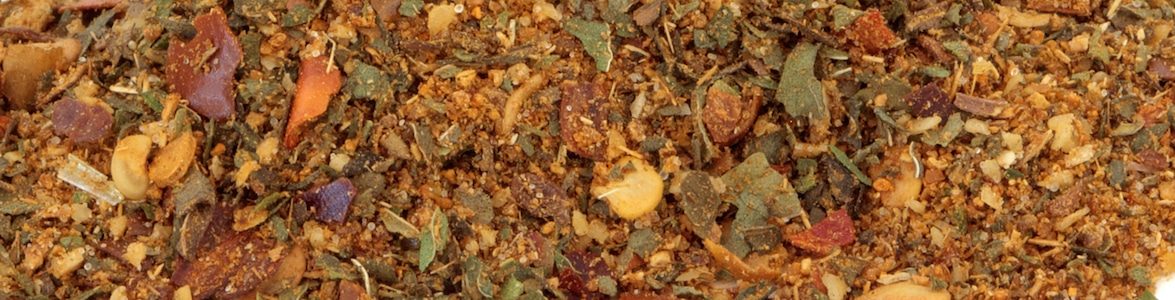
Harissa is a chile seasoning from Tunisia, best known as a paste; UNESCO added Tunisian harissa and the practices around making it to its list of the intangible cultural heritage of humanity in 2022.1 Harissa powder is the dry form: ground dried chile with garlic and spices such as coriander, caraway and cumin, ready to stir into oil or sprinkle on food. There is no single recipe. This page sets out what named sources put in it, how it is made, and how to use it.
At a glance
| What it is | A dry blend modeled on harissa, a North African chile paste12 |
| Home | Tunisia (UNESCO inscription, 2022)1 |
| Base | Dried chile pepper12 |
| Other ingredients | Varies; salt, garlic and coriander in the traditional paste, caraway in several Tunisian recipes13 |
| Name | From North African Arabic harīsa, from Arabic harasa, “crush, bruise, pound”2 |
| Heat | Depends on the chile; one recipe says to pick a ground red pepper with the heat you like4 |
| Forms sold | Paste (the traditional form) and powder15 |
What harissa is
UNESCO’s description calls harissa a seasoning made with chilli pepper paste and an integral part of household provisions in Tunisia.1 Merriam-Webster defines it as a spicy North African paste made from dried chilies, salt, oil and other seasonings.2 Gernot Katzer calls Tunisian harissa a fiery paste of dried chiles and notes that several recipes for it call for caraway, as does zhoug, a similar preparation from Yemen.3
How the paste is made. As UNESCO describes it, the chilies are dried in the sun, then stemmed, seeded and rinsed, and crushed with salt, garlic and coriander using a pestle and mortar or a hand-cranked meat mincer.1 The paste is stored in glass or pottery. Making it is usually a job for the women of a household, done together in a festive family setting.1
The name. Merriam-Webster traces harissa through French to North African Arabic harīsa, a derivative of Arabic harasa, “crush, bruise, pound.”2 The pounding in the name fits the mortar described above, though no source we opened says that is why it got the name. Merriam-Webster dates the first known English use, in this sense, to 1970.2
Origin of chile in North Africa. Chile peppers are American plants: Kew gives the native range of Capsicum annuum as the southern United States to Brazil and the Caribbean.6 Which route they took to North Africa and when they entered Tunisian cooking were not documented in any source checked for this page.
What goes into harissa powder
No regulator or standard defining harissa powder was found. Here is what five named sources use, side by side:
| Ingredient | UNESCO, traditional Tunisian paste1 | Katzer, Tunisian recipes3 | Oregon State Extension powder recipe4 | The Spice House blend (label order)5 | PepperScale harissa seasoning7 |
|---|---|---|---|---|---|
| Dried chile | Yes (sun-dried) | Yes | 1½ tsp cayenne, 1 tsp smoked paprika | Chiles, paprika | 1/2 cup dried chiles, minced; 2 tbsp smoked paprika |
| Salt | Yes | not stated | ½ tsp | Kosher salt | 1 tbsp sea salt |
| Garlic | Yes | not stated | ½ tsp garlic powder | Garlic | 1 tbsp garlic powder |
| Coriander | Yes | not stated | 1 tsp | Coriander | 2 tbsp seeds |
| Caraway | not listed | “Several recipes” | ½ tsp ground | Caraway | 1 tsp seeds |
| Cumin | not listed | not stated | 1 tsp | Cumin | 2 tbsp seeds |
| Other | none listed | none stated | none | Tomato powder (first), pepper, fennel, lemon juice powder, onion | none |
| Yield | not given | not given | 2 tablespoons | not given | not given |
How to read this:
- Chile, salt, garlic and coriander are the common core, and they are all that UNESCO’s description of the paste names.1
- Caraway appears in Katzer’s Tunisian recipes, the Oregon State recipe, the Spice House blend and PepperScale’s recipe.3457
- Cumin appears in all three American versions, and smoked paprika in Oregon State’s and PepperScale’s; neither is in UNESCO’s description.1457
- Mint, sometimes said to be a standard addition, is not in any of the five.
Flavor
The Spice House lists garlic, cumin and warm heat as its blend’s taste notes.5 In general, harissa powder tastes of dried red chile first, then garlic and the citrusy warmth of coriander and the anise-like note of caraway; that is our description. Heat ranges from mild to very hot depending on the chile used: the Oregon State recipe tells cooks to use cayenne or any ground red pepper with the heat level they like,4 and PepperScale suggests removing the chile seeds for a milder version.7
How it is used
As a paste. Oregon State Extension suggests mixing the powder with vegetable oil to make a paste for roasting poultry, meat or tofu.4 Mixed with oil, the powder gives a quick stand-in for the traditional paste; see harissa paste vs. powder.
As a seasoning. Oregon State suggests roasted vegetables, sauces, soups and stews.4 The Spice House suggests grilled vegetables, stews and lentils, eggs, shakshuka and merguez sausage, where it gives 3 tablespoons per pound of ground meat.5 PepperScale suggests it as a dry rub for steaks, chicken or a meaty fish, and as extra spice for soups, spreads and dips.7
Kitchen practice. As common practice rather than sourced findings, cooks also use harissa powder in:
- Couscous, chickpea dishes and lentil soups.
- Marinades for lamb, chicken and fish.
- Yogurt or mayonnaise sauces.
- Roasted carrots and squash.
Technique. Oregon State suggests that for a fresher blend, toast whole cumin and coriander seeds until fragrant, cool, then grind.4
Buying and quality
- Read the label. Commercial blends vary a lot. The Spice House blend lists tomato powder first;5 others are mostly chile. Salt is common.
- Smoked or not. A blend made with smoked paprika, as in Oregon State’s recipe,4 tastes noticeably smoky.
- Color and aroma. Bright brick-red powder with a clear garlic-and-coriander smell is fresh; dull brown powder has faded. Kitchen judgment.
Storage
Oregon State’s recipe says to keep the mix in an airtight container.4 No shelf-life figure from a regulator or standards body was found for harissa powder. Homemade harissa paste is a different matter: keep it refrigerated under a layer of oil (common practice).
Nutrition and health
No nutrient analysis of harissa powder was found. The amounts used are small, so the blend supplies little of any vitamin or mineral. Claims that harissa helps prevent obesity or macular degeneration through its calcium or vitamin A content were not supported by any source reviewed for this page, and no claim is made here that harissa treats or prevents any disease.
Safety
- Mycotoxins (EU). EU law sets maximum levels of ochratoxin A (20 µg/kg) and aflatoxins for dried Capsicum spices such as chilli powder, cayenne and paprika,8 the base of harissa powder.
- Salt. Commercial blends often contain salt;5 taste before salting the dish.
Substitutes and comparisons
- Harissa powder substitutes
- Harissa paste vs. powder
- North African cooking: Tunisian spices, Moroccan spices, ras el hanout
- The single spices: caraway seeds, coriander, cumin, cayenne pepper, smoked paprika, paprika
- Another chile-based blend: berbere seasoning
Footnotes
-
Harissa, knowledge, skills and culinary and social practices (Tunisia), UNESCO Intangible Cultural Heritage, 2022. ich.unesco.org · Reference work ↩ ↩2 ↩3 ↩4 ↩5 ↩6 ↩7 ↩8 ↩9 ↩10 ↩11 ↩12
-
harissa, Merriam-Webster Dictionary. merriam-webster.com · Reference work ↩ ↩2 ↩3 ↩4 ↩5 ↩6
-
Gernot Katzer, Caraway (Carum carvi), Gernot Katzer’s Spice Pages. gernot-katzers-spice-pages.com · Reference work ↩ ↩2 ↩3 ↩4
-
Harissa Spice Mix, Food Hero, Oregon State University Extension Service. foodhero.org · Reference work ↩ ↩2 ↩3 ↩4 ↩5 ↩6 ↩7 ↩8 ↩9 ↩10
-
Harissa Seasoning, The Spice House. thespicehouse.com · Merchant ↩ ↩2 ↩3 ↩4 ↩5 ↩6 ↩7 ↩8
-
Capsicum annuum L., Plants of the World Online, Royal Botanic Gardens, Kew. powo.science.kew.org · Reference work ↩
-
Matt Bray, “Harissa Seasoning Recipe”, PepperScale, 2024. pepperscale.com · Publication · PepperScale is also owned by Matt Bray, the editor of this site. ↩ ↩2 ↩3 ↩4 ↩5
-
Commission Regulation (EU) 2023/915, EUR-Lex. eur-lex.europa.eu · Regulator ↩