Spice Substitutes · Substitutes
Harissa Powder Substitutes, Ranked by the Job Harissa Is Doing
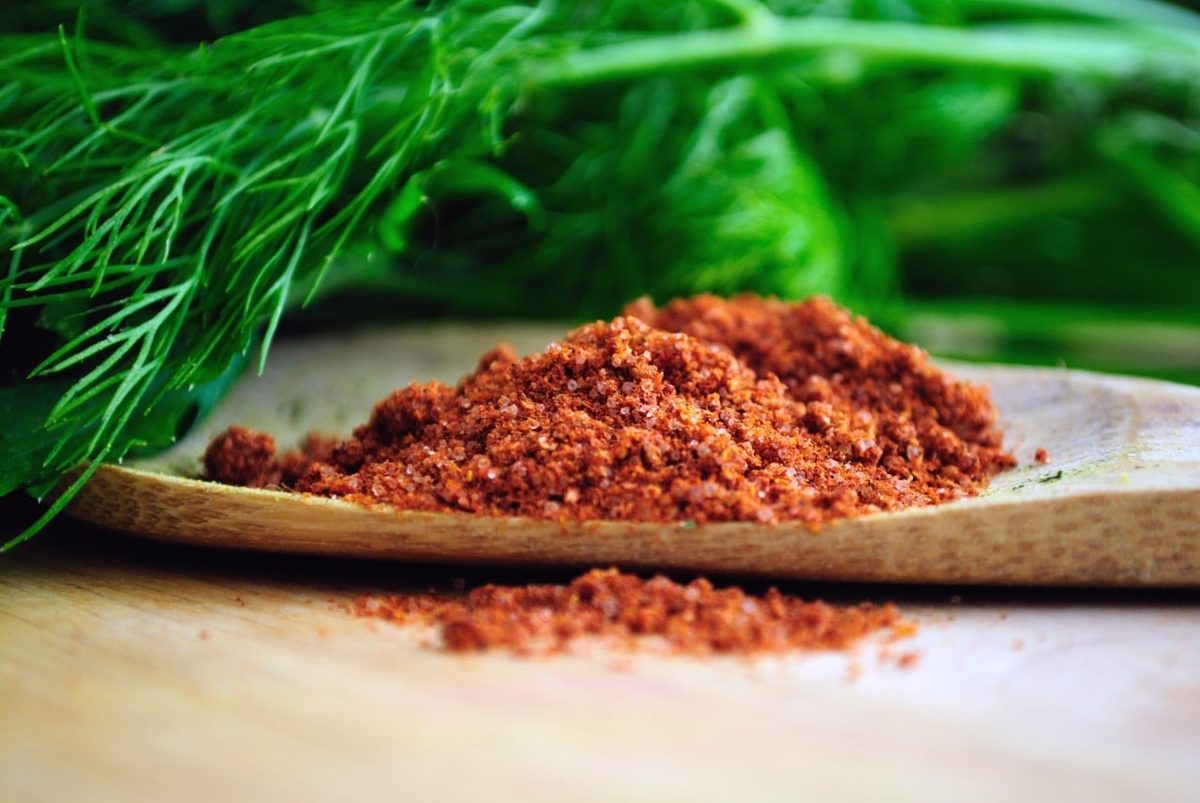
Harissa is a Tunisian chile paste. UNESCO, which added it to its intangible heritage list in 2022, describes chilies dried in the sun and crushed with salt, garlic and coriander.1 Harissa powder is a dry blend built on the same idea, and commercial and home versions add cumin, caraway, smoked paprika or tomato.23 Because harissa powder is itself a mix of common spices, the best substitute is usually to make a small batch. When you can’t, the right stand-in depends on what the harissa is doing in your dish.
Quick answer
| What harissa powder is doing | Best substitute | Starting amount, per 1 part harissa powder | Treatment |
|---|---|---|---|
| Lead flavor in a rub, roast or stew | A quick homemade mix (formula below) | 1 part | Attributed |
| Chile heat in a wet dish (marinade, sauce, stew) | Harissa paste | 1 part, then taste | Method |
| Chile and cumin warmth | Chili powder with a pinch of caraway | 1 part, then taste | Method |
| Seed-spice warmth with some heat | Tabil | 1 part, plus chile to taste | Method |
The rest of the page explains each choice and lists blends that work less well.
How the ratios on this page are labeled
Every ratio carries one of four labels.
- Computed: based on a measurable physical relationship, with the source named.
- Attributed: a named source publishes this ratio. We quote it as theirs.
- Disputed: named sources give different answers to the same swap. We show each one and do not average them.
- Method: we found no published ratio. We give a direction and a cautious starting point, and say so.
We found no credible published ratio for swapping harissa powder for another product. The one Attributed entry is a published recipe for the blend itself. The one Computed figure covers salt only.
What you are trying to replace
There is no official definition of harissa powder, so it helps to see what named sources put in it:
| Ingredient | UNESCO, traditional Tunisian paste1 | Katzer, Tunisian recipes4 | Oregon State Extension powder2 | The Spice House blend3 |
|---|---|---|---|---|
| Dried chile | Yes, sun-dried | Yes | Cayenne and smoked paprika | Chiles and paprika |
| Garlic | Yes | not stated | Garlic powder | Garlic |
| Coriander | Yes | not stated | Yes | Yes |
| Caraway | not listed | In several recipes | Yes | Yes |
| Cumin | not listed | not stated | Yes | Yes |
| Salt | Yes | not stated | Yes | Kosher salt |
| Other | none | none stated | none | Tomato powder (listed first), pepper, fennel, lemon juice powder, onion |
The common core is dried chile, garlic and coriander. The heat comes from the chile’s capsaicinoids, mainly capsaicin and dihydrocapsaicin,5 and how hot the blend is depends on which chile was used. Coriander brings a citrusy, floral warmth: linalool makes up 60 to 80% of coriander essential oil.6 Caraway, which Katzer says several Tunisian harissa recipes call for, adds a sharper note.4 A substitute that covers chile, garlic and coriander will get you most of the way.
If harissa is the lead flavor
1. A quick homemade mix
Oregon State University Extension’s Food Hero recipe makes 2 tablespoons of harissa powder from 1½ teaspoons cayenne pepper (or any ground red pepper with the heat level you like), 1 teaspoon smoked paprika, 1 teaspoon cumin, 1 teaspoon coriander, ½ teaspoon garlic powder, ½ teaspoon salt and ½ teaspoon ground caraway seed.2 If you have no cayenne, it suggests grinding dried hot peppers or crushed red pepper flakes, and for a fresher blend it suggests toasting whole cumin and coriander seeds before grinding.2
If you are missing caraway or smoked paprika, leave them out. The chile, garlic and coriander matter most (see the table above).
Ratio (Attributed): This is Oregon State’s formula for the blend itself, so use it in the same amount as the harissa powder your recipe calls for. Adjust the cayenne to suit the heat you want.
A larger batch (Attributed formula): PepperScale’s harissa seasoning uses whole seeds and dried chiles: 1/2 cup minced dried chiles, 2 tablespoons each smoked paprika, cumin seeds and coriander seeds, 1 tablespoon each sea salt and garlic powder, and 1 teaspoon caraway seeds, stored in an airtight container.7 It suggests removing the chile seeds for a milder version.7 Use it in the same amount as the harissa powder called for.
If harissa is chile heat in a wet dish
1. Harissa paste
The paste is the traditional form, not a variation. Merriam-Webster defines harissa as a spicy North African paste made from dried chilies, salt, oil and other seasonings,8 and UNESCO describes it as a household staple in Tunisia.1 In a marinade, sauce, soup or stew, paste works well. In a dry rub or a spice crust it does not, because it adds oil and moisture.
Going the other way, Oregon State suggests mixing its harissa powder with vegetable oil to make a paste for roasting poultry, meat or tofu, but gives no amount of oil.2
Ratio (Method): No published ratio for paste in place of powder. Pastes vary in strength and in how much oil they hold. Start with an equal amount, taste, and reduce other oil and salt in the recipe a little.
If harissa is chile and cumin warmth
1. Chili powder, with a pinch of caraway
American chili powder shares harissa’s chile, cumin and garlic. The USDA’s purchasing specification says it should include ground chili pepper, cumin, oregano, salt and garlic powder,9 and Saveur says the chile is usually ancho.10 What it lacks is coriander and caraway, and it adds oregano, which harissa does not have in any of the four sources above.
Ratio (Method): No published ratio. Use the same amount of chili powder, add a pinch each of ground coriander and caraway if you have them, and taste before salting. Add cayenne if you want more heat.
If harissa is seed-spice warmth
1. Tabil
Tabil is another Tunisian blend. Dave DeWitt writes that it is used to spice stews and is sprinkled over grilled meats, and that the word means coriander but generally refers to the blend.11 His recipe pounds 1 tablespoon coriander seeds, 1½ teaspoons caraway seeds, 2 garlic cloves and 1 teaspoon dried crushed chile into a paste, then dries and grinds it.11 That is harissa’s coriander, caraway and garlic with much less chile.
Ratio (Method): No published ratio. Use the same amount, then add ground chile or cayenne to bring up the heat.
Blends that work less well
Berbere
Berbere is an Ethiopian chile blend; Saveur says its name means hot in Amharic.12 Like harissa, it is chile-led. Katzer’s account adds long and black pepper, ginger, coriander and fenugreek, with sweet notes from cinnamon, cardamom, cloves and even allspice.13 Fenugreek is the big difference. PROSEA describes fenugreek as having a characteristic curry aroma,14 and none of the harissa sources above include it. Marcus Samuelsson notes that every family makes its own berbere,15 so check the label.
Ratio (Method): No published ratio. Start with about half the harissa amount, taste, and add a pinch of ground coriander or caraway.
Tandoori masala
Tandoori masala is an Indian blend, and Anjula Devi says that blended with yogurt it makes a marinade.16 Her recipe starts with large amounts of coriander and cumin seed,16 which overlap with harissa. Woodland Foods’ version lists salt first, then coriander, fenugreek, cinnamon and nutmeg, along with lemon peel, beet powder, tomato powder, paprika, garlic and cayenne.17 Its red color is not a guide to heat: Anupy Singla writes that the bright red of some store-bought blends “comes from Food Dyes like Red 40,” and that the blend was originally made with a leaning toward turmeric and paprika.18
Ratio (Method): No published ratio. Start with about half the harissa amount, since many blends are salted, and add cayenne if you need heat.
Old Bay seasoning
Old Bay is a celery-salt seafood seasoning. McCormick’s label lists celery salt (salt and celery seed), spices including red and black pepper, and paprika.19 It has red pepper, but none of harissa’s garlic, coriander or caraway is named on the label, and it is far saltier than a homemade harissa mix.
Salt (Computed): The Old Bay label gives 125 mg of sodium per ¼ teaspoon.20 The Oregon State harissa mix uses ½ teaspoon of salt in 2 tablespoons (6 teaspoons) of blend,2 and Tufts gives 2,325 mg of sodium in a teaspoon of table salt.21 Assuming table salt, that works out to about 48 mg of sodium per ¼ teaspoon of the harissa mix (2,325 × ½ ÷ 6 ÷ 4). So Old Bay used 1:1 adds about 2.6 times the salt (125 ÷ 48). This covers salt only, for these two products.
Ratio (Method): If Old Bay is all you have, use about a third of the harissa amount, which keeps the salt at or a little below the homemade mix’s level, and add other chile for heat.
What isn’t known
- No published ratio exists for replacing harissa powder with paste, chili powder, tabil, berbere, tandoori masala or Old Bay. Every amount marked Method is a starting point.
- No regulator or standards body defines harissa powder, and no heat measurement for it was found. Heat depends on the chile; Oregon State tells cooks to choose a ground red pepper with the heat they like.2
- Mint is sometimes said to be a standard harissa ingredient. It is not in any of the four sources compared above.
Related
- Harissa powder, the full profile, and harissa paste vs. powder
- Tunisian spices, Moroccan spices, ras el hanout
- Chili powder and chili powder substitutes
- Berbere seasoning and berbere substitutes
- Tandoori masala, tandoori masala substitutes, Old Bay seasoning
- The single spices: cayenne pepper, smoked paprika, cumin, coriander, caraway seeds, red pepper flakes
Footnotes
-
Harissa, knowledge, skills and culinary and social practices (Tunisia), UNESCO Intangible Cultural Heritage, 2022. ich.unesco.org · Regulator ↩ ↩2 ↩3
-
Harissa Spice Mix, Food Hero, Oregon State University Extension Service. foodhero.org · Reference work ↩ ↩2 ↩3 ↩4 ↩5 ↩6 ↩7
-
Harissa Seasoning, The Spice House. thespicehouse.com · Merchant ↩ ↩2
-
Gernot Katzer, Caraway (Carum carvi), Gernot Katzer’s Spice Pages. gernot-katzers-spice-pages.com · Reference work ↩ ↩2
-
Bosland and Walker, Measuring Chile Pepper Heat, NMSU Guide H-237, 2010. pubs.nmsu.edu · Reference work ↩
-
Al-Khayri et al., Essential Oil from Coriandrum sativum, Molecules, 2023. mdpi.com · Peer-reviewed ↩
-
Matt Bray, “Harissa Seasoning Recipe”, PepperScale, 2024. pepperscale.com · Publication · PepperScale is also owned by Matt Bray, the editor of this site. ↩ ↩2
-
harissa, Merriam-Webster Dictionary. merriam-webster.com · Reference work ↩
-
Commercial Item Description A-A-20001C, Spices and Spice Blends, USDA Agricultural Marketing Service, 2023. ams.usda.gov · Regulator ↩
-
Chili Powder, Saveur, 2009. saveur.com · Publication ↩
-
DeWitt, Tabil, Fiery Foods Central, 2015. fieryfoodscentral.com · Publication ↩ ↩2
-
Ethiopian Spice Mix (Berbere), Saveur, 2008. saveur.com · Publication ↩
-
Gernot Katzer, Long Pepper (Piper longum), Gernot Katzer’s Spice Pages. gernot-katzers-spice-pages.com · Reference work ↩
-
Trigonella foenum-graecum (PROSEA), Pl@ntUse. uses.plantnet-project.org · Reference work ↩
-
Raposo, Berbere Is Marcus Samuelsson’s Secret Weapon, Tasting Table, 2016. tastingtable.com · Publication ↩
-
Devi, Tandoori Masala, in 15-Minute Indian, via ckbk. app.ckbk.com · Publication ↩ ↩2
-
Tandoori Spice Blend, Woodland Foods. shop.woodlandfoods.com · Merchant ↩
-
Singla, Why Your Tandoori Masala Doesn’t Need to be Bright Red, Indian As Apple Pie. indianasapplepie.com · Publication ↩
-
OLD BAY Classic Seafood Seasoning, McCormick. mccormick.com · Merchant ↩
-
Old Bay Seasoning, 16 oz, ShopRite (Nutrition Facts). shoprite.com · Merchant ↩
-
What’s the difference between kosher salt and other salt?, Tufts Health & Nutrition Letter. nutritionletter.tufts.edu · Publication ↩