Blog · Profile
Tunisian Spices: Harissa, Tabil, Caraway, Coriander and Ras el Hanout
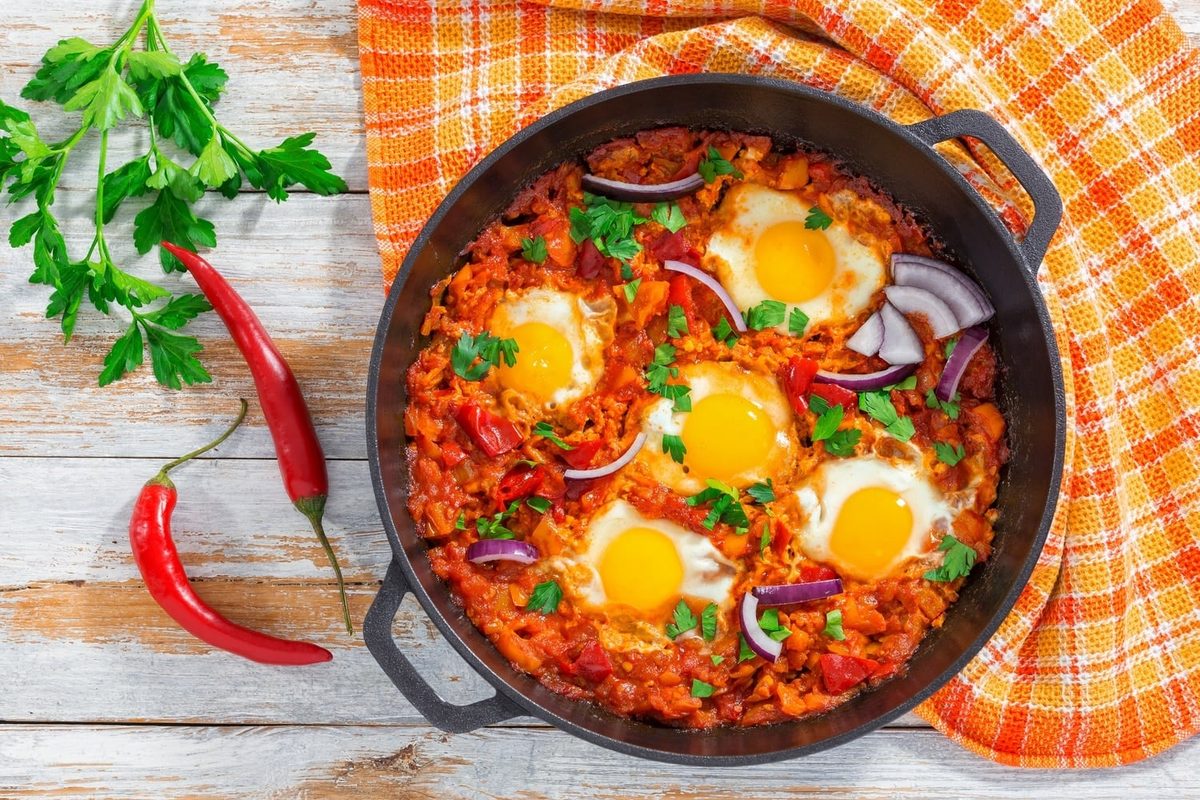
Tunisian cooking is built on chile, and the chile arrives mostly as harissa, a paste of sun-dried peppers pounded with salt, garlic and coriander that UNESCO added to its intangible heritage list in 2022.1 Around it sit a handful of seed spices (coriander, caraway and cumin), the blend tabil, and, in some dishes, the more elaborate ras el hanout and the old pepper-like spices cubeb and grains of paradise.
At a glance
| Seasoning | What it is | What it brings | Typical use |
|---|---|---|---|
| Harissa | Sun-dried chiles crushed with salt, garlic and coriander1 | Heat, garlic | Kept as a household staple1; merguez, shakshuka2 |
| Tabil | Coriander, caraway, garlic and dried chile3 | Warm, citrusy, mildly hot | Stews; sprinkled on grilled meat3 |
| Caraway | Dried seed | Sharp, anise-like | Harissa recipes4 |
| Coriander seed | Dried seed | Citrusy, warm | Harissa,1 tabil3 |
| Cumin | Dried seed | Earthy | Savory dishes |
| Ras el hanout | Multi-spice blend5 | Varies by maker | Varies |
| Cubeb, grains of paradise | Peppery seeds and berries | Pungent, bitter or citrusy | Blends67 |
Harissa
UNESCO’s inscription, made in Tunisia’s name in 2022, describes harissa as chilies dried in the sun and then crushed with salt, garlic and coriander, using a pestle and mortar or a hand meat mincer, and stored in glass or pottery jars.1 It calls the paste an integral part of domestic provisions and notes that it is usually prepared by women in a festive family setting.1
Recipes vary. Katzer notes that several Tunisian harissa recipes call for caraway,4 and commercial dry blends add more:
| Source | Ingredients |
|---|---|
| UNESCO (traditional paste)1 | Sun-dried chile, salt, garlic, coriander |
| Katzer (Tunisian recipes)4 | Several call for caraway |
| The Spice House (dry blend, US)2 | Tomato powder, chiles, salt, garlic, cumin, paprika, pepper, coriander, caraway, fennel, lemon juice powder |
The Spice House suggests 3 tablespoons of its blend per pound of ground meat for merguez, and lists shakshuka among its uses.2 See harissa powder, harissa paste vs. powder and harissa substitutes.
Tabil
Tabil is a Tunisian blend; Dave DeWitt writes that the word means coriander but usually refers to a mix, which Tunisians use in stews and sprinkle over grilled meats.3 His recipe uses coriander seed, caraway seed, garlic and a dried crushed chile.3 It reads as harissa’s dry cousin: the same seeds and garlic, with less chile. That comparison is ours.
Caraway
Katzer describes caraway as of some importance in North African cooking, mostly in Tunisia.4 See caraway seeds, cooking with caraway seeds and caraway vs. cumin.
Coriander seed
Katzer lists coriander fruits as a common spice across Europe, Northern Africa and West, Central and South Asia.8 In Tunisia it is one of the three seasonings in UNESCO’s description of harissa1 and the namesake of tabil.3 See coriander, cooking with coriander and coriander vs. cumin.
Cumin
Britannica describes cumin as especially popular in North African cooking, as well as in Asian and Latin American cuisines.9 It is not part of UNESCO’s description of traditional harissa,1 though some commercial harissa blends include it.2 See cumin and cumin uses.
Ras el hanout
The Oxford Companion to Food says ras el hanout, a name meaning something like “top of the shop,” is found in varying forms in Tunisia, Algeria and Morocco.5 Its standard ingredients, per the Companion, are cumin, coriander, turmeric, ginger, cardamom and nutmeg, with many more in elaborate versions.5 It is better known as a Moroccan blend; see ras el hanout and Moroccan spices.
Cubeb and grains of paradise
Katzer writes that cubeb pepper is now used mostly in North Africa, notably Tunisia and Morocco,6 and that the Tunisian blend gâlat dagga contains grains of paradise.7 See cubeb pepper and grains of paradise.
Mint
Katzer calls an infusion of green mint the “national beverage” of Morocco and Tunisia.10 See Moroccan mint and spearmint.
Also in the pantry
Flat-leaf parsley and olive oil turn up in most savory Tunisian dishes; that is common practice. See parsley.
Related pages
- Moroccan spices, Egyptian spices and Mediterranean spices
- Cayenne pepper and red pepper flakes
- The master list of herbs and spices
Footnotes
-
Harissa, knowledge, skills and culinary and social practices, UNESCO Representative List, 2022. ich.unesco.org · Reference work ↩ ↩2 ↩3 ↩4 ↩5 ↩6 ↩7 ↩8 ↩9
-
Harissa Seasoning product page, The Spice House. thespicehouse.com · Merchant ↩ ↩2 ↩3 ↩4
-
Dave DeWitt, “Tabil”, Fiery Foods Central, 2015. fieryfoodscentral.com · Publication ↩ ↩2 ↩3 ↩4 ↩5 ↩6
-
Gernot Katzer, Caraway (Carum carvi), Gernot Katzer’s Spice Pages. gernot-katzers-spice-pages.com · Reference work ↩ ↩2 ↩3 ↩4
-
Alan Davidson, “Ras-el-hanout”, The Oxford Companion to Food, 2014. app.ckbk.com · Reference work ↩ ↩2 ↩3
-
Gernot Katzer, Cubeb Pepper (Piper cubeba), Gernot Katzer’s Spice Pages. gernot-katzers-spice-pages.com · Reference work ↩ ↩2
-
Gernot Katzer, Grains of Paradise (Aframomum melegueta), Gernot Katzer’s Spice Pages. gernot-katzers-spice-pages.com · Reference work ↩ ↩2
-
Gernot Katzer, Coriander (Coriandrum sativum), Gernot Katzer’s Spice Pages. gernot-katzers-spice-pages.com · Reference work ↩
-
“Cumin”, Encyclopaedia Britannica. britannica.com · Reference work ↩
-
Gernot Katzer, Mint (Mentha), Gernot Katzer’s Spice Pages. gernot-katzers-spice-pages.com · Reference work ↩