Spices · Profile
Jalapeño Powder: Green and Red, How Hot It Is, and How to Use It
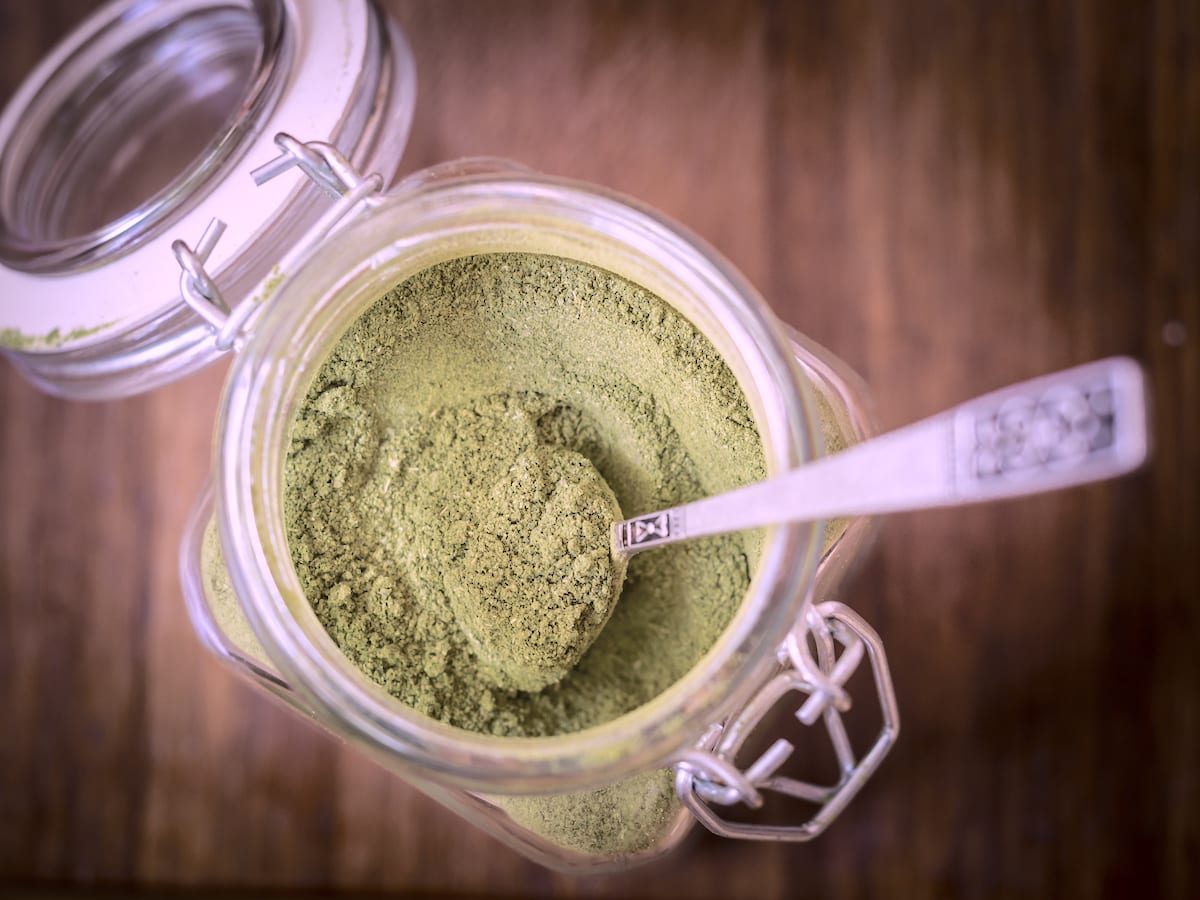
Jalapeño powder is jalapeño chile that has been dried and ground without smoking. Smoke-dried jalapeños are chipotles, a different product.1 It is sold green, from unripe pods, and red, from ripe ones; merchants describe the green powder as bright and bell-pepper-like.23 This page covers what the powder is, how hot it is (the figures depend on who measured what), how cooks use it, and what can and cannot be said about its nutrition.
At a glance
| What it is | Dried, ground jalapeño chile, unsmoked2 |
| Botanical name | Capsicum annuum; DeWitt describes the jalapeño as a pod type of that species4 |
| Plant family | Solanaceae (nightshade family)5 |
| Domesticated | Mexico; the evidence points to central-east Mexico6 |
| Name | After Xalapa (Jalapa), capital of Veracruz417 |
| Heat | Moderate; one bylined figure for the pods is 2,500–10,000 SHU (see table)4 |
| Forms sold | Green powder (unripe pods) and red powder (ripe pods)23 |
| Smoked version | Chipotle powder1 |
Measured values
4 figures, sourced| Measure | Value | Scope | Source |
|---|---|---|---|
| Heat, jalapeno pods in general Conventional range | 2,500–10,000 SHU | jalapeno pods in general; no samples or method stated (Dave DeWitt, 2008)No published measurement of jalapeno powder was found | fieryfoodscentral.com |
| Ochratoxin A, maximum Limit | 20 µg/kg | EU Regulation 2023/915, dried Capsicum fruits, whole or ground | eur-lex.europa.eu |
| Aflatoxin B1, maximum Limit | 5.0 µg/kg | EU Regulation 2023/915, dried Capsicum fruits, whole or ground | eur-lex.europa.eu |
| Total aflatoxins, maximum Limit | 10.0 µg/kg | EU Regulation 2023/915, dried Capsicum fruits, whole or ground | eur-lex.europa.eu |
Each figure is quoted as its source states it, with the samples or standard it applies to. Where sources differ, both are shown; nothing is averaged. All measured values
What a jalapeño is
The Real Academia Española defines chile jalapeño, as used in Mexico and Nicaragua, as a chile variety with a small, thick, dark green fruit.8 Dave DeWitt, writing for Fiery Foods & Barbecue Central, describes the pods as conical to cylindrical, about 2 to 3 inches long and 1 inch wide, green and maturing to red.4 Gernot Katzer notes that jalapeños are usually eaten unripe and fresh, valued for their crisp texture in salsa and guacamole.1
The name. DeWitt says the chile was named after the city of Xalapa in Veracruz, Mexico, where it is no longer grown commercially.4 Katzer gives the same derivation, from Jalapa (or Xalapa), capital of Veracruz,1 and the RAE defines jalapeño as a native of, or relating to, Jalapa de Enríquez, the state capital.7 Two other claims often made about the name could not be traced: that it came into use in the 1950s, and that in Mexico it applies only to pickled jalapeños.
Origin. The species Capsicum annuum is native from the southern United States to Brazil and the Caribbean,9 and a 2014 study found four lines of evidence pointing to its domestication in central-east Mexico.6 When the jalapeño type itself arose is not documented in any source checked here.
Why dried jalapeños used to be smoked
Katzer explains that fleshy, perishable chiles such as jalapeños rot more quickly than they dry, and that chipotles are made by slowly smoking ripe red jalapeños for up to two days.1 Powder made from unsmoked dried jalapeños avoids the smoke flavor entirely. Claims that the Aztecs smoked jalapeños for this reason, or used them in mole with venison and seafood, could not be traced to any source.
Green and red powder
| Green jalapeño powder | Red jalapeño powder | |
|---|---|---|
| Made from | Unripe green pods (pods mature from green to red)4 | Ripe red pods4 |
| How a merchant describes it | “Distinctly bright, bell-pepper taste” (World Spice)2; “a rich earthy flavor” (Santa Fe School of Cooking)3 | No named source checked describes it |
| Heat, as a merchant rates it | Moderate (World Spice)2; mild to moderate (Santa Fe School of Cooking)3 | No named rating found |
The Santa Fe School of Cooking says its green powder has a different flavor profile from its red cousin, without describing the red.3 A common claim says red jalapeño powder is earthier and hotter because heat builds as the pod ripens on the plant. No source checked for this page measured that, so it is not presented as fact.
Flavor
Green jalapeño powder tastes of fresh green pepper, grassy and a little vegetal, with heat that arrives quickly and fades; red powder tastes rounder and fruitier. Those descriptions are ours. World Spice tags its powder “grassy” and contrasts its bright bell-pepper taste with red chiles.2 PepperScale describes the green powder as bright, grassy and slightly sweet.10
How hot is jalapeño powder?
| Scope | Heat | Source |
|---|---|---|
| Jalapeño pods in general (no samples or method stated) | 2,500–10,000 SHU | Dave DeWitt, 20084 |
| Fresh jalapeños, 10 peppers from each of 10 suppliers, analyzed individually | Heat very skewed; very high variability within a single supplier (abstract gives no SHU range) | Sweat et al., Food Chemistry, 201611 |
| Jalapeño powder (general rating, no samples or method stated) | 2,500–8,000 SHU | PepperScale10 |
| Jalapeño powder, measured | No published measurement found | |
| For comparison: “cayenne peppers” (no sample or method stated) | About 8,000 SHU | McCormick Science Institute5 |
How to read this:
- DeWitt’s and PepperScale’s ranges are general ratings, not measurements of any powder; they share the 2,500 floor and differ at the top (10,000 against 8,000), and both are shown.
- The 2016 study shows why single figures mislead. Heat varied widely even among peppers from the same supplier.11
- Jalapeño powder versus cayenne. A common claim says jalapeño powder is a little milder than cayenne. The general figures above overlap and none measures powder, so this page does not rank them. See cayenne pepper for why cayenne figures vary.
- Heat in chiles comes from capsaicinoids, and NMSU notes that HPLC is the most accurate way to measure it.12
Whether drying changes the capsaicinoid content of jalapeños could not be checked for this page.
How it is used
World Spice suggests its jalapeño powder for roasted vegetables, soups, sauces and rubs.2 The Santa Fe School of Cooking suggests its green powder for long-simmered dishes.3 PepperScale calls it a stand-in for fresh jalapeños in a pinch, though it gives no conversion, and suggests it as a finishing spice on eggs and tacos, in place of hot sauce where you want jalapeño flavor without the liquid, in bread and barbecue sauce, as the chile in a homemade chili powder, and mixed with salt for a margarita rim.10 Other common uses, which are kitchen practice rather than sourced findings:
- Dry rubs for chicken and pork, and barbecue sauces.
- Cornbread, biscuits and savory baking, where fresh chile would add moisture.
- Dips made with sour cream, cream cheese or mayonnaise.
- Popcorn, roasted nuts and eggs, as a finishing sprinkle.
- Salsas and guacamole, for heat when fresh jalapeños are out of season.
Technique. Like other ground chiles, the powder scorches easily; warm it briefly in oil over moderate heat, or add it with liquid. Kitchen practice, not a sourced finding.
Buying and quality
- Check the label. Pure jalapeño powder lists only jalapeño. A jar that adds salt, garlic or other spices is a seasoning blend.
- Color. Green powder should be olive to bright green; a dull, brownish green suggests age. Kitchen judgment, not a standard.
- Smoked or not. If the label says smoked, it is chipotle, not jalapeño powder.1
Storage
The University of California Cooperative Extension lists air, light, moisture and heat as what speeds flavor and color loss in spices.13 Keep the powder airtight, dark and cool. No shelf-life figure from a regulator or standards body was found for jalapeño powder.
Nutrition and health
USDA FoodData Central has no entry for jalapeño powder, and no nutrient analysis of the powder was found. Vitamin A and fiber figures that circulate for a teaspoon or tablespoon of jalapeño powder could not be traced, so none are given here.
Capsaicin. The strongest human evidence concerns a prescription skin patch, not chile in food. A 2017 Cochrane systematic review found moderate-quality evidence that a high-concentration (8%) capsaicin patch gave moderate pain relief to a minority of people with postherpetic neuralgia.14 Claims that jalapeño powder prevents cancer, lowers cholesterol or relieves constipation were not supported by any source reviewed for this page. No claim is made here that it treats or prevents any disease.
Safety
- Mycotoxins (EU). EU law caps ochratoxin A at 20 µg/kg in dried Capsicum fruits, whole or ground, and sets 5.0 µg/kg for aflatoxin B1 and 10.0 µg/kg for total aflatoxins.15
- Handling. Wash hands after handling chile powder and keep it away from eyes. Common-sense guidance, not a sourced finding.
Substitutes and comparisons
- Chipotle powder, the smoked jalapeño, and chipotle powder substitutes
- Cayenne pepper and cayenne pepper substitutes
- Other chile powders: ancho powder, guajillo powder, chile de árbol powder, habanero powder
- Related: chili powder, red pepper flakes, paprika
Footnotes
-
Gernot Katzer, Paprika and Mexican chiles (Capsicum annuum), Gernot Katzer’s Spice Pages. gernot-katzers-spice-pages.com · Reference work ↩ ↩2 ↩3 ↩4 ↩5 ↩6 ↩7
-
Jalapeño Powder, World Spice Merchants (product page). worldspice.com · Merchant ↩ ↩2 ↩3 ↩4 ↩5 ↩6 ↩7
-
Green Jalapeño Powder, Santa Fe School of Cooking Market (product page). market.santafeschoolofcooking.com · Merchant ↩ ↩2 ↩3 ↩4 ↩5 ↩6
-
Dave DeWitt, “Pepper Profile: Jalapeño”, Fiery Foods & Barbecue Central, 2008. fieryfoodscentral.com · Publication ↩ ↩2 ↩3 ↩4 ↩5 ↩6 ↩7 ↩8
-
Red Pepper, McCormick Science Institute. mccormickscienceinstitute.com · Merchant ↩ ↩2
-
Kraft et al., Multiple lines of evidence for the origin of domesticated chili pepper, PNAS, 2014. escholarship.org · Peer-reviewed ↩ ↩2
-
jalapeño, Diccionario de la lengua española, Real Academia Española. dle.rae.es · Reference work ↩ ↩2
-
chile (chile jalapeño), Diccionario de la lengua española, Real Academia Española. dle.rae.es · Reference work ↩
-
Capsicum annuum L., Plants of the World Online, Royal Botanic Gardens, Kew. powo.science.kew.org · Reference work ↩
-
Matt Bray, Six Jalapeño Powder Uses To Spice Up Your Kitchen, PepperScale, 2022. pepperscale.com · Publication · PepperScale is also owned by Matt Bray, the editor of this site. ↩ ↩2 ↩3
-
Sweat et al., Variability in capsaicinoid content and Scoville heat ratings of commercially grown Jalapeño, Habanero and Bhut Jolokia peppers, Food Chemistry, 2016 (abstract). asu.elsevierpure.com · Peer-reviewed ↩ ↩2
-
Bosland and Walker, Measuring Chile Pepper Heat, NMSU Guide H-237, 2010. pubs.nmsu.edu · Reference work ↩
-
Add a Little Spice to Your Life! Part II, University of California Cooperative Extension. ucanr.edu · Reference work ↩
-
Derry et al., Topical capsaicin (high concentration) for chronic neuropathic pain in adults, Cochrane Database of Systematic Reviews, 2017. cochrane.org · Peer-reviewed ↩
-
Commission Regulation (EU) 2023/915, EUR-Lex. eur-lex.europa.eu · Regulator ↩