Spice Substitutes · Substitutes
Chipotle Powder Substitutes, Ranked by the Job Chipotle Is Doing
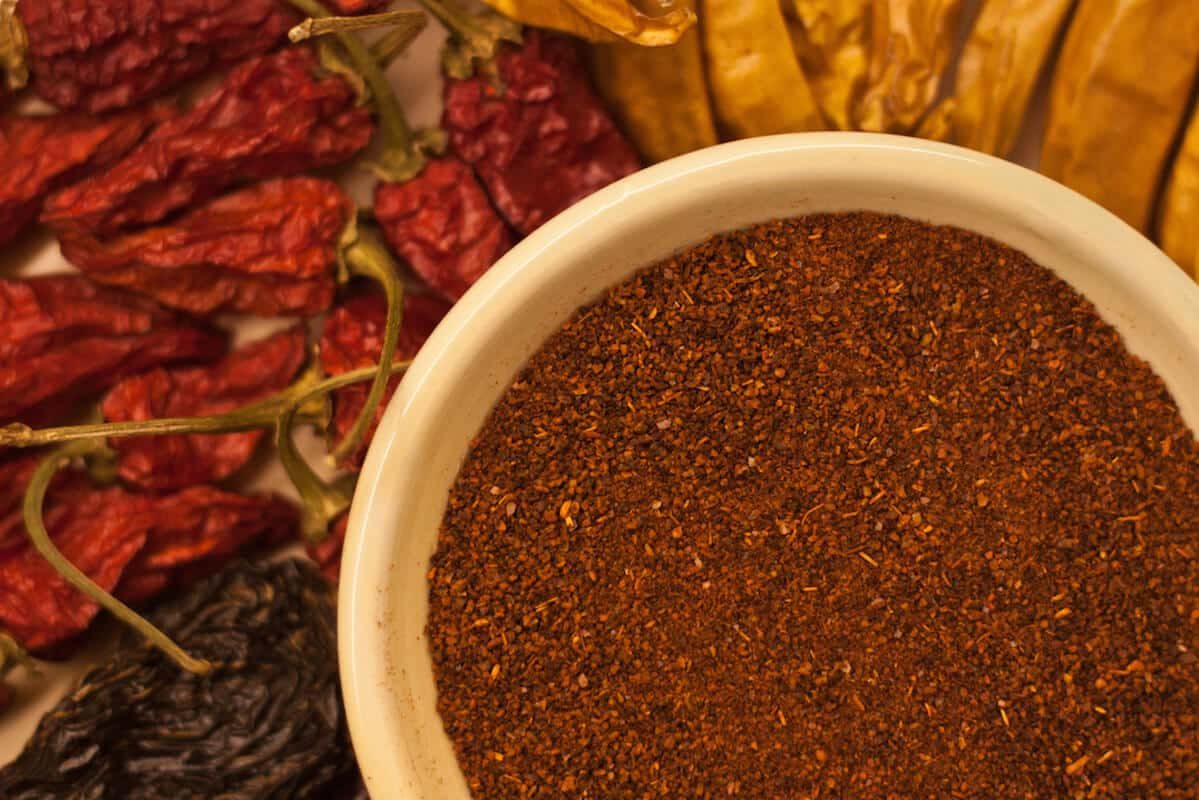
Chipotle powder is ground chipotle chile, and a chipotle is a ripe jalapeño dried over wood smoke.12 Gernot Katzer describes the finished chile as combining good paprika aroma, significant heat and intense smoke flavor.1 That gives it two jobs at once, smoke and heat, and few substitutes do both. The best choice depends on which of the two your recipe needs more.
Quick answer
| What chipotle is doing | Best substitute | Starting amount, per 1 part chipotle | Treatment |
|---|---|---|---|
| Smoke, with gentle heat | Smoked paprika | 1 part | Attributed |
| Smoke and real heat | Smoked paprika plus cayenne | 1 part, plus a pinch of cayenne at a time | Method |
| Heat, smoke not needed | Cayenne | ½ part | Attributed |
| Mild chile body in a sauce | Ancho powder | 1½ parts | Attributed |
| Seasoning in chili or taco meat | Chili powder | 1 part | Attributed |
| A sauce or marinade, if you have the can | Chipotles in adobo | 1 chipotle, or 1 tablespoon adobo sauce per tablespoon of powder | Attributed |
The rest of the page explains each choice and the other options.
How the ratios on this page are labeled
Every ratio carries one of four labels.
- Computed: based on a measurable physical relationship, with the source named.
- Attributed: a named source publishes this ratio. We quote it as theirs.
- Disputed: named sources give different answers to the same swap. We show each one and do not average them.
- Method: we found no published ratio. We give a direction and a cautious starting point, and say so.
Almost every published ratio we found for chipotle comes from one bylined listicle in Mashed, which gives them without saying how they were arrived at. They are rules of thumb. And because chipotle’s own heat is so poorly pinned down (see below), no ratio can promise to match a particular jar.
How hot is chipotle, and how hot are the swaps?
The figures below come from different kinds of sources and describe different things. They are shown side by side, not combined.
| What | Heat | Scope | Source |
|---|---|---|---|
| Chipotle in general | Usually 5,000–10,000 SHU | A journalist’s general figure; no samples or method stated | Mick Vann, The Austin Chronicle, 20122 |
| Ground chipotle (morita) | 13,000–28,000 SHU | One merchant’s own product; no method stated | The Spice House3 |
| Chipotle powder, as widely repeated | 2,500–8,000 SHU | No traceable source found | |
| Fresh jalapeños, 10 from each of 10 suppliers | Heat very skewed, with very high variability within one supplier | Fresh fruit, not chipotle | Sweat et al., Food Chemistry, 20164 |
| Ancho | 1,000–2,000 SHU | Pepper type; general figure | NMSU Chile Pepper Institute5 |
| Chili powder bought by US federal agencies | 900–2,000 SHU | A purchasing specification | USDA AMS, 20236 |
| Cayenne powder | 35,000–70,000 SHU | One merchant’s own product | The Spice House7 |
| “Cayenne Long” | 30,000–50,000 SHU | Approximate scale | Dave DeWitt, 20088 |
| Crushed red pepper | 15,000–30,000 SHU | Approximate scale | Dave DeWitt, 20088 |
| Hot paprika (category) | Above 480 and below 900 SHU | A category boundary, not a measurement | Codex CXS 353-20229 |
How to read this:
- The two chipotle figures differ several-fold, and The Spice House’s is for its own morita powder. Vann says most chipotles sold in the US are moritas,2 but neither source states its samples or method, so they cannot be settled against each other.
- The 2,500–8,000 range is untraceable, not wrong. It may describe some powders; we found no one who shows where it came from.
- The jalapeño study shows why single figures mislead. Heat varied widely even among peppers from one supplier.4
If chipotle is there for smoke
This is the job most recipes rely on: in barbecue sauces, rubs, beans and chili, chipotle supplies smoke that nothing else in the dish provides.
1. Smoked paprika
Smoked paprika is the closest match for the smoke, because it is made the same basic way: ripe red peppers dried over a wood fire. Spain’s Pimentón de la Vera is dried over holm oak or oak until its moisture falls from about 80% to under 15%,1011 and its specification describes a smoky, intense and penetrating flavor and aroma.10 Katzer says chipotles are commonly smoked over pecan or hickory.1 So the woods and the peppers differ: the peppers behind smoked paprika are mild paprika types, and the La Vera sweet type is described as completely sweet, with only the hot type showing “pronounced heat on the palate”.10
Ratio (Attributed): Mashed says to use a teaspoon of smoked paprika for each teaspoon of chipotle powder.12 Use the hot (picante) type if you can find it.
2. Smoked paprika plus cayenne, for smoke and heat
Even hot paprika sits below 900 Scoville units by the international standard’s definition,9 lower than either published chipotle figure. Adding cayenne restores some of the heat.
Ratio (Method): We found no published ratio for this mix. Start with the same amount of smoked paprika as chipotle, add cayenne a pinch at a time, and taste after each addition. Cayenne is much hotter than chipotle by every figure above, so a little goes a long way.
3. Pasilla de Oaxaca
Katzer describes pasilla de Oaxaca as a chile that is dried and smoked,1 unlike the ordinary pasilla. It is harder to find than chipotle, but it is a smoked Mexican chile.
Ratio (Method): No published ratio was found. Start with an equal amount and taste.
If chipotle is there for heat
When chipotle is one of several spices and the smoke is not the point, any hot ground chile will do.
Cayenne
Cayenne brings heat with little smoke or sweetness; that description is ours.
Ratio (Attributed): Mashed says to use half a tablespoon of cayenne for each tablespoon of chipotle powder.12 By the heat figures above, even that may be hotter than your chipotle; start lower if you are unsure.
Crushed red pepper
McCormick Science Institute says crushed red pepper flakes typically use the cayenne variety, alone or blended.13
Ratio (Attributed): Mashed says to use a teaspoon of crushed red pepper per teaspoon of chipotle powder.12 Grind the flakes if you want the heat spread evenly; that is kitchen practice.
If chipotle is chile body in a sauce
Ancho powder
Ancho is a dried poblano, which the Chile Pepper Institute describes as mild, sweet and smoky with hints of dried fruit.5 Katzer writes that mole-type sauces commonly pair mild, aromatic chiles such as ancho with more pungent ones like the smoky chipotle,1 so ancho fills the body but not the heat.
Ratio (Attributed): Mashed says to use about a tablespoon and a half of ancho powder for each tablespoon of chipotle powder.12
Pasilla powder
Pasilla is another mild Mexican chile, according to the Chile Pepper Institute.14 It is darker and has no smoke.
Ratio (Attributed): Mashed says to use a tablespoon of pasilla powder per tablespoon of chipotle powder.12
If chipotle is seasoning in chili or taco meat
Chili powder
American chili powder blends ground chili pepper with cumin, oregano, salt and garlic powder,6 and Saveur says the chile is usually ancho.15 It brings those flavors, little smoke and less heat than chipotle on the figures above.
Ratio (Attributed): Mashed says to use a teaspoon of chili powder per teaspoon of chipotle powder.12 Cut back on the recipe’s own cumin, oregano and salt.
If you have chipotles in a can
Katzer describes chipotles en adobo as whole chipotles stewed in a thin, well-seasoned tomato sauce.1 They bring moisture and the sauce’s own seasoning along with the chile.
Ratio (Attributed): Mashed’s rule of thumb is about one chipotle pepper for each teaspoon of chipotle powder, or a tablespoon of adobo sauce in place of a tablespoon of powder.12
Other options
| Substitute | Starting amount, per 1 part chipotle | Treatment | Notes |
|---|---|---|---|
| Gochugaru | 1 part | Attributed12 | Mashed’s figure. Korean chile, usually not smoked; heat varies by lot. |
| Hot sauce with a drop or two of liquid smoke | A few drops of each, then taste | Method | No published ratio. Hot sauce adds vinegar and liquid. |
On liquid smoke: Vann reports that some chipotle producers already spray chiles with liquid smoke in gas driers rather than smoking them over wood,2 so some chipotle powders may taste of it anyway.
What isn’t known
- How hot chipotle powder is. The two named figures differ several-fold, and the most widely repeated range has no traceable source.
- No published measurement compares chipotle’s smoke or heat with any substitute; every ratio above is a rule of thumb.
- Whether a given chipotle powder was smoked over wood or treated with liquid smoke. Vann reports that both are done;2 no source we checked says how to tell them apart in the jar.
Related
- Chipotle powder and jalapeño powder, the unsmoked version
- Smoked paprika and smoked paprika substitutes, paprika
- Ancho powder and ancho substitutes, pasilla powder, guajillo powder
- Cayenne pepper and cayenne substitutes, red pepper flakes, gochugaru
- Chili powder, adobo seasoning, BBQ spices, best spices for chili
Footnotes
-
Gernot Katzer, Paprika and Mexican chiles (Capsicum annuum), Gernot Katzer’s Spice Pages. gernot-katzers-spice-pages.com · Reference work ↩ ↩2 ↩3 ↩4 ↩5 ↩6
-
Mick Vann, Chipotle Chiles, The Austin Chronicle, 2012. austinchronicle.com · Publication ↩ ↩2 ↩3 ↩4 ↩5
-
Ground Chipotle Chiles, The Spice House (product page). thespicehouse.com · Merchant ↩
-
Sweat et al., Variability in capsaicinoid content and Scoville heat ratings of commercially grown Jalapeño, Habanero and Bhut Jolokia peppers, Food Chemistry, 2016 (abstract). asu.elsevierpure.com · Peer-reviewed ↩ ↩2
-
Ancho recipe card, Chile Pepper Institute, New Mexico State University. cpi.nmsu.edu · Reference work ↩ ↩2
-
Commercial Item Description A-A-20001C, Spices and Spice Blends, USDA Agricultural Marketing Service, 2023. ams.usda.gov · Regulator ↩ ↩2
-
Cayenne Pepper, The Spice House (product page). thespicehouse.com · Merchant ↩
-
Dave DeWitt, Heat Scale Updated, Fiery Foods & Barbecue Central, 2008. fieryfoodscentral.com · Publication ↩ ↩2
-
Standard for Dried or Dehydrated Chilli Pepper and Paprika, CXS 353-2022, Codex Alimentarius. fao.org · Standard ↩ ↩2
-
Pimentón de la Vera PDO product specification, Consejo Regulador. assets.publishing.service.gov.uk · Regulator ↩ ↩2 ↩3
-
Pimentón de la Vera PDO, Foods & Wines from Spain (ICEX). foodswinesfromspain.com · Regulator ↩
-
Adrianna MacPherson, X Best Substitutes For Chipotle Powder, Mashed, updated 2023. mashed.com · Publication ↩ ↩2 ↩3 ↩4 ↩5 ↩6 ↩7 ↩8
-
Red Pepper, McCormick Science Institute. mccormickscienceinstitute.com · Merchant ↩
-
Pasilla recipe card, Chile Pepper Institute, New Mexico State University. cpi.nmsu.edu · Reference work ↩
-
Chili Powder, Saveur, 2009. saveur.com · Publication ↩