Spice Comparisons · Comparison
Paprika vs. Cayenne: Heat, Color and Flavor Compared
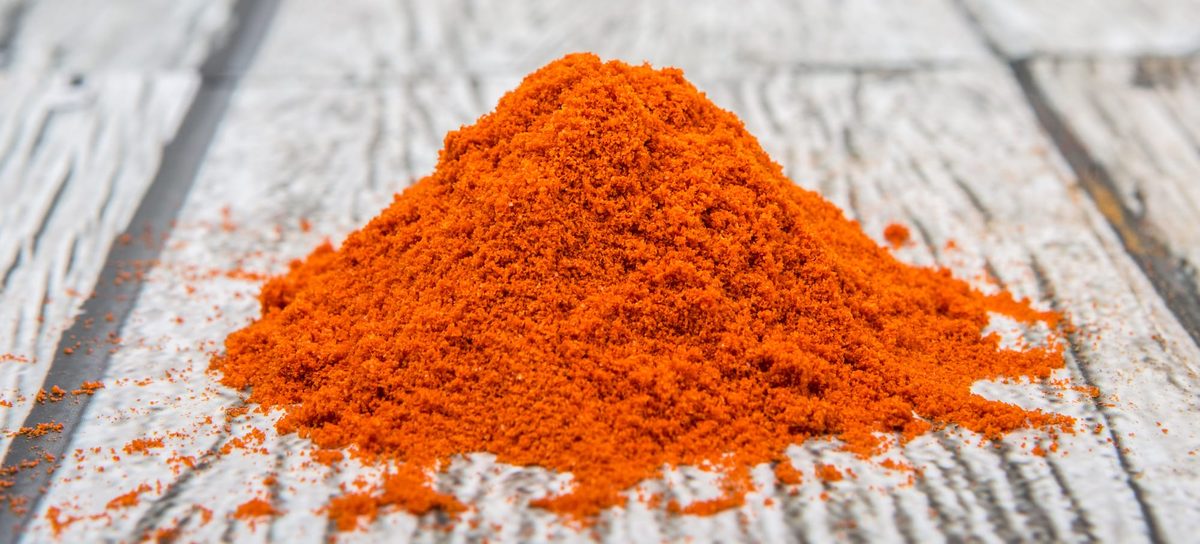
Paprika and cayenne are both dried, ground red fruit of Capsicum annuum.12 What separates them is what each is grown and blended for. Paprika is sold for color and sweet pepper flavor, with heat optional: the international Codex standard defines paprika as dried Capsicum at 480 Scoville heat units (SHU) or less, and “hot paprika” as above 480 but below 900.3 Cayenne is sold for heat. Its published Scoville figures disagree with each other, but every one of them sits above the 900 SHU line where the Codex standard stops calling a chile paprika.32456
This page compares the ground spices, not fresh cayenne pods.
Side by side
| Paprika | Cayenne | |
|---|---|---|
| Plant | Capsicum annuum, nightshade family (Solanaceae)1 | Capsicum annuum, nightshade family; most commercial red pepper is this species2 |
| What defines it | Dried Capsicum at 480 SHU or less; hot paprika above 480 and below 900 (Codex)3 | A pod type within C. annuum with many cultivars;47 in the trade, ground red pepper is sometimes simply called cayenne2 |
| Color compounds | Mainly the carotenoids capsanthin and capsorubin8 | No cayenne-specific pigment analysis found |
| Heat compounds | Capsaicinoids; Hungary grades ground paprika by capsaicinoid content in mg/kg9 | Capsaicinoids, mainly capsaicin and dihydrocapsaicin10 |
| Heat | Low by definition; see the table below | Disputed; see the table below |
| Color grading | ASTA Method 20.1 measures extractable color in all capsicums;11 Pimentón de la Vera must reach 90 ASTA units at milling, Hungary’s premium class 120129 | Same method applies;11 no published color minimum found for retail cayenne |
| Styles | Sweet, bittersweet and hot pimentón;12 smoke-dried in La Vera, sun- or hot-air-dried in Murcia;1213 four Hungarian heat classes9 | Hot. Used fresh, dried and ground, or as a mash for Louisiana-style hot sauce24 |
| Vitamin A per teaspoon (computed) | About 57 µg RAE, about 6% of the Daily Value (1 tsp = 2.3 g)1415 | About 37 µg RAE, about 4% (1 tsp = 1.8 g)1615 |
| EU mycotoxin limits | Ochratoxin A 20 µg/kg; aflatoxin B1 5.0 µg/kg; total aflatoxins 10.0 µg/kg17 | The same limits; the regulation names both17 |
| Flavor (editorial) | Ripe, sweet, fruity pepper; wood smoke in smoked pimentón | Heat first, with a dry, slightly fruity pepper flavor and little sweetness |
| Flavor (PepperScale) | Ranges from earthy and spicy to mild and sweet18 | Plainly, cleanly peppery, with a touch of sweetness and a faint bitter edge19 |
| Price | No dated, sourced retail comparison found | No dated, sourced retail comparison found |
The editorial flavor row is our description. It fits what the specifications say: the La Vera specification calls its sweet type completely sweet with a mild flavor and describes the smoked product as smoky, intense and penetrating.12 For each spice on its own, see paprika and cayenne pepper.
How much hotter is cayenne?
Much hotter, but no one can give a single multiple, because the figures on each side measure different things. They sit side by side here and are not combined:
| Product and scope | Heat | Source |
|---|---|---|
| Paprika, as a category in the international standard | 480 SHU or less | Codex CXS 353-20223 |
| Hot paprika, same standard | Above 480 and below 900 SHU | Codex CXS 353-20223 |
| Hungarian sweet (non-pungent) ground paprika, labeling class | Capsaicinoids below 30 mg/kg | Hungarian Food Codex MÉ 2-1089 |
| Regular paprika, general rating; no method stated | Usually no more than 100–500 SHU | PepperScale, Is Paprika Spicy?20 |
| Mild paprika, general rating; no method stated | Typically 500–1,500 SHU | PepperScale, paprika substitutes guide21 |
| Hungarian “very hot” ground paprika, labeling class | Capsaicinoids above 500 mg/kg | Hungarian Food Codex MÉ 2-1089 |
| “Cayenne peppers”; no sample, method or date stated | About 8,000 SHU | McCormick Science Institute2 |
| Cayenne cultivars ‘Large Red Thick’, ‘Mesilla’ and ‘NuMex Las Cruces’, replicated New Mexico trials, measured by HPLC | 12,900, 13,200 and 17,400 SHU | HortScience, 20104 |
| Cultivar ‘NuMex Nematador’ | 15,000 SHU (rated) | NMSU, 20187 |
| “Cayenne Large Red Thick”, on a scale its author calls necessarily approximate | 2,500–5,000 SHU | Dave DeWitt, 20085 |
| “Cayenne Long”, same approximate scale; Chili Pepper Madness and PepperScale give the same range for cayenne | 30,000–50,000 SHU | DeWitt, 2008;5 Hultquist, 2020;22 PepperScale1819 |
| Cayenne powder, one merchant’s own product; no method stated | 35,000–70,000 SHU | The Spice House6 |
How to read this:
- The paprika figures are boundaries, not measurements. The Codex numbers say where a product stops being paprika; they do not say how hot any jar is.3 The Hungarian classes are in mg/kg of capsaicinoids, not Scoville units, and are not converted here.9 PepperScale’s two general ratings come from two of its articles, do not agree with each other, and both reach above the Codex ceiling for paprika; Codex is the international standard, so they are shown, not adopted.2021
- The cayenne figures belong to their own scopes. The cultivar measurements describe those cultivars in those trials.4 The 30,000–50,000 range is attributable to named writers, DeWitt, Chili Pepper Madness and PepperScale, but none cites a measurement behind it.52219 The cultivar figures do not show that range is wrong. McCormick Science Institute’s 8,000 has no stated sample or method.2
- The same name can carry two numbers. DeWitt’s approximate scale puts ‘Large Red Thick’ at 2,500–5,000 SHU; the New Mexico trial measured it at 12,900 by HPLC.54 New Mexico State University calls the Scoville taste test subjective and HPLC the most accurate method.10
- Even the lowest cayenne figure is above the hot-paprika band. That is the one comparison the sources support across scopes.
Paprika was not always the mild one. Hungary’s Hungarikum Committee says Hungarian paprika stayed hot until the 1940s.23 A figure of 15,000 SHU for the hottest paprika also circulates; we found no source for it, and it sits far above the Codex band for hot paprika.
The differences that change a dish
Heat
This is the main one. A tablespoon of sweet paprika over a dish adds color and flavor; the same amount of cayenne makes it fiercely hot. Chili Pepper Madness puts it plainly: cayenne is “quite a bit hotter” than typical mild paprika.24 Because cayenne is used by the pinch and paprika by the spoonful, the two are rarely measured the same way in a recipe. That is cooking judgment, not a measured finding.
Color and flavor
Paprika is often in a dish for its color. The spice trade grades it by color, using ASTA Method 20.1, which reads the absorbance of an acetone extract at 460 nm,11 and the protected Spanish and Hungarian paprikas set minimum color values.129 Its red comes mainly from capsanthin and capsorubin.8 Cayenne also colors food red, but no color specification or pigment profile for retail cayenne was found, so how the two compare in coloring strength is not known. PepperScale describes the visible difference: cayenne stays within a narrow orange-red, while paprika runs from orange-brown to deep red.18
Smoke
Only some paprika is smoked. Pimentón de la Vera is dried over holm oak and oak fires,12 while Pimentón de Murcia is dried in the sun or with hot air.13 Cayenne powder brings no smoke. See smoked paprika.
Where each is used
Paprika defines Hungarian goulash and paprikash.25 In Spain, the La Vera specification credits smoke-dried pimentón’s stable color with making it the best preservative for sausages and cured meats.12 McCormick Science Institute lists red pepper (cayenne) in seasoning blends, meats, pickles and seafood, and in Italian, Indian, Mexican and Caribbean cooking, and describes a mash of red peppers as the key ingredient in Louisiana-style hot sauces.2 For more, see cayenne pepper uses.
Can one stand in for the other?
Only partly, because one is mostly color and the other mostly heat. The ratios below come from our substitute pages and keep their labels there.
- Paprika in place of cayenne (Attributed). Chili Pepper Madness says to use double the amount of paprika, and Mashed gives the same doubling.2226 Neither says how the figure was arrived at. Doubling gives you the color; in our judgment it will not give you cayenne’s heat, since even hot paprika sits below 900 SHU by definition.3 If heat matters, add a pinch of red pepper flakes too. See cayenne pepper substitutes.
- Cayenne in place of hot paprika (Method). The Spice House lists cayenne as a substitute for hot or sharp paprikas, without an amount.27 PepperScale says swapping cayenne for paprika is easier than the reverse but a major jump in heat, so use less.18 No published ratio exists for cayenne alone. Use a sweet base (sweet paprika, bell pepper powder or ancho) for the bulk and add a small pinch of cayenne per teaspoon, then taste once the dish has simmered. PepperScale publishes a hotter blend, ancho or chili powder cut with an equal part cayenne (Attributed);21 by the figures above that is far hotter than any hot paprika. See paprika substitutes.
- Cayenne in place of sweet paprika (Method). Not recommended where paprika is used by the spoonful: you would be adding a hot spice where the recipe wants a mild one. For color alone, a small pinch is the most a dish will usually take.
- Cayenne in place of smoked paprika (Method). You lose the smoke as well as the sweetness. A smoky ingredient such as smoked sea salt can bring some smoke back; no source measures that swap. Smoked paprika substitutes covers better options.
What isn’t known
- No study measures retail paprika and retail cayenne side by side, for heat or for color.
- No Scoville measurement for paprika as a product, or for a named paprika cultivar, was found; only the Codex category boundaries and Hungary’s labeling classes.
- The 30,000–50,000 SHU range for cayenne can be attributed to named writers but not to a published measurement.
- It is often said that hot paprikas contain cayenne. PepperScale says hot paprika may be a mild chile cut with a hotter one, often cayenne, without naming a product or source.18 No label or specification reviewed here shows it, and the protected paprikas list their own pepper varieties, such as Jaranda, Jariza and Jeromín for La Vera.12
- Hungary is often called the world’s leading paprika producer. McCormick Science Institute names Spain, Hungary, China, India and the United States as important producers without ranking them,1 and no production statistics were checked for this page.
Related
- Paprika vs. chili powder and black pepper vs. cayenne
- Chili powder and red pepper flakes
- Paprika substitutes and cayenne pepper substitutes
Footnotes
-
Paprika, McCormick Science Institute. mccormickscienceinstitute.com · Merchant ↩ ↩2 ↩3
-
Red Pepper, McCormick Science Institute. mccormickscienceinstitute.com · Merchant ↩ ↩2 ↩3 ↩4 ↩5 ↩6 ↩7 ↩8
-
Standard for Dried or Dehydrated Chilli Pepper and Paprika (CXS 353-2022), Codex Alimentarius. fao.org · Standard ↩ ↩2 ↩3 ↩4 ↩5 ↩6 ↩7
-
Bosland and Strausbaugh, ‘NuMex Las Cruces’ Cayenne Pepper, HortScience, 2010. journals.ashs.org · Peer-reviewed ↩ ↩2 ↩3 ↩4 ↩5 ↩6
-
Dave DeWitt, Heat Scale Updated, Fiery Foods & Barbecue Central, 2008. fieryfoodscentral.com · Publication ↩ ↩2 ↩3 ↩4 ↩5
-
Cayenne Pepper (product page), The Spice House. thespicehouse.com · Merchant ↩ ↩2
-
Coon and Bosland, The Chile Cultivars of New Mexico State University Released from 1913 to 2016, NMSU Research Report 792, 2018. pubs.nmsu.edu · Reference work ↩ ↩2
-
Paprika extract (CTA), FAO/WHO JECFA, 2008 (rev. 2013). fao.org · Regulator ↩ ↩2
-
MÉ 2-108, Hungarian Food Codex Committee, 2013. elelmiszerlanc.kormany.hu · Standard ↩ ↩2 ↩3 ↩4 ↩5 ↩6 ↩7
-
Bosland and Walker, Measuring Chile Pepper Heat, NMSU Guide H-237, 2010. pubs.nmsu.edu · Reference work ↩ ↩2
-
ASTA Method 20.1: Determination of Extractable Color in Capsicums and Their Oleoresins, American Spice Trade Association. astaspice.org · Standard ↩ ↩2 ↩3
-
Pimentón de la Vera PDO product specification, Consejo Regulador. assets.publishing.service.gov.uk · Regulator ↩ ↩2 ↩3 ↩4 ↩5 ↩6 ↩7 ↩8
-
Pimentón de Murcia PDO application and specification, European Commission eAmbrosia. ec.europa.eu · Regulator ↩ ↩2
-
Spices, paprika (FDC 171329), USDA FoodData Central. fdc.nal.usda.gov · Regulator ↩
-
Daily Value on the Nutrition and Supplement Facts Labels, FDA. fda.gov · Regulator ↩ ↩2
-
Spices, pepper, red or cayenne (FDC 170932), USDA FoodData Central. fdc.nal.usda.gov · Regulator ↩
-
Commission Regulation (EU) 2023/915, EUR-Lex. eur-lex.europa.eu · Regulator ↩ ↩2
-
Matt Bray, Cayenne Pepper Vs. Paprika: PepperScale Showdown, PepperScale, 2014. pepperscale.com · Publication · PepperScale is also owned by Matt Bray, the editor of this site. ↩ ↩2 ↩3 ↩4 ↩5
-
Matt Bray, Cayenne Peppers: Heat, Flavor, Ingredient Pairings, PepperScale, 2026. pepperscale.com · Publication · PepperScale is also owned by Matt Bray, the editor of this site. ↩ ↩2 ↩3
-
Matt Bray, Is Paprika Spicy?, PepperScale, 2024. pepperscale.com · Publication · PepperScale is also owned by Matt Bray, the editor of this site. ↩ ↩2
-
Matt Bray, What’s A Good Paprika Substitute?, PepperScale, 2022. pepperscale.com · Publication · PepperScale is also owned by Matt Bray, the editor of this site. ↩ ↩2 ↩3
-
Mike Hultquist, What Can I Substitute for Cayenne Pepper?, Chili Pepper Madness, 2020. chilipeppermadness.com · Publication ↩ ↩2 ↩3
-
Ground paprika from Szeged, Hungarikum Committee. hungarikum.hu · Reference work ↩
-
Mike Hultquist, Paprika Substitute, Chili Pepper Madness, 2019 (updated 2025). chilipeppermadness.com · Publication ↩
-
Paprika: why this smoky spice plays a crucial role in Hungarian cuisine, MICHELIN Guide, 2023. guide.michelin.com · Publication ↩
-
Ralph Schwartz, 10 Best Substitutes For Cayenne Pepper, Mashed, 2021. mashed.com · Publication ↩
-
The 7 Best Paprika Substitutes, The Spice House, 2018. thespicehouse.com · Merchant ↩