Spice Substitutes · Substitutes
Smoked Paprika Substitutes: How to Replace the Smoke, the Color and the Heat
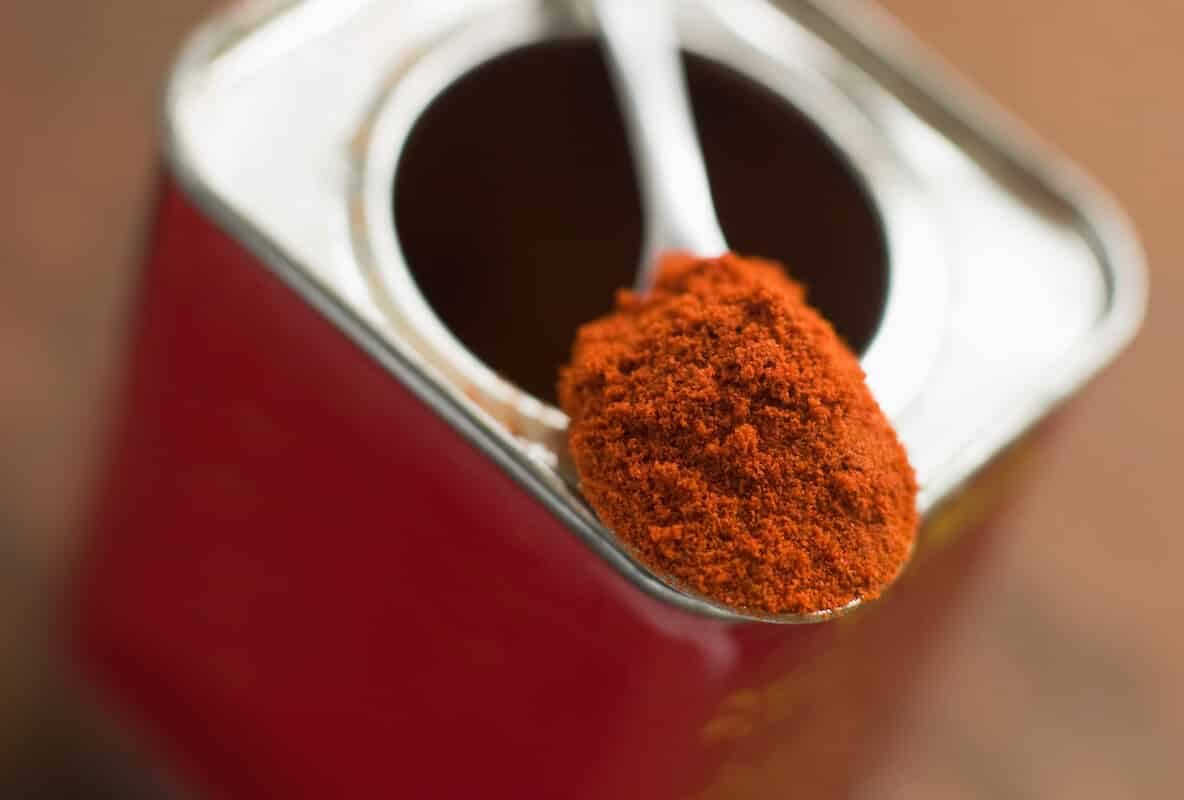
Smoked paprika is paprika made from peppers dried over a fire. The best-known kind, Spain’s Pimentón de la Vera, is dried over holm oak or oak fires,12 for 10 to 15 days, until the peppers fall from about 80 percent moisture to under 15 percent.12 The region’s damp climate rules out drying in the sun.2 Its official specification describes the result as having “a smoky, intense, and penetrating” flavor and aroma, and it comes sweet, bittersweet or hot.1 Not all Spanish paprika is smoked: Pimentón de Murcia is dried in the sun or with hot air.3
So a substitute has up to three things to replace: smoke, red color with sweet pepper flavor, and, in the hot type, heat. Few single spices do all three.
Quick answer
| What smoked paprika is doing | Best substitute | Starting amount, per 1 part smoked paprika | Treatment |
|---|---|---|---|
| Smoke without heat (beans, stews, roast vegetables) | Liquid smoke plus sweet paprika | Sources disagree: from 1/2 part liquid smoke to one drop per part paprika; start with a drop | Disputed |
| Smoke where extra heat is welcome (rubs, chili, barbecue) | Chipotle powder, plus sweet paprika for color | 1/2 part chipotle, then taste | Attributed |
| Red color and sweet pepper flavor | Sweet paprika with a little cumin | 2/3 part paprika plus 1/3 part cumin | Attributed |
| The heat of hot smoked paprika | Hot paprika, or any of the above plus cayenne or hot red pepper flakes | 1 part hot paprika; cayenne a pinch at a time | Attributed (hot paprika); Method |
How the ratios on this page are labeled
Every ratio carries one of four labels.
- Computed: based on a measurable physical relationship, with the source named.
- Attributed: a named source publishes this ratio. We quote it as theirs.
- Disputed: named sources give different answers to the same swap. We show each one and do not average them.
- Method: we found no published ratio. We give a direction and a cautious starting point, and say so.
The ratios here come from two bylined sources, Sonja Overhiser of A Couple Cooks and PepperScale, neither of which says how its figures were arrived at.45 They are rules of thumb, not measurements. Where the two agree, both are cited; where they disagree, as on liquid smoke, both are shown.
How hot is smoked paprika compared with its substitutes?
The figures below come from different kinds of sources and describe different things, so they are shown side by side and not combined.
| Product or chile | Heat | Scope and source |
|---|---|---|
| Pimentón de la Vera, hot | “Pronounced heat on the palate”; no Scoville figure given | La Vera PDO specification1 |
| Paprika, as a category | 480 SHU or less | Category boundary, Codex CXS 353-20226 |
| Hot paprika, as a category | Above 480 and below 900 SHU | Same standard6 |
| U.S. paprika | 0 SHU | DeWitt’s heat scale, which he calls “necessarily approximate”7 |
| Hungarian hot paprika | 100–500 SHU | DeWitt’s scale7 |
| Hot (Hungarian) paprika | 500–1,000 SHU | PepperScale, general rating, no method stated5 |
| Chili powder | 500–1,000 SHU | DeWitt’s scale7 |
| Ancho | 1,000–1,500 SHU (DeWitt and PepperScale); 1,000–2,000 SHU (Chile Pepper Institute) | General ratings for the chile type758 |
| Mirasol (guajillo) | 2,500–5,000 SHU | DeWitt’s scale;7 PepperScale gives the same range5 |
| Chipotle | “Usually in the 5,000 to 10,000” SHU range | Mick Vann, The Austin Chronicle9 |
| Chipotle powder | Typically 2,500–8,000 SHU | PepperScale, general rating, no method stated5 |
| Cayenne | 30,000–50,000 SHU | PepperScale, general rating, no method stated5 |
No source gives a Scoville figure for any smoked paprika; PepperScale calls it usually mild.5 So the comparison with chipotle cannot be made exactly. On every figure above, though, chipotle sits well above even the Codex ceiling for hot paprika. PepperScale’s hot paprika range runs past that ceiling and above DeWitt’s figure; the Codex standard is the stronger source, and both ratings are shown as published.
If smoked paprika is there for smoke
This is the job most recipes mean: a smoky note in beans, stews, rubs and roast vegetables. America’s Test Kitchen says smoked paprika is “best used to season grilled meats.”10
1. Liquid smoke, with sweet paprika for color
Liquid smoke supplies the smoke and nothing else, which makes it the cleanest substitute when you don’t want extra heat. Sonja Overhiser of A Couple Cooks calls it the best smoked paprika substitute for smoky flavor, and warns that it is “very strong” and can be overpowering.4 PepperScale also calls it powerful, and notes that some people find smoked paprika tastes a little like liquid smoke in powder form.511
Ratio (Disputed): the two published amounts are far apart.
| Source | For 1 teaspoon smoked paprika |
|---|---|
| A Couple Cooks4 | ½ teaspoon liquid smoke, plus ½ teaspoon regular paprika for color |
| PepperScale5 | 1 teaspoon sweet paprika with one small drop of liquid smoke; taste before adding more |
Neither says how its amount was arrived at, and they are not averaged here. Brands of liquid smoke differ in strength, so in our judgment it is safer to start with a single drop per teaspoon of paprika and work up toward the larger amount only if the dish needs it (Method). Being a liquid, it also suits wet dishes better than dry rubs, in our judgment.
2. Chipotle powder
Chipotle is a ripe jalapeño dried over wood smoke; Gernot Katzer notes that the name has come to mean smoked jalapeños “almost exclusively.”12 Like smoked paprika, it is a smoke-dried chile, so it brings real smoke along with chile flavor and color. The Spice House lists chipotle powder as its substitute for smoked sweet paprikas,13 and PepperScale calls it the closest match to smoked paprika in most kitchens.5
The catch is heat. Vann puts chipotle usually at 5,000 to 10,000 SHU,9 while the international standard caps even hot paprika below 900.6 Mashed, writing about the reverse swap, notes that smoked paprika “doesn’t actually contain much heat at all.”14 Not everyone recommends chipotle: A Couple Cooks calls chipotle powder and cayenne “bogus ideas” for replacing smoked paprika.4
Ratio (Attributed): PepperScale says to use about half the amount of chipotle powder.5 Mashed treats the opposite swap, smoked paprika for chipotle, as one to one,14 but that does not work in reverse because of the heat gap. If heat is a concern, start lower, make up the rest of the volume with sweet paprika for color, and taste before adding more.
3. Smoked salt
A Couple Cooks also suggests smoked salt and says to reduce the recipe’s other salt to match.4 PepperScale makes the same point and treats smoked salt as a finishing touch rather than a direct swap in a spice mix.5
Ratio (Method): A Couple Cooks gives no amount.4 Use smoked salt in place of some of the recipe’s ordinary salt rather than in place of the paprika, and add sweet paprika for color.
If smoked paprika is there for color and sweet pepper flavor
Sometimes smoked paprika is doing more for color than for smoke, as in a final dusting or a light sauce. Then an unsmoked paprika does most of the job.
1. Sweet paprika, with or without cumin
Sweet paprika matches the color and the sweet pepper flavor, with no smoke and little or no heat (see the table above). Some cooks add cumin. A Couple Cooks says a paprika and cumin mix approximates smoked paprika “in color and nuance, but not in smoky flavor.”4 Cumin adds earthiness, not smoke.
Ratio (Attributed): A Couple Cooks: “1 teaspoon smoked paprika = 2/3 teaspoon regular paprika + ⅓ teaspoon cumin.”4 PepperScale gives the same proportion, 2 parts paprika or chili powder to 1 part cumin, and says it gets close without matching smoked paprika’s depth.5 Leave out the cumin if it doesn’t suit the dish.
2. Ancho powder
Ancho is a dried poblano. The Chile Pepper Institute describes its flavor as “sweet, smoky” with hints of dried fruit and rates it mild.8 No source we found says anchos are smoke-dried, so the smoky note is a matter of flavor, not of smoke. The Spice House lists ancho powder as a substitute for sweet paprikas.13 PepperScale describes ancho as gently hot, with a deep earthy sweetness and a hint of smoke.5
Ratio (Method): No published ratio was found. Start with 1 part ancho powder for 1 part smoked paprika. It rates a little hotter than paprika on the scales above, so taste before adding more.
3. Chili powder
American chili powder is a blend. The USDA’s purchasing specification lists ground chili pepper, cumin, oregano, salt and garlic powder,15 and Saveur says the chile is usually ancho.16 The Spice House lists chili powder among its smoky substitutes, for hot or sharp paprikas.13 It brings salt and herbs as well as color, so it fits Tex-Mex dishes best.
Ratio (Method): No published ratio was found. Start with 1 part chili powder for 1 part smoked paprika and cut back on the recipe’s salt, cumin and oregano.
4. Gochugaru
Gochugaru has no smoke, but it is used in Korean cooking for color. Maangchi uses mild gochugaru in kimchi “so that I can add a lot for color without making the dish too spicy.”17 Its heat varies by product; see gochugaru.
Ratio (Method): No published ratio was found. Start with 1 part for 1 part and add liquid smoke if the dish needs smoke.
If you’re replacing hot smoked paprika
Hot Pimentón de la Vera has “pronounced heat on the palate.”1 Add heat separately to any of the substitutes above.
Hot paprika
PepperScale suggests hot Hungarian paprika, which lacks the smoke but has more heat than sweet paprika, and suggests adding cumin or smoked salt to make up for the missing smoke.5
Ratio (Attributed): PepperScale says one for one.5
1. Guajillo powder
Guajillo, also called mirasol in Mexico,18 is one of the dried chiles in Saveur’s chili con carne.19 The Spice House lists guajillo powder as a substitute for hot or sharp paprikas.13 DeWitt rates mirasol at 2,500 to 5,000 SHU,7 above the Codex ceiling for hot paprika.6 PepperScale credits it with a mild smokiness and a subtle sweetness similar in tone to smoked paprika,5 though, as dried chile, it has no smoke from drying that any source documents.
Ratio (Method): No ratio was found in a form we could quote. Start with half as much guajillo as the recipe’s hot smoked paprika, made up with sweet paprika, and taste.
2. A pinch of cayenne or hot red pepper flakes
The Spice House suggests pairing its smoky substitutes with hot red pepper flakes when you want the heat of hot smoked paprika.13 Cayenne does the same job as a powder; see paprika vs. cayenne.
Ratio (Method): For cayenne on its own in place of smoked paprika, PepperScale says to start with a third of the amount (Attributed),5 though by every figure above that is far hotter than hot smoked paprika. Added to another substitute, start with a pinch per teaspoon and taste.
If it’s the backbone of a Spanish dish
In some Spanish products smoked paprika is not a background note but part of the definition. The specification for Chorizo de Cantimpalos requires that at least half the pimentón used be Pimentón de la Vera,20 at 18 to 25 grams of pimentón per kilogram of meat.20 The La Vera specification itself calls its pimentón the best preservative for sausages and cured meats.1 It also names pork, kid, lamb and game as uses.1
Ratio (Method): No substitute reproduces a product defined by its paprika. For a home dish in that style, sweet paprika plus liquid smoke (as above) is the closest of the options here. For a protected sausage, there is no substitute.
What isn’t known
- No published Scoville or capsaicinoid figure was found for any smoked paprika, sweet or hot. The La Vera specification describes heat in words only.1
- No source explains how either A Couple Cooks ratio was arrived at, and no study compares the smoke intensity of smoked paprika with liquid smoke or chipotle.
- It is sometimes said that smoked paprika adds umami. No source reviewed here supports that.
- Guajillo is often described as tasting of cranberries; PepperScale is one source that says so.21 That is a writer’s description, not an aroma analysis.
Related
- Smoked paprika, paprika and paprika substitutes
- Chipotle powder and chipotle powder substitutes
- Ancho powder, guajillo powder, chili powder, gochugaru, cumin
- Paprika vs. cayenne, paprika vs. chili powder
Footnotes
-
Pimentón de la Vera PDO product specification, Consejo Regulador DOP Pimentón de la Vera. assets.publishing.service.gov.uk · Regulator ↩ ↩2 ↩3 ↩4 ↩5 ↩6 ↩7 ↩8
-
Pimentón de la Vera PDO, Foods & Wines from Spain (ICEX). foodswinesfromspain.com · Regulator ↩ ↩2 ↩3
-
Pimentón de Murcia PDO application file and specification, European Commission eAmbrosia. ec.europa.eu · Regulator ↩
-
Overhiser, Best Substitute for Smoked Paprika, A Couple Cooks, 2026. acouplecooks.com · Publication ↩ ↩2 ↩3 ↩4 ↩5 ↩6 ↩7 ↩8
-
Matt Bray, Smoked Paprika Substitutes: What To Use When You’re Out, PepperScale, 2025. pepperscale.com · Publication · PepperScale is also owned by Matt Bray, the editor of this site. ↩ ↩2 ↩3 ↩4 ↩5 ↩6 ↩7 ↩8 ↩9 ↩10 ↩11 ↩12 ↩13 ↩14 ↩15 ↩16 ↩17 ↩18
-
Standard for Dried or Dehydrated Chilli Pepper and Paprika, CXS 353-2022, Codex Alimentarius. fao.org · Standard ↩ ↩2 ↩3 ↩4
-
DeWitt, Heat Scale Updated, Fiery Foods & Barbecue Central, 2008. fieryfoodscentral.com · Publication ↩ ↩2 ↩3 ↩4 ↩5 ↩6
-
Ancho recipe card, Chile Pepper Institute, New Mexico State University. cpi.nmsu.edu · Reference work ↩ ↩2
-
Vann, Chipotle Chiles, The Austin Chronicle, 2012. austinchronicle.com · Publication ↩ ↩2
-
Savory Spices, America’s Test Kitchen. americastestkitchen.com · Publication ↩
-
Matt Bray, Smoked Paprika Vs. Paprika: PepperScale Showdown, PepperScale, 2015. pepperscale.com · Publication · PepperScale is also owned by Matt Bray, the editor of this site. ↩
-
Paprika and Mexican chiles, Gernot Katzer’s Spice Pages. gernot-katzers-spice-pages.com · Reference work ↩
-
The 7 Best Paprika Substitutes, The Spice House, 2018. thespicehouse.com · Merchant ↩ ↩2 ↩3 ↩4 ↩5
-
MacPherson, Best Substitutes For Chipotle Powder, Mashed, 2023. mashed.com · Publication ↩ ↩2
-
Commercial Item Description A-A-20001C, Spices and Spice Blends, USDA Agricultural Marketing Service, 2023. ams.usda.gov · Regulator ↩
-
Chili Powder, Saveur, 2009. saveur.com · Publication ↩
-
Maangchi, Korean hot pepper flakes (Gochugaru), Maangchi.com. maangchi.com · Publication ↩
-
Santiago-López et al., HMG14E, híbrido de chile guajillo, Revista Fitotecnia Mexicana, 2020. revistafitotecniamexicana.org · Peer-reviewed ↩
-
Chili Con Carne, Saveur, 2012. saveur.com · Publication ↩
-
Chorizo de Cantimpalos PGI product specification, Ministerio de Agricultura, Pesca y Alimentación, 2023. mapa.gob.es · Regulator ↩ ↩2
-
Matt Bray, Guajillo Pepper Guide: Heat, Flavor, Pairings, And More, PepperScale, 2026. pepperscale.com · Publication · PepperScale is also owned by Matt Bray, the editor of this site. ↩