Spice Substitutes · Substitutes
Paprika Substitutes, Ranked by the Job Paprika Is Doing
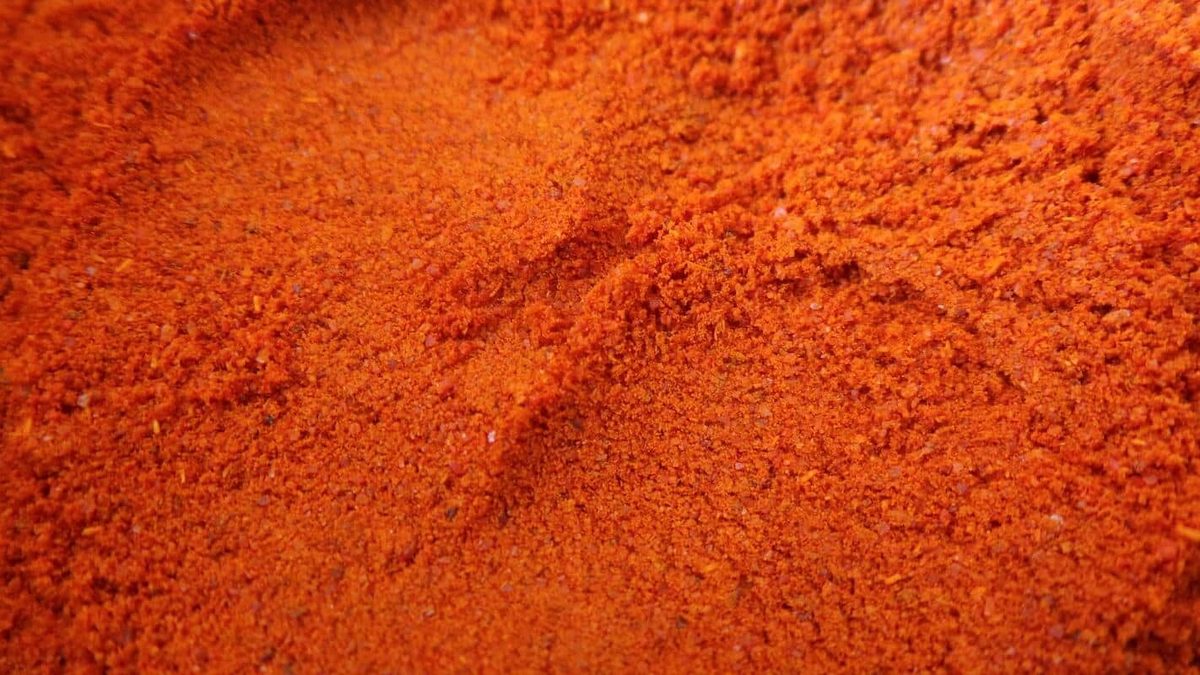
Paprika is dried, ground Capsicum,1 and chile peppers of the species Capsicum annuum were domesticated in Mexico.2 McCormick Science Institute names Spain, Hungary, China, India and the United States as important producers.3 Paprika’s red comes mainly from two carotenoids, capsanthin and capsorubin,4 and its heat, where it has any, from capsaicinoids. Under the international Codex standard, dried Capsicum sold as paprika has 480 Scoville heat units or less, and “hot paprika” sits above 480 but below 900.1 That low ceiling is the main problem with substitutes: almost every other ground chile is hotter. So the right swap depends on whether paprika is in the dish for color, for sweet pepper flavor, for heat, or for smoke.
Quick answer
| What paprika is doing | Best substitute | Starting amount, per 1 part paprika | Treatment |
|---|---|---|---|
| Red color with no heat (deviled eggs, potato salad, a dusting) | Red bell pepper powder | 1 part | Method |
| Sweet pepper flavor in a cooked dish (stews, braises, sauces) | Ancho powder | 3/4 part, then taste | Method |
| The heat in hot paprika | A sweet substitute plus cayenne | 1 part sweet substitute plus a small pinch of cayenne per teaspoon | Method |
| Color and mild heat as a garnish | Aleppo pepper flakes | 1/2 part, then taste | Method |
| The smoke in smoked paprika | See smoked paprika substitutes |
The rest of the page explains each choice and how the heat of each substitute compares.
How the ratios on this page are labeled
Every ratio carries one of four labels.
- Computed: based on a measurable physical relationship, with the source named.
- Attributed: a named source publishes this ratio. We quote it as theirs.
- Disputed: named sources give different answers to the same swap. We show each one and do not average them.
- Method: we found no published ratio. We give a direction and a cautious starting point, and say so.
We found one published ratio, and it is for a hotter result than paprika: PepperScale suggests cutting ancho powder or chili powder with an equal part cayenne (Attributed; see the hot paprika section).5 The Spice House and Chili Pepper Madness both name substitutes without giving amounts,67 so every other amount here is a Method starting point.
How hot are paprika and its substitutes?
Heat is where the substitutes differ most. NMSU notes that HPLC, which measures capsaicinoids directly, is the most accurate way to measure chile heat.8 The figures below come from different kinds of sources and describe different things, so they sit side by side and are not combined.
| Product | Heat | Scope | Source |
|---|---|---|---|
| Paprika | 480 SHU or less | A category boundary in the international standard, not a measurement | Codex CXS 353-20221 |
| Hot paprika | Above 480 and below 900 SHU | Category boundary | Codex CXS 353-20221 |
| Hungarian sweet paprika | Below 30 mg/kg capsaicinoids | Labeling class in mg/kg, not Scoville units | Hungarian Food Codex9 |
| Regular paprika | Usually no more than 100–500 SHU | General rating, no method stated | PepperScale, Is Paprika Spicy?10 |
| Mild paprika | Typically 500–1,500 SHU | General rating, no method stated | PepperScale, paprika substitutes guide5 |
| Sweet bell pepper | 0 SHU | One university’s tests | The Ohio State University11 |
| Ancho | 1,000–2,000 SHU | Pepper type; no lot or method stated | NMSU Chile Pepper Institute12 |
| Ancho | 1,000–1,500 SHU | Pepper type on a scale its author calls necessarily approximate | Dave DeWitt, 200813 |
| Guajillo (also called mirasol)14 | 2,500–5,000 SHU | General ratings, no method stated | DeWitt, 2008;13 INDY Week, 201515 |
| Chipotle | Usually 5,000–10,000 SHU | Chipotle in general | Mick Vann, The Austin Chronicle, 201216 |
| Cayenne | 30,000–50,000 SHU | Approximate scale | Dave DeWitt, 2008;13 PepperScale gives the same range5 |
| Cayenne | 35,000–70,000 SHU | One merchant’s own product | The Spice House17 |
| Aleppo pepper | No figure published; the merchant calls it mild | One merchant’s own product | The Spice House18 |
| Aleppo pepper | Around 10,000 SHU | General rating, no method stated | PepperScale, chili flakes substitutes guide19 |
PepperScale’s two paprika figures come from two of its articles and do not agree with each other. Both reach above the Codex boundary for paprika, and the 500–1,500 range runs past the ceiling for hot paprika as well; Codex is the international standard and the stronger source, so the PepperScale figures are shown as published, not adopted. A figure of 15,000 SHU for the hottest paprika also circulates. We found no source for it, and it sits far above the Codex boundary for hot paprika.
If paprika is there for color
Dusted over deviled eggs or potato salad, or used in quantity in a rub, paprika’s job is mostly red color with a mild, sweet pepper taste. The best substitute has color and no heat.
1. Red bell pepper powder
Bell pepper is Capsicum annuum, and researchers at The Ohio State University report that the sweet bell pepper they tested scored 0 SHU.11 Dried and ground, it is the same kind of product as paprika: dried Capsicum.1 So it brings color and sweet pepper flavor with no heat at all. In our judgment it tastes more like fresh pepper and less toasted than paprika, and it can be harder to find.
Ratio (Method): No published ratio. Start one for one.
2. Tomato powder
The Spice House lists tomato powder, along with mild chili powder, as a substitute for sweet paprika.6 It adds red color and a tart, savory taste rather than pepper; that description is ours.
Ratio (Method): No published ratio. Start with half the paprika amount, since it brings acidity paprika does not, and taste. Tomato paste works the same way in a sauce or stew; stir it in a teaspoon at a time until the color looks right.
If paprika is sweet pepper flavor in a cooked dish
In a stew, braise or sauce where paprika is used by the tablespoon, flavor matters as much as color. For Hungarian dishes like goulash and paprikash, nothing replaces paprika well; in our judgment it is worth buying.
Ancho powder
In its list of smoked-paprika substitutes, The Spice House suggests ancho powder for the sweet kinds.6 PepperScale calls ancho an excellent paprika alternative, mild and only a little hotter than the pimento pepper, with a slight smokiness that can show in a dish.5 The Chile Pepper Institute describes ancho, the dried poblano, as mild, with sweet, smoky flavors and hints of dried fruit.12 Ancho is C. annuum,12 but every ancho figure in the table above is higher than the Codex ceiling for paprika, so it will add a little warmth. Expect a darker, browner color; that is our description.
Make sure it is pure ancho. American chili powder is a blend: the USDA purchasing specification says it should include ground chili pepper, cumin, oregano, salt and garlic powder.20
Ratio (Method): No published ratio for this direction of the swap. Start with three quarters of the paprika amount and taste before adding the rest.
Guajillo powder
Guajillo, also called mirasol, is another C. annuum chile grown for drying in Mexico.14 Its heat figures run higher than ancho’s (see the table), so it is a second choice here. In its smoked-paprika list, The Spice House suggests guajillo for the hot or sharp kinds,6 and Chili Pepper Madness notes that other chile powders may work in place of paprika, though they are less common.7
Ratio (Method): No published ratio. Start with half the paprika amount.
If you need the heat of hot paprika
Hungary’s food codex sorts ground paprika into four heat classes by capsaicinoid content, from non-pungent to very hot,9 and Pimentón de la Vera comes in sweet, bittersweet and hot types.21 If a recipe asks for hot paprika, you need both color and some heat.
A sweet substitute plus cayenne
For hot or sharp smoked paprikas, The Spice House suggests cayenne.6 Chili Pepper Madness notes that cayenne is quite a bit hotter than typical mild paprika.7 By the figures above, cayenne is dozens of times hotter than the Codex ceiling for hot paprika, so cayenne alone is not a one-for-one swap. PepperScale agrees, calling it a big jump in spiciness.5
PepperScale’s blend (Attributed): cut ancho powder or chili powder with an equal part cayenne, which PepperScale says lessens the heat of cayenne while still giving more bite than typical paprika.5 Half of that blend is cayenne, so by the figures above it is still far hotter than anything Codex would call hot paprika; use it only where you want real heat.
Ratio (Method): No published ratio. Use bell pepper powder or ancho powder for the bulk, as above, and add a small pinch of cayenne per teaspoon. Taste and add more only after the dish has simmered a few minutes.
Chili powder, where its other flavors fit
Chili Pepper Madness says chili powder is usually hotter than paprika and is a blend of ingredients.7 PepperScale notes that its cumin and garlic make a definite flavor difference, but that where paprika is only a dash or a pinch for color you are unlikely to notice.5 Because it brings cumin, oregano, garlic and salt,20 it suits chili, tacos and rubs but not a goulash or a dusting on eggs.
Ratio (Method): No published ratio. Start with half the paprika amount and reduce the salt in the recipe.
If paprika is a garnish with a little heat
Aleppo pepper
The Spice House describes Aleppo pepper as flakes that add “color, mild heat, and a unique salty-raisiny flavor,” with notes of raisin, pomegranate and sun-dried tomato.18 The pepper takes its name from Aleppo in Syria, and the product’s ingredients are chiles, vegetable oil and salt.18 PepperScale describes Aleppo as earthy, a little smoky, with a tomato-like tang, more complex than mild paprika and much milder than cayenne, but harder to find.5 It is coarse, slightly oily and salted, so it suits a finishing sprinkle better than a smooth sauce; that is our judgment.
Ratio (Method): No published ratio. Start with half the paprika amount and cut back the salt slightly.
If the recipe calls for smoked paprika
Pimentón de la Vera is smoke-dried, and its specification describes a smoky, intense and penetrating flavor and aroma.21 Sweet paprika will give color but no smoke. The Spice House suggests chipotle powder for smoked sweet paprikas.6 Chipotle is a smoke-dried jalapeño,22 much hotter than paprika (see the table), so use a fraction of the amount. For the full set of options, see smoked paprika substitutes.
Ratio (Method): No published ratio. Start with a quarter of the smoked paprika amount in chipotle powder and make up the rest with sweet paprika or bell pepper powder.
What isn’t known
- No published study compares the flavor of paprika with any substitute, and the only ratio we found is PepperScale’s ancho-and-cayenne blend, which is hotter than paprika.
- No Scoville measurement for paprika as a product, or for any named paprika cultivar, was found; only category boundaries, the Hungarian codex’s capsaicinoid classes and general ratings without a stated method. The only heat figure found for Aleppo pepper is PepperScale’s general rating.
- Paprika is sometimes called an excellent source of vitamin C. USDA’s FoodData Central lists 0.9 mg of vitamin C per 100 g of paprika, and a teaspoon weighs 2.3 g,23 which works out to about 0.02 mg per teaspoon against a Daily Value of 90 mg.24
- Paprika is sometimes said to have originated in Central America. The species was domesticated in Mexico, and the evidence points to central-east Mexico.2
Related
- Paprika, smoked paprika and smoked paprika substitutes
- Paprika vs. cayenne, paprika vs. chili powder
- Bell pepper powder, ancho powder, guajillo powder, chipotle powder
- Cayenne pepper and cayenne substitutes, chili powder and chili powder substitutes
- Gochugaru, red pepper flakes
Footnotes
-
Standard for Dried or Dehydrated Chilli Pepper and Paprika, CXS 353-2022, Codex Alimentarius. fao.org · Standard ↩ ↩2 ↩3 ↩4 ↩5
-
“Multiple lines of evidence for the origin of domesticated chili pepper, Capsicum annuum, in Mexico”, PNAS, 2014. escholarship.org · Peer-reviewed ↩ ↩2
-
“Paprika”, McCormick Science Institute. mccormickscienceinstitute.com · Merchant ↩
-
Paprika extract (CTA), FAO/WHO JECFA, 2008 (rev. 2013). fao.org · Regulator ↩
-
Matt Bray, What’s A Good Paprika Substitute?, PepperScale, 2022. pepperscale.com · Publication · PepperScale is also owned by Matt Bray, the editor of this site. ↩ ↩2 ↩3 ↩4 ↩5 ↩6 ↩7 ↩8
-
The 7 Best Paprika Substitutes, The Spice House, 2018. thespicehouse.com · Merchant ↩ ↩2 ↩3 ↩4 ↩5 ↩6
-
Mike Hultquist, Paprika Substitute, Chili Pepper Madness. chilipeppermadness.com · Publication ↩ ↩2 ↩3 ↩4
-
Bosland and Walker, Measuring Chile Pepper Heat, Guide H-237, NMSU, 2010. pubs.nmsu.edu · Reference work ↩
-
MÉ 2-108, Hungarian Food Codex directive on ground paprika, 2013. elelmiszerlanc.kormany.hu · Standard ↩ ↩2
-
Matt Bray, Is Paprika Spicy?, PepperScale, 2024. pepperscale.com · Publication · PepperScale is also owned by Matt Bray, the editor of this site. ↩
-
Hernandez-Garcia and Zhang, “Pepper Heat”, The Ohio State University, eXtension. plant-breeding-genomics.extension.org · Reference work ↩ ↩2
-
Ancho recipe card, Chile Pepper Institute, New Mexico State University. cpi.nmsu.edu · Reference work ↩ ↩2 ↩3
-
Dave DeWitt, Heat Scale Updated, Fiery Foods & Barbecue Central, 2008. fieryfoodscentral.com · Publication ↩ ↩2 ↩3
-
Santiago-López, Ramírez-Meraz and Méndez-Aguilar, HMG14E, híbrido de chile guajillo, Revista Fitotecnia Mexicana, 2020. revistafitotecniamexicana.org · Peer-reviewed ↩ ↩2
-
Lisa Sorg, DISH: Tips on which peppers suit which dish, INDY Week, 2015. indyweek.com · Publication ↩
-
Mick Vann, Chipotle Chiles, The Austin Chronicle, 2012. austinchronicle.com · Publication ↩
-
Cayenne Pepper, The Spice House (product page). thespicehouse.com · Merchant ↩
-
Aleppo Peppers, The Spice House (product page). thespicehouse.com · Merchant ↩ ↩2 ↩3
-
Matt Bray, What’s A Good Chili Flakes Substitute?, PepperScale, 2026. pepperscale.com · Publication · PepperScale is also owned by Matt Bray, the editor of this site. ↩
-
Commercial Item Description A-A-20001C, Spices and Spice Blends, USDA Agricultural Marketing Service, 2023. ams.usda.gov · Regulator ↩ ↩2
-
Pimentón de la Vera PDO product specification. assets.publishing.service.gov.uk · Regulator ↩ ↩2
-
Gernot Katzer, Paprika and Mexican chiles (Capsicum annuum), Gernot Katzer’s Spice Pages. gernot-katzers-spice-pages.com · Reference work ↩
-
Spices, paprika (FDC 171329), USDA FoodData Central. fdc.nal.usda.gov · Regulator ↩
-
Daily Value on the Nutrition and Supplement Facts Labels, FDA. fda.gov · Regulator ↩