Spice Substitutes · Substitutes
Chili Powder Substitutes, Ranked by the Job Chili Powder Is Doing
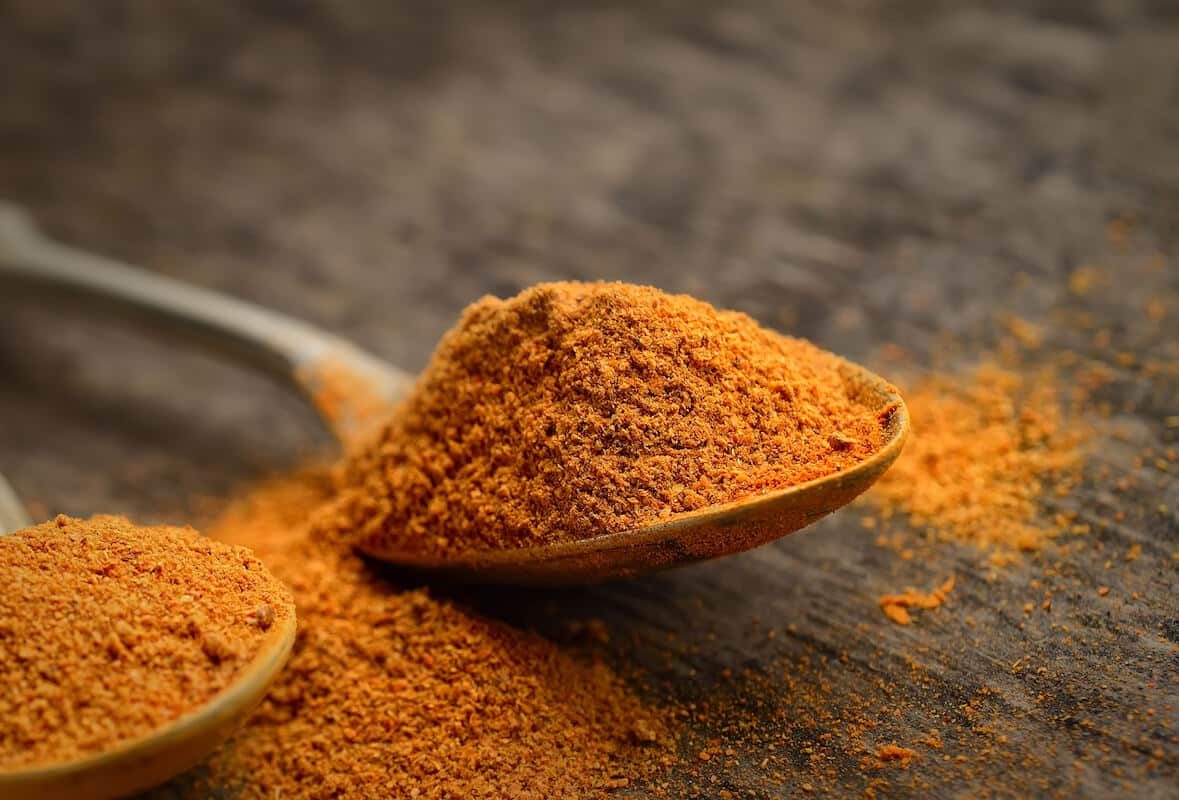
In the United States, chili powder is a blend. USDA’s purchasing specification says it should include ground chili pepper, cumin, oregano, salt and garlic powder,1 and Saveur says the chile in it is usually ancho.2 Outside North America, “chilli powder” often means ground chile alone; the international standard for dried chile covers chile ground to a powder and says nothing about blends.3 If your recipe means the American blend, you are replacing four or five ingredients at once, so the best substitute is usually to rebuild the blend. If it means plain ground chile, see cayenne pepper substitutes or ancho powder substitutes.
Quick answer
| What chili powder is doing | Best substitute | Starting amount, per 1 part chili powder | Treatment |
|---|---|---|---|
| The whole blend (chili con carne, Tex-Mex meat) | Homemade chili powder | 1 part; the published recipes differ | Disputed (recipe), Method (amount) |
| Mild chile flavor and color | Ancho powder | 1 part | Attributed |
| Color, when you have no chile powder | Paprika plus a pinch of cayenne and cumin | 1 part paprika | Attributed |
| Seasoning for taco meat | Taco seasoning | 1 part, then hold back salt | Attributed |
| Heat only | Cayenne | ⅛ part | Attributed |
The rest of the page explains each choice and the other options.
How the ratios on this page are labeled
Every ratio carries one of four labels.
- Computed: based on a measurable physical relationship, with the source named.
- Attributed: a named source publishes this ratio. We quote it as theirs.
- Disputed: named sources give different answers to the same swap. We show each one and do not average them.
- Method: we found no published ratio. We give a direction and a cautious starting point, and say so.
The ratios here come from a spice merchant (The Spice House) and three bylined food publications (Chili Pepper Madness, Mashed and PepperScale). None says how its figures were arrived at. Because every maker sets its own recipe, no substitute can match “chili powder” exactly; USDA’s own specification lists ingredients that are “not limited to” those five.1
How hot is chili powder, and how hot are the swaps?
The figures below come from different kinds of sources and describe different things. They are listed side by side, not combined.
| What | Heat | Scope | Source |
|---|---|---|---|
| Chili powder bought by US federal agencies | 900–2,000 SHU | A purchasing specification, not a survey of store brands | USDA AMS, 20231 |
| Retail chili powder brands | No published measurement found | ||
| Ancho | 1,000–2,000 SHU | Pepper type; general figure | NMSU Chile Pepper Institute4 |
| Ancho and pasilla | 1,000–1,500 SHU | Approximate scale | Dave DeWitt, 20085 |
| Chipotle | Usually 5,000–10,000 SHU | Chipotle in general | Mick Vann, 20126 |
| Chipotle powder (morita) | 13,000–28,000 SHU | One merchant’s own product | The Spice House7 |
| Crushed red pepper | 15,000–30,000 SHU | Approximate scale | Dave DeWitt, 20085 |
| Cayenne powder | 35,000–70,000 SHU | One merchant’s own product | The Spice House8 |
| Paprika (category) | 480 SHU or less | Category boundary in the international standard | Codex CXS 353-20223 |
So, on the figures that exist, ancho sits closest to what USDA expects of chili powder, and chipotle, flakes and cayenne are all hotter. For the full disagreement over cayenne’s heat, see cayenne pepper substitutes.
If chili powder is the whole blend
In chili con carne and seasoned taco or enchilada fillings, the cumin, oregano and garlic matter as much as the chile.
1. Make your own
Three published recipes are easy to make from a spice rack, and they disagree a lot.
Recipe (Disputed):
| Ingredient | The Spice House9 | Chili Pepper Madness10 | PepperScale11 |
|---|---|---|---|
| Chile | 2 parts chile powder of your choice (ancho, guajillo and so on) | 2 tablespoons paprika (“smoked paprika is great”) | 2 tablespoons paprika, sweet, or hot for more heat |
| Cayenne | 1 part | 1 teaspoon (“use less for milder”) | 1 teaspoon |
| Garlic powder | 2 parts | 1 teaspoon | 1½ teaspoons |
| Onion powder | ½ part | ½ teaspoon | ¾ teaspoon |
| Oregano | 2 parts Mexican oregano, crushed | ½ teaspoon dried oregano | 1 tablespoon dried oregano, Mexican if you have it |
| Cumin | 1 part ground cumin | ½ teaspoon | 1 tablespoon ground cumin |
| Black pepper | 1 part | None | None |
| Salt | None | To taste | None |
Put on the same footing, The Spice House uses half as much cumin as chile, while Chili Pepper Madness uses one part cumin to twelve parts paprika (2 tablespoons is 6 teaspoons). The Spice House also uses as much garlic powder and oregano as chile, against a sixth and a twelfth in the other recipe. PepperScale’s version lands between them: like The Spice House, it uses half as much cumin as chile (and half as much oregano), but its cayenne is one part in six of the paprika rather than one in two. These are differences in style, not errors, and we do not average them. PepperScale notes that cumin and paprika lose their punch over time, so it suggests making a batch you will use within a few months.11
Which to start from is a judgment. The Spice House’s version is closer to the cumin-forward blends USDA and Saveur describe,12 but its cayenne makes it hot: one part cayenne to two parts mild chile, where cayenne is far hotter than ancho by every figure above. Chili Pepper Madness’s version is milder and more paprika-forward. Better Homes & Gardens offers a quicker fix with no amounts: a dash of bottled hot pepper sauce with dried oregano and ground cumin.12 For soups, sauces and other dishes with a liquid base, PepperScale also suggests a dash or two of hot sauce, such as original Tabasco or Sriracha.13
Ratio (Method): None of these sources says how much homemade blend replaces store-bought. Use the same amount the recipe calls for, add salt separately, and taste before adding more.
2. Taco seasoning
Taco seasoning is another chile-based blend. The ingredient list on McCormick’s original taco packet reads: spices (including chili pepper, paprika, oregano), corn starch, salt, onion and garlic.14 Expect salt and a little thickening from the corn starch.
Ratio (Attributed): Mashed says you can use the same amount of taco seasoning as chili powder.15 Hold back the recipe’s salt until you have tasted.
If chili powder is mild chile flavor and color
1. Ancho powder
Ancho is a dried poblano, which CPI describes as sweet and smoky with hints of dried fruit, and mild.4 Since it is the chile Saveur names as usual in chili powder,2 ancho gives you the base of the blend without the cumin, oregano, garlic or salt.
Ratio (Attributed): The Spice House says to use another powdered chile like ancho one-to-one.9 Mashed says to use an equal amount of ground ancho.15
Adding back cumin and oregano (Method): no source gives amounts. If the dish relied on them, start with about ¼ teaspoon of each per tablespoon of ancho and taste.
2. Paprika
Paprika brings red color with almost no heat: under the international standard it is dried Capsicum at 480 Scoville units or less.3
Ratio (Attributed): The Spice House says paprika can go in one-to-one with a pinch of cayenne and a little cumin for heat and earthiness.9 Mashed says sweet paprika can be used in equal amounts, and to start with half or less if your paprika is hot.15
3. Pasilla powder
Pasilla, the dried chilaca, is a common Mexican chile,16 and CPI rates it mild.17 DeWitt’s scale puts it in the same band as ancho.5 It is darker and more bitter than ancho; that description is ours.
Ratio (Method): We found no published ratio for pasilla in place of chili powder. Start with an equal amount, as the sources suggest for ancho, and add cumin and oregano to taste.
If chili powder is there for heat
Use these when chili powder is a minor ingredient and its job is a little warmth. All are hotter than chili powder on the figures above, and none brings cumin or oregano.
| Substitute | Starting amount, per 1 part chili powder | Treatment | Notes |
|---|---|---|---|
| Cayenne | ⅛ part | Attributed15 | Mashed’s figure. |
| Crushed red pepper | ½ part | Attributed15 | McCormick Science Institute says flakes are typically cayenne, alone or blended.18 PepperScale suggests crushing them finer in a mortar and expects them to run hotter than the blend, since they are not cut with milder spices.13 |
| Chipotle powder | 1 part | Attributed9 | The Spice House’s one-to-one. Chipotle is a smoke-dried jalapeño and adds strong smoke.16 Its heat figures are well above USDA’s chili powder range, and PepperScale warns that equal parts would be significantly hotter and to start small,13 so in our judgment start at half and taste. |
If chili powder is seasoning in a non-Mexican dish
These blends also contain chile, but their other flavors will change the dish.
| Substitute | Starting amount, per 1 part chili powder | Treatment | What else it brings |
|---|---|---|---|
| Harissa (paste or dried blend) | 1 part | Attributed15 | UNESCO describes Tunisian harissa as sun-dried chiles seasoned with salt, garlic and coriander;19 The Spice House’s dried blend adds tomato, cumin, caraway, fennel and lemon.20 |
| Cajun seasoning | 1 part | Attributed15 | Salt is listed first on Slap Ya Mama’s original blend, ahead of black pepper, red pepper and garlic,21 so hold back the recipe’s salt. |
| Ground cumin | 1 part, up to 2 | Attributed15 | Cumin is one of chili powder’s own ingredients,1 but it brings no chile at all. In our judgment, stay at 1 part or below. |
What isn’t known
- No published measurement exists for the heat of retail chili powder brands; the 900–2,000 SHU range is a federal purchasing specification.
- No source we found publishes the proportion of chile, cumin or oregano in commercial chili powders. The two homemade recipes above differ several-fold.
- None of the ratios on this page says how it was arrived at. Every one is a rule of thumb.
- A widely repeated claim says ancho supplies most of chili powder’s flavor. Saveur says ancho is the usual chile;2 no source measures its share of the flavor.
Related
- Chili powder and paprika vs. chili powder
- Ancho powder, pasilla powder, chipotle powder, cayenne pepper, red pepper flakes, paprika
- Taco seasoning and taco seasoning substitutes, harissa powder, Cajun seasoning
- Cumin, oregano, Mexican oregano vs. oregano
- Best spices for chili and spices for taco meat
Footnotes
-
Commercial Item Description A-A-20001C, Spices and Spice Blends, USDA Agricultural Marketing Service, 2023. ams.usda.gov · Regulator ↩ ↩2 ↩3 ↩4 ↩5
-
Chili Powder, Saveur, 2009. saveur.com · Publication ↩ ↩2 ↩3 ↩4
-
Standard for Dried or Dehydrated Chilli Pepper and Paprika, CXS 353-2022, Codex Alimentarius. fao.org · Standard ↩ ↩2 ↩3
-
Ancho recipe card, Chile Pepper Institute, New Mexico State University. cpi.nmsu.edu · Reference work ↩ ↩2
-
Dave DeWitt, Heat Scale Updated, Fiery Foods & Barbecue Central, 2008. fieryfoodscentral.com · Publication ↩ ↩2 ↩3
-
Mick Vann, Chipotle Chiles, The Austin Chronicle, 2012. austinchronicle.com · Publication ↩
-
Ground Chipotle Chiles, The Spice House (product page). thespicehouse.com · Merchant ↩
-
Cayenne Pepper, The Spice House (product page). thespicehouse.com · Merchant ↩
-
Chili Powder Substitute, The Spice House, 2018. thespicehouse.com · Merchant ↩ ↩2 ↩3 ↩4
-
Mike Hultquist, Chili Powder Substitutes, Chili Pepper Madness, 2018 (modified 2025). chilipeppermadness.com · Publication ↩
-
Matt Bray, Spicy Homemade Chili Powder, PepperScale, updated 2026. pepperscale.com · Publication · PepperScale is also owned by Matt Bray, the editor of this site. ↩ ↩2
-
100 Emergency Ingredient Substitutions, Better Homes & Gardens. static.onecms.io · Publication ↩
-
Matt Bray, What’s A Good Chili Powder Substitute?, PepperScale. pepperscale.com · Publication · PepperScale is also owned by Matt Bray, the editor of this site. ↩ ↩2 ↩3
-
McCormick Original Taco Seasoning Mix, ingredient label, via Giant Food Stores. giantfoodstores.com · Merchant ↩
-
Nancy Mock, 10 Best Substitutes For Chili Powder, Mashed, 2021 (updated 2023). mashed.com · Publication ↩ ↩2 ↩3 ↩4 ↩5 ↩6 ↩7 ↩8
-
Gernot Katzer, Paprika and Mexican chiles (Capsicum annuum), Gernot Katzer’s Spice Pages. gernot-katzers-spice-pages.com · Reference work ↩ ↩2
-
Pasilla recipe card, Chile Pepper Institute, New Mexico State University. cpi.nmsu.edu · Reference work ↩
-
Red Pepper, McCormick Science Institute. mccormickscienceinstitute.com · Merchant ↩
-
Harissa, knowledge, skills and culinary and social practices (Tunisia), UNESCO Intangible Cultural Heritage, 2022. ich.unesco.org · Reference work ↩
-
Harissa Seasoning, The Spice House (product page). thespicehouse.com · Merchant ↩
-
Slap Ya Mama Original Blend Cajun Seasoning, ingredient label, via Giant Food Stores. giantfoodstores.com · Merchant ↩