Cooking · Dish guide
The Best Spices for French Toast: Cinnamon, Nutmeg, Vanilla and Warm Spice Blends
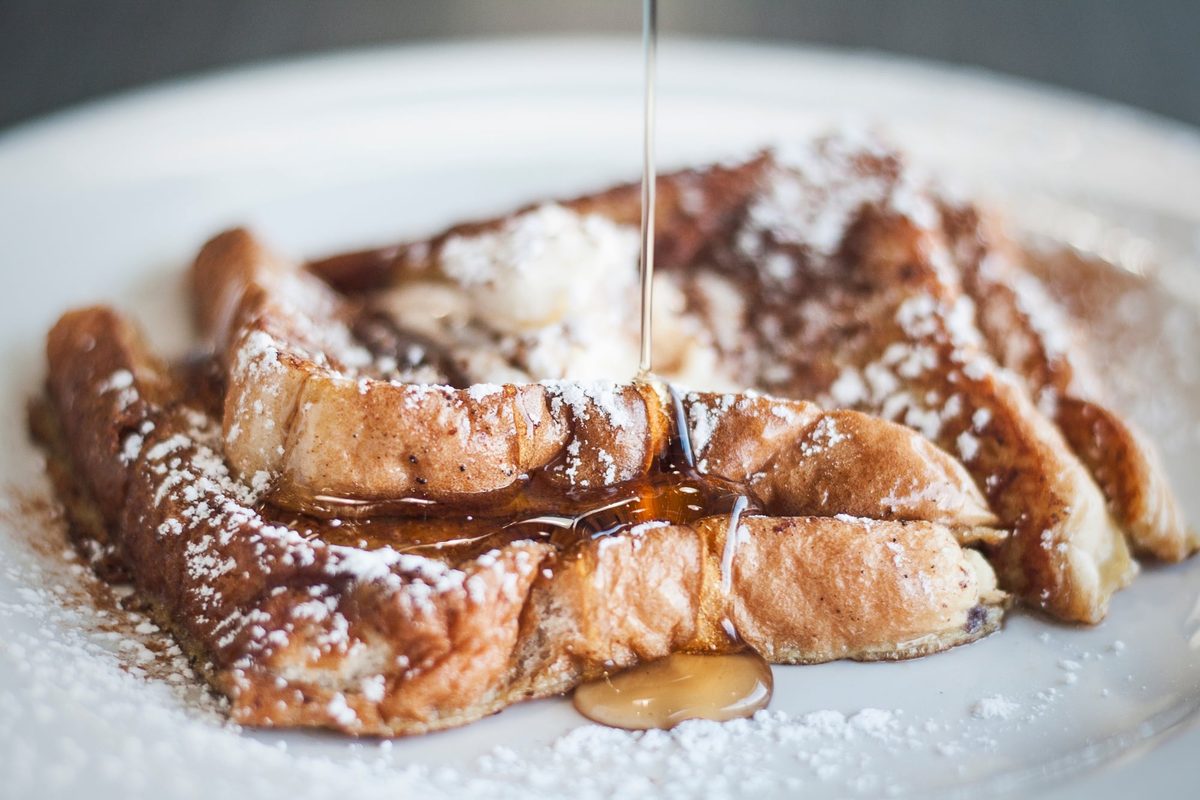
French toast is bread soaked in an egg-and-milk custard and cooked in a pan, so whatever spice goes into the custard ends up in every bite. The three extension-service recipes cited here all use vanilla and cinnamon, and two offer nutmeg as an alternative. Ginger and ready-made pie-spice blends are optional extras. This page covers what each one brings, how much the recipes use, and what to know about cinnamon types. Quantities appear only where a named recipe gives them.
At a glance
| Spice | What it brings | In the recipes cited |
|---|---|---|
| Cinnamon | Sweet, warm, woody aroma; the default | All three123 |
| Vanilla | Rounded sweetness behind the spice | All three123 |
| Nutmeg | Warm, nutty note | As an alternative to cinnamon in two12 |
| Ginger | Sharper warmth | Not in these recipes; an optional extra |
| Pumpkin pie spice, apple pie spice | Several warm spices in one | McCormick suggests apple pie spice for French toast4 |
How much spice the recipes use
| Recipe | Eggs and milk | Spice | Vanilla | Bread |
|---|---|---|---|---|
| Food Hero, Oregon State University Extension1 | 2 eggs, ½ cup milk | ¼ tsp cinnamon or nutmeg | ½ tsp | 4 slices |
| Healthy Families, University of Tennessee2 | 4 eggs, 1 cup milk | ½ tsp ground cinnamon or nutmeg | ½ tsp | 8 slices |
| Montana State University Extension3 | 2 eggs, ½ cup milk | 2 tsp ground cinnamon, “or to taste” | ½ tsp | 6 slices |
The cinnamon ranges from ¼ teaspoon to 2 teaspoons for a similar amount of custard, an eightfold spread, so “to taste” is the honest summary. A starting point between those, with more dusted on at the table, is our suggestion, not a sourced figure.
Cinnamon: the default
Two kinds of bark are sold as cinnamon. Ceylon or “true” cinnamon is Cinnamomum verum, native to Sri Lanka; cassia covers several species, including Cinnamomum aromaticum, native to southeast China and Vietnam. Both are in the laurel family, Lauraceae.56 Cassia is the type most often sold in North America, according to NIH’s National Center for Complementary and Integrative Health.7 The Netherlands Enterprise Agency’s CBI market study describes Ceylon as the milder and finer of the two.8 In our kitchen judgment, cassia gives the bolder, candy-like cinnamon flavor most Americans expect in French toast, and Ceylon a gentler one. For a full comparison, see Ceylon vs. cassia cinnamon; for the individual types, see Ceylon cinnamon, cassia cinnamon and Saigon cinnamon.
A note on coumarin. Cassia averages about 3,000 mg of coumarin per kg in German monitoring data,9 and Germany’s Federal Institute for Risk Assessment (BfR) calculates that a 60 kg adult reaches the tolerable daily intake with about 2 g a day of cassia with average coumarin content.10 A US study found only traces of coumarin in C. verum bark,11 so people who eat a lot of cinnamon every day may prefer Ceylon. For more, see Ceylon vs. cassia cinnamon.
In our judgment, ground cinnamon tends to clump in the custard; whisking it into a little sugar or melted butter first helps it spread. If you have none, see cinnamon substitutes; if you added too much, see too much cinnamon.
Vanilla: the background note
All three recipes add ½ teaspoon of vanilla.123 Vanilla’s flavor comes from the whole cured pod, not just the seeds: fresh beans contain an odorless vanillin glucoside, and the fully cured fruit contains about 2% vanillin, according to Gernot Katzer’s Spice Pages.12 In our judgment, scraping a pod into the custard gives visible specks and a strong flavor, while extract is easier to measure. In the US, a product labeled vanilla extract must contain at least 35% ethyl alcohol by volume; with less, it is vanilla flavoring.13 For substitutes, see vanilla extract substitutes; for powder, see vanilla powder vs. vanilla extract.
Nutmeg: the alternative
Two of the recipes offer nutmeg instead of cinnamon.12 Nutmeg is the seed of Myristica fragrans, native to the Banda Islands in Maluku;14 the same fruit gives a second spice, mace.15 PROSEA (Plant Resources of South-East Asia) notes that in most countries grated nutmeg is used in small quantities to flavor confectionery,16 and a small quantity is the right instinct here too. Freshly grated is more aromatic than pre-ground in our judgment; see fresh nutmeg vs. ground nutmeg and cinnamon vs. nutmeg. The National Capital Poison Center, which covers nutmeg in an article on kitchen cautions, says none of the foods and flavorings it discusses is dangerous used as recommended.17 If you overdo it in a batch, see too much nutmeg.
Ginger: sharper warmth
Ginger is the rhizome of Zingiber officinale, in the Zingiberaceae, the same family as turmeric.1819 None of the recipes here uses it, so it is an option rather than a standard. In our judgment ground ginger mixes into a custard more easily than fresh, while fresh grated ginger gives a brighter, sharper bite. See fresh ginger vs. ground ginger.
Spice blends
A blend is a shortcut to several warm spices at once.
| Blend | Label ingredients | Source |
|---|---|---|
| McCormick Pumpkin Pie Spice | Cinnamon, ginger, nutmeg, allspice, sulfiting agents | McCormick20 |
| McCormick Apple Pie Spice | Cinnamon, nutmeg, allspice | McCormick4 |
McCormick lists French toast among the uses for its apple pie spice.4 Neither label lists cloves, so cloves and allspice depend on the brand; check the label. See pumpkin pie spice substitutes.
Related
Footnotes
-
French Toast, Food Hero, Oregon State University Extension Service. extension.oregonstate.edu · Reference work ↩ ↩2 ↩3 ↩4 ↩5 ↩6
-
French Toast, Healthy Families, University of Tennessee. healthyfamilies.tennessee.edu · Reference work ↩ ↩2 ↩3 ↩4 ↩5 ↩6
-
French Toast, Buy Eat Live Better, Montana State University Extension. montana.edu · Reference work ↩ ↩2 ↩3 ↩4
-
McCormick Apple Pie Spice, product page. mccormick.com · Merchant ↩ ↩2 ↩3
-
Cinnamomum verum J.Presl, Plants of the World Online, Kew. powo.science.kew.org · Reference work ↩
-
Cinnamomum aromaticum Nees, Plants of the World Online, Kew. powo.science.kew.org · Reference work ↩
-
Cinnamon: Usefulness and Safety, NCCIH, 2024. nccih.nih.gov · Regulator ↩
-
The European market potential for cinnamon, CBI. cbi.eu · Regulator ↩
-
FAQ on coumarin in cinnamon and other foods, BfR. bfr.bund.de · Regulator ↩
-
Cassia cinnamon with high coumarin contents to be consumed in moderation, BfR. bfr.bund.de · Regulator ↩
-
Wang et al., Cassia Cinnamon as a Source of Coumarin in Cinnamon-Flavored Food and Food Supplements in the United States, J. Agric. Food Chem., 2013. agris.fao.org · Peer-reviewed ↩
-
Vanilla (Vanilla planifolia), Gernot Katzer’s Spice Pages. gernot-katzers-spice-pages.com · Reference work ↩
-
Myristica fragrans Houtt., Plants of the World Online, Kew. powo.science.kew.org · Reference work ↩
-
Production, handling and processing of nutmeg and mace, Introduction, FAO, 1995. fao.org · Reference work ↩
-
M. Flach and M. Tjeenk Willink, Myristica fragrans, Plant Resources of South-East Asia (PROSEA). uses.plantnet-project.org · Reference work ↩
-
Kitchen surprises and cautions, Rose Ann Gould Soloway, National Capital Poison Center. poison.org · Reference work ↩
-
Zingiber officinale Roscoe, Plants of the World Online, Kew. powo.science.kew.org · Reference work ↩
-
Curcuma longa L., Plants of the World Online, Kew. powo.science.kew.org · Reference work ↩
-
McCormick Pumpkin Pie Spice, product page. mccormick.com · Merchant ↩