Seasonings · Profile
Tikka Masala Spice Blend: What’s in It, Where the Dish Came From, and How to Use It
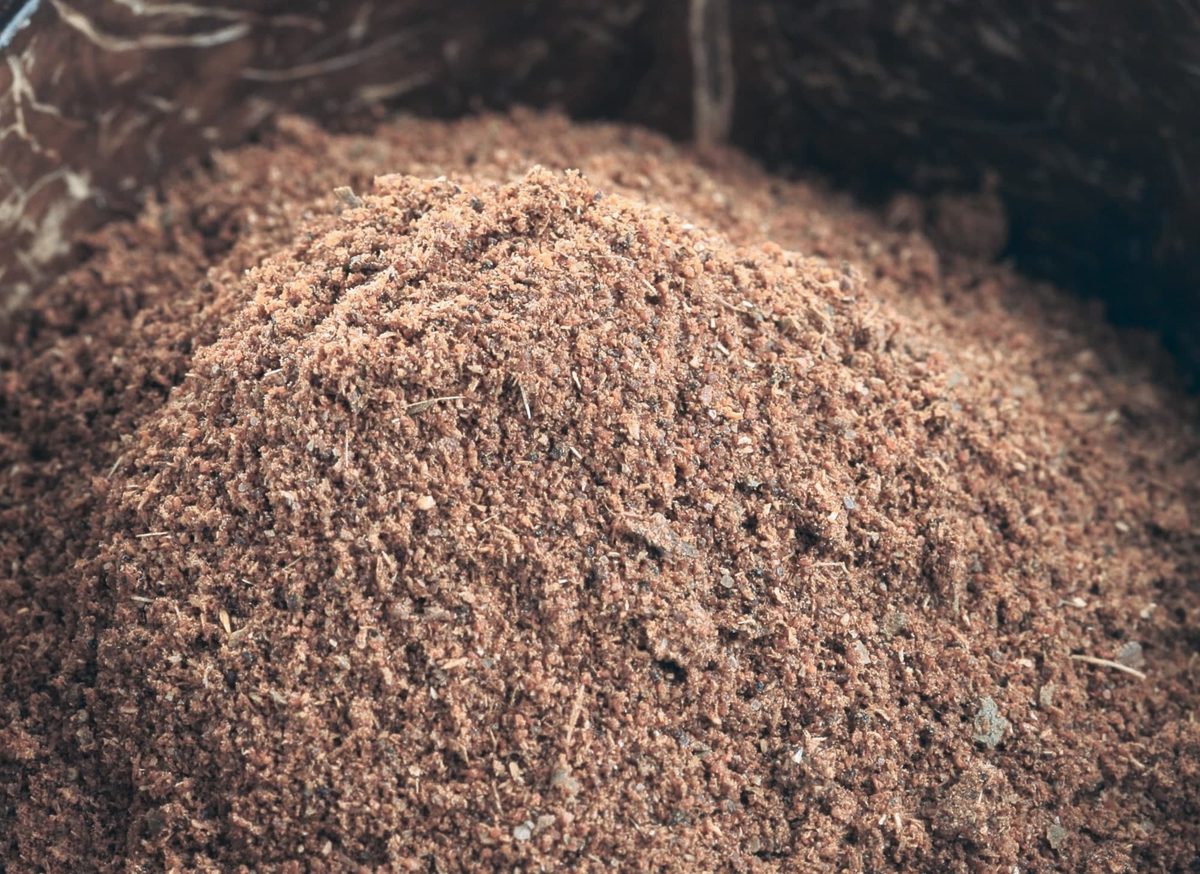
Tikka masala is the spice blend used to make chicken tikka masala: pieces of marinated, skewer-cooked chicken in a spiced tomato and cream sauce. As a jarred or homemade blend, it usually combines cumin, coriander, chile and paprika with garam masala or its warm spices, and sometimes turmeric and fenugreek. There is no fixed recipe, and the dish it was built for has no agreed birthplace. This page covers what goes into the blend, the compounds behind its flavor, the competing origin stories, and how to buy, store and use it.
At a glance
| What it is | A ground spice blend for chicken tikka masala and similar dishes |
| The name | Tikka: from Hindi and Urdu for a small piece of meat1; masala: the Indian term for a spice mixture2 |
| Typical components | Cumin, coriander, chile, paprika, garam masala or cardamom, turmeric, fenugreek (across the recipes and products below)3456 |
| Fixed recipe? | No; recipes and commercial blends differ widely3456 |
| The dish’s origin | Disputed: a Glasgow restaurant in the 1970s, or Punjab or older Indian cooking, depending on whom you ask478 |
| Forms sold | Dry blends, salted or salt-free; seasoning-mix packets56 |
The name
Merriam-Webster defines tikka as an Indian dish of marinated meat cooked on a skewer, from the Hindi and Urdu tikkā, a small piece of meat, which in turn comes from Persian.1 Britannica notes that in traditional Indian cookery spice mixtures are called masala.2 So the name describes the dish: spiced pieces of meat, then a sauce.
What is in it
No standard defines a tikka masala blend. Two published recipes and two commercial products show the range:
| Source | Spices | Ref |
|---|---|---|
| Alfred Prasad, Great British Chefs (dish recipe) | Marinade: Kashmiri chilli powder, sweet paprika, turmeric, garam masala. Sauce: Kashmiri chilli powder, cardamom, ground kasoori methi, garam masala | 3 |
| delicious. magazine (dish recipe) | Marinade: cumin seeds, garam masala, chilli powder, with garlic and ginger. Sauce: garam masala, turmeric | 4 |
| McCormick Chicken Tikka Masala Seasoning Mix (label) | Spices including coriander, cumin, cardamom and nutmeg; garlic, onion, modified corn starch, garlic powder, salt, sugar, paprika extractives, natural flavor; contains milk | 5 |
| Spices, Inc. Tikka Masala (label) | Paprika, turmeric, guajillo, garlic, cayenne, black pepper, fenugreek, ginger, cumin, bay leaves, cardamom, caraway, nutmeg, cloves; salt-free | 6 |
The two home recipes split the spicing between the marinade and the sauce and lean on garam masala in both.34 The two jarred products try to capture the whole dish in one jar, so they carry more spices, and one also carries starch, sugar, salt and dairy.56 Mango powder does not appear in any of these four.
Flavor and the compounds behind it
A typical blend tastes warm and earthy from cumin and coriander, perfumed from cardamom, with mild chile heat and a red color from paprika. That description is ours. The compounds belong to the individual spices:
| Spice | What it contributes | Source |
|---|---|---|
| Coriander seed | Oil that is 60–80% linalool | 9 |
| Cumin | Cuminaldehyde, 20–72% of the oil across studies | 10 |
| Cardamom | 1,8-cineole, up to about 31% of the oil in one 2025 study | 11 |
| Chile, cayenne | Heat, from capsaicinoids | 12 |
| Paprika | Red color, mainly from capsanthin and capsorubin | 13 |
| Turmeric | Yellow color, from curcumin | 14 |
How hot it is depends on which chiles the maker uses and how much; no published heat measurement for tikka masala blends was found.
Where the dish came from
The origin of chicken tikka masala is contested, and the sources below do not agree. They are shown side by side rather than resolved:
| Claim | Who makes it | Source |
|---|---|---|
| Invented in Glasgow in the 1970s by Ali Ahmed Aslam at his Shish Mahal restaurant, when a customer said the chicken tikka was too dry; he made a sauce with condensed tomato soup | Aslam’s own account, reported at his death in 2022 | 7 |
| No way of proving Aslam was the first; a campaign for EU Protected Designation of Origin for Glasgow did not succeed | CBS News | 7 |
| “Basically a Punjabi dish not more than 40-50 years old” | Rahul Verma, Delhi street food expert, 2009 | 8 |
| “An authentic Mughlai recipe” from royal chefs of the Mughal period | Zaeemuddin Ahmad, chef at Karim’s in Delhi, 2009 | 8 |
| Prepared in India for generations | Himanshu Kumar, founder of Eating Out in Delhi, 2009 | 8 |
| “A matter of fierce debate”: some say it appeared in Punjab around 60 years ago, others in Britain in the 1970s | delicious. magazine, 2014 | 4 |
The Caterer, reporting the Delhi objections in 2009, concluded that the exact origin remains unclear.8 Chef Alfred Prasad describes his own version as a twist on murgh makhani, or butter chicken.3 Whatever its birthplace, the dish became a British symbol: in a 2001 speech, the British politician Robin Cook called it “a true British national dish.”7
A dry blend is a shortcut: it puts in one jar the spicing that both recipes above build in two stages, marinade and sauce.34
How tikka masala is used
The main use is chicken tikka masala. Both recipes above follow the same pattern: spice and yogurt for the marinade, then a tomato and cream sauce seasoned again with garam masala.34 With a single blend, a sensible approach is to divide it between the marinade and the sauce. The blend also works as a dry rub for chicken, lamb, paneer or vegetables before grilling or roasting; that is common practice rather than a sourced finding. See good spices for chicken.
Technique
When ground spices go into the sauce, America’s Test Kitchen recommends blooming them in fat first, since powdered spices added straight to liquid can taste bland and musty; blooming takes from 30 seconds to several minutes, and ground spices burn fairly quickly.15
Buying and quality
Read the label. Some mixes are spice-only and salt-free;6 others include salt, sugar, starch and dairy, which matters if you are salting separately or avoiding milk.5 A blend with chile or cayenne near the top of the list will be hotter than one led by paprika, as a rule of thumb.
Storage
No regulator or standards body we found gives a shelf life for tikka masala blends. Keep the blend sealed, away from heat and light; if it smells faint when rubbed between the fingers, it has faded. That is common practice, not a measured figure.
Safety
Lead in spices. A New York City health department review of 1,496 spice samples from 41 countries, collected from 2008 to 2017, found detectable lead in more than half and above 2 parts per million in more than 30%, with higher average levels in spices bought abroad.16 The abstract does not break the results out by blend.
Turmeric adulteration. Turmeric, which appears in several tikka masala recipes and blends,346 has a documented problem with lead chromate, a yellow pigment added to improve color. A 2026 study of 503 turmeric samples from 34 cities in eastern India found 30% above India’s 10 µg/g lead limit.17 See turmeric.
Health claims
No regulator or systematic review we found supports health claims for tikka masala blends, and this page makes none. Claims that the blend is a meaningful source of fiber or iron, or helps prevent constipation or anemia, could not be traced to any credible source. For scale, McCormick’s mix gives a serving as 1.5 teaspoons.5
Substitutes and comparisons
- Tikka masala substitutes
- Tikka masala vs. curry powder (see also curry powder)
- Tikka masala vs. garam masala (see also garam masala)
- Tandoori masala and tandoori masala vs. garam masala
The individual spices: cumin, coriander, cardamom, paprika, cayenne pepper, turmeric, fenugreek, kasuri methi, ginger, nutmeg, cloves and mango powder.
Footnotes
-
“Tikka”, Merriam-Webster Dictionary. merriam-webster.com · Reference work ↩ ↩2
-
“Curry”, Encyclopaedia Britannica, 2026. britannica.com · Reference work ↩ ↩2
-
Alfred Prasad, “Chicken tikka masala”, Great British Chefs. greatbritishchefs.com · Publication ↩ ↩2 ↩3 ↩4 ↩5 ↩6 ↩7 ↩8
-
delicious. team, “How to make chicken tikka masala”, delicious. magazine, 2014. deliciousmagazine.co.uk · Publication ↩ ↩2 ↩3 ↩4 ↩5 ↩6 ↩7 ↩8 ↩9
-
McCormick Chicken Tikka Masala Seasoning Mix, product page. mccormick.com · Merchant ↩ ↩2 ↩3 ↩4 ↩5 ↩6 ↩7
-
“Tikka Masala”, Spices, Inc., product page. spicesinc.com · Merchant ↩ ↩2 ↩3 ↩4 ↩5 ↩6 ↩7
-
Caitlin O’Kane, report on the death of Ali Ahmed Aslam, CBS News, 2022. cbsnews.com · Publication ↩ ↩2 ↩3 ↩4
-
Kerstin Kühn, “Indian experts refute Glasgow’s claim to tikka masala”, The Caterer, 2009. thecaterer.com · Publication ↩ ↩2 ↩3 ↩4 ↩5
-
Al-Khayri et al., “Essential Oil from Coriandrum sativum: A Review”, Molecules, 2023. mdpi.com · Peer-reviewed ↩
-
P.C.M. Jansen, Cuminum cyminum, Plant Resources of South-East Asia (PROSEA). uses.plantnet-project.org · Reference work ↩
-
Blažeković et al., “Content and Chemical Composition of Essential Oil from Cardamom”, Croatica Chemica Acta, 2025. hrcak.srce.hr · Peer-reviewed ↩
-
Bosland and Walker, “Measuring Chile Pepper Heat”, New Mexico State University, 2010. pubs.nmsu.edu · Reference work ↩
-
“Paprika extract”, Chemical and Technical Assessment, FAO/WHO JECFA, 2008 (rev. 2013). fao.org · Regulator ↩
-
“Turmeric: Usefulness and Safety”, National Center for Complementary and Integrative Health, 2025. nccih.nih.gov · Regulator ↩
-
“How to Bloom Spices”, America’s Test Kitchen, 2023. americastestkitchen.com · Publication ↩
-
Hore et al., “A Spoonful of Lead”, Journal of Public Health Management and Practice, 2019. scholars.mssm.edu · Peer-reviewed ↩
-
Forsyth et al., “Systemic drivers of toxic food adulteration: lead chromate in turmeric across eastern India”, npj Science of Food, 2026. nature.com · Peer-reviewed ↩