Spice Substitutes · Substitutes
Za’atar Substitutes: Make Your Own, or Match the Job It’s Doing
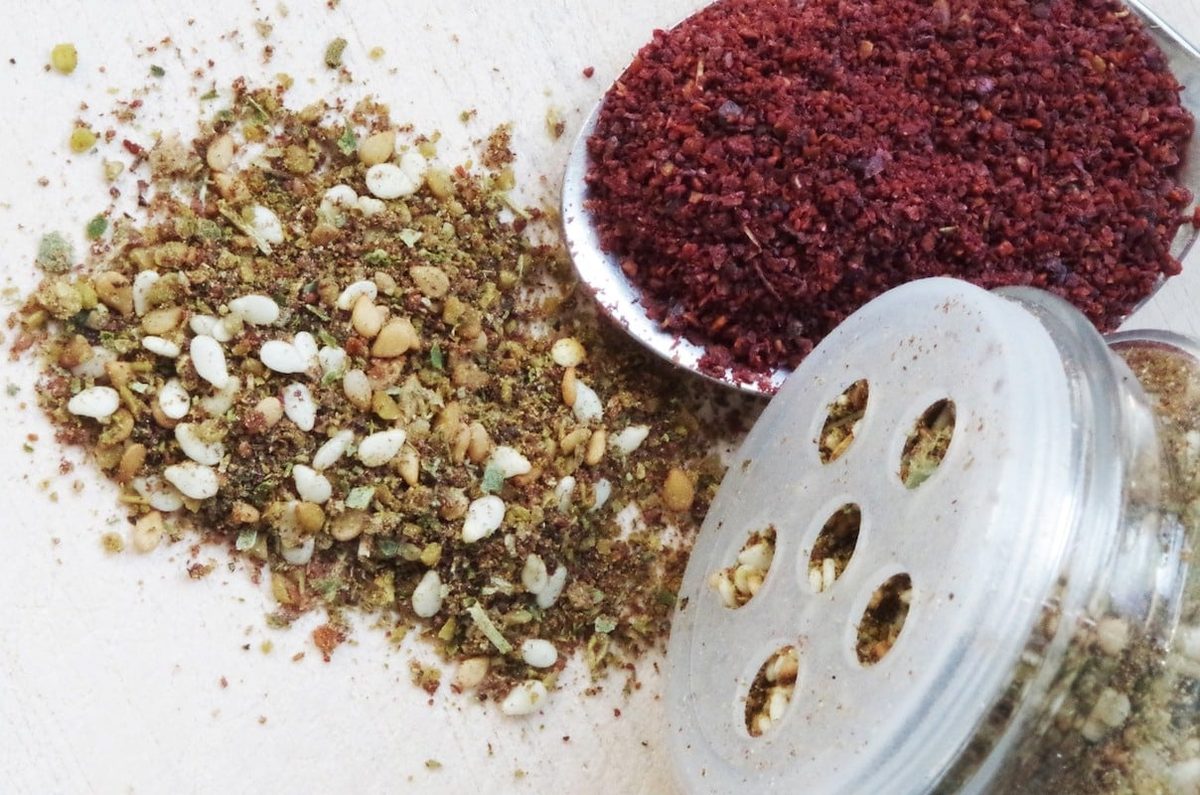
Za’atar is both the Arabic name for a group of wild herbs (Katzer lists oregano, marjoram, thyme and savory among them) and the name of a seasoning built on them.1 At its most basic, the blend is sumac, thyme, oregano and sesame seeds.2 That gives it three jobs at once: herbal, sour and nutty. The best substitute is the blend itself, made from parts you may already have. If you are missing a part, choose the swap that covers the job that matters most in your dish.
Quick answer
| What za’atar is doing | Best substitute | Starting amount, per 1 part za’atar | Treatment |
|---|---|---|---|
| All three jobs (bread with olive oil, eggs, hummus) | Homemade za’atar | 1 part | Attributed |
| Mostly herbal (in dough, on roast vegetables or chicken) | Dried thyme with oregano or marjoram, plus lemon zest | 1 part, then taste | Method |
| A crunchy, nutty topping for bread and oil | Dukkah | 1 part, check the salt first | Method |
| You have za’atar’s herbs but no sumac | Finely grated lemon zest in place of the sumac | 1 part zest per part sumac | Attributed |
How the ratios on this page are labeled
- Computed: based on a measurable physical relationship, with the source named.
- Attributed: a named source publishes this ratio. We quote it as theirs.
- Disputed: named sources give different answers to the same swap. We show each and do not average them.
- Method: we found no published ratio. We give a direction and a cautious starting point, and say so.
Best option: make your own
Most kitchens with a spice rack have the herbs. Sumac is the part most often missing; see below for what to do then.
Ratio (Attributed): The Spice House says to use a homemade substitute 1:1 anywhere za’atar is called for.3
Named recipes agree on the ingredients and disagree on the proportions, especially the sumac:
| America’s Test Kitchen (Bryan Roof)4 | The Spice House3 | Laura Crowley, UC Master Food Preservers2 | Susan Belsinger, Fine Gardening5 | |
|---|---|---|---|---|
| Herbs | 2 Tbsp dried thyme, 1 Tbsp dried oregano | 1 tsp dried thyme, 1/2 tsp dried oregano, 1/2 tsp dried marjoram | 1 Tbsp dried thyme; 1 Tbsp dried oregano, marjoram or a mix | 2 Tbsp dried thyme; 2 Tbsp dried marjoram and/or oregano |
| Sumac | 1 1/2 Tbsp | 1/4 tsp | 2 Tbsp | About 1 Tbsp |
| Sesame | 1 Tbsp, toasted | 1/2 tsp, toasted | 1 Tbsp, toasted | 1/4 cup, toasted |
| Other | 1/4 tsp salt | Pinch of ground cumin and coriander | Salt optional | 2 to 3 tsp salt |
ATK’s version has three times as much sumac per teaspoon of thyme as the Spice House’s. The Spice House says to adjust the sumac for more tang,3 which is the practical answer: start in the middle and taste. ATK grinds the thyme and oregano to a fine powder before stirring in the sumac, sesame and salt, and says its blend keeps at room temperature in an airtight container for up to a year.4
Why these herbs stand in for the wild ones
The herb called za’atar is not always available outside the eastern Mediterranean. Susan Belsinger suggests equal parts thyme and marjoram, oregano or both in its place.5 The chemistry supports the swap: thymol and carvacrol are the characteristic constituents of thyme oil,6 and the same two compounds make up roughly 78 to 85 percent of oregano oil.7 Marjoram is milder; that is our description.
If you don’t have sumac
Sumac brings the sourness. Katzer describes it as tart and sour with slightly astringent overtones, from organic acids including malic and citric acid.8 For a dry blend, the Spice House suggests finely grated lemon zest or a small pinch of citric acid in its place, and a squeeze of lemon juice for wet uses such as dips.3
Ratio (Attributed): For lemon zest in place of sumac, the Spice House says you can start 1:1.9 A za’atar made this way tastes of lemon rather than sumac, and loses sumac’s red color.
If you don’t have sesame seeds
Sesame gives the nutty note. Some of its aroma compounds form only during toasting.10 Leave the sesame out if you must; the blend will still taste herbal and sour. Anyone avoiding sesame should know that store-bought za’atar usually contains it, and that the FDA reports some manufacturers have added sesame to products that did not previously contain it.11 Read the label every time.
If za’atar is mostly an herbal seasoning
In a bread dough or on roast vegetables, the herbs carry most of the flavor.
Dried thyme with oregano or marjoram, plus lemon zest
Ratio (Method): No published ratio exists for this partial swap. Mix two parts thyme to one part oregano or marjoram, following the proportions in the ATK and Spice House recipes above,43 add a little lemon zest, and use the same amount as the za’atar called for. Taste for salt, since most za’atar includes some.
Italian seasoning
Italian seasoning shares some of za’atar’s herbs. McCormick’s version lists marjoram, basil, rosemary, thyme, oregano, savory and sage.12 It has no sumac and no sesame, and its rosemary and sage take it away from za’atar’s flavor.
Ratio (Method): No published ratio was found. Start with about half the za’atar amount, add lemon zest and toasted sesame if you have them, then taste.
If za’atar is a topping for bread and olive oil
Dukkah
Dukkah is another Near Eastern seasoning eaten with bread dipped in olive oil.13 The Oxford Companion to Food says it typically includes sesame and coriander seeds, cumin, salt and pepper, and perhaps hazelnut.13 It covers za’atar’s nutty, crunchy job well, but its herbal and sour notes are missing or weak. A 19th-century list quoted there includes za’atar or wild marjoram or mint,13 so some versions do carry an herb.
Ratio (Method): No published ratio was found. Start with the same amount, check the salt, and add a pinch of dried thyme and lemon zest if you have them.
Swaps that don’t do the job
Harissa. Harissa is built on chiles. UNESCO describes the traditional Tunisian paste as sun-dried chiles crushed with salt, garlic and coriander.14 It brings heat and none of za’atar’s herb, sumac or sesame. We do not recommend it as a za’atar substitute.
What isn’t known
- No published measurement compares any substitute with za’atar. Every ratio on this page is a recipe or a rule of thumb.
- Store-bought blends vary as much as the recipes above, and no source measures the sumac, salt or sesame share of a typical jar.
- No published ratio was found for dukkah, Italian seasoning or a herbs-only mix in place of za’atar.
Related
- Za’atar, za’atar uses and cooking with za’atar
- Sumac and sumac substitutes
- Thyme, oregano, marjoram and oregano vs thyme
- Sesame seeds and sesame seed substitutes
- Dukkah, Italian seasoning and harissa powder
Footnotes
-
Oregano, Gernot Katzer’s Spice Pages. gernot-katzers-spice-pages.com · Reference work ↩
-
Crowley, Za’atar Spice Blend, UC Cooperative Extension Master Food Preservers of El Dorado County. ccfruitandnuts.ucanr.edu · Reference work ↩ ↩2
-
Za’atar Substitute, The Spice House, 2020. thespicehouse.com · Merchant ↩ ↩2 ↩3 ↩4 ↩5
-
Roof, Za’atar, America’s Test Kitchen, 2017. americastestkitchen.com · Publication ↩ ↩2 ↩3
-
Belsinger, Za’atar: An Exotic Herb Blend, Fine Gardening, 2010. finegardening.com · Publication ↩ ↩2
-
Thymus vulgaris, PROSEA. uses.plantnet-project.org · Reference work ↩
-
Lombrea et al., International Journal of Molecular Sciences, 2020. mdpi.com · Peer-reviewed ↩
-
Sumac, Gernot Katzer’s Spice Pages. gernot-katzers-spice-pages.com · Reference work ↩
-
Sumac Substitute, The Spice House, 2018. thespicehouse.com · Merchant ↩
-
Sesame, Gernot Katzer’s Spice Pages. gernot-katzers-spice-pages.com · Reference work ↩
-
Califf, An Update on Sesame Allergen Labeling on Food Packages, FDA, 2023. fda.gov · Regulator ↩
-
McCormick Italian Seasoning ingredients, via Giant Food Stores. giantfoodstores.com · Merchant ↩
-
Duqqa, The Oxford Companion to Food. app.ckbk.com · Reference work ↩ ↩2 ↩3
-
Harissa (Tunisia), UNESCO Intangible Cultural Heritage, 2022. ich.unesco.org · Reference work ↩