Spice Comparisons · Comparison
Turmeric vs. Curry Powder: One Spice and the Blend Built Around It
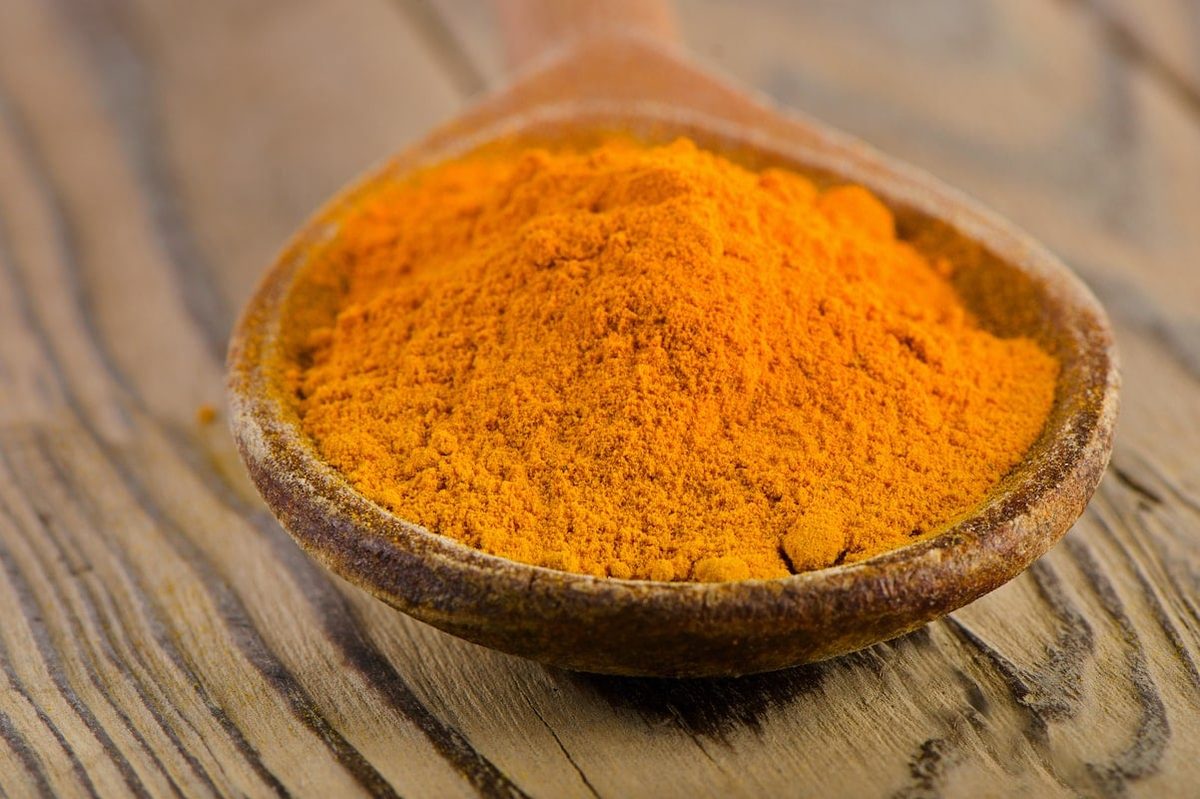
Turmeric is one spice: the boiled, dried and ground rhizome of Curcuma longa, a ginger-family plant.12 Curry powder is a blend, and turmeric is usually in it. The USDA’s purchasing specification says curry powder should include turmeric, coriander, fenugreek, cinnamon, cumin, black pepper, ginger and cardamom, and it sets no proportions.3 The two look alike in the jar because turmeric supplies the blend’s yellow,24 but in the pot curry powder brings a whole set of flavors that turmeric alone does not.
Side by side
| Turmeric | Curry powder | |
|---|---|---|
| What it is | Ground rhizome of Curcuma longa (Zingiberaceae)1 | A ground blend of spices for making curries4 |
| Recipe | One ingredient | No fixed recipe: “there has never been a set combination of spices” (Atlas Obscura)5 |
| Ingredients | Turmeric only. In the US, ground turmeric is also a permitted color additive6 | Should include turmeric, coriander, fenugreek, cinnamon, cumin, black pepper, ginger and cardamom, “not limited to” those (USDA)3 |
| Color | Yellow, from curcumin7 | Yellow, from its turmeric24 |
| Key compounds | Curcumin (color); turmerone, ar-turmerone and zingiberene (aroma)72 | Those of each component, for example sotolon in fenugreek, which PROSEA credits with the characteristic curry aroma8 |
| Taste | Bitter, slightly acrid, yet sweet2 | “A fragrant aromatic aroma and a warm bitter taste” (USDA)3 |
| Heat | No source describes turmeric as hot | None required: USDA’s minimum list includes no chile3 |
| Origin | Known only as a cultigen, from southwest India (Kew)1 | Adapted by British settlers in India; Indian home cooks make their own mixtures, called masala4 |
| Standards | Codex CXS 359-2024 (dried turmeric)9 | ISO 2253:1999 (text not checked);10 USDA A-A-20001C: moisture 9.0% max, total ash 7.2% max3 |
| Price | No dated, sourced retail comparison found | No dated, sourced retail comparison found |
For each in depth, see turmeric and curry powder.
How much of curry powder is turmeric?
Nobody publishes a standard answer. The USDA list sets no proportions,3 and recipes vary: Atlas Obscura quotes an 1870 recipe by a Mrs. Hill that uses coriander seed, turmeric, ginger, black pepper, mustard, allspice, cumin and cardamom.5 The one share figure we found belongs to another spice. PROSEA’s entry on coriander says curry powder contains up to 40% coriander,11 which suggests turmeric is not always the largest component, though PROSEA gives no figure for turmeric itself.
That matters for curcumin, the compound behind turmeric’s color. Published curcumin figures depend on what was measured:
| Material and scope | Curcumin | Source |
|---|---|---|
| Whole turmeric extracts (range across extracts) | 1% to 6% by dry weight | NIH LiverTox12 |
| Commercial ground turmeric samples, measured by HPLC in a Brazilian study (number and origin of samples not given in the abstract) | 0.06% to 2.06% w/w | Messa et al., 202513 |
| Curry powder | No published measurement opened for this page |
The two turmeric figures describe different materials and are not combined. Our inference, not a measurement: a blend that is only partly turmeric should carry less curcumin per gram than turmeric itself. No measured figure for curry powder was available to test that or say how much less.
The differences that change a dish
Flavor
This is the main difference. Turmeric on its own is bitter and earthy with a faint sweetness.2 Curry powder adds the warm, sweet and pungent notes of its other spices. Fenugreek seed, for example, is strong, sweetish and somewhat bitter,14 and coriander, cumin and black pepper all bring their own oils. In our judgment, turmeric alone in a recipe that wants curry powder tastes flat and dusty, and curry powder in a recipe that wants a little turmeric tastes like curry.
Color
Both turn food yellow, because turmeric is the coloring spice in curry powder.2 Turmeric is also traditionally used just to color boiled white rice golden,2 and the food industry uses it in mustard, cereals, chips, cheese and butter.2 If color is all you want, turmeric does it without changing the flavor much; curry powder will not.
Heat
Neither has to be hot. USDA’s curry powder list includes no chile,3 so heat depends on whether a maker adds some. See is curry powder spicy? and Madras curry powder, a style made hotter with chile.
Cooking
America’s Test Kitchen recommends blooming ground spices in fat before liquid goes in, for anywhere from 30 seconds to several minutes, and warns that ground spices burn fairly quickly.15 That applies to both. See cooking with turmeric and cooking with curry powder.
Health claims
Turmeric is often sold as a health food. NIH’s National Center for Complementary and Integrative Health concluded in 2025 that there isn’t enough evidence to say turmeric or curcumin is beneficial for any health purpose.7 Much of the interest rests on laboratory work, and a compound behaving a certain way in the lab does not establish an effect in people. Concentrated, highly bioavailable curcumin supplements may harm the liver.7 Neither turmeric in cooking amounts nor curry powder is treated here as a health product, and claims that curry powder supplies meaningful nutrients from its spices could not be traced.
Safety
Turmeric’s documented problem is lead chromate, a yellow pigment added to improve color. A 2026 study of 503 turmeric samples from 34 cities in eastern India found 30% above India’s lead limit of 10 µg/g, with the pigment mainly added when dried roots are polished.16 Curry powder inherits whatever is in its turmeric. More broadly, a New York City health department review of 1,496 spice samples collected from 2008 to 2017 found detectable lead in more than half, though its abstract does not break out curry powder.17 See turmeric for the full record.
Can one stand in for the other?
Partly, in one direction more than the other.
- Curry powder in place of turmeric (Attributed). A Couple Cooks says to use slightly less curry powder than the turmeric a recipe calls for.18 Frontier Co-op lists curry powder as a substitute without an amount.19 Neither says how its advice was arrived at. The dish will take on the blend’s other flavors, so check them against the recipe. See turmeric substitutes.
- Turmeric in place of curry powder (Method). We found no published ratio. Turmeric covers only the color. Start with about a quarter of the curry powder amount in turmeric, since it is bitter in quantity, and add ground cumin and coriander if you have them; then taste. If the recipe calls for Madras curry powder, see Madras curry powder substitutes.
- Turmeric as a saffron stand-in. Turmeric, not curry powder, is the usual swap for saffron’s color. The Spice House says it will give paella its traditional yellow but is more earthy and peppery than saffron.20 See saffron vs. turmeric.
What isn’t known
- No source opened for this page gives the share of turmeric in commercial curry powders, or a measured curcumin content for curry powder.
- ISO 2253, the international curry powder specification, is sold rather than published, so its requirements were not checked.10
- No dated price comparison was found.
Related
- Turmeric vs. cumin, turmeric vs. ginger and cumin vs. curry powder
- Garam masala vs. curry powder and curry paste vs. curry powder
- Too much turmeric and too much curry powder
- Fresh turmeric vs. powder
Footnotes
-
Curcuma longa L., Plants of the World Online, Royal Botanic Gardens, Kew. powo.science.kew.org · Reference work ↩ ↩2 ↩3
-
Prasad and Aggarwal, Turmeric, the Golden Spice, in Herbal Medicine: Biomolecular and Clinical Aspects, 2nd ed., via NCBI Bookshelf. ncbi.nlm.nih.gov · Reference work ↩ ↩2 ↩3 ↩4 ↩5 ↩6 ↩7 ↩8 ↩9
-
Commercial Item Description A-A-20001C, Spices and Spice Blends, USDA Agricultural Marketing Service, 2023. ams.usda.gov · Regulator ↩ ↩2 ↩3 ↩4 ↩5 ↩6 ↩7
-
Curry, Encyclopaedia Britannica. britannica.com · Reference work ↩ ↩2 ↩3 ↩4
-
Rohini Chaki, The Subversive, Surprising History of Curry Powder, Atlas Obscura, 2019. atlasobscura.com · Publication ↩ ↩2
-
21 CFR 73.600, Turmeric (color additive), eCFR. ecfr.gov · Regulator ↩
-
Turmeric: Usefulness and Safety, NCCIH, 2025. nccih.nih.gov · Regulator ↩ ↩2 ↩3 ↩4
-
Trigonella foenum-graecum (PROSEA), via Pl@ntUse. uses.plantnet-project.org · Reference work ↩
-
Standard for Dried or Dehydrated Roots, Rhizomes and Bulbs: Turmeric (CXS 359-2024), Codex Alimentarius. fao.org · Standard ↩
-
ISO 2253:1999 Curry powder: Specification (catalogue page), ISO. iso.org · Standard ↩ ↩2
-
Coriandrum sativum (PROSEA), via Pl@ntUse. uses.plantnet-project.org · Reference work ↩
-
LiverTox: Turmeric, NIDDK, 2025. ncbi.nlm.nih.gov · Regulator ↩
-
Messa et al., Chromatographic evaluation of curcumin content in commercial samples, Brazilian Journal of Food Technology, 2025. doaj.org · Peer-reviewed ↩
-
Fenugreek, Encyclopaedia Britannica. britannica.com · Reference work ↩
-
How to Bloom Spices, America’s Test Kitchen, 2023. americastestkitchen.com · Publication ↩
-
Forsyth et al., Systemic drivers of toxic food adulteration: lead chromate in turmeric across eastern India, npj Science of Food, 2026. nature.com · Peer-reviewed ↩
-
Hore et al., A Spoonful of Lead: A 10-Year Look at Spices as a Potential Source of Lead Exposure, Icahn School of Medicine at Mount Sinai. scholars.mssm.edu · Peer-reviewed ↩
-
Sonja Overhiser, Best Turmeric Substitute, A Couple Cooks, 2026. acouplecooks.com · Publication ↩
-
Top Turmeric Substitutes, Frontier Co-op. frontiercoop.com · Merchant ↩
-
Saffron Substitute, The Spice House, 2018. thespicehouse.com · Merchant ↩