Cooking · Dish guide
The Best Spices and Add-Ins for Cornbread: Jalapeño, Garlic, Herbs and Cheese
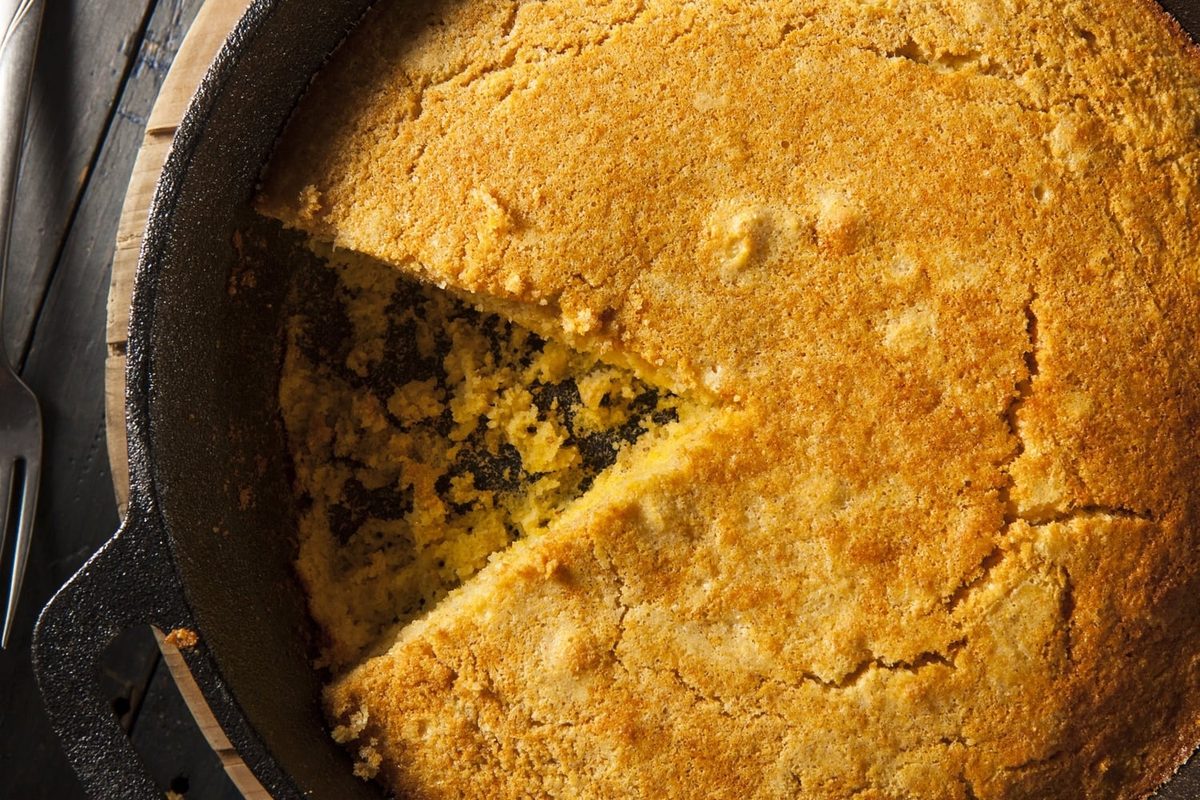
A basic cornbread is cornmeal, a leavener, eggs, fat, dairy and a little salt and sugar,1 which leaves plenty of room for seasoning. The two recipes cited here both add jalapeños, one adds cheddar and one adds garlic powder. Herbs such as rosemary and basil are a matter of taste rather than tradition. This page covers what each add-in does and how to use it without making the crumb soggy. Quantities appear only where a named recipe gives them.
At a glance
| Add-in | What it does | Watch out for |
|---|---|---|
| Jalapeño (fresh, pickled or canned) | Heat, green flavor, color | Moisture; heat varies pepper to pepper23 |
| Garlic powder or fresh garlic | Savory depth | Easy to overdo |
| Cheese (cheddar, Parmesan) | Savory richness, salt | Extra salt in the batter |
| Rosemary | Piney, resinous note | Strong; a little goes far4 |
| Basil | Sweet, green note | Fades with long heat (fresh) |
Jalapeño: the classic add-in
Both recipes cited here put jalapeños in the batter. Grit’s jalapeño cornbread uses a 4-ounce can of chopped jalapeños with a cup of grated cheddar and a can of cream-style corn.1 Magnolia’s skillet cornbread uses ¼ cup of chopped, drained pickled jalapeños and marks them optional: “If you’re spice-averse, simply skip the jalapeños.”5
Heat varies. In a 2016 study, researchers analyzed fresh jalapeños from ten suppliers one pepper at a time and found heat varied with “a very high degree of variability within a given supplier.”2 Peppers from one supplier can differ widely, so tasting a sliver before deciding how much to add is sensible. For a measured, consistent heat, a dried jalapeño powder is another option.
Moisture matters. USDA data put raw jalapeños at 91.7 grams of water per 100 grams.3 Both recipes use drained or canned peppers,15 and in our judgment chopped fresh or brined peppers should be drained and patted dry so they don’t loosen the batter. If you add a lot, cutting back slightly on the milk or buttermilk is a reasonable adjustment; no source gives a ratio for it.
For smoke as well as heat, see chipotle powder.
Garlic: savory depth
Magnolia’s recipe seasons 1 cup of flour and 1 cup of cornmeal with ½ teaspoon of garlic powder.5 In our kitchen judgment, garlic powder disperses evenly through a batter, while fresh garlic, finely minced or first cooked in the butter, gives more pungency. For how the two differ, see garlic powder vs. garlic; if a batch turns harsh, see too much garlic powder.
Cheese: richness and savory depth
Cheese is not a spice, but it is one of the most common savory additions. Grit’s recipe uses 1 cup of grated cheddar.1 Parmesan brings much more savory intensity. A white paper from the Academy of Nutrition and Dietetics’ Evidence Analysis Library tabulates free glutamic acid, the compound behind umami taste, at 1,200 to 1,680 mg per 100 g for Parmesan against 182 mg per 100 g for cheddar.6 Those are the paper’s figures, compiled from earlier sources (Giacometti 1979, the Umami Information Center and Yamaguchi and Ninomiya 2000), not new measurements, and they cover the cheese types, not any particular brand.6 Hard cheese also adds salt, so in our judgment the salt in the batter is worth trimming when you add a lot.
Herbs: rosemary and basil
Neither recipe cited here uses herbs, so these are suggestions rather than tradition.
- Rosemary. Britannica describes rosemary leaves as having a pungent, slightly bitter taste.7 The University of Delaware’s extension service groups rosemary with bay leaf, ginger and sage among the strong or dominant flavors,4 so start small, especially in a recipe that didn’t call for it. Finely chopped fresh or crumbled dried both work; see dried vs. fresh rosemary and, if it takes over, too much rosemary.
- Basil. Britannica describes dried large-leaf basil as warm, sweet, aromatic and mildly pungent.8 The same Delaware fact sheet puts basil among the medium-strength herbs.4 In our judgment fresh basil loses much of its aroma in a hot oven, so an herb butter for serving shows it off better than baking it in. See dried basil vs. fresh.
The Delaware fact sheet also notes that dried herbs are stronger than fresh, giving ¾ to 1 teaspoon dried crumbled as equal to 2 to 3 teaspoons fresh.4
Two recipes side by side
| Recipe | Spices and savory add-ins | Fat and dairy |
|---|---|---|
| Grit, Jalapeño Cornbread1 | 1 small can (4 oz) chopped jalapeños, 1 cup grated cheddar, 1 tsp salt, 1 tsp sugar | Lard, buttermilk |
| Magnolia, Jalapeño Cornbread5 | ½ tsp garlic powder, 1 tsp kosher salt, ¼ cup pickled jalapeños (optional), ¼ cup roasted pimientos (optional) | Butter, heavy cream |
These are the named sources’ recipes, not a house standard.
Related
Footnotes
-
Jalapeño Cornbread, Grit Staff, Grit, 2013. grit.com · Publication ↩ ↩2 ↩3 ↩4 ↩5
-
Sweat et al., Variability in capsaicinoid content and Scoville heat ratings of commercially grown Jalapeño, Habanero and Bhut Jolokia peppers, Food Chemistry, 2016. asu.elsevierpure.com · Peer-reviewed ↩ ↩2
-
Peppers, jalapeno, raw (FDC ID 168576), USDA FoodData Central. fdc.nal.usda.gov · Regulator ↩ ↩2
-
Using Herbs and Spices, University of Delaware Cooperative Extension, 2025. udel.edu · Reference work ↩ ↩2 ↩3 ↩4
-
Jalapeño Cornbread, Magnolia (from Magnolia Table). magnolia.com · Publication ↩ ↩2 ↩3 ↩4
-
Umami in Foods white paper, Kristi Crowe, Academy of Nutrition and Dietetics Evidence Analysis Library. andeal.org · Reference work ↩ ↩2
-
Rosemary, Encyclopaedia Britannica. britannica.com · Reference work ↩
-
Basil, Encyclopaedia Britannica. britannica.com · Reference work ↩