Spice Substitutes · Substitutes
Gochugaru Substitutes, Ranked by the Job Gochugaru Is Doing
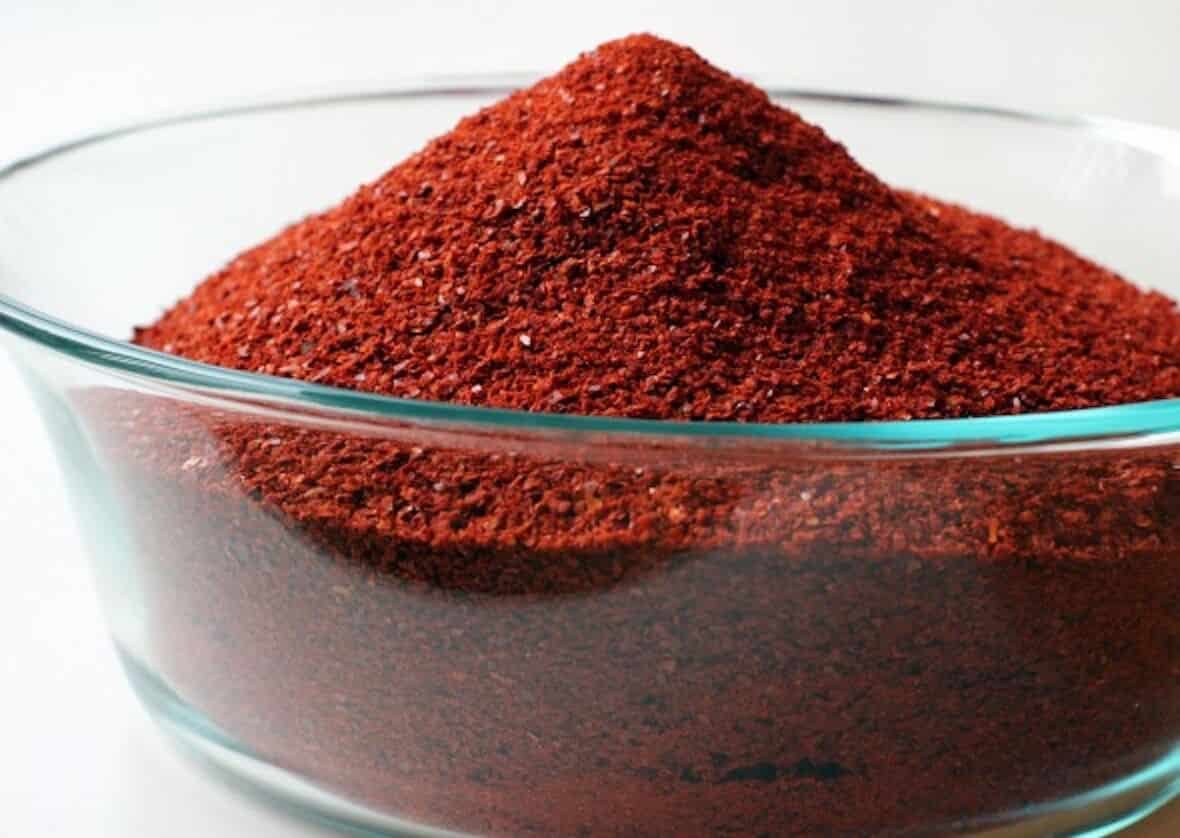
Gochugaru is Korean red pepper, ground from Capsicum annuum and sold as coarse flakes or finer powder.12 Maangchi, the Korean cooking author, says it comes in mild and hot versions, and that she uses the mild flakes for kimchi “so that I can add a lot for color without making the dish too spicy.”3 That sentence explains why gochugaru is hard to replace: in many Korean dishes it is used by the spoonful, for color as much as for heat, and most other chiles are too hot to use that way.
Quick answer
| What gochugaru is doing | Best substitute | Starting amount, per 1 part gochugaru | Treatment |
|---|---|---|---|
| Color and gentle heat, used in quantity (kimchi, seasoned vegetables) | Sweet paprika with a pinch of cayenne | 1 part paprika plus a pinch, then taste | Method |
| Coarse red flakes with moderate heat (garnish, dipping sauces, marinades) | Aleppo pepper | 3/4 part, then taste | Method |
| Heat and body in stews and sauces | Gochujang (paste) | 1 part, and cut the salt | Method |
| Mostly heat | Cayenne or crushed red pepper | 1/4 part, then taste | Method |
The rest of the page explains each choice and lists the alternatives.
How the ratios on this page are labeled
Every ratio carries one of four labels.
- Computed: based on a measurable physical relationship, with the source named.
- Attributed: a named source publishes this ratio. We quote it as theirs.
- Disputed: named sources give different answers to the same swap. We show each one and do not average them.
- Method: we found no published ratio. We give a direction and a cautious starting point, and say so.
We found no credible published ratio for replacing gochugaru. Maangchi says readers often ask whether they can use chili powder or other crushed chili flakes, and answers that they “won’t work with Korean dishes” because the flavor is different and they are too spicy.3 When a reader had nothing else, she advised using less than her recipe calls for.3 Every amount below follows that direction.
Why heat is the hard part
Gochugaru’s heat is not one number. Korean laboratory studies measure capsaicinoid content rather than Scoville units:
| Scope | Capsaicinoids | Source |
|---|---|---|
| 20 Korean red peppers, analyzed by HPLC (1994) | 7.0 to 75.9 mg per 100 g | Analytical Science and Technology4 |
| Commercial powders by variety and district (2000) | 41.7 mg per 100 g (Youngyang district) up to 126.1 mg per 100 g (‘Chungyang’ variety) | Korean Journal of Food Science and Technology5 |
| Korean gochu as described by Kwon et al. (no samples or method stated in the abstract) | Under 1,000 SHU | Journal of Ethnic Foods6 |
| Gochugaru as a category (no samples or method stated) | About 1,500 to 10,000 SHU | PepperScale, gochugaru profile7 |
| Gochugaru as a category (no samples or method stated) | 4,000 to 8,000 SHU | PepperScale, gochugaru substitutes guide8 |
Within the 1994 study alone, the hottest pepper had about 11 times the capsaicinoids of the mildest (75.9 vs 7.0 mg per 100 g). The two studies sampled different peppers and are not combined. PepperScale’s two Scoville ranges come from two of its own articles and do not agree with each other; neither states how it was arrived at, so both are shown as published. The figures are not converted to Scoville units here. New Mexico State University notes that Scoville scoring depends on human tasters and that HPLC, which measures the compounds directly, is the most accurate method.9 The practical point: check whether your recipe assumes mild or hot gochugaru before choosing a substitute.
If gochugaru is color and gentle heat
This is the kimchi job. The Codex kimchi standard describes the seasoning as mainly red pepper (Capsicum annuum) powder with garlic, ginger, other alliums and radish.1 Here you need a lot of red with little burn.
Kwon and colleagues take the strictest view, writing that kimchi and gochujang fermented only with Korean gochu “can be eaten”;6 that is their view, not a tested finding.
1. Sweet paprika with a pinch of cayenne
Paprika supplies the color at low heat. Codex classes paprika as having a pungency of 480 Scoville units or less, hot paprika as above 480 and below 900, and chilli as 900 or more.2 Chili Pepper Madness suggests paprika powder or flakes, including smoked, hot or Hungarian types, “for vibrant color and a touch of heat.”10 A pinch of cayenne brings the heat up toward a mild gochugaru. Smoked paprika adds smoke that gochugaru usually lacks, so use it only if you like that.
Ratio (Method): No published ratio. Use the same volume of sweet paprika as gochugaru, add cayenne a pinch at a time, and taste. Paprika is usually finer than gochugaru flakes, so the texture will be smoother.
If gochugaru is coarse flakes with moderate heat
For dipping sauces, marinades and as a garnish, the flake texture matters.
1. Aleppo pepper
The Spice House describes Aleppo pepper as flakes that add “color, mild heat, and a unique salty-raisiny flavor,” and lists notes of raisin, pomegranate and sun-dried tomato.11 It originated around Aleppo, Syria; The Spice House now sources it from a Turkish region just north of the city, and its ingredients are chiles, vegetable oil and salt.11 Chili Pepper Madness also suggests Aleppo flakes.10 PepperScale rates Aleppo as a better flavor match than crushed red pepper, with comparable heat and a lightly sweet flavor, though harder to find in stores.8 In our judgment, expect a fruitier, saltier result than gochugaru, with a slight oily sheen from the added oil.
Ratio (Method): No published ratio for this swap. Start with about three quarters of the gochugaru amount, taste, and reduce any added salt a little.
2. Crushed red pepper or cayenne flakes
Chili Pepper Madness notes that cayenne pepper flakes have a texture similar to gochugaru and are spicier than the powder.10 This is the swap Maangchi warns about: other chili flakes are usually too hot to use by the spoonful.3 PepperScale calls crushed red pepper the convenience choice rather than the best flavor match: it is typically made from cayenne, which PepperScale rates at 30,000 to 50,000 SHU, it often contains seeds, and its flavor is more neutral than gochugaru’s sweet, slightly smoky taste. PepperScale suggests crushing the flakes finer in a mortar and using less.8
Ratio (Method): No published ratio. Start with about a quarter of the gochugaru amount, and make up the color with paprika.
If gochugaru is heat and body in a stew or sauce
1. Gochujang
Gochujang is a fermented paste, not a dried chile. The Codex standard lists its basic ingredients as grains, red pepper powder, salt and water, with optional ingredients including powdered meju, soybeans, sugars and fish sauce.12 It sets a minimum capsaicin content of 10.0 ppm and a maximum moisture of 55%.12 So gochujang brings Korean chile flavor, but also salt, sweetness, fermented depth and water.
Chili Pepper Madness says gochujang will give you the taste of gochugaru with a different texture, and warns to add less salt because gochujang is already somewhat salty.10 PepperScale makes the same point about salt and describes gochujang as sweet, salty and earthy, suited to soups and sauces.8 It is best in soups, stews and sauces, where the paste dissolves. In kimchi it changes the texture of the seasoning.
Ratio (Method): No published ratio. Start with an equal amount, cut back on salt and on salty seasonings such as soy or fish sauce, then taste. See gochugaru vs. gochujang.
2. Cayenne
Ratio (Method): No published ratio for replacing gochugaru with cayenne. Chili Pepper Madness answers the opposite question, saying to use equal measures of gochugaru in place of cayenne.13 Maangchi’s advice for Korean dishes points the other way: other chiles are too spicy, so use less.3 Because cayenne is a fine, usually hot powder, start with about a quarter of the gochugaru amount and add paprika for color.
Mexican dried chiles
These are easy to find in the U.S. and each covers part of gochugaru’s job. None tastes Korean.
| Chile | Heat, as published | Source | Best for |
|---|---|---|---|
| Ancho | 1,000 to 2,000 SHU (general rating) | Chile Pepper Institute14 | Color and mild, sweet depth |
| Guajillo | 2,500 to 5,000 SHU (general rating) | INDY Week15 | Color and moderate heat |
| Chile de árbol | 15,000 to 30,000 SHU (approximate) | Dave DeWitt’s 2008 heat scale16; PepperScale gives the same range8 | Heat only, in small amounts |
These are ratings for each chile type as a whole, not measurements of any one powder, and they cannot be compared directly with the Korean capsaicinoid figures above.
- Ancho is the chile usually used in American chili powder, according to Saveur.17 The Chile Pepper Institute describes it as sweet and smoky with dried-fruit notes.14 It is mild, so add a little cayenne if you need heat.
- Guajillo goes mainly to Mexico’s artisanal mole industry, along with ancho, mulato, mirasol and pasilla, according to Mexico’s agriculture ministry,18 and Saveur pairs it with chile de árbol in chili con carne.19
- Chile de árbol is a long, pointed chile of “biting heat,” in Katzer’s words, and less aromatic than milder types.20 Use it as you would cayenne.
- Chipotle powder is ground from smoked, dried red jalapeños. PepperScale suggests it as a substitute with comparable heat but much more smoke than gochugaru, and advises mixing in only a little where smoke could take over a dish.8
Ratio (Method): No published ratio for any of these swaps. Start with an equal amount of ancho or guajillo powder, or about a quarter as much chile de árbol, and taste.
What isn’t known
- No published ratio exists for replacing gochugaru with any other chile or with gochujang. Every amount above is a starting point.
- No Scoville measurement of gochugaru as a category was found. The widely repeated range of 1,500 to 10,000 SHU appears in PepperScale’s gochugaru profile, which does not say how it was derived;7 the Korean studies above report capsaicinoid content, which varies widely by variety and district.54
- PepperScale says gochugaru is typically made seedless.8 No source we checked documents how widely that holds.
Related
- Gochugaru, the full profile, and gochugaru vs. gochujang
- Korean spices and Korean BBQ spices
- Paprika, paprika substitutes, cayenne pepper, cayenne pepper substitutes
- Red pepper flakes and red pepper flakes substitutes
- Ancho powder, guajillo powder, chile de árbol powder, chipotle powder
Footnotes
-
Standard for Kimchi, CXS 223-2001, Codex Alimentarius. fao.org · Standard ↩ ↩2
-
Standard for Dried or Dehydrated Chilli Pepper and Paprika, CXS 353-2022, Codex Alimentarius. fao.org · Standard ↩ ↩2
-
Maangchi, Korean hot pepper flakes (Gochugaru), Maangchi.com. maangchi.com · Publication ↩ ↩2 ↩3 ↩4 ↩5
-
Chai et al., Relationships Between the Content and Sensory Evaluation of Pungent Principles in Red Pepper, Analytical Science and Technology, 1994. accesson.kr · Peer-reviewed ↩ ↩2
-
Choi, Jeon and Park, Comparison of Quality of Red Pepper Powders Produced in Korea, Korean Journal of Food Science and Technology, 2000. koreascience.kr · Peer-reviewed ↩ ↩2
-
Kwon, Jang, Yang and Chung, History of Korean gochu, gochujang, and kimchi, Journal of Ethnic Foods, 2014 (abstract). agris.fao.org · Peer-reviewed ↩ ↩2
-
Matt Bray, What Is Gochugaru? The Story Behind The Spice, PepperScale, 2023. pepperscale.com · Publication · PepperScale is also owned by Matt Bray, the editor of this site. ↩ ↩2
-
Matt Bray, What’s A Good Gochugaru Substitute?, PepperScale, 2022. pepperscale.com · Publication · PepperScale is also owned by Matt Bray, the editor of this site. ↩ ↩2 ↩3 ↩4 ↩5 ↩6 ↩7
-
Bosland and Walker, Measuring Chile Pepper Heat, NMSU Guide H-237, 2010. pubs.nmsu.edu · Reference work ↩
-
Hultquist, Gochugaru: What It Is and How to Use It, Chili Pepper Madness. chilipeppermadness.com · Publication ↩ ↩2 ↩3 ↩4
-
Aleppo Peppers, The Spice House. thespicehouse.com · Merchant ↩ ↩2
-
Regional Standard for Gochujang, CXS 294R-2009, Codex Alimentarius. fao.org · Standard ↩ ↩2
-
Hultquist, What Can I Substitute for Cayenne Pepper?, Chili Pepper Madness. chilipeppermadness.com · Publication ↩
-
Ancho recipe card, Chile Pepper Institute, New Mexico State University. cpi.nmsu.edu · Reference work ↩ ↩2
-
Sorg, DISH: Tips on which peppers suit which dish, INDY Week, 2015. indyweek.com · Publication ↩
-
DeWitt, Heat Scale Updated, Fiery Foods & Barbecue Central, 2008. fieryfoodscentral.com · Publication ↩
-
Chili Powder, Saveur, 2009. saveur.com · Publication ↩
-
Chile seco, Secretaría de Agricultura y Desarrollo Rural, Mexico. gob.mx · Regulator ↩
-
Chili Con Carne, Saveur, 2012. saveur.com · Publication ↩
-
Gernot Katzer, Paprika and Mexican chiles (Capsicum annuum), Gernot Katzer’s Spice Pages. gernot-katzers-spice-pages.com · Reference work ↩