Blog · Dish guide
The Best Seasonings for Korean BBQ: Gochujang, Doenjang, Soy Sauce, Garlic, Sesame and Pear
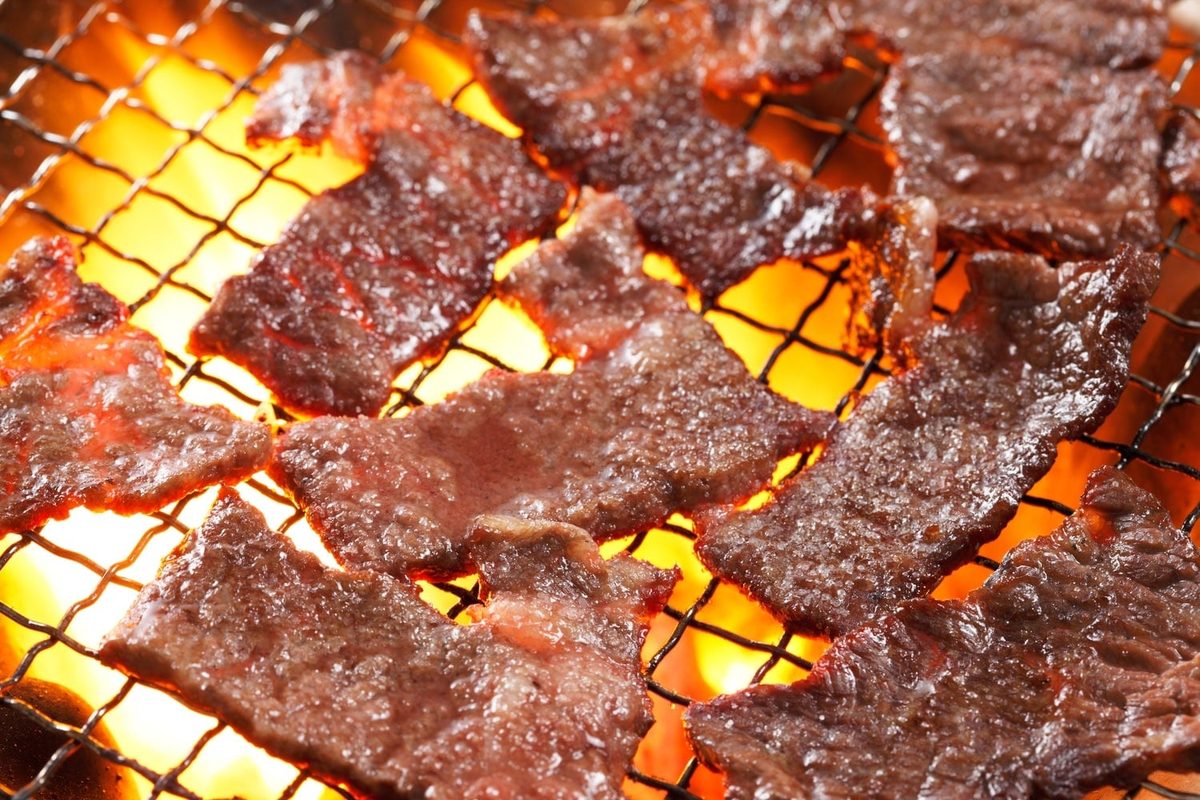
Korean barbecue gets its flavor less from dry spices than from a handful of pastes, sauces and fresh aromatics: soy sauce, garlic, sesame oil and pear in the marinade, and fermented pastes such as gochujang and doenjang in the dipping sauce. This page covers what each one does at the grill, with quantities only where a named recipe gives them.
At a glance
| Seasoning | Job at the table | Where it goes |
|---|---|---|
| Soy sauce (ganjang) | Salt and savory depth | Bulgogi marinade1 |
| Garlic | Pungent backbone | Marinade1 and ssamjang2 |
| Sesame oil and seeds | Nutty, toasted aroma | Marinade1 and ssamjang2 |
| Sugar and pear | Sweetness; pear is said to tenderize | Bulgogi marinade1 |
| Green onion | Fresh allium note | Marinade1 and ssamjang2 |
| Gochujang | Sweet, hot, fermented paste | Ssamjang,2 glazes |
| Doenjang | Funky, salty fermented soybean paste | Ssamjang2 |
| Ssamjang | Thick dipping and wrapping paste | Lettuce wraps and grilled meat32 |
| Perilla leaves | Aromatic wrapping leaf | Wraps (common practice) |
The marinade: soy sauce, garlic, sesame oil, sugar and pear
Bulgogi, thin-sliced marinated beef, is a fixture of Korean menus; Smithsonian Magazine notes that nearly every Korean restaurant in the US serves it one way or another.1 The magazine’s history of the dish says bulgogi marinades generally include some combination of soy sauce, sugar, garlic, green onion, sesame oil and pear, and that the meat is eaten over rice or wrapped in lettuce.1 The same article traces the dish back to a skewered meat called maekjeok in the Goguryeo era (37 BCE to 668 CE), which by the early 20th century gave way to neobiani, thin-sliced, marinated, charbroiled beef favored by the royal court.1
There is no fixed ratio. As one example, chef Peter Serpico’s recipe in the same article uses 4 tablespoons of low-sodium soy sauce, 4 tablespoons of canned pineapple juice, 1 tablespoon each of sesame oil and sesame seeds, 3 cloves of garlic, a bunch of scallions and fresh-ground pepper for a pound of sirloin.1 Note the pineapple juice in place of pear.
Does pear tenderize the meat?
Pear is widely described as a tenderizer for Korean marinades. A 2000 study in the Korean Journal of Food and Cookery Science marinated beef in a sauce containing juice from each of five fruits and measured toughness: the reduction ran pineapple, then papaya, fig, kiwifruit and, smallest, pear.4 Pineapple, papaya and fig tenderized the beef significantly more than pear and kiwifruit.4 So in that test pear softened the beef least of the five fruits, and pineapple, the fruit in Serpico’s recipe, softened it most. Pear’s other job, sweetness, is not in doubt.
A widely repeated claim says Korean pears are native to Korea, China and Japan. Kew gives the native range of the pear species Pyrus pyrifolia as southern China to Indo-China.5 We found no source naming the species of the pears used in Korean marinades.
Soy sauce (ganjang)
Korean soy sauce, ganjang, is the liquid byproduct of making doenjang, according to Matt Rodbard’s guide to Korean jangs in Saveur, which adds that it contains no added wheat.3 We did not find a source for the claim that Japanese soy sauce began as a byproduct of miso making, so that comparison is left out. Soy sauce is the main salt in most bulgogi marinades.1 See soy sauce powder and, if a marinade is too salty, too much soy sauce.
Gochujang
Gochujang has a Codex standard. Codex defines it as a red or dark red fermented paste made by saccharifying grain starch with malt or fermenting grains with Aspergillus, mixing in salt, fermenting and aging, and adding red pepper powder (Capsicum annuum).6 Soybeans and powdered meju are optional ingredients, not required ones, and the standard sets a minimum capsaicin content of 10.0 ppm.6 Rodbard calls it sweet, spicy and funky, and the most assertive ingredient in Korean cooking, to be used sparingly.3
Which heat level to use is the cook’s choice. For barbecue it goes into glazes and into ssamjang. See gochugaru, the red pepper behind it, and gochugaru vs. gochujang.
Doenjang
Doenjang is Korean fermented soybean paste.2 Codex’s regional standard for fermented soybean paste defines the category as a paste whose essential ingredient is soybean, fermented by Bacillus or Aspergillus species, salted and aged.7 Rodbard writes that its natural fermentation gives it the sharp, funky smell of a strong cheese.3 At the barbecue table its main job is in ssamjang.2
Ssamjang
Ssamjang is the thick paste that goes with grilled meat. Rodbard describes it as used to glaze meats and fill lettuce wraps.3 Chef Hooni Kim’s recipe in Saveur combines doenjang and gochujang and is mainly for glazing barbecued meat or as a condiment in lettuce wraps, and also as a dip for raw vegetables.2
Kim’s ssamjang, makes about 3/4 cup:2
| Ingredient | Amount |
|---|---|
| Doenjang | 5 tbsp |
| Gochujang | 3 1/2 tbsp |
| Rice syrup or corn syrup | 1 1/2 tbsp |
| Walnuts, coarsely chopped (Kim’s own touch) | 2 tbsp |
| White onion, minced | 1 tbsp |
| Sesame seeds | 1 tbsp |
| Sesame oil | 1 tbsp |
| Scallion, sliced | 1 tbsp |
| Garlic, minced | 2 cloves |
It keeps up to a month refrigerated in an airtight container, per the recipe.2 The name is often translated as “spicy dipping sauce”; ssam refers to the wrap, and we found no source for that translation.
Garlic
Garlic is in the bulgogi marinade1 and in ssamjang.2 Whole cloves grilled alongside the meat, and pickled garlic among the side dishes, are common at Korean barbecue restaurants; that is common practice rather than a sourced finding. See garlic, garlic powder and too much garlic.
Sesame oil and seeds
Sesame oil is a standard part of bulgogi marinades,1 and both oil and seeds go into Kim’s ssamjang.2 The dark, toasted oil used in Korean cooking is for flavor, not frying: Gernot Katzer notes that dark sesame oil is not suitable as a frying medium unless diluted with another oil.8 Some cooks add it at the end of mixing a marinade; we found no evidence that it blocks the meat from absorbing the other liquids.
Sesame is one of the nine major food allergens in the United States.9 See sesame seeds, black sesame seeds and hulled vs. unhulled sesame seeds.
Perilla leaves
Perilla, Perilla frutescens, is a mint-family plant (Lamiaceae).10 Katzer, who covers Japanese shiso and Korean perilla under this one species, notes that the common Korean name, kkaennip, means “sesame leaf,” and that Korean cooking has found similar uses for the aromatic leaves.11 Kew accepts several varieties of the species, including var. crispa.10 The main aroma compound in perilla oil is perillaldehyde, per a 2022 review.12 Wrapping grilled meat in a perilla leaf, alone or with lettuce, is common practice; we found no source that makes it the traditional wrap for bulgogi. A claim that perilla tastes like licorice-noted basil is not supported by the sources we checked. See shiso and Korean mint, a different plant.
Related pages
- Korean spices, gochugaru and gochugaru substitutes
- BBQ spices for American-style rubs
- The master list of herbs and spices
Footnotes
-
“A Brief History of Bulgogi, Korea’s Most Delicious Export”, Smithsonian Magazine, 2018. smithsonianmag.com · Publication ↩ ↩2 ↩3 ↩4 ↩5 ↩6 ↩7 ↩8 ↩9 ↩10 ↩11 ↩12
-
Hooni Kim, “Ssamjang (Korean Barbecue Paste)”, Saveur, 2016. saveur.com · Publication ↩ ↩2 ↩3 ↩4 ↩5 ↩6 ↩7 ↩8 ↩9 ↩10 ↩11 ↩12 ↩13
-
Matt Rodbard, “How to Cook With Korean Jangs”, Saveur, 2016. saveur.com · Publication ↩ ↩2 ↩3 ↩4 ↩5
-
Bae and Noh, “Application of Proteolytic Enzymes in Fruits for Meat Tenderization”, Korean Journal of Food and Cookery Science, 2000 (abstract). koreascience.kr · Peer-reviewed ↩ ↩2
-
Pyrus pyrifolia (Burm.f.) Nakai, Plants of the World Online, Royal Botanic Gardens, Kew. powo.science.kew.org · Reference work ↩
-
Regional Standard for Gochujang, CXS 294R-2009, Codex Alimentarius. fao.org · Standard ↩ ↩2
-
Regional Standard for Fermented Soybean Paste, CXS 298R-2009, Codex Alimentarius. fao.org · Standard ↩
-
Gernot Katzer, Sesame (Sesamum indicum), Gernot Katzer’s Spice Pages. gernot-katzers-spice-pages.com · Reference work ↩
-
“Food Allergies”, U.S. Food and Drug Administration. fda.gov · Regulator ↩
-
Perilla frutescens (L.) Britton, Plants of the World Online, Royal Botanic Gardens, Kew. powo.science.kew.org · Reference work ↩ ↩2
-
Gernot Katzer, Perilla (Perilla frutescens), Gernot Katzer’s Spice Pages. gernot-katzers-spice-pages.com · Reference work ↩
-
Hou et al., “Perilla frutescens: A Rich Source of Pharmacological Active Compounds”, Molecules, 2022. mdpi.com · Peer-reviewed ↩