Blog · Dish guide
The Best BBQ Spices: What Each One Does in a Rub, from Salt and Pepper to Paprika
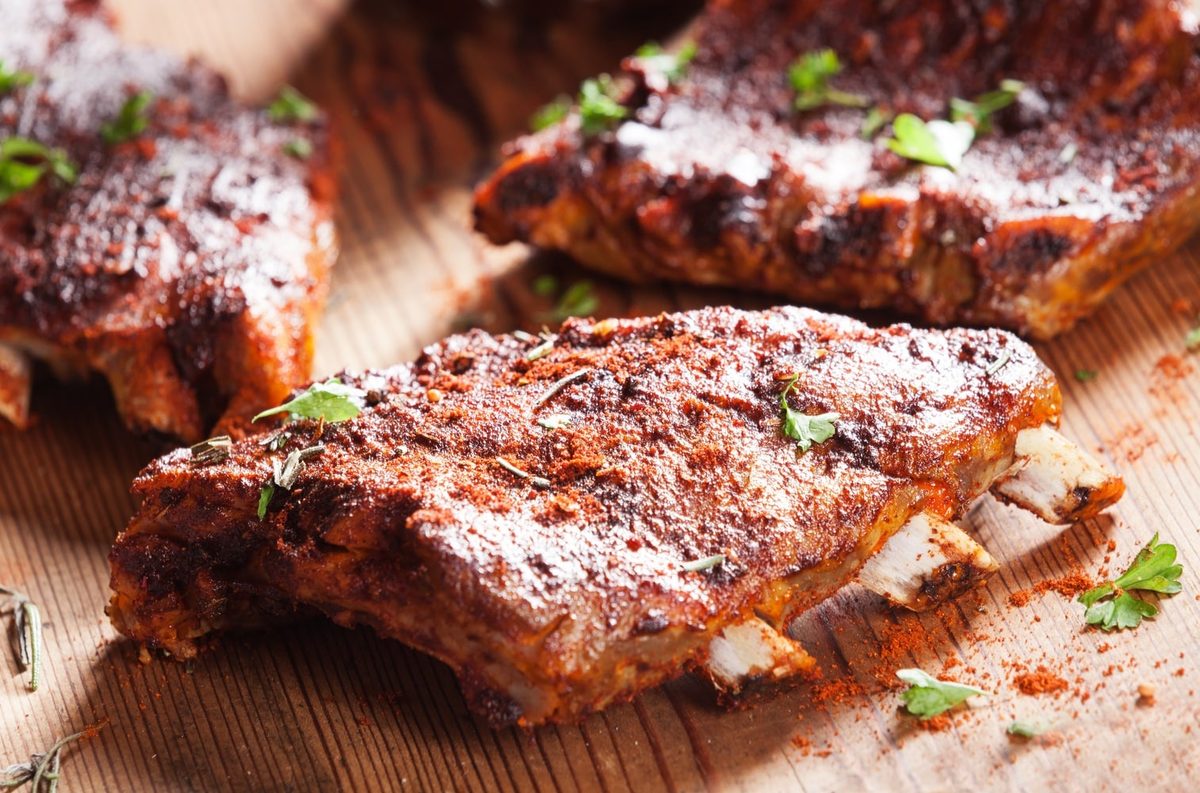
Barbecue rubs are dry mixes of ground spices pressed onto meat before it goes on the smoker or grill. There is no single formula, but the sources agree on a base. Texas A&M’s meat science program calls salt and black pepper the foundations of most seasonings and the primary flavorings of Central Texas barbecue, and lists paprika, brown sugar, garlic powder and onion powder alongside them as the base of many rubs.1 This page covers what each of those spices does, how the main rub styles differ, and how to apply them. Quantities appear only where a named source gives them, credited to that source.
At a glance
| Spice | Job in the rub | Where it is essential |
|---|---|---|
| Salt | Seasoning | Every Texas A&M and USDA rub21 |
| Black pepper | Pungency | Central Texas (with salt only); most other rubs21 |
| Paprika | Red color, mild sweet-pepper flavor | Most sweet-and-savory rubs21 |
| Smoked paprika | Color plus smoke flavor | Optional |
| Brown sugar | Sweetness | Many pork rubs21 |
| Garlic powder and onion powder | Savory depth | Many rubs21 |
| Cumin | Warm, earthy note | Some rubs2 |
| Cayenne or other chile | Heat | Optional1 |
| Allspice | Warm, clove-like spice | Jamaican jerk3 |
The core spices and what each one does
Salt and black pepper: the foundation
Salt is in every Texas A&M and USDA rub on this page. Texas A&M describes salt and black pepper as the primary flavorings in Central Texas barbecue, and its Central Texas brisket rub is nothing more than equal parts salt and black pepper.1 So the idea that some pitmasters use nothing but salt and smoke is close but not quite right: the documented minimalist rub is salt and pepper.
Black pepper’s bite comes principally from piperine.4 In our kitchen judgment, coarse-ground pepper stays visible and textured on a long-smoked crust, while fine pepper disappears into it; see cracked vs. ground black pepper.
The Texas A&M program’s rule for any rub is that seasonings should complement the meat rather than mask its underlying flavor.1
Paprika: color first
Paprika gives a rub its red color. The red comes from carotenoids, mainly capsanthin and capsorubin, according to the FAO/WHO expert committee’s monograph on paprika extract.5 Its flavor in a rub is mild and sweet-peppery; that description is ours. Paprika is part of Texas A&M’s base list and of the USDA’s purchasing specification for barbecue seasoning.12
Smoked paprika. For smoke flavor in the rub itself, use smoked paprika such as Spain’s Pimentón de la Vera, which is dried over oak smoke and protected by a designation of origin that describes its smoky, intense flavor and aroma.6 Not all Spanish pimentón is smoked: Pimentón de Murcia is dried in the sun or with hot air.7 Read the label for the word “smoked” (ahumado). See smoked paprika and paprika vs. cayenne.
Garlic and onion powder: savory depth
Both are on Texas A&M’s base list and in the USDA barbecue seasoning specification.12 Garlic and onion are close relatives, both in the genus Allium in the family Amaryllidaceae.89
Garlic powder behaves differently from fresh garlic. America’s Test Kitchen found that garlic powder stirred in dry tasted harsh and not particularly complex, and recommends hydrating it in water first so its flavor compounds can form.1011 On a dry rub that hydration happens on the meat’s moist surface; that is our inference, not something ATK tested. For more, see garlic powder vs. garlic and onion powder vs. onion.
Brown sugar: sweetness
Brown sugar is in Texas A&M’s base list and its simple pork rub, and in the USDA specification, which describes barbecue seasoning as spicy, salty and slightly sweet.12 Sugar is what separates a sweet pork rub from the Central Texas salt-and-pepper approach.
Cumin: warm and earthy
Cumin appears in the USDA barbecue seasoning specification but not in Texas A&M’s base list.21 Its aroma comes from an essential oil that makes up 2.5 to 4.5% of the seed, and Britannica describes it as especially popular in Asian, North African and Latin American cooking.12 In our judgment it is easy to overdo; a little reads as warmth, too much as dusty bitterness. See too much cumin. Many cooks toast whole seeds before grinding; that is common practice, not a measured effect. See cumin seeds vs. ground cumin.
Chile for heat
Texas A&M suggests cayenne or other chile peppers for those who want a hotter rub.1 The USDA specification lists red pepper.2 See cayenne pepper and chili powder.
Allspice: the jerk signature
Allspice is not part of the American rub base in these sources, but it defines Jamaican jerk. The Smithsonian’s history of jerk names pimento (allspice) and Scotch bonnet pepper as essential ingredients, and says authentic jerk is smoked over pimento wood.3 Britannica says allspice got its name because the dried berry tastes like a combination of cloves, cinnamon and nutmeg.13 See jerk seasoning.
Rub styles compared
| Rub | Ingredients | Proportions | Source |
|---|---|---|---|
| Central Texas brisket rub | Salt, black pepper | Equal parts; Texas A&M’s method cooks the mix over post oak smoke until the salt begins to change color | 1 |
| Simple pork rub | Paprika, black pepper, garlic powder, salt, brown sugar | Equal parts | 1 |
| USDA purchasing specification, Barbecue Seasoning | Celery seed, coriander, black pepper, red pepper, white pepper, paprika, salt, onion, garlic, brown sugar, cumin, natural smoke flavor | Not given (“should include, but is not limited to”) | 2 |
| Jamaican jerk | Pimento (allspice), Scotch bonnet; thyme, scallions, garlic, ginger in modern recipes | Not given | 3 |
Each is the named source’s own formula, not a house standard. The USDA list is a federal purchasing specification, not a definition of every product sold as barbecue rub; it calls for a free-flowing reddish-brown powder with a spicy, salty, slightly sweet flavor.2
Applying a rub
No source we found gives a tested rule for how far ahead to apply a rub, so this is method:
- Coat evenly and press the rub on so it sticks. A thin layer of oil or mustard helps it adhere; that is common practice.
- Mind the heat. Ground spices don’t fare well under intense heat, Tasting Table notes.14 In our judgment that matters most for sugar-heavy rubs, which suit low-and-slow smoking or indirect heat better than a hot grill.
- Salt timing. Salting well ahead lets it season deeper; how far ahead is a matter of preference, and we found no source giving a tested figure for rubs.
- Taste the rub first. A pinch on the tongue tells you whether salt or sugar dominates before it goes on the meat.
Related
- Best spices for ribs, best spices for steak, spices for pork and good spices for chicken
- Spices for hamburgers
- Korean BBQ spices
- Smoked sea salt
- The master list of herbs and spices
Footnotes
-
“Seasonings”, Texas A&M Meat Science, Texas A&M University. meat.tamu.edu · Reference work ↩ ↩2 ↩3 ↩4 ↩5 ↩6 ↩7 ↩8 ↩9 ↩10 ↩11 ↩12 ↩13 ↩14 ↩15 ↩16
-
Commercial Item Description A-A-20001C, Spices and Spice Blends, USDA Agricultural Marketing Service, 2023. ams.usda.gov · Regulator ↩ ↩2 ↩3 ↩4 ↩5 ↩6 ↩7 ↩8 ↩9 ↩10 ↩11 ↩12 ↩13
-
Vaughn Stafford Gray, “A Brief History of Jamaican Jerk”, Smithsonian Magazine, 2020. smithsonianmag.com · Publication ↩ ↩2 ↩3
-
“Black pepper”, Encyclopaedia Britannica. britannica.com · Reference work ↩
-
“Paprika extract”, Chemical and Technical Assessment for the 77th JECFA, FAO. fao.org · Regulator ↩
-
Pimentón de la Vera PDO product specification. assets.publishing.service.gov.uk · Regulator ↩
-
Pimentón de Murcia PDO application file and product specification. ec.europa.eu · Regulator ↩
-
“Allium sativum L.”, Plants of the World Online, Royal Botanic Gardens, Kew. powo.science.kew.org · Reference work ↩
-
“Allium cepa L.”, Plants of the World Online, Royal Botanic Gardens, Kew. powo.science.kew.org · Reference work ↩
-
“Experiment: Bringing Out the Best in Garlic Powder”, America’s Test Kitchen. americastestkitchen.com · Publication ↩
-
Carolyn Grillo, “For Great Garlic Bread, Hydrate Your Garlic Powder First”, America’s Test Kitchen, 2021. americastestkitchen.com · Publication ↩
-
“Cumin”, Encyclopaedia Britannica. britannica.com · Reference work ↩
-
“Allspice”, Encyclopaedia Britannica. britannica.com · Reference work ↩
-
Marco Rossi, “How To Improvise Instant Pot Seasoning Without Burning Your Spices”, Tasting Table, 2023. tastingtable.com · Publication ↩