Spice Substitutes · Substitutes
Mexican Oregano Substitutes, Ranked by the Job It Is Doing
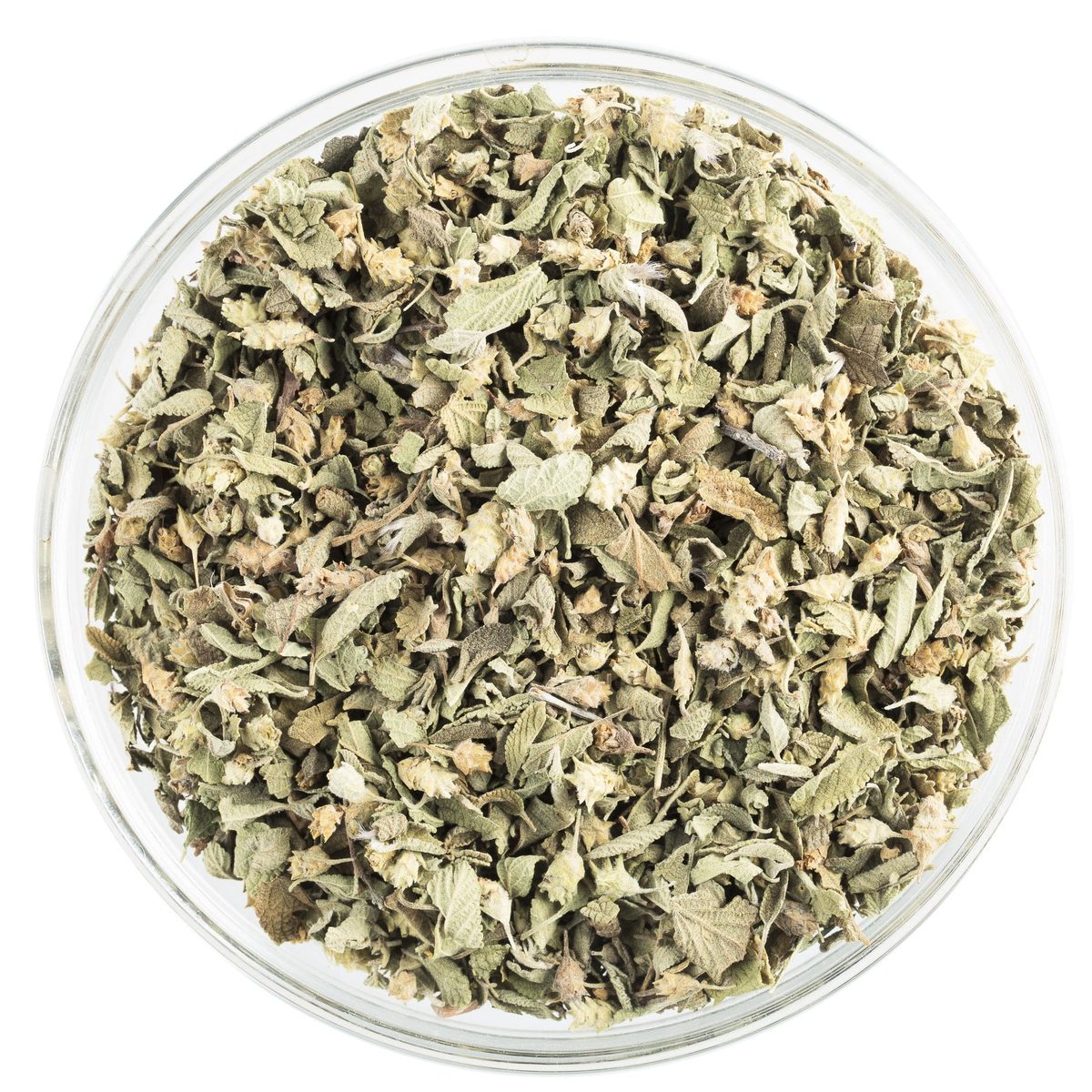
Mexican oregano is the dried leaf of Lippia graveolens, a shrub of the verbena family (Verbenaceae), not a true oregano.1 It tastes like oregano because it shares oregano’s two key phenols, thymol and carvacrol, but in a different balance: PROSEA puts thymol at 40 to 60 percent of the oil and carvacrol at 3 to 25 percent, and describes the flavor as stronger, sharper and more pungent than that of Origanum.2 In Mediterranean oregano (Origanum vulgare), carvacrol and thymol together make up about 78 to 85 percent of the oil, and carvacrol usually leads.3 So the closest stand-ins are herbs built on the same phenols, and the best choice depends on what the herb is doing in your dish.
Quick answer
| What Mexican oregano is doing | Best substitute | Starting amount, per 1 part Mexican oregano | Treatment |
|---|---|---|---|
| The main dried herb in chile sauces, pozole, beans and braises | Dried Mediterranean oregano | 1 to 1 1/2 parts | Attributed |
| Same job, no oregano of any kind | Dried marjoram | 1 part, then more to taste | Method |
| Same job, thyme is what you have | Dried thyme | 1/2 part, then taste | Method |
| A bright, citrusy edge in a salsa or quick dish | Mediterranean oregano plus a pinch of ground coriander | 1 part oregano, a small pinch of coriander | Method |
| Recipe calls for dried, you have fresh oregano | Fresh oregano | 3 parts fresh per 1 part dried | Computed |
The rest of the page explains each choice.
How the ratios on this page are labeled
Every ratio carries one of four labels.
- Computed: based on a measurable physical relationship, such as converting dried herbs to fresh, with the source named.
- Attributed: a named source publishes this ratio. We quote it as theirs.
- Disputed: named sources give different answers to the same swap. We show each one and do not average them.
- Method: we found no published ratio. We give a direction and a cautious starting point, and say so.
No published study compares the flavor strength of Mexican oregano with any of its substitutes. The ratios below are rules of thumb, not measurements.
If Mexican oregano is the main savory herb
This is the herb’s usual job: a dried leaf crumbled into red chile sauce, pozole, beans or a meat braise. NMSU Extension’s New Mexico red chile sauce, for example, adds it near the end and simmers it another 5 to 7 minutes.4 Here you want the resinous, oregano-like bite more than anything else.
1. Mediterranean oregano
This is the closest substitute and the easiest to buy. America’s Test Kitchen tried both kinds in tomato sauce and in mojo-marinated skirt steak and noticed only minimal differences. Its tasters found the Mediterranean oregano milder and faintly sweeter, and the Mexican type stronger, with a hint of menthol.5 That matches the chemistry: both contain carvacrol,5 but Mexican oregano’s oil leans on thymol while Mediterranean oregano’s usually leans on carvacrol.23 Maggie Unzueta of Mama Maggie’s Kitchen, writing about Mexican cooking, says most cooks of Mexican food use regular oregano all the time without realizing it.6
Ratio (Attributed): RawSpiceBar’s Joseph Rosenblatt says to start with 1.5 times as much regular oregano as the Mexican oregano called for. The same article elsewhere suggests about 25 percent more, so the merchant’s own advice runs from 1 1/4 to 1 1/2 times.7 Given ATK’s finding of minimal differences,5 a cautious cook can start at an equal amount and add the rest after tasting.
2. Marjoram
The Spice House names marjoram as the best substitute for Mexican oregano.8 A Couple Cooks also suggests dried marjoram in place of dried oregano for Mexican-style dishes.9 Marjoram is an Origanum too, but a softer one. A 2022 review describes two main chemical types: one led by terpinen-4-ol and cis-sabinene hydrate, which the review links to marjoram’s sweet flavor, and one led by carvacrol and thymol.10 Britannica describes marjoram’s flavor as warm, aromatic, slightly sharp and bitterish.11 Which type is in your jar is not on the label, so expect a gentler, sweeter result than Mexican oregano.
Ratio (Method): The Spice House calls marjoram a bit milder than oregano and suggests using more when substituting, without giving a number.8 We found no published ratio. Start with an equal amount, taste near the end of cooking, and add up to half as much again.
3. Thyme
Thyme is not a common suggestion for this swap, but its chemistry is close. PROSEA names thymol and carvacrol as the characteristic constituents of thyme oil.12 In a 2023 study of eight thyme species, six oils were thymol-type, and the common thyme sample held 42.44 percent thymol and 2.28 percent carvacrol.13 That thymol-led profile resembles Mexican oregano’s more than Mediterranean oregano’s.23 The Spice House suggests thyme, sage or marjoram for chili when oregano is missing.8
Ratio (Method): No published ratio was found. A Couple Cooks advises against swapping dried thyme for dried oregano because, in its view, thyme has a much stronger flavor.9 Start with about half the Mexican oregano amount and taste.
If Mexican oregano is a bright, citrusy note
Unzueta describes Mexican oregano as having a citrusy flavor.6 In a raw salsa, pickled onions or a quick bean dish, that edge matters more than in a long braise.
Mediterranean oregano with a pinch of coriander
Ratio (Method): No published ratio was found. Use Mediterranean oregano as above and add a small pinch of ground coriander seed. Coriander essential oil is 60 to 80 percent linalool,14 and in our judgment it reads as floral and citrusy in a dish. This pairing is a cook’s approach, not a tested one.
Lemon verbena, only for the citrus
Lemon verbena (Aloysia citrodora) is in the same family as Mexican oregano,15 and ATK calls Mexican oregano a close relative of it.5 The family tie does not carry over to flavor. Lemon verbena’s oil is led by the citral isomers geranial and neral,16 while Mexican oregano’s is led by thymol and carvacrol.2 Lemon verbena adds a lemon note and nothing of oregano.
Ratio (Method): No published ratio was found. Use it only as an accent alongside Mediterranean oregano: start with about a quarter of the Mexican oregano amount, chopped fine.
Cilantro: a different job
Cilantro turns up on lists of Mexican oregano substitutes because both herbs appear in Mexican cooking. Its chemistry is unrelated. PROSEA reports that aldehydes make up more than 80 percent of the leaf’s volatile compounds,17 a different class of compounds from the thymol and carvacrol that give Mexican oregano its bite.2 It also behaves differently in the pot: LSU AgCenter lists cilantro among the delicate herbs best added at the end of cooking.18 Use cilantro for its own fresh flavor, not to replace oregano in a cooked sauce.
Fresh and dried
Mexican oregano is almost always sold dried, so the usual question is how much fresh oregano or marjoram to use in its place.
Ratio (Computed): The sources agree on about 1 part dried to 3 parts fresh. America’s Test Kitchen’s tasting tests found that 1 part dried herb to 3 parts fresh came closest to equal strength.19 The Spice House, writing about oregano, gives 1 teaspoon dried for 1 tablespoon fresh,8 and A Couple Cooks and LSU AgCenter give the same rule.918 The University of Delaware’s extension service gives 3/4 to 1 teaspoon dried for 2 to 3 teaspoons fresh, and notes that dried herbs are stronger than fresh.20 These are general rules for herbs, not a test on Mexican oregano.
Unzueta suggests rubbing dried oregano between your hands as you add it to release its flavor.6 That applies to any of the dried substitutes above.
What isn’t known
- No published measurement compares the strength of Mexican oregano with Mediterranean oregano, marjoram or thyme. Every ratio above except the fresh-to-dried conversion is a rule of thumb.
- The chemistry figures come from essential oils of particular samples, not from retail dried leaf, and oil composition varies by plant and place.310
- A widely repeated claim says Mexican oregano has a licorice note. ATK’s tasters found a hint of menthol instead,5 and no source reviewed here mentions licorice.
- The idea that marjoram plus a little fresh basil makes a near-perfect Mexican oregano could not be traced to any source.
Related
- Mexican oregano and Mexican oregano vs. oregano
- Oregano, oregano substitutes and fresh vs. dried oregano
- Marjoram, marjoram substitutes and marjoram vs. oregano
- Thyme and oregano vs. thyme
- Lemon verbena, coriander, cilantro and cilantro vs. oregano
- Too much oregano? How to fix the dish
Footnotes
-
Lippia graveolens Kunth, Plants of the World Online, Royal Botanic Gardens, Kew. powo.science.kew.org · Reference work ↩
-
H.C. Ong and M. Brink, Lippia graveolens, Plant Resources of South-East Asia (PROSEA). uses.plantnet-project.org · Reference work ↩ ↩2 ↩3 ↩4 ↩5
-
Lombrea et al., “A Recent Insight Regarding the Phytochemistry and Bioactivity of Origanum vulgare L. Essential Oil”, International Journal of Molecular Sciences, 2020. mdpi.com · Peer-reviewed ↩ ↩2 ↩3 ↩4
-
Benson and Garcia-Anaya, “Preserving Red Chile”, NMSU Cooperative Extension Service. bernalilloextension.nmsu.edu · Reference work ↩
-
“Oregano: Mediterranean and Mexican”, America’s Test Kitchen. americastestkitchen.com · Publication ↩ ↩2 ↩3 ↩4 ↩5
-
Maggie Unzueta, “What Is Mexican Oregano?”, Mama Maggie’s Kitchen, 2022. inmamamaggieskitchen.com · Publication ↩ ↩2 ↩3
-
Joseph Rosenblatt, “Can I Use Regular Oregano Instead of Mexican Oregano?”, RawSpiceBar, 2025. rawspicebar.com · Merchant ↩
-
“The 8 Best Oregano Substitutes”, The Spice House, 2018. thespicehouse.com · Merchant ↩ ↩2 ↩3 ↩4
-
Sonja Overhiser, “Best Oregano Substitute”, A Couple Cooks, 2026. acouplecooks.com · Publication ↩ ↩2 ↩3
-
Kakouri et al., “Origanum majorana Essential Oil: A Review of Its Chemical Profile and Pesticide Activity”, Life, 2022. mdpi.com · Peer-reviewed ↩ ↩2
-
“Marjoram”, Encyclopaedia Britannica. britannica.com · Reference work ↩
-
S.H. Widodo, Thymus vulgaris, Plant Resources of South-East Asia (PROSEA). uses.plantnet-project.org · Reference work ↩
-
Dong et al., “Chemical Compositions of Essential Oil Extracted from Eight Thyme Species and Potential Biological Functions”, Plants, 2023. mdpi.com · Peer-reviewed ↩
-
Al-Khayri et al., “Essential Oil from Coriandrum sativum”, Molecules, 2023. mdpi.com · Peer-reviewed ↩
-
Aloysia citrodora Paláu, Plants of the World Online, Royal Botanic Gardens, Kew. powo.science.kew.org · Reference work ↩
-
Sprea et al., “Volatile Compounds and Biological Activity of the Essential Oil of Aloysia citrodora Paláu”, Molecules, 2023. mdpi.com · Peer-reviewed ↩
-
Coriandrum sativum, Plant Resources of South-East Asia (PROSEA). uses.plantnet-project.org · Reference work ↩
-
“Flavorful Herbs”, LSU AgCenter. lsuagcenter.com · Reference work ↩ ↩2
-
“Science: Substituting Dried Herbs for Fresh”, America’s Test Kitchen. americastestkitchen.com · Publication ↩
-
“Using Herbs and Spices”, University of Delaware Cooperative Extension, 2025. udel.edu · Reference work ↩