Cooking · Dish guide
The Best Spices for Roasted Pumpkin Seeds, Savory and Sweet
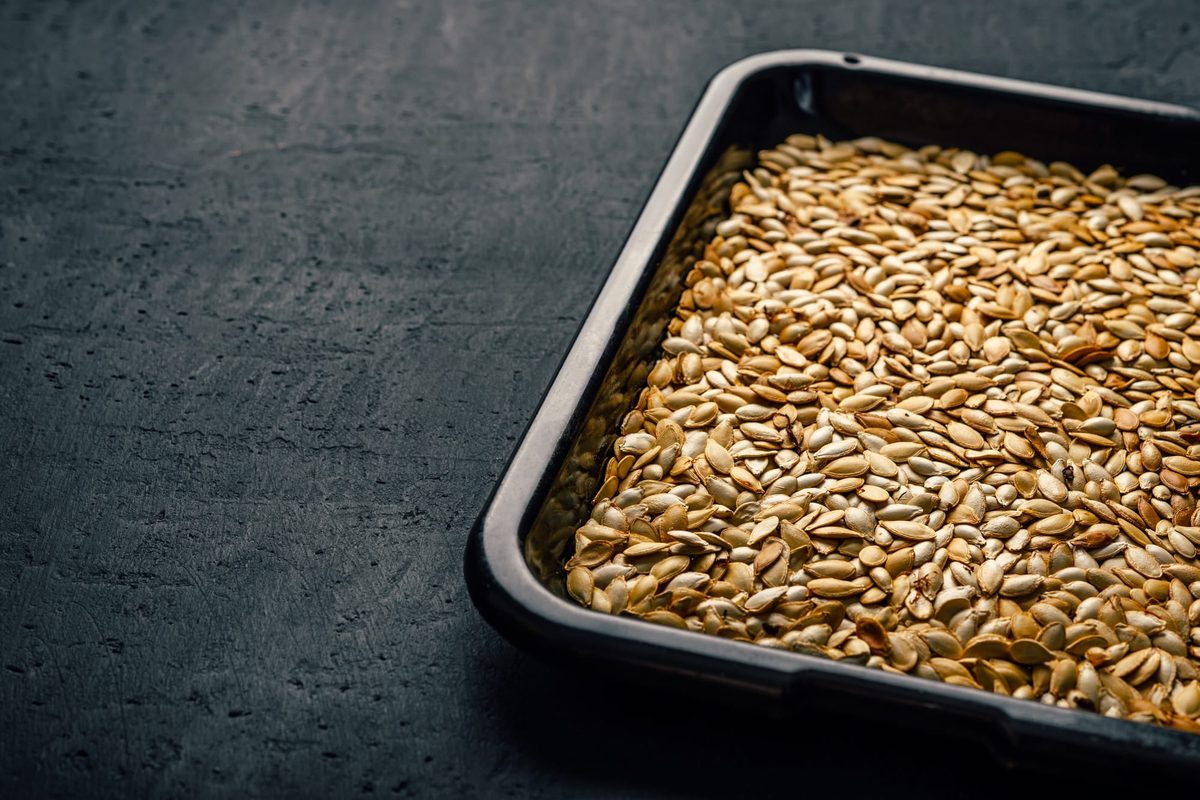
Roasted pumpkin seeds need very little: salt, a little oil, and whatever spice you like. Two extension recipes show the basic method. Illinois Extension boils 2 cups of seeds in salted water, tosses them with a tablespoon of olive or canola oil and roasts them,1 and Oklahoma State University Extension does the same with vegetable oil and a tablespoon of Old Bay seasoning.2 Clemson Extension’s Home and Garden Information Center points readers to a cinnamon sugar version for a sweet snack.3 This page covers the method, what each seasoning does, and how to make it stick.
At a glance
| Seasoning | Style | Notes |
|---|---|---|
| Salt | Both | In the boil, or sprinkled on (about 1/2 tsp per 2 cups seeds if not boiling)1 |
| Oil | Both | 1 tbsp olive, canola or vegetable oil12 |
| Garlic powder | Savory | Tossed with the oil; a common choice |
| Black pepper | Savory | Mild bite; fine grind coats best |
| Cayenne | Savory, hot | Heat to taste |
| Old Bay | Savory | 1 tbsp per cup of seeds in the OSU recipe2 |
| Cinnamon and sugar | Sweet | The sweet version Clemson Extension points to3 |
The method: boil, dry, oil, roast
| Illinois Extension (8 servings of 1/4 cup)1 | Oklahoma State Extension (about 1 cup)2 | |
|---|---|---|
| Seeds | 2 cups | 1 cup raw |
| Salt water | 1 quart water, 2 tbsp salt | 4 cups water, 2 tbsp salt |
| Boil | 10 minutes, then pat dry | About 10 minutes, then pat dry |
| Oil | 1 tbsp olive or canola oil | 1 tbsp vegetable oil |
| Seasoning | Optional | 1 tbsp Old Bay |
| Oven | 350°F, 30 to 40 minutes, stirring | 300°F, 30 to 40 minutes, stirring |
Illinois Extension says boiling in salt water makes the seeds roast more evenly, and that the step can be skipped; if you skip it, salt the seeds directly with about 1/2 teaspoon salt and/or other spices.1 Oklahoma State bakes until the seeds reach the brownness you want and says to adjust the salt to your needs and taste.2 Both recipes stir the seeds often so they color evenly.12
Savory seasonings
Salt
Salt is the one seasoning both recipes use, and the boil is where most of it goes in.12 Fine salt sticks to dry seeds better than coarse flakes; that is kitchen practice, not a measured result. See sea salt and kosher salt.
Garlic
Garlic powder tossed with the oil before roasting is a common choice; we found no test of how it behaves on seeds in the oven. America’s Test Kitchen found that garlic powder stirred dry into mashed potatoes tasted harsh rather than complex,4 so mixing the powder into the oil first is a reasonable starting point (Method). If you use homemade garlic oil, UC Agriculture and Natural Resources says not to store garlic in oil at room temperature.5 See garlic powder and garlic salt.
Black pepper and cayenne
Black pepper’s flavor comes mainly from piperine.6 Cayenne brings capsaicinoids, of which capsaicin and dihydrocapsaicin are usually the most concentrated,7 and McCormick Science Institute notes that ground red pepper is sometimes called cayenne pepper.8 Start with a pinch of cayenne and taste before adding more (Method). See black pepper, cayenne pepper and red pepper flakes.
Old Bay and other blends
Oklahoma State’s recipe uses a tablespoon of Old Bay for a cup of seeds.2 McCormick’s label lists celery salt (salt, celery seed), spices including red and black pepper, and paprika,9 so it brings salt as well as spice: cut back on other salt if you use it. Chili powder, smoked paprika and curry powder are other easy single-jar options. See Old Bay seasoning, smoked paprika and chili powder.
Pumpkin seeds in Mexican cooking
Pumpkin seeds are a seasoning base as well as a snack. In the Yucatecan dish papadzules, ground pumpkin seeds are dissolved in water used to cook tomatoes, habaneros and epazote to make the sauce.10 See epazote.
Sweet seasonings
Clemson Extension’s Samantha Houston made cinnamon sugar pumpkin seeds from a Betty Crocker recipe.3 For a sweet batch, a neutral oil or melted butter keeps savory flavors out of the way; that is a matter of taste. Pumpkin pie spice works the same way as plain cinnamon. See cinnamon and pumpkin pie spice.
Related
- Pumpkin soup spices
- Spices for butternut squash
- Too much salt if the boil overdid it
- The master list of herbs and spices
Footnotes
-
Jenna Smith, “Roasted Pumpkin Seeds”, University of Illinois Extension, Eat. Move. Save. eat-move-save.extension.illinois.edu · Reference work ↩ ↩2 ↩3 ↩4 ↩5 ↩6 ↩7
-
“Toasted Pumpkin Seeds”, Oklahoma Gardening, Oklahoma State University Extension. extension.okstate.edu · Reference work ↩ ↩2 ↩3 ↩4 ↩5 ↩6 ↩7 ↩8
-
Samantha Houston, “Roasting Pumpkin Seeds”, Clemson Cooperative Extension Home & Garden Information Center, 2024. hgic.clemson.edu · Reference work ↩ ↩2 ↩3
-
“Experiment: Bringing Out the Best in Garlic Powder”, America’s Test Kitchen. americastestkitchen.com · Publication ↩
-
Linda J. Harris, “Garlic: Safe Methods to Store, Preserve, and Enjoy”, UC Agriculture and Natural Resources, 2016. ccfruitandnuts.ucanr.edu · Reference work ↩
-
“Black pepper”, Encyclopaedia Britannica. britannica.com · Reference work ↩
-
Bosland and Walker, “Measuring Chile Pepper Heat”, New Mexico State University, 2010. pubs.nmsu.edu · Reference work ↩
-
“Red Pepper”, McCormick Science Institute. mccormickscienceinstitute.com · Merchant ↩
-
“OLD BAY Classic Seafood Seasoning”, McCormick & Company product page. mccormick.com · Merchant ↩
-
“Papadzules 2000”, La Cocina Histórica, UTSA Libraries Special Collections. lacocina.utsa.edu · Publication ↩