Cooking · Dish guide
The Best Spices for Butternut Squash: Sweet, Savory and Hot
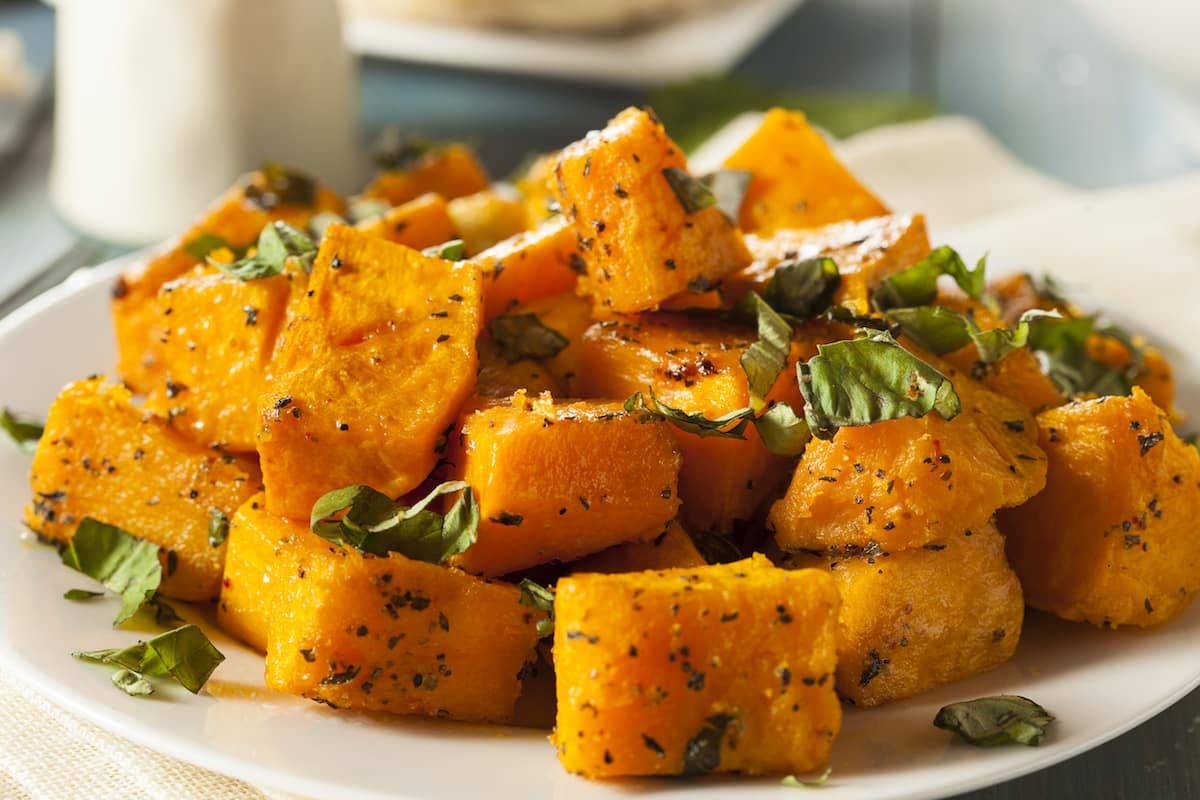
Butternut squash is sweet, and the spices that suit it either lean into that sweetness or push against it. Six named recipes, from America’s Test Kitchen and four university extension services, show the pattern clearly. On the sweet side, cinnamon does most of the work, often with honey, maple syrup or brown sugar. On the savory side, cumin, sage, black pepper and a small amount of cayenne take over. This page sets those recipes side by side, explains what each spice does, and shows when each goes in. Quantities appear only where a named recipe gives them.
At a glance
| Spice | Job | In the recipes below |
|---|---|---|
| Cinnamon | Warm, sweet aroma | Kentucky, Montana, ATK mashed123 |
| Cayenne | Heat against the sweetness | Kentucky, ATK roasted, ATK mashed143 |
| Cumin | Savory, earthy depth | Both ATK recipes43 |
| Allspice | Delicate sweetness | ATK roasted4 |
| Sage | Savory herb | Maryland; brown butter sage sauce56 |
| Black pepper | Mild bite | Maryland, Montana, both ATK recipes5243 |
| Harissa | Chile heat with spice | Oregon State7 |
| Garlic and onion | Savory base | ATK mashed3 |
| Chives | Mild onion, fresh finish | ATK roasted4 |
Six recipes side by side
| Seasonings | Sweetener | Fat | Method | |
|---|---|---|---|---|
| ATK, spice-roasted (serves 4)4 | 1 tsp ground cumin, 1 tsp ground allspice, pinch cayenne, salt and pepper; chives in the butter | 1 tbsp honey (in the butter) | 3 tbsp extra-virgin olive oil; 2 tbsp butter | 425°F, 30 to 35 minutes |
| ATK, mashed (serves 8)3 | 1/2 tsp cumin, 1/2 tsp coriander, 1/4 tsp cinnamon, 1/8 tsp cayenne, 1 garlic clove, 1 onion, salt and pepper | 3 tbsp maple syrup, 2 shredded apples | Vegetable oil and butter | Roasted, then mashed |
| University of Kentucky (12 half-cup servings)1 | 1 tsp ground cinnamon, 1/4 tsp cayenne, 1/4 tsp kosher salt | 1/4 cup honey, drizzled after roasting | 1 tbsp olive oil | 450°F, about 40 minutes |
| University of Maryland (serves 6)5 | 1 tsp dried sage, 1/4 tsp salt, 1/4 tsp black pepper | 1 1/2 tbsp maple syrup, with cranberries and walnuts | 2 tbsp canola oil | 375°F, about 35 minutes |
| Montana State (serves 6)2 | 1/2 tsp cinnamon, 1/2 tsp salt, pinch black pepper | 1/4 cup brown sugar | 1/4 cup melted butter | 375°F, 30 to 35 minutes |
| Oregon State, Food Hero (makes 6 cups)7 | 1 1/2 to 2 tbsp harissa spice mix, mint and cilantro | 2 tbsp agave syrup | 2 tbsp olive oil | 400°F, 15 to 20 minutes |
These are the publishers’ own recipes, not a house standard. Two things stand out. Almost every recipe pairs its spice with a sweetener, even the savory ones. And the hot spice is always used sparingly: a pinch to 1/4 teaspoon of cayenne for a whole squash or more.431
The sweet side: cinnamon and allspice
Cinnamon is the most common spice in these recipes. Montana’s version melts butter with brown sugar, salt, cinnamon and pepper and tosses the squash in it before roasting.2 Kentucky’s tosses the cubes with oil, salt, cayenne and cinnamon, then drizzles warm honey over the roasted squash.1 ATK’s mashed squash uses a smaller 1/4 teaspoon alongside cumin and coriander, with apple and maple syrup for sweetness.3
America’s Test Kitchen chose allspice and cumin for its roasted squash because, in its words, the delicate sweetness of allspice and the savoriness of cumin complemented those same qualities in the squash.4 See allspice, cinnamon and pumpkin pie spice, which bundles these warm spices in one jar.
The savory side: cumin, sage and pepper
Cumin
A common claim says cumin is rarely used with winter squash. Both ATK recipes on this page use it: 1 teaspoon in the roasted version and 1/2 teaspoon in the mash.43 ATK credits cumin with the savory side of its seasoning.4 See cumin uses and too much cumin.
Sage
Sage (Salvia officinalis) is in the mint family, Lamiaceae.8 PROSEA describes it as combining a pleasant aroma with a distinctive bitter, pungent taste.9 Maryland Extension tosses the squash with oil, 1 teaspoon dried sage, salt and pepper before roasting.5
Fresh sage works differently. Alida Ryder’s brown butter sage sauce crisps 14 sage leaves in 1/2 cup of browned butter, where they sizzle and crisp in 30 to 60 seconds, and she recommends it over roasted butternut squash as well as ravioli and gnocchi.6 Sage and butternut squash ravioli are often called a traditional pairing; we did not find a source that documents that. See cooking with sage, sage uses and too much sage.
Black pepper
Four of the six recipes use black pepper, from a pinch to 1 teaspoon.5243 Its sharpness comes principally from piperine.10
Heat: cayenne and harissa
Cayenne adds heat rather than much flavor; chile heat comes from capsaicinoids.11 ATK adds a pinch of cayenne for warmth to its roasted squash, and 1/8 teaspoon to its mash.43 Kentucky’s recipe uses 1/4 teaspoon with a teaspoon of cinnamon and finishes with honey,1 so the heat sits against the sweetness. See cayenne pepper uses.
Oregon State’s Food Hero recipe roasts the squash with oil and 1 tablespoon of harissa spice mix, then stirs in 1/2 to 1 tablespoon more once it is done, using less for a milder result.7 Food Hero’s own harissa mix includes smoked paprika and tells cooks to use any ground red pepper with the heat level they like.12 The recipe finishes with agave, lemon juice, pumpkin seeds and torn mint and cilantro.7 See harissa powder.
Herbs: rosemary, oregano, basil and chives
None of the six recipes uses rosemary, oregano or basil, so their use here is kitchen judgment rather than a tested recipe.
- Rosemary is now classed by Kew as Salvia rosmarinus, in the mint family, Lamiaceae, the same genus as sage.13 Britannica describes its taste as pungent and slightly bitter and lists vegetables among the foods it seasons.14 Roasting the squash with rosemary, garlic and olive oil is common practice.
- Oregano is a mint-family perennial with a strong aroma and a warm, pungent taste, according to Britannica.15
- Basil is an annual of the mint family; Britannica describes the dried leaf’s flavor as warm, sweet, aromatic and mildly pungent.16
- Chives have a mild onion flavor and are best sprinkled on food just before serving, according to University of Wisconsin Extension.17 ATK stirs a tablespoon of minced chives into the honey-lime butter for its roasted squash.4
The LSU AgCenter groups oregano and rosemary with the less delicate herbs and basil and chives with the delicate ones, which it says should go in a minute or two before the end of cooking.18 For roasted squash, that means fresh basil and chives at the table.
Garlic and onion
ATK’s mashed squash starts with sautéed onion and a minced garlic clove as its savory backbone.3 If you cook fresh garlic in a pan, ATK’s advice is to add it after the onion has softened, because garlic added too early can burn and turn acrid and bitter.19
If you make garlic-infused oil to drizzle over the squash, use it fresh. UC Agriculture and Natural Resources warns against storing garlic in oil at room temperature, and says homemade garlic oil should be refrigerated and used within 4 days.20
When to add each seasoning
- Before roasting: dry spices go into the oil or melted butter and get tossed with the squash: cumin, allspice, cayenne, cinnamon, dried sage, salt and pepper in the recipes above.4152
- After roasting: honey, maple syrup or agave; a second dose of harissa; brown butter and crisped sage leaves.1576
- At the table: chives and other delicate fresh herbs.1718
Related
- Sweet potato spices and pumpkin soup spices
- Pumpkin seed spices for the seeds you scoop out
- Thanksgiving herbs and spices
- Rosemary vs. sage
- Dried herbs vs. fresh
- The master list of herbs and spices
Footnotes
-
“Sweet & Spicy Butternut Squash”, Plate It Up! project, University of Kentucky Cooperative Extension, 2018. fcs.mgcafe.uky.edu · Reference work ↩ ↩2 ↩3 ↩4 ↩5 ↩6 ↩7 ↩8
-
“Roasted Butternut Squash with Cinnamon and Brown Sugar”, Buy Eat Live Better, Montana State University Extension. montana.edu · Reference work ↩ ↩2 ↩3 ↩4 ↩5 ↩6
-
Nick Iverson, “Mashed Butternut Squash”, America’s Test Kitchen, 2013. americastestkitchen.com · Publication ↩ ↩2 ↩3 ↩4 ↩5 ↩6 ↩7 ↩8 ↩9 ↩10 ↩11 ↩12
-
Ashley Moore, “Spice-Roasted Butternut Squash with Honey-Lime Butter”, America’s Test Kitchen (Cook’s Country), 2017. americastestkitchen.com · Publication ↩ ↩2 ↩3 ↩4 ↩5 ↩6 ↩7 ↩8 ↩9 ↩10 ↩11 ↩12 ↩13 ↩14
-
“Holiday Roasted Butternut Squash”, SNAP-Ed Eat Smart, University of Maryland Extension. extension.umd.edu · Reference work ↩ ↩2 ↩3 ↩4 ↩5 ↩6 ↩7
-
Alida Ryder, “Brown Butter Sage Sauce”, Simply Delicious, 2026. simply-delicious-food.com · Publication ↩ ↩2 ↩3
-
“Harissa Roasted Butternut Squash”, Food Hero, Oregon State University Extension Service. extension.oregonstate.edu · Reference work ↩ ↩2 ↩3 ↩4 ↩5
-
“Salvia officinalis L.”, Plants of the World Online, Royal Botanic Gardens, Kew. powo.science.kew.org · Reference work ↩
-
U.A. Dasuki, “Salvia officinalis”, PROSEA. uses.plantnet-project.org · Reference work ↩
-
“Black pepper”, Encyclopaedia Britannica. britannica.com · Reference work ↩
-
Bosland and Walker, “Measuring Chile Pepper Heat”, New Mexico State University, 2010. pubs.nmsu.edu · Reference work ↩
-
“Harissa Spice Mix”, Food Hero, Oregon State University Extension Service. foodhero.org · Reference work ↩
-
“Salvia rosmarinus Spenn.”, Plants of the World Online, Royal Botanic Gardens, Kew. powo.science.kew.org · Reference work ↩
-
Anoushka Pant, “Rosemary”, Encyclopaedia Britannica. britannica.com · Reference work ↩
-
Anoushka Pant, “Oregano”, Encyclopaedia Britannica. britannica.com · Reference work ↩
-
“Basil”, Encyclopaedia Britannica. britannica.com · Reference work ↩
-
Susan Mahr, “Chives, Allium schoenoprasum”, University of Wisconsin Extension. hort.extension.wisc.edu · Reference work ↩ ↩2
-
“Flavorful Herbs”, LSU AgCenter. lsuagcenter.com · Reference work ↩ ↩2
-
Liz Bomze, “Why You Should Wait to Add Garlic”, America’s Test Kitchen, 2023. americastestkitchen.com · Publication ↩
-
Linda J. Harris, “Garlic: Safe Methods to Store, Preserve, and Enjoy”, UC Agriculture and Natural Resources, 2016. ccfruitandnuts.ucanr.edu · Reference work ↩