Spice Comparisons · Comparison
Turmeric vs. Cumin: Different Plants, Different Jobs
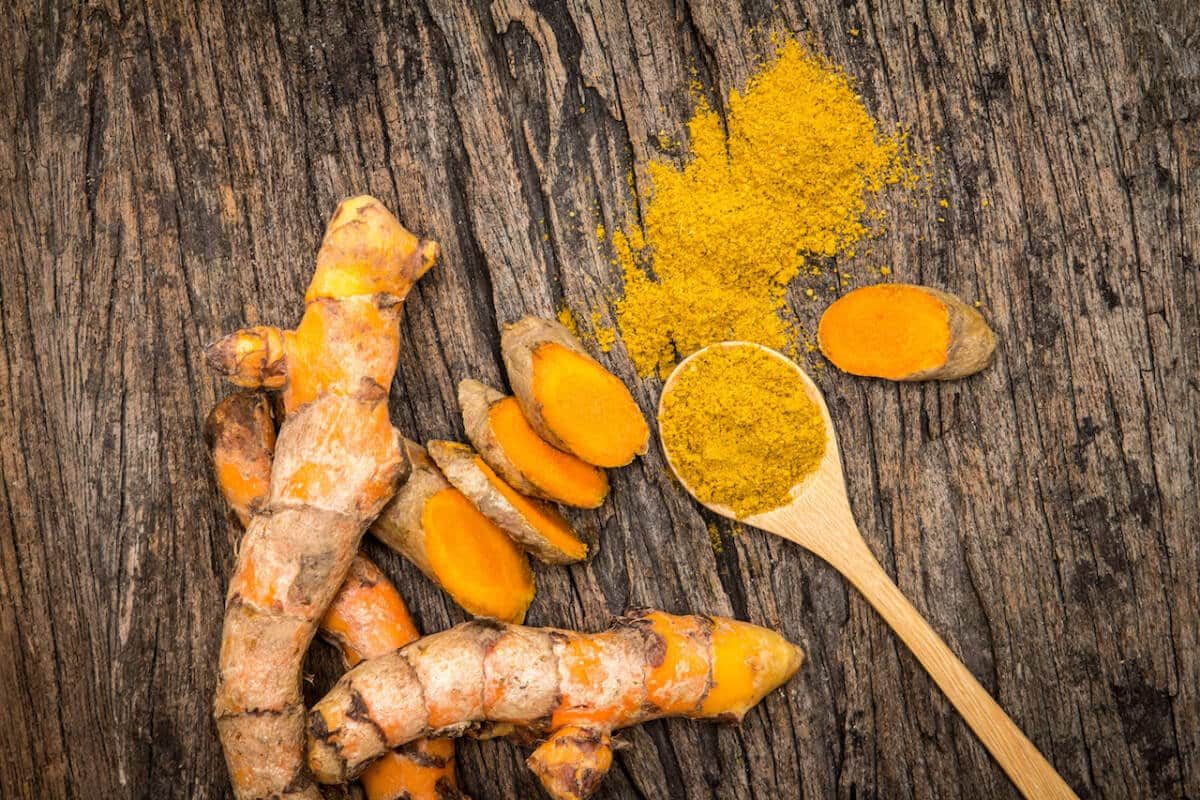
Turmeric and cumin turn up in the same curries, but they come from unrelated plants and do different jobs. Turmeric is the rhizome of Curcuma longa, a member of the ginger family, Zingiberaceae.1 Cumin is the dried fruit, sold as “seed,” of Cuminum cyminum, in the carrot and parsley family, Apiaceae.23 Turmeric is mostly about color: curcumin gives it its yellow.4 Cumin is mostly about aroma, which comes from an essential oil led by cuminaldehyde.5 Neither can do the other’s job.
Side by side
| Turmeric | Cumin | |
|---|---|---|
| Species | Curcuma longa1 | Cuminum cyminum2 |
| Family | Zingiberaceae (ginger family)1 | Apiaceae (carrot and parsley family)23 |
| Part used | Rhizome, used fresh, or boiled, dried and ground6 | Dried fruit, sold whole or ground3 |
| Native range (Kew) | Known only as a cultigen, from southwest India1 | Iraq to Afghanistan; other references say the Mediterranean, and the exact origin is not settled25 |
| India’s crop, 2024-25 (final) | 1,105,321 tonnes of dry turmeric7 | 1,163,907 tonnes7 |
| Color | Yellow, from curcumin4 | Seeds yellowish-brown, about 6 mm long, with lengthwise ridges3 |
| Aroma compounds | Turmerone, ar-turmerone and zingiberene6 | Cuminaldehyde, 20–72% of the oil across the studies PROSEA summarizes5 |
| Essential oil in the spice | 3.0–5.16% in dried rhizomes from three growers in Bahia, Brazil (one study)8 | 2.5–4.5% (Britannica)3 |
| Taste | Bitter, slightly acrid, yet sweet (Prasad and Aggarwal)6 | Strong, warm, pungent and persistent (PROSEA)5 |
| International standard | Codex CXS 359-2024 (dried turmeric)9 | Codex CXS 327-2017 (cumin)10 |
| Documented safety problem | Lead chromate added to improve color11 | Undeclared peanut traced to ground cumin, 2014–1512 |
| Price | No dated, sourced retail comparison found | No dated, sourced retail comparison found |
The oil figures come from different studies of different samples, so they show that both spices carry a few percent of essential oil, not which carries more. For each spice in depth, see turmeric and cumin.
Curcumin is not cumin
The names look alike, which causes a common mix-up. Curcumin is a compound in turmeric; NIH’s National Center for Complementary and Integrative Health (NCCIH) calls it a major component of turmeric and the source of its yellow color.4 Cumin’s signature compound is a different one, cuminaldehyde, which PROSEA calls the most important constituent of cumin oil.5 Supplements and studies sold as “curcumin” are about turmeric, not cumin.
The differences that change a dish
Color
Turmeric colors whatever it touches. It gives curry powders their yellow and is traditionally used to turn boiled white rice golden.6 Cumin adds a little brown at most. If a dish looks pale without turmeric, cumin will not fix it.
Flavor and aroma
Cumin is the louder spice. PROSEA describes its smell as strong, warm, pungent and persistent.5 Turmeric, in the Prasad and Aggarwal reference chapter, is bitter, slightly acrid and faintly sweet.6 In our judgment, cumin is usually a flavor you can name in a finished dish, while turmeric sits in the background, and too much of it tastes bitter and dusty.
How they go into the pan
Both are usually cooked in fat early. AramcoWorld notes that cumin is often added first to a hot pan, which gives it a starring role in the flavor.13 Ground turmeric is commonly cooked briefly in oil as well, which takes off its raw edge; that is common practice rather than a sourced finding. Before grinding, turmeric rhizomes are boiled or steamed, which removes their raw smell.6
Where they meet
They share a pot often. AramcoWorld’s history of cumin cites the writer Reshii, who counts cumin among “The Big Four” of Indian spices alongside chili, turmeric and coriander,13 and USDA’s purchasing specification lists both turmeric and cumin among the ingredients curry powder should include.14 Cumin also goes into American chili powder, which turmeric does not; USDA’s chili powder list names cumin and no turmeric.14 Britannica notes cumin’s popularity in Asian, North African and Latin American cooking.3
Nutrition: neither is a meaningful source in normal amounts
A widely repeated claim says cumin is far more nutritious than turmeric. Per teaspoon, using USDA FoodData Central’s entries, the picture is closer than that and mostly small:
| Per teaspoon, computed from USDA | Cumin seed (1 tsp = 2.1 g)15 | Ground turmeric (1 tsp = 3.0 g)16 | Daily Value17 |
|---|---|---|---|
| Iron | about 1.4 mg (about 8% DV) | about 1.7 mg (about 9% DV) | 18 mg |
| Manganese | about 0.07 mg (about 3% DV) | about 0.59 mg (about 26% DV) | 2.3 mg |
| Calcium | about 20 mg (under 2% DV) | about 5 mg (under 1% DV) | 1,300 mg |
Scope: the cumin entry is for whole seed and the turmeric entry for ground powder, and a teaspoon of each weighs a different amount.1516 By these figures, turmeric is the larger source of manganese and neither stands out for iron.
On health research, NCCIH concluded in 2025 that there isn’t enough evidence to say turmeric or curcumin is beneficial for any health purpose, and it warns that highly bioavailable curcumin supplements may harm the liver.4 Those findings concern supplements, not a teaspoon in a curry. No health claim is made here for either spice.
Safety
- Turmeric: lead chromate. A 2026 study of 503 turmeric samples from 34 cities in eastern India found 30% above India’s lead limit of 10 µg/g, with the yellow pigment mainly added when dried roots are polished.11 See turmeric for the full record.
- Cumin: peanut. Between late 2014 and mid-2015, more than 675 food products in the US were recalled over undeclared peanut traced to ground cumin.12 The US spice trade body ASTA said at the time that such findings usually came from incidental cross-contact where cumin and peanuts are grown in the same regions.18 See cumin.
Can one stand in for the other?
Not well, and the substitute pages treat them that way.
- Cumin in place of turmeric (Method). No source we reviewed recommends it. Our turmeric substitutes page gives a Method starting point for stews and dals that already contain cumin: about 1/4 teaspoon more cumin for each teaspoon of turmeric, and expect no color. If the turmeric is there for color, use a color substitute instead.
- Turmeric in place of cumin (Method). Not recommended. Turmeric brings color and bitterness, not cumin’s aroma. Our cumin substitutes page does not list it; caraway and coriander come closer.
- A blend with both. The Spice House suggests starting with curry powder one-to-one when cumin is one spice among several, a rule of thumb with no stated basis.19 Curry powder contains turmeric as well,14 so the dish will turn yellower.
What isn’t known
- No study measures turmeric and cumin side by side, for oil content or anything else; each figure above comes from separate work.
- No dated price comparison was found.
- Claims that cumin is “bursting with” vitamins and antioxidants could not be traced to a source; USDA’s figures above show small amounts per teaspoon apart from turmeric’s manganese.
Related
- Turmeric vs. curry powder, cumin vs. curry powder and turmeric vs. ginger
- Cumin seeds vs. ground cumin and fresh turmeric vs. powder
- Coriander vs. cumin and caraway vs. cumin
- Cooking with turmeric, too much turmeric and too much cumin
Footnotes
-
Curcuma longa L., Plants of the World Online, Royal Botanic Gardens, Kew. powo.science.kew.org · Reference work ↩ ↩2 ↩3 ↩4
-
Cuminum cyminum L., Plants of the World Online, Royal Botanic Gardens, Kew. powo.science.kew.org · Reference work ↩ ↩2 ↩3 ↩4
-
Cumin, Encyclopaedia Britannica. britannica.com · Reference work ↩ ↩2 ↩3 ↩4 ↩5 ↩6
-
Turmeric: Usefulness and Safety, NCCIH, 2025. nccih.nih.gov · Regulator ↩ ↩2 ↩3 ↩4
-
Cuminum cyminum (PROSEA), P.C.M. Jansen, via Pl@ntUse. uses.plantnet-project.org · Reference work ↩ ↩2 ↩3 ↩4 ↩5 ↩6
-
Prasad and Aggarwal, Turmeric, the Golden Spice, in Herbal Medicine: Biomolecular and Clinical Aspects, 2nd ed., via NCBI Bookshelf. ncbi.nlm.nih.gov · Reference work ↩ ↩2 ↩3 ↩4 ↩5 ↩6
-
Spice wise area and production in India, 2021-22 to 2025-26, Spices Board India. indianspices.com · Regulator ↩ ↩2
-
Essential oil of Curcuma longa L. rhizomes: chemical composition, yield variation and stability, Química Nova, 2020. scielo.br · Peer-reviewed ↩
-
Standard for Dried or Dehydrated Roots, Rhizomes and Bulbs: Turmeric (CXS 359-2024), Codex Alimentarius. fao.org · Standard ↩
-
Standard for Cumin (CXS 327-2017), Codex Alimentarius. fao.org · Standard ↩
-
Forsyth et al., Systemic drivers of toxic food adulteration: lead chromate in turmeric across eastern India, npj Science of Food, 2026. nature.com · Peer-reviewed ↩ ↩2
-
Ishani Nath, Special Report: Investigating Motive and Spice Safety in the Big Peanut-Tainted Cumin Recalls, Allergic Living, 2016. allergicliving.com · Publication ↩ ↩2
-
Jeff Koehler, Spice Migrations: Cumin, AramcoWorld, 2021. aramcoworld.com · Publication ↩ ↩2
-
Commercial Item Description A-A-20001C, Spices and Spice Blends, USDA Agricultural Marketing Service, 2023. ams.usda.gov · Regulator ↩ ↩2 ↩3
-
Spices, cumin seed (FDC 170923), USDA FoodData Central. fdc.nal.usda.gov · Regulator ↩ ↩2
-
Spices, turmeric, ground (FDC 172231), USDA FoodData Central. fdc.nal.usda.gov · Regulator ↩ ↩2
-
Daily Value on the Nutrition and Supplement Facts Labels, FDA. fda.gov · Regulator ↩
-
ASTA Statement on FDA’s Consumer Advice on Products Containing Ground Cumin with Undeclared Peanuts, American Spice Trade Association, 2015. astaspice.org · Standard ↩
-
Cumin Substitute, The Spice House, 2017. thespicehouse.com · Merchant ↩