Spice Substitutes · Substitutes
Adobo Seasoning Substitutes, Matched for Salt as Well as Flavor
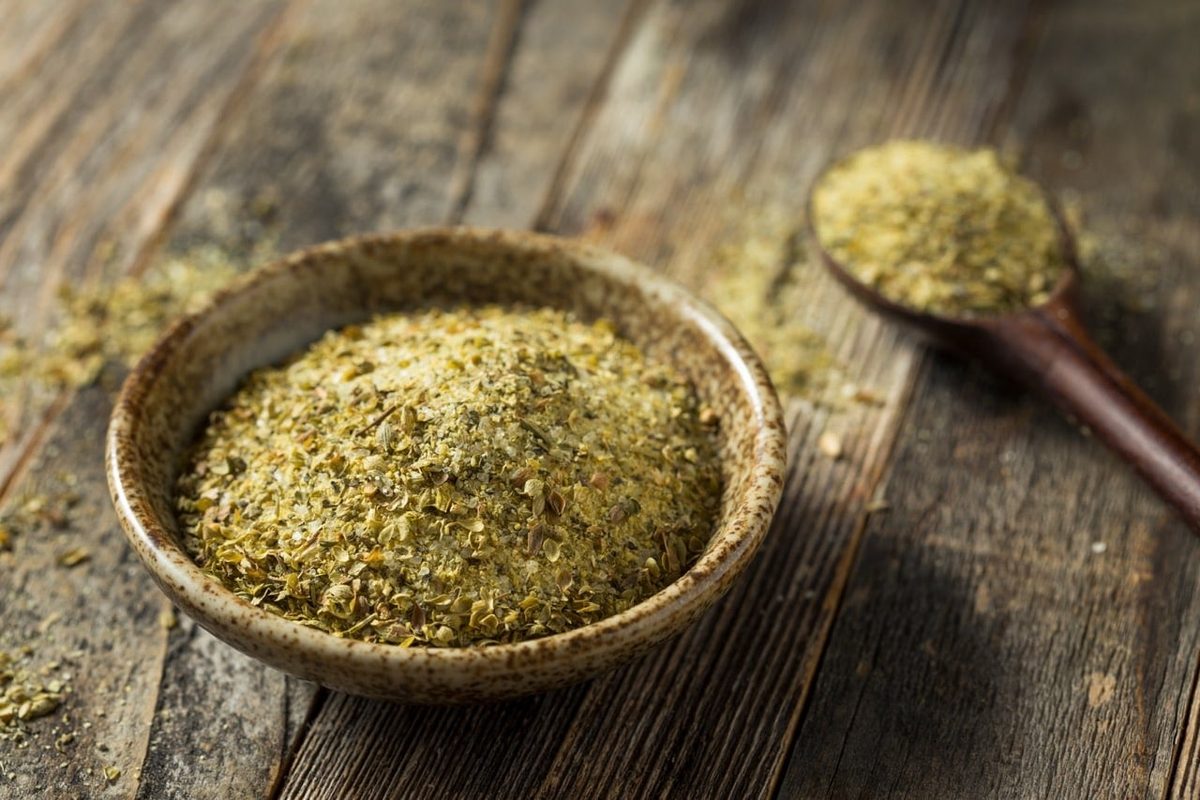
Adobo seasoning, the kind sold in shakers and big jars in the United States, is a salt-based blend of garlic, oregano and black pepper, often with turmeric.12 Goya’s Adobo with Pepper lists salt first,1 and US labels list ingredients in descending order of weight,3 so salt is the largest single ingredient. That shapes every substitute below. Most stand-ins carry much less salt than adobo, a few carry none, and a straight swap can leave a dish under-seasoned even when the spices are close.
Quick answer
| What adobo is doing | Best substitute | Starting amount, per 1 part adobo | Treatment |
|---|---|---|---|
| Seasoning meat, fish or vegetables before cooking | Homemade garlic, onion, oregano and pepper blend | 1 part, then salt to taste | Attributed (formula), Method (amount) |
| Same job, straight from a jar | Seasoned salt or Greek seasoning | 1 part, plus 1/4 to 1/2 part table salt | Computed (salt) |
| Mostly salting a marinade, rice or beans | Table salt with garlic powder | About 7/8 part salt; garlic to taste | Computed (salt), Method (garlic) |
| A rub where chile heat is welcome | Cajun seasoning | 1 part, plus 1/3 to 5/8 part table salt | Computed (salt) |
| Tex-Mex dishes | Chili powder, with salt added separately | 1/2 part chili powder, then salt | Method, Computed (salt) |
How the ratios on this page are labeled
Every ratio carries one of four labels.
- Computed: based on a measurable physical relationship, with the source named.
- Attributed: a named source publishes this figure. We quote it as theirs.
- Disputed: named sources give different answers to the same swap. We show each one and do not average them.
- Method: we found no published ratio. We give a direction and a cautious starting point, and say so.
Every Computed figure on this page concerns salt only. It is worked out from the sodium printed on each product’s Nutrition Facts label, and says nothing about garlic, oregano or pepper flavor. We found no credible published ratio for swapping any of these blends for adobo, and no study comparing their flavor strength.
How much salt each substitute carries
Goya’s adobo carries 520 mg of sodium per 1/4 teaspoon serving of 1.5 g.1 Here is how the alternatives compare, spoon for spoon:
| Product | Sodium per 1/4 tsp | A 1:1 swap gives this share of adobo’s sodium | Source |
|---|---|---|---|
| Goya Adobo All-Purpose Seasoning with Pepper | 520 mg | 100% | 1 |
| Morton Iodized Table Salt | 590 mg | 113% | 4 |
| Lawry’s Seasoned Salt | 380 mg | 73% | 5 |
| Slap Ya Mama Original Blend Cajun | 310 mg | 60% | 6 |
| Cavender’s All Purpose Greek Seasoning | 241 mg | 46% | 7 |
| McCormick Signature Seasonings Cajun | 160 mg | 31% | 8 |
| Chili powder, USDA reference sample | About 19 mg | About 4% | 9 |
The percentages are our arithmetic from the label figures. The chili powder figure is calculated from USDA FoodData Central’s 2,870 mg of sodium per 100 g and its weight of 2.7 g per teaspoon;9 brands will differ. All of these are figures for single products, not for the category. TASTE notes that newer adobo blends include lower-sodium versions,2 so check the label of the jar your recipe was written for.
Two useful results follow. A teaspoon of Goya’s adobo carries about as much sodium as 7/8 teaspoon of Morton table salt (520 ÷ 590 = 0.88), so table salt is the yardstick for topping up any of the substitutes. And Morton’s table salt also weighs 1.5 g per 1/4 teaspoon,4 so the comparison holds by weight as well as by volume.
If adobo is seasoning food before cooking
This is the shake-on-before-cooking use that Goya suggests for meat, chicken, fish and vegetables.1 Salt and garlic do most of the work.
1. Make your own
TASTE describes most commercial blends as garlic, pepper, salt and oregano.2 All of those are pantry spices, so a homemade blend is the closest match.
Formula (Attributed): David Leite’s adobo seasoning uses 3 tablespoons onion powder, 3 tablespoons garlic powder, 1 tablespoon freshly ground black pepper, 1 teaspoon each dried oregano, ground cumin and turmeric, and 1 tablespoon sea salt.10 He presents it as a stand-in for commercial mixes “often loaded with salt.”10
That formula shares garlic, black pepper, oregano and turmeric with Goya’s label, and adds onion and cumin, which Goya does not list.110 PepperScale also recommends making your own as the best option, from paprika, chili powder, black pepper, oregano, onion powder, garlic powder and ground cumin, and says regular chili powder works where its recipe calls for chipotle powder.11 That version brings chile, which Goya’s adobo does not list.1 Oregano’s character comes mainly from carvacrol and thymol, which make up about 78 to 85 percent of the essential oil of Origanum vulgare.12 Turmeric adds the yellow color, from curcumin.13 Leave it out if you don’t have it; the blend will simply be less yellow.
Amount (Method): Leite does not give a swap ratio. By our arithmetic, salt is 1 of roughly 9 tablespoons in his mix, a far smaller share than in a salt-first commercial blend. Use the homemade blend 1:1 for flavor, then add salt to taste. Per teaspoon of adobo replaced, 7/8 teaspoon of table salt would bring the total close to Goya’s level, so treat that as a ceiling, not a target.
TASTE reports that one chef grinds and toasts his spices before mixing them into the salt, and uses each batch within a couple of weeks.2
2. Seasoned salt
Lawry’s Seasoned Salt lists salt, sugar, spices (including paprika, celery seed and turmeric), onion, corn starch and garlic.5 Like adobo it is salt-first, with garlic, onion and turmeric, but it has no oregano and adds sugar.
Ratio (Computed, salt only): A teaspoon of Lawry’s carries about 1,520 mg of sodium against adobo’s 2,080 mg (4 servings × 380 mg and 4 × 520 mg).51 Use it 1:1 and add about 1/4 teaspoon of table salt per teaspoon to close the gap.4
3. Greek seasoning
Cavender’s All Purpose Greek Seasoning begins salt, black pepper, corn starch, garlic, monosodium glutamate, oregano,7 which covers all four ingredients TASTE names for most adobo blends.2 It also contains MSG and a soy-based flavor base,7 which matters if you avoid either. McCormick’s Culinary Greek Seasoning describes its flavor as oregano, garlic and onion with a touch of mint,14 and mint is not an adobo flavor.
Ratio (Computed, salt only): A teaspoon of Cavender’s carries about 964 mg of sodium (4 × 241 mg).7 Use it 1:1 and add about 1/2 teaspoon of table salt per teaspoon to reach adobo’s level.14
4. Table salt and garlic powder, when adobo is mostly salting
When adobo goes into a marinade, a pot of rice or beans, its main job is salt.
Salt (Computed): About 7/8 teaspoon of table salt carries the sodium of 1 teaspoon of Goya’s adobo.14
Garlic (Method): Goya does not publish how much garlic its blend contains.1 Start with about 1/4 teaspoon of garlic powder per teaspoon of adobo replaced, and add a pinch of dried oregano and black pepper if you have them. This is a starting point, not a measured equivalence.
If adobo is part of a rub where heat is welcome
Cajun seasoning
Slap Ya Mama’s Original Blend is just salt, black pepper, red pepper and granulated garlic.6 McCormick’s Signature Cajun lists salt, then paprika, red pepper, thyme, black pepper, celery seed, garlic and onion.8 Both share adobo’s salt, garlic and black pepper, but neither lists oregano, and both add red pepper, whose heat comes from capsaicinoids.6815 Goya’s adobo lists no chile at all.1 Use Cajun seasoning only where some heat suits the dish.
Ratio (Computed, salt only): A 1:1 swap gives 60 percent of adobo’s sodium with Slap Ya Mama and 31 percent with McCormick Signature.681 To match adobo, add about 1/3 teaspoon of table salt per teaspoon with Slap Ya Mama, or about 5/8 teaspoon with McCormick Signature.4 If you’re worried about heat, use less of the blend and make up the difference with salt.
Chili powder, for Tex-Mex dishes
The USDA’s federal purchasing specification says chili powder should include ground chili pepper, cumin, oregano, salt and garlic powder,16 and Saveur says the chile is usually ancho.17 So chili powder shares adobo’s garlic and oregano but adds chile and cumin. It also changes the color: the specification calls for a reddish-brown powder,16 while turmeric makes adobo yellow.113
Ratio (Method, with Computed salt): Chili powder is barely salty. The USDA reference sample works out to about 77 mg of sodium per teaspoon,9 about 4 percent of adobo’s. Start with half as much chili powder as the adobo called for, because it brings chile flavor adobo doesn’t have, then add salt separately, up to about 7/8 teaspoon of table salt per teaspoon of adobo replaced.14 The half-quantity starting point is our judgment, not a measured figure.
A weak match: vadouvan
Vadouvan is a curry-style blend. The Spice House’s version includes shallots, turmeric, onion, coriander, garlic, sugar, cumin, mustard, ginger and fenugreek among its 20 ingredients, while World Spice Merchants’ version has no onion or garlic at all.1819 Fenugreek, in both, carries sotolon, the compound responsible for its characteristic curry aroma.20 Expect the dish to taste of curry, not of adobo.
Ratio (Method): We found no published ratio. If the curry note suits the dish, start with half the adobo amount and salt separately; the Spice House’s blend lists kosher salt among its ingredients, but no sodium figure was found for either blend.18
Not for a dry rub: adobo sauce, adobo paste and chipotles in adobo
The same word is on jars of wet adobo sauce and paste and on cans of chipotles in adobo, which are different products from the dry seasoning (see adobo seasoning). PepperScale warns that the sauce or paste adds water, so a dish that relies on a dried powder may turn soggy.11 It adds that chipotles in adobo bring extra heat and smoke, so use them with care.11
Ratio (Method): PepperScale gives no amount for either. Use them only in wet dishes, start with a small spoonful, taste, and salt separately.
What isn’t known
- No credible source we found publishes a ratio for replacing adobo seasoning with any other blend. The salt figures above are arithmetic from labels; everything about garlic, oregano and pepper strength is judgment.
- Goya does not publish the proportions of garlic, oregano and pepper in its blend, so how much of each to add when rebuilding it is a starting point, not a match.1
- Sodium differs by brand and by version, including lower-sodium adobo.2 The table above covers only the labels named.
Related
- Adobo seasoning, sazón seasoning and sazón seasoning substitutes
- Seasoned salt, Greek seasoning, Cajun seasoning, chili powder, vadouvan
- All-purpose seasoning and all-purpose seasoning substitutes
- Garlic powder, oregano, turmeric, table salt
- Paprika vs. chili powder, Cajun vs. Creole seasoning, MSG vs. salt
Footnotes
-
Goya Foods, “Adobo All-Purpose Seasoning with Pepper”, trade product page. trade.goya.com · Merchant ↩ ↩2 ↩3 ↩4 ↩5 ↩6 ↩7 ↩8 ↩9 ↩10 ↩11 ↩12 ↩13 ↩14 ↩15 ↩16
-
Alicia Kennedy, article on adobo seasoning, TASTE, 2018. tastecooking.com · Publication ↩ ↩2 ↩3 ↩4 ↩5 ↩6
-
21 CFR 101.4, Food; designation of ingredients. ecfr.gov · Regulator ↩
-
Morton Iodized Table Salt, product page, Morton Salt. mortonsalt.com · Merchant ↩ ↩2 ↩3 ↩4 ↩5 ↩6 ↩7
-
Lawry’s Seasoned Salt, ingredients and nutrition label, via Giant Food Stores. giantfoodstores.com · Merchant ↩ ↩2 ↩3
-
Slap Ya Mama Original Blend Cajun Seasoning, ingredients and nutrition label, via Giant Food Stores. giantfoodstores.com · Merchant ↩ ↩2 ↩3 ↩4
-
Cavender’s All Purpose Greek Seasoning, ingredients and nutrition, via Food Lion. foodlion.com · Merchant ↩ ↩2 ↩3 ↩4
-
McCormick Signature Seasonings Cajun, ingredients and nutrition label, via Giant Food Stores. giantfoodstores.com · Merchant ↩ ↩2 ↩3 ↩4
-
Spices, chili powder (FDC ID 171319), USDA FoodData Central. fdc.nal.usda.gov · Regulator ↩ ↩2 ↩3
-
David Leite, “Adobo Seasoning”, Leite’s Culinaria. leitesculinaria.com · Publication ↩ ↩2 ↩3
-
Matt Bray, “What’s A Good Adobo Seasoning Substitute?”, PepperScale, 2022. pepperscale.com · Publication · PepperScale is also owned by Matt Bray, the editor of this site. ↩ ↩2 ↩3
-
Lombrea et al., “A Recent Insight Regarding the Phytochemistry and Bioactivity of Origanum vulgare L. Essential Oil”, International Journal of Molecular Sciences, 2020. mdpi.com · Peer-reviewed ↩
-
“Turmeric: Usefulness and Safety”, National Center for Complementary and Integrative Health. nccih.nih.gov · Regulator ↩ ↩2
-
McCormick Culinary Greek Seasoning, product page, McCormick. mccormick.com · Merchant ↩
-
Bosland and Walker, Measuring Chile Pepper Heat, New Mexico State University, 2010. pubs.nmsu.edu · Reference work ↩
-
Commercial Item Description A-A-20001C, Spices and Spice Blends, USDA Agricultural Marketing Service, 2023. ams.usda.gov · Regulator ↩ ↩2
-
“Chili Powder”, Saveur, 2009. saveur.com · Publication ↩
-
Vadouvan Curry, product page, The Spice House. thespicehouse.com · Merchant ↩ ↩2
-
Vadouvan Curry, product page, World Spice Merchants. worldspice.com · Merchant ↩
-
Tawan and Wulijarni-Soetjipto, Trigonella foenum-graecum (PROSEA), via Pl@ntUse. uses.plantnet-project.org · Reference work ↩