Spice Substitutes · Substitutes
Bergamot Herb (Bee Balm) Substitutes, Ranked by the Job It Is Doing
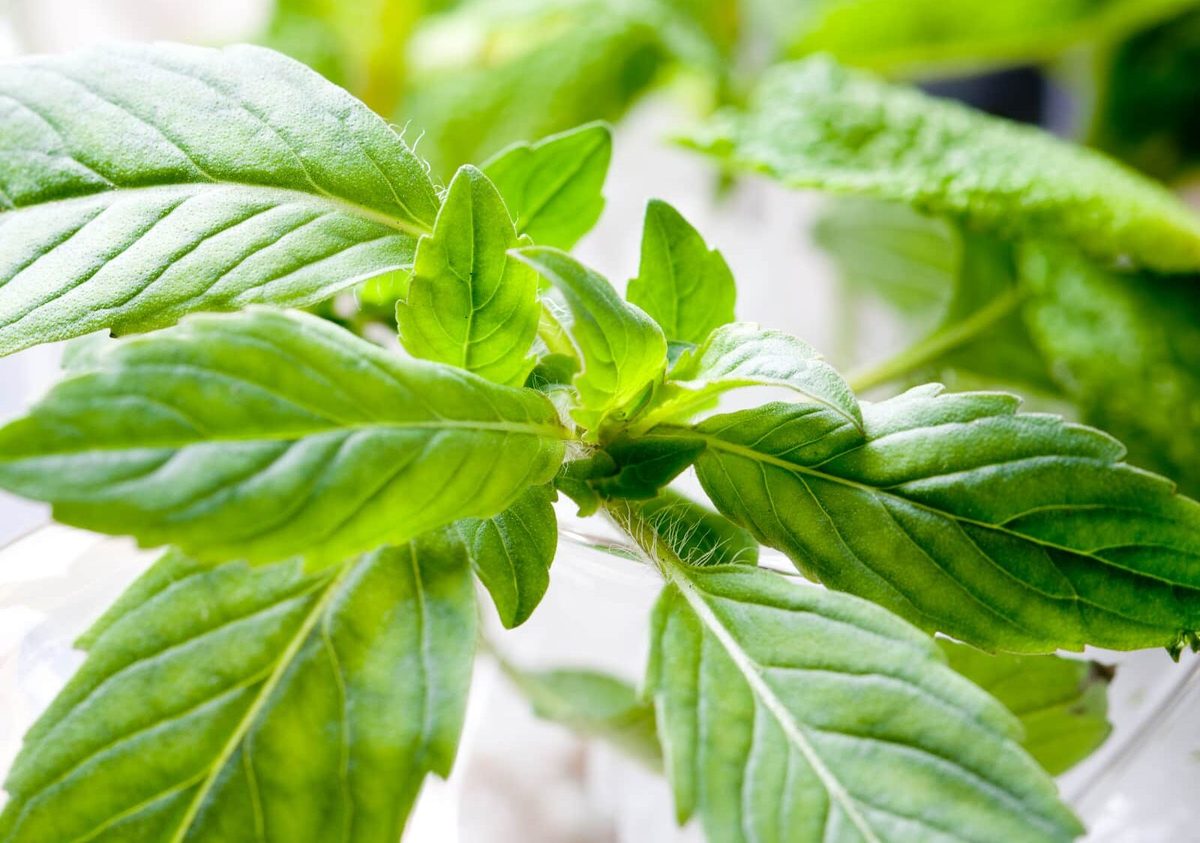
On this site, bergamot means the herb: Monarda didyma, a perennial of the mint family (Lamiaceae) native from southeastern Canada to the eastern United States, also sold as bee balm or Oswego tea.123 It shares only a name with the bergamot orange, the Italian citrus whose oil flavors Earl Grey tea.4 The herb’s character comes from phenols that it shares with thyme and oregano. In a 2022 study of plants grown at Urbino, Italy, the most abundant compounds in the oil were carvacrol (16.74%), p-cymene (16.00%) and thymol (10.51%), and the same paper cites an earlier Italian chemotype whose oil was 51.7 to 59.3% thymol.2 Smithsonian Gardens describes the fragrance as spicy, citrusy, peppery and minty.4 So the best substitute depends on which side of that profile your recipe needs.
Quick answer
| What bergamot is doing | Best substitute | Starting amount, per 1 part fresh bergamot leaves | Treatment |
|---|---|---|---|
| Savory seasoning (meat, stuffing, beans, tomato dishes) | Fresh thyme, or dried thyme | 1 part fresh; 1/3 part dried | Method; dried conversion Computed |
| Same job, more bite | Oregano or Mexican oregano | Less than 1 part, then taste | Method |
| Herbal tea | Thyme with a little spearmint, or lemon balm | About the same volume of leaves | Method |
| Fresh leaves in a salad | Lemon thyme | A small amount, then taste | Method |
Nobody we found publishes a ratio for replacing bergamot herb, so every starting amount here is our own, labeled as such.
How the ratios on this page are labeled
Every ratio carries one of four labels.
- Computed: based on a measurable physical relationship, such as converting fresh herbs to dried, with the source named.
- Attributed: a named source publishes this ratio. We quote it as theirs.
- Disputed: named sources give different answers to the same swap. We show each one and do not average them.
- Method: we found no published ratio. We give a direction and a cautious starting point, and say so.
If bergamot is a savory seasoning
In meat dishes, stuffings and beans, bergamot works like a sharper thyme. Here you want the phenols, thymol and carvacrol, more than the citrus.
1. Thyme
Thyme is the closest chemical match. PROSEA names thymol and carvacrol as the characteristic constituents of thyme oil,5 the same two compounds that lead bergamot’s.2 The forager and chef Alan Bergo makes the same link from the other direction: writing about wild bergamot (Monarda fistulosa), he says its thymol makes it a great substitute anywhere you would use oregano or thyme.6 He notes that scarlet bee balm, M. didyma, also has a thymol flavor, mixed in its flowers with notes of ripe red fruit and berries.6
Ratio (Method): We found no published ratio. Start with the same amount of fresh thyme as the bergamot called for, taste, and add more if the dish needs it. If you are using dried thyme, start with a third as much (see the fresh and dried section below).
2. Oregano or Mexican oregano
Oregano’s oil is led by the same two phenols: one review puts carvacrol and thymol together at almost 78 to 85% of it.7 Mexican oregano, a different plant, has an oil that PROSEA gives as 40 to 60% thymol, and a flavor it calls stronger, sharper and more pungent than Origanum oregano.8 Either brings bergamot’s savory bite, but louder and without the citrus and mint notes.
Ratio (Method): No published ratio was found. Start with less than the bergamot amount, about half for Mexican oregano, and build up to taste.
If bergamot is for tea
The USDA plant guide says dried leaves and flower heads make an aromatic tea,3 and Smithsonian Gardens notes that Native Americans and colonists used the plant this way.4 No single herb reproduces that cup.
1. Thyme with a little spearmint
Thyme supplies the thymol. Spearmint covers the minty note that Smithsonian Gardens describes,4 though by a different route: carvone is the principal component of spearmint oil,9 and carvone is not among bergamot’s main compounds.2 The blend is our suggestion, not a tested recipe.
Ratio (Method): We found no published ratio. Start with about two parts thyme to one part spearmint, by volume of leaves, and use the same total amount of leaves as the bergamot called for.
2. Lemon balm
Lemon balm, Melissa officinalis, is another mint-family herb,10 and Britannica lists herbal teas among its uses.10 It covers the citrus side of bergamot instead of the savory side: the European Medicines Agency describes its oil as mainly monoterpene aldehydes, chiefly citral, neral and citronellal.11 It has none of bergamot’s thymol, so the cup will be lemony and soft rather than peppery. Lemongrass, whose oil is also led by citral,12 gives a similar result.
Ratio (Method): No published ratio was found. Start with the same volume of leaves and steep to taste.
3. Earl Grey tea
Earl Grey is black tea flavored with bergamot orange oil.4 It shares a name and, according to Smithsonian Gardens, something of the scent: the herb’s fragrance is reminiscent of true bergamot.4 But it is a different plant and a different drink, without bergamot herb’s thyme-like phenols. Use it only if the name and citrus note are what the recipe wants.
Ratio (Method): No ratio applies. Brew it as you would any black tea.
If bergamot leaves are going into a salad
The USDA guide says fresh leaves and shoot tips are used to flavor salads.3 Raw, the citrus and peppery notes matter more than in cooking.
1. Lemon thyme
UF/IFAS Extension describes lemon thyme as adding a citrus overtone to the usual thyme flavor,13 which is a fair sketch of bergamot’s two sides. Lemon balm, which Britannica also lists for salads,10 is a softer option.
Ratio (Method): No published ratio was found. Thyme leaves are small and assertive, so start with a small pinch of leaves and add more to taste.
If you are using the flowers
The 2022 study notes that M. didyma flowers are counted among edible flowers.2 Bergo says bee balm flowers lose some of their power when dried and uses them fresh.6 We found nothing that copies their color and flavor together.
Method: Leave them out, or add a few thyme leaves for the flavor and another edible flower for the color.
Fresh and dried
Bergo says dried bee balm leaves can be used anywhere you would use dried oregano or thyme.6 Going the other way, if a recipe calls for dried bergamot, dried thyme or oregano in the same amount is a reasonable start (Method).
If you are swapping fresh for dried, the standard conversion applies:
| Source | Fresh herbs | Dried, crumbled | Ground or powdered |
|---|---|---|---|
| NDSU Extension | 1 tablespoon | 1 teaspoon | 1/2 teaspoon14 |
| Penn State Extension | 1 tablespoon | 1 teaspoon | 1/4 teaspoon15 |
| University of Delaware Extension | 2 to 3 teaspoons | 3/4 to 1 teaspoon | not given16 |
| LSU AgCenter | 1 tablespoon | 1 teaspoon | not given17 |
| America’s Test Kitchen, tasting test | 3 parts | 1 part | not given18 |
Fresh to dried (Computed): The sources agree on roughly one part dried to three parts fresh. In ATK’s testing, 1 part dried to 3 parts fresh came closest to producing flavors of equal strength,18 and Penn State gives about a quarter to a third.15 This works best for the hardy herbs that stand in for bergamot: ATK’s Danielle Lapierre counts hardier herbs such as oregano and thyme among those that work dried, and says to use one-third the amount when substituting,19 and ATK’s tests found dried thyme fared reasonably well in dishes cooked more than 20 minutes with plenty of liquid.18
Dried to ground (Disputed): NDSU puts 1 tablespoon of fresh herbs at 1/2 teaspoon ground, Penn State at 1/4 teaspoon powdered, a twofold difference.1415 If ground thyme is all you have, start at the lower figure and taste.
What isn’t known
- No published source gives a ratio for replacing bergamot herb with anything. All starting amounts on this page are Method.
- Bergamot’s oil varies with the plant. The 2022 study stresses that composition differs markedly by chemotype,2 so one plant may lean on carvacrol and another on thymol, and no substitute will match every plant.
- Some substitute lists call bergamot “horsemint.” The USDA plant guide’s common names for M. didyma are scarlet beebalm, Oswego tea, bergamot and crimson beebalm,3 and we found no source applying “horsemint” to this species.
- Lavender is sometimes suggested. We found no source supporting it as a bergamot substitute.
- Bergamot orange extract is sometimes suggested too, along with health claims made for the citrus. We found no culinary guidance for using it in place of the herb, and the health claims are outside this page’s scope.
Related
- Bergamot herb
- Thyme, lemon thyme, fresh vs. dried thyme and thyme substitutes
- Oregano, Mexican oregano and oregano vs. thyme
- Lemon balm, lemon balm vs. lemongrass and lemongrass
- Spearmint, spearmint vs. peppermint and mint
- Dried vs. fresh herbs
Footnotes
-
Monarda didyma L., Plants of the World Online, Royal Botanic Gardens, Kew. powo.science.kew.org · Reference work ↩
-
Fraternale et al., “Chemical composition, antioxidant and anti-inflammatory properties of Monarda didyma L. essential oil”, PeerJ, 2022. peerj.com · Peer-reviewed ↩ ↩2 ↩3 ↩4 ↩5 ↩6
-
Randall K. Lester and John Vandevender, Plant Guide for scarlet beebalm (Monarda didyma), USDA Natural Resources Conservation Service, 2015. plants.sc.egov.usda.gov · Regulator ↩ ↩2 ↩3 ↩4
-
Erin Clark, “A Tempest in a Teapot: Alternative Plants to Traditional Tea”, Smithsonian Gardens, 2021. gardens.si.edu · Publication ↩ ↩2 ↩3 ↩4 ↩5 ↩6
-
S.H. Widodo, Thymus vulgaris, Plant Resources of South-East Asia (PROSEA). uses.plantnet-project.org · Reference work ↩
-
Alan Bergo, “Bee Balm (Monarda fistulosa)”, Forager Chef, 2018, updated 2024. foragerchef.com · Publication ↩ ↩2 ↩3 ↩4
-
Lombrea et al., “A Recent Insight Regarding the Phytochemistry and Bioactivity of Origanum vulgare L. Essential Oil”, International Journal of Molecular Sciences, 2020. mdpi.com · Peer-reviewed ↩
-
H.C. Ong and M. Brink, Lippia graveolens, Plant Resources of South-East Asia (PROSEA). uses.plantnet-project.org · Reference work ↩
-
“Spearmint”, Encyclopaedia Britannica. britannica.com · Reference work ↩
-
Melissa Petruzzello, “Lemon balm”, Encyclopaedia Britannica. britannica.com · Reference work ↩ ↩2 ↩3
-
Assessment report on Melissa officinalis L., folium, European Medicines Agency. ema.europa.eu · Regulator ↩
-
L.P.A. Oyen, Cymbopogon citratus, Plant Resources of South-East Asia (PROSEA). uses.plantnet-project.org · Reference work ↩
-
Busbee, Andrews and Criss, “Lemon Thyme”, UF/IFAS Extension Santa Rosa County, 2024. sfyl.ifas.ufl.edu · Reference work ↩
-
Julie Garden-Robinson, Ingredient Substitutions (FN198), NDSU Extension, 2018. ksre.ksu.edu · Reference work ↩ ↩2
-
Stacy Reed, “Preserving Herbs by Drying”, Penn State Extension, 2024. extension.psu.edu · Reference work ↩ ↩2 ↩3
-
“Using Herbs and Spices”, University of Delaware Cooperative Extension, 2025. udel.edu · Reference work ↩
-
“Flavorful Herbs”, LSU AgCenter. lsuagcenter.com · Reference work ↩
-
“Science: Substituting Dried Herbs for Fresh”, America’s Test Kitchen. americastestkitchen.com · Publication ↩ ↩2 ↩3
-
Danielle Lapierre, “When You Should Actually Use Dried Herbs (and Which Ones to Avoid)”, America’s Test Kitchen, 2022. americastestkitchen.com · Publication ↩