Cooking · Profile
Egyptian Spices: Cumin, Coriander, Garlic, Chile and Dukkah in Egypt’s Everyday Dishes
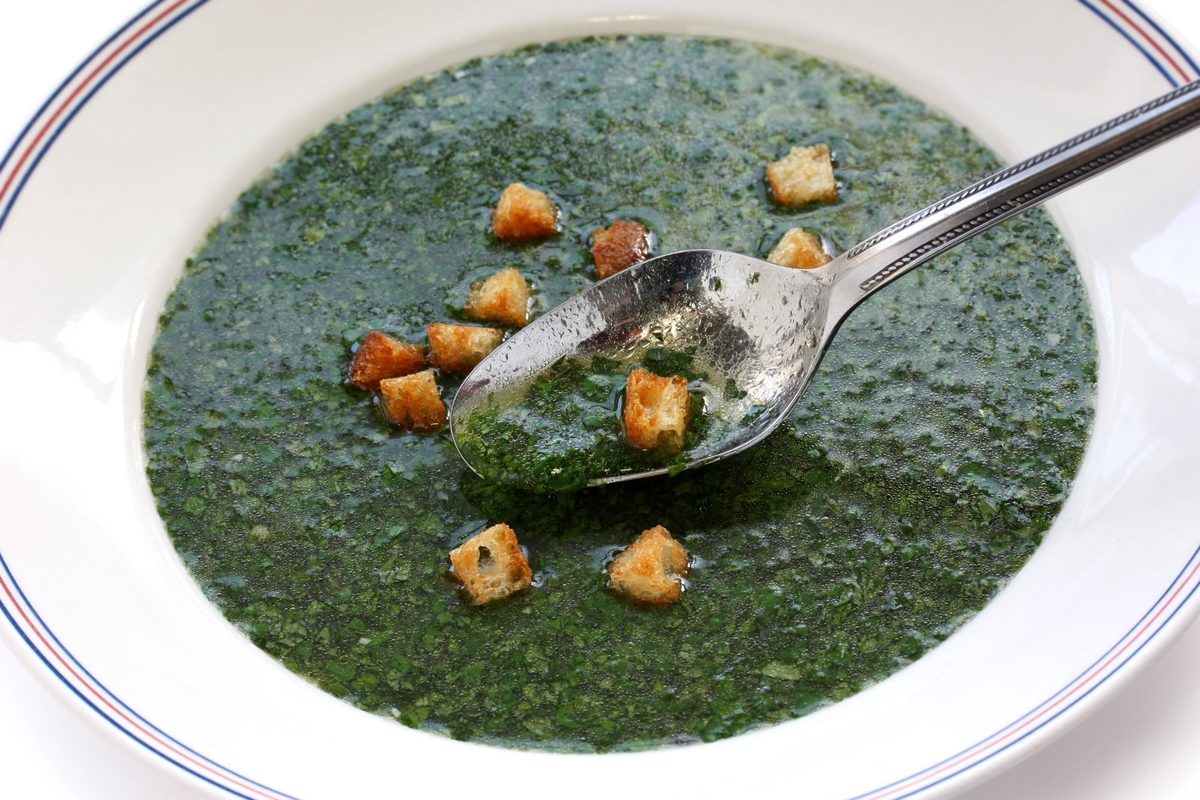
Egypt’s everyday cooking is built on a short list of seasonings: cumin, coriander, garlic, chile, sesame and onion, plus the nut and seed mix dukkah. They show up again and again in the dishes Egyptians eat most, from fava beans at breakfast to koshary from a street cart. This page covers each one, with the dishes the sources tie it to and links to our full profiles.
At a glance
| Seasoning | Plant family (Kew) | Where it shows up in Egypt | Full profile |
|---|---|---|---|
| Cumin | Apiaceae1 | Ful medames23; dukkah4 | Cumin |
| Coriander seed | Apiaceae5 | Molokhia6; dukkah4 | Coriander |
| Garlic | Amaryllidaceae7 | Ful medames, koshary, molokhia286 | Garlic |
| Chile | Solanaceae9 | Ful medames; hot sauce on koshary28 | Cayenne pepper |
| Dukkah | A blend | Bread dipped in olive oil, at breakfast4 | Dukkah |
| Sesame (tahini) | See profile | Dukkah; tahini paste410 | Sesame seeds |
| Onion | See profile | Fried onions on koshary8 | Onion powder |
Measured values
2 figures, sourced| Measure | Value | Scope | Source |
|---|---|---|---|
| Cumin: cuminaldehyde | 20 to 72 % of essential oil | cumin oil, depending on the study (PROSEA) | uses.plantnet-project.org |
| Coriander seed: linalool | 60 to 80 % of oil | coriander seed oil (2023 review) | mdpi.com |
Each figure is quoted as its source states it, with the samples or standard it applies to. Where sources differ, both are shown; nothing is averaged. All measured values
Cumin
Cumin is the dried fruit of Cuminum cyminum, a member of the parsley family, Apiaceae.111 Kew gives its native range as Iraq to Afghanistan.1 Its aroma sits in an essential oil whose most important constituent is cuminaldehyde, 20 to 72% of the oil depending on the study.12 Britannica notes that it is especially popular in Asian, North African and Latin American cooking,11 and PROSEA calls ground cumin an essential ingredient of curry and chili powder.12
Egypt’s history with cumin is long. Archaeologists found a basket of cumin seeds in the tomb of Kha at Thebes.13 Pliny the Elder ranked the cumin of Carpetania highest, but noted that some preferred African, Ethiopian or Egyptian cumin.14
In today’s kitchen, cumin is a standard seasoning for ful medames, the stewed fava beans that a University of Michigan museum recipe sheet, adapted from Claudia Roden, calls the national dish of Egypt.2 Saveur’s version uses 2 teaspoons of ground cumin for two cans of beans.3 Cumin is also one of the typical seeds in dukkah.4 See our cumin profile and cumin uses.
Coriander
Coriander seed is the dried fruit of Coriandrum sativum, also in Apiaceae.5 Its oil is 60 to 80% linalool, and the seed has a mild, sweet, warm and aromatic flavor.15 The University of Michigan’s Kelsey Museum notes that coriander seeds have been found in large quantities in Egyptian archaeological contexts, including the tomb of Tutankhamun.16 Arabic cooking uses both the leaves and the seeds, in pickles, curries and chutneys.17
Coriander is a key seasoning in molokhia: Saveur’s Egyptian molokhia, by Kat Craddock, uses a tablespoon of ground coriander with a whole head of garlic.6 It is also one of the standard seeds in dukkah.4 See our coriander profile and cooking with coriander.
Garlic
Garlic’s native range is Central Asia to northeastern Iran, according to Kew.18 It has a long Egyptian record: a historical review in the Journal of Nutrition says garlic was found in Egyptian pyramids, and that ancient medical texts from Egypt prescribed it.19
It is in all three of the everyday dishes on this page. The Roden-based ful medames recipe calls for 4 to 6 crushed cloves,2 UNESCO lists garlic among the condiments added to koshary to taste,8 and Saveur’s molokhia uses a whole head minced to a coarse paste.6 See garlic.
Chile
Egyptian food uses chile for heat in measured amounts. The Roden-based ful medames recipe finishes the beans with chili-pepper flakes, and Saveur’s version adds a quarter teaspoon of cayenne.23 UNESCO’s description of koshary lists hot sauce, alongside vinegar and garlic, as a condiment added according to preference.8 The chiles themselves are New World plants: Capsicum annuum, the species that includes cayenne, is native from the southern United States to Brazil and the Caribbean.20
A widely repeated claim says the chiles used in Egypt are typically cayennes; no source was found for that. Any moderately hot dried chile or flakes will do the same job; that is cooking judgment. See cayenne pepper.
Dukkah
Dukkah (also written duqqa) is a crushed, dry mixture of seeds, spices and often nuts. The Oxford Companion to Food describes it as a spice mixture used in the Near East, served at breakfast time in Egypt, and usually eaten with bread dipped in olive oil.4 It lists sesame and coriander seeds, cumin, salt and pepper as typical, with hazelnut as a possible addition, and explains that the name comes from the Arabic verb meaning “to pound”.4 Claudia Roden, quoted there, insists it should always be a crushed dry mixture, and definitely not a paste.4
Recipes vary. The Oxford entry quotes a 19th-century list that includes zaatar or wild marjoram or mint, sesame, coriander, cinnamon and chickpeas,4 while a modern recipe in Food & Nutrition magazine is built on nuts, coriander, cumin seeds, salt and sesame.21 See our dukkah profile, dukkah uses and dukkah substitutes.
Sesame and tahini
Sesame seeds are ground into the paste known as tahini, which is widely used to thicken and flavor sauces.10 Sesame also has deep roots in Egypt: an Egyptian medical papyrus of about 1500 BCE lists remedies that include sesame oil and seed.22 Tahini is a core ingredient of hummus; see hummus spices and sesame seeds.
Onion
Onion is a base flavor in Egyptian cooking. UNESCO lists fried onions among the core ingredients of koshary, with rice, pasta and black lentils.8 Two widely repeated details, pickled red onions called basal mekhalel and raw green onions served beside ful and hummus, could not be traced to a source we could open.
Molokhia: the leaf in Egypt’s green stew
Molokhia is not a spice, but it is the defining flavor of one of Egypt’s best-known dishes. It is the leaf of Corchorus olitorius, an annual in the mallow family, Malvaceae, native across the tropical and subtropical Old World.23 Saveur describes it as a grassy-tasting green vegetable also known as jute or Jew’s mallow, and notes that frozen leaves are far easier to find than fresh, in Middle Eastern and North African grocery stores.6
In Saveur’s recipe the leaves are cooked in chicken broth until the stew is smooth and slightly viscous, seasoned with garlic, ground coriander, cardamom pods and bay leaves, and served with white rice.6
Three everyday dishes and their seasonings
| Dish | What it is | Seasonings in the named source |
|---|---|---|
| Ful medames | Stewed fava beans; called Egypt’s national dish by both sources23 | Roden-based sheet: garlic, chili-pepper flakes, ground cumin, lemon, parsley, olive oil2. Saveur: cumin, cayenne, garlic, lemon, olive oil3 |
| Koshary | Rice, pasta, black lentils and fried onions; inscribed by UNESCO in 20258 | Vinegar, garlic and hot sauce, added to taste8 |
| Molokhia | Jute-leaf stew with chicken6 | Garlic, ground coriander, cardamom, bay leaves (Saveur)6 |
Saveur says ful is usually eaten for breakfast and is a staple all over the Middle East, with many variations.3 The Kelsey Museum sheet says the recipe most likely dates to Egypt’s Dynastic Period; treat that as the museum’s estimate.2 UNESCO describes koshary as a filling, budget-friendly meal made at home and sold from restaurants and street carts.8
Related pages
- Cumin, cumin uses and cumin substitutes
- Coriander and coriander vs. cumin
- Dukkah
- Garlic and cayenne pepper
- Hummus spices
- The master list of herbs and spices
Footnotes
-
Cuminum cyminum L., Plants of the World Online, Royal Botanic Gardens, Kew. powo.science.kew.org · Reference work ↩ ↩2 ↩3
-
Ful Medames (recipe sheet, adapted from Claudia Roden, The New Book of Middle Eastern Food, 2000), Kelsey Museum of Archaeology, University of Michigan. ii.umich.edu · Reference work ↩ ↩2 ↩3 ↩4 ↩5 ↩6 ↩7 ↩8 ↩9
-
Ful Medames (Stewed Fava Beans), headnote by Lucy-Ruth Hathaway (5 Sep 2012), Saveur. saveur.com · Publication ↩ ↩2 ↩3 ↩4 ↩5 ↩6
-
Duqqa, in The Oxford Companion to Food (Alan Davidson, 2014), Oxford University Press, via ckbk. app.ckbk.com · Reference work ↩ ↩2 ↩3 ↩4 ↩5 ↩6 ↩7 ↩8 ↩9 ↩10
-
Coriandrum sativum L., Plants of the World Online, Royal Botanic Gardens, Kew. powo.science.kew.org · Reference work ↩ ↩2
-
Braised Egyptian Greens With Crispy Chicken (Egyptian Molokhia), by Kat Craddock (17 May 2017), Saveur. saveur.com · Publication ↩ ↩2 ↩3 ↩4 ↩5 ↩6 ↩7 ↩8
-
Garlic (Britannica Editors, revised by Michele Metych, updated 12 Sep 2026), Encyclopaedia Britannica. britannica.com · Reference work ↩
-
Koshary, daily life dish and practices associated with it (inscribed 2025, 20.COM), UNESCO Intangible Cultural Heritage. ich.unesco.org · Regulator ↩ ↩2 ↩3 ↩4 ↩5 ↩6 ↩7 ↩8 ↩9
-
Red Pepper, McCormick Science Institute. mccormickscienceinstitute.com · Merchant ↩
-
Sesame (Sesamum indicum), Gernot Katzer’s Spice Pages, Gernot Katzer. gernot-katzers-spice-pages.com · Reference work ↩ ↩2
-
Cumin, Encyclopaedia Britannica (revised by Sohini Dasgupta, updated 14 Aug 2026). britannica.com · Reference work ↩ ↩2
-
Cuminum cyminum (PROSEA), P.C.M. Jansen, Plant Resources of South-East Asia, via Pl@ntUse. uses.plantnet-project.org · Reference work ↩ ↩2
-
Spice Migrations: Cumin, by Jeff Koehler (1 Sep 2021), AramcoWorld. aramcoworld.com · Publication ↩
-
Pliny the Elder, Natural History, Book 19, chapter 47 (English translation; Latin text ed. Mayhoff 1906), Perseus Digital Library, Tufts University. perseus.tufts.edu · Reference work ↩
-
Essential Oil from Coriandrum sativum: A Review on Its Phytochemistry and Biological Activity (Al-Khayri et al.), Molecules 28(2):696, 2023, MDPI Molecules. mdpi.com · Peer-reviewed ↩
-
Ugly Object of the Month: May 2022, by Suzanne Davis with Dr. Laura Motta (5 May 2022), Kelsey Museum of Archaeology, University of Michigan. sites.lsa.umich.edu · Reference work ↩
-
Cilantro, by Susan Mahr (posted 6 Feb 2017), Wisconsin Master Gardener Program, University of Wisconsin-Madison Extension. mastergardener.extension.wisc.edu · Reference work ↩
-
Allium sativum L., Plants of the World Online, Royal Botanic Gardens, Kew. powo.science.kew.org · Reference work ↩
-
Historical perspective on the use of garlic (Rivlin, Journal of Nutrition 131(3 Suppl):951S-954S, 2001), abstract, Memorial Sloan Kettering Cancer Center research repository. synapse.mskcc.org · Peer-reviewed ↩
-
Capsicum annuum L., Plants of the World Online, Royal Botanic Gardens, Kew. powo.science.kew.org · Reference work ↩
-
Do You Dukkah? You’ve Got to Try the Egyptian Spice Mix (Michele Redmond, MS, RDN), Food & Nutrition Magazine (Stone Soup blog). foodandnutrition.org · Publication ↩
-
Sesamum orientale (PROSEA), E.A. Weiss and Q.D. de la Cruz, Plant Resources of South-East Asia, via Pl@ntUse. uses.plantnet-project.org · Reference work ↩
-
Corchorus olitorius L., Plants of the World Online, Royal Botanic Gardens, Kew. powo.science.kew.org · Reference work ↩