Spice Comparisons · Comparison
Fennel Seeds vs. Cumin Seeds: Anethole Sweetness Against Cumin’s Earthy Warmth
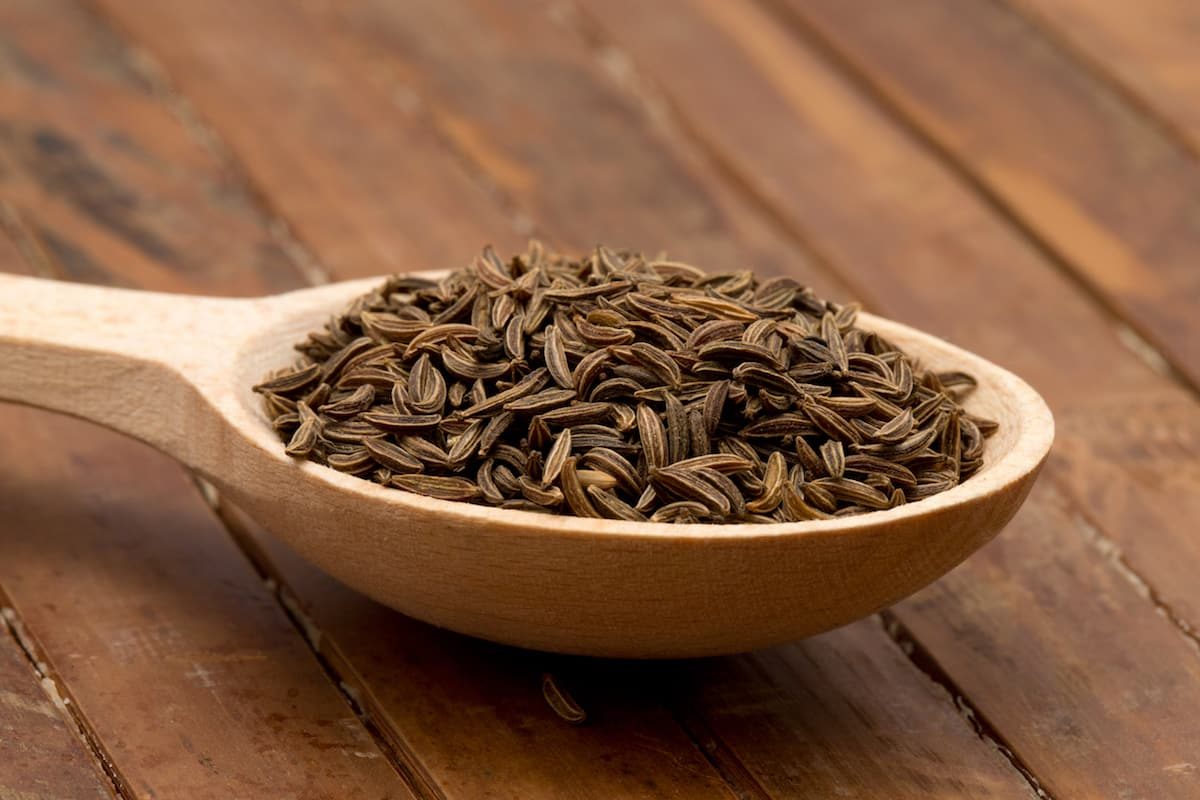
Fennel and cumin seeds look alike and come from the same plant family, but they taste of different compounds. Sweet fennel’s oil is dominated by anethole, which gives it an anise fragrance and sweet taste;1 cumin’s most important constituent is cuminaldehyde, behind its strong, warm, pungent smell.2 Fennel is the sweet, licorice-leaning seed and cumin the earthy, savory one. They often appear in the same Indian blends, but neither is a close substitute for the other.
Side by side
| Fennel seed | Cumin seed | |
|---|---|---|
| Species | Foeniculum vulgare3 | Cuminum cyminum4 |
| Family | Apiaceae (carrot/parsley family)5 | Apiaceae6 |
| The plant | A perennial herb about 1 m tall5 | A slender annual herb6 |
| Native range (Kew) | Mediterranean to Ethiopia and western Nepal3 | Iraq to Afghanistan4 |
| Part used | The small dry fruit, sold as “seed”5 | The dry fruit, sold as “seed”6 |
| What it looks like | Greenish-brown to yellowish-brown oblong ovals about 6 mm long, five ridges5 | Thin yellowish-brown ovals about 6 mm long, five ridges6 |
| Main aroma compounds | Anethole, up to 70–80% of sweet-fennel oil; fenchone leads bitter fennel1 | Cuminaldehyde, the most important constituent, 20–72% of the oil across studies2 |
| Essential oil | 3–4% (Britannica)5 | 2.5–4.5% (Britannica)6 |
| Aroma and taste (sourced) | Sweet fennel: anise fragrance, sweet taste; bitter fennel: pungent, camphor-like1 | Strong, warm, pungent and persistent2 |
| Flavor (editorial) | Sweet, light licorice, faintly green | Earthy, savory, slightly bitter; nuttier when toasted |
| Typical uses | Pastries, sweet pickles, fish;5 sausage7 | Curry and chili powders, chutneys and spice mixes;6 soups, rice, meat, stews, cheese, bread, pickles2 |
| Safety | Contains estragole1 | Ground cumin was at the center of the 2014–15 US peanut recalls8 |
| Cost | No dated, sourced comparison found | No dated, sourced comparison found |
Each chemistry row comes from a separate PROSEA entry summarizing its own literature. They show which compound leads each oil, not a measurement of the same samples.
Telling them apart
By size, you can’t: Britannica gives both fruits as about 6 mm long, with five prominent ridges.56 Color is the better clue. Britannica describes fennel as greenish-brown to yellowish-brown and cumin as yellowish-brown,56 so a greenish tint points to fennel. Crushing a seed settles it: fennel smells sweet and anise-like, cumin warm and pungent.12
How the differences show up in cooking
Sweet versus savory. Fennel goes both ways. Britannica lists pastries, sweet pickles and fish among the foods its seeds flavor,5 and Illinois Extension notes its use in sausage.7 Cumin’s sourced uses are savory: Britannica calls it an essential ingredient in many mixed spices, chutneys, and chili and curry powders,6 and PROSEA lists soups, rice, meat dishes, stews, cheese, bread and pickles.2 We found no source using cumin in a sweet dish.
How much each leads. Cumin is often the first spice in the pan in Indian cooking, and AramcoWorld counts it among the “Big Four” of Indian spices with chili, turmeric and coriander.9 In Mexico, an expert quoted by AramcoWorld says cumin is common in moles, pipianes and adobos, but always in small quantities that don’t dominate, and is more prominent in the north.9 So the idea that cumin is the main flavor of Mexican meat dishes is too broad.
Where they meet. The two often share a blend:
| Blend | Fennel | Cumin | Source |
|---|---|---|---|
| Garam masala, as Great British Chefs lists its common spices | Yes | Yes | 10 |
| Bengali garam masala at its most basic (Bong Eats) | No | No (cardamom, cinnamon, cloves) | 11 |
| Panch phoran, the version most often printed (Katzer) | Yes | Yes | 12 |
| Curry powder, USDA purchasing specification minimum list | Not listed | Yes | 13 |
| Curry powder, as PROSEA describes it | Often included | Essential (PROSEA’s cumin entry) | 12 |
| Chili powder, USDA minimum list | Not listed | Yes | 13 |
Britannica also names both fennel seed and cumin among the spices that typically flavor Indian curries.14 The USDA lists describe minimum ingredients for federal purchasing, not every recipe.
A note on caraway. Fennel is sometimes said to taste like caraway. Caraway’s oil is led by carvone and limonene,15 not anethole, so the resemblance is partial. See caraway seeds vs. fennel seeds and caraway seeds vs. cumin.
Can one stand in for the other?
Only loosely. These treatments come from our substitute pages.
- Fennel in place of cumin (Attributed). Healthline and Tasting Table both say to start with about half as much fennel as the cumin called for.1617 Fennel brings sweetness and an anise note, so use it where that suits the dish. See cumin substitutes.
- Cumin in place of fennel (Attributed, in a curry). The Spice House suggests cumin and celery seed together for fennel in a curry, starting with an equal total volume and adjusting, and says the pair brings a similar aroma and sweetness.18 Neither carries fennel’s anethole, and in our judgment cumin is not a substitute where fennel is the lead flavor, as in sausage or baking. See fennel seed substitutes.
Safety
- Fennel and estragole. Fennel contains estragole, which PROSEA notes is a liver carcinogen in mice.1 Germany’s BfR said in 2022 that fennel tea may contain high amounts of compounds of this kind, but that the risk could not yet be conclusively assessed.19
- Cumin and peanut. Between late 2014 and mid-2015, more than 675 US products were recalled over undeclared peanut traced to ground cumin, and testing found up to 5,000 ppm of peanut in some recalled cumin.8 People with peanut allergy have reason to check ground cumin’s source; see cumin for the full account.
What isn’t known
- No study compares the flavor strength of fennel and cumin, so the swap amounts are published rules of thumb.
- The chemistry figures come from separate summaries of different samples.
- Jars rarely say whether fennel is the sweet or bitter type, and anethole content varies with type and sample.1
- No dated, sourced retail price comparison was found.
Related
- Fennel seed, fennel seed substitutes, fennel seed vs. anise seed, fennel pollen vs. fennel seed
- Cumin, cumin substitutes, cumin seeds vs. ground cumin, too much cumin?
- Caraway seeds vs. cumin, coriander vs. cumin, caraway seeds vs. fennel seeds
- Garam masala, panch phoran, curry powder
Footnotes
-
Purwaningsih, Harmida and M. Brink, Foeniculum vulgare, Plant Resources of South-East Asia (PROSEA). uses.plantnet-project.org · Reference work ↩ ↩2 ↩3 ↩4 ↩5 ↩6 ↩7 ↩8
-
P.C.M. Jansen, Cuminum cyminum, Plant Resources of South-East Asia (PROSEA). uses.plantnet-project.org · Reference work ↩ ↩2 ↩3 ↩4 ↩5 ↩6 ↩7
-
Foeniculum vulgare Mill., Plants of the World Online, Royal Botanic Gardens, Kew. powo.science.kew.org · Reference work ↩ ↩2
-
Cuminum cyminum L., Plants of the World Online, Royal Botanic Gardens, Kew. powo.science.kew.org · Reference work ↩ ↩2
-
“Fennel”, Encyclopaedia Britannica. britannica.com · Reference work ↩ ↩2 ↩3 ↩4 ↩5 ↩6 ↩7 ↩8 ↩9
-
“Cumin”, Encyclopaedia Britannica. britannica.com · Reference work ↩ ↩2 ↩3 ↩4 ↩5 ↩6 ↩7 ↩8 ↩9
-
“Fennel”, Herb Gardening, University of Illinois Extension. extension.illinois.edu · Reference work ↩ ↩2
-
Ishani Nath, “Special Report: Investigating Motive and Spice Safety in the Big Peanut-Tainted Cumin Recalls”, Allergic Living, 2016. allergicliving.com · Publication ↩ ↩2
-
Jeff Koehler, “Spice Migrations: Cumin”, AramcoWorld, 2021. aramcoworld.com · Publication ↩ ↩2
-
“How to make garam masala”, Great British Chefs, 2025. greatbritishchefs.com · Publication ↩
-
“Bengali Garam Masala”, Bong Eats, 2016. bongeats.com · Publication ↩
-
Gernot Katzer, “Nigella (Nigella sativa L.)”, Gernot Katzer’s Spice Pages. gernot-katzers-spice-pages.com · Reference work ↩
-
Commercial Item Description A-A-20001C, Spices and Spice Blends, USDA Agricultural Marketing Service, 2023. ams.usda.gov · Regulator ↩ ↩2
-
“Curry”, Encyclopaedia Britannica. britannica.com · Reference work ↩
-
H. Toxopeus and J.H. Lubberts, Carum carvi, Plant Resources of South-East Asia (PROSEA). uses.plantnet-project.org · Reference work ↩
-
Lisa Wartenberg, “8 Good Substitutes for Cumin”, Healthline, 2023. healthline.com · Publication ↩
-
Steve Peters, “12 Best Substitutes for Cumin”, Tasting Table, 2024. tastingtable.com · Publication ↩
-
“12 Best Fennel Substitutes”, The Spice House, 2018. thespicehouse.com · Merchant ↩
-
“Alkenylbenzenes in food: how large is the health risk?”, BfR Communication No. 22/2022, German Federal Institute for Risk Assessment. bfr.bund.de · Regulator ↩