Seasonings · Profile
Mojo Seasoning: The Dry Blend, the Cuban Sauce and the Canary Island Original
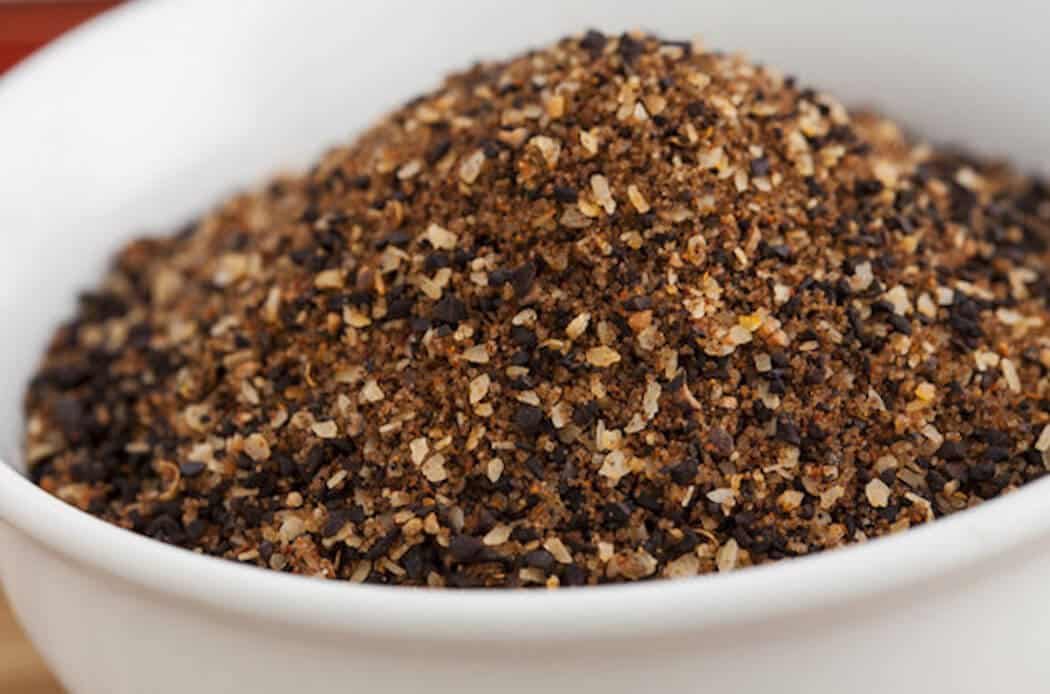
“Mojo” names three related things: a family of sauces from the Canary Islands, the garlic and bitter orange sauce of Cuban cooking, and the dry seasoning blend sold in jars, which is built to taste like the Cuban sauce. This page covers what goes into each, how they differ, and how to use the dry blend.
At a glance
| What it is | A dry blend modeled on mojo, a garlic and citrus sauce12 |
| Typical ingredients (dry) | Garlic, black pepper, orange, onion, lime and cumin, in one spec sheet2 |
| Flavor | Peppery, citrusy and savory, per its maker2 |
| The sauce it imitates | Cuban mojo: garlic, bitter orange juice, olive oil, cumin, oregano1 |
| The older sauce | Canarian mojo picón: oil, garlic, chiles, cumin, salt and paprika3 |
| Name | From Spanish mojar, to wet3 |
| Main uses | Marinade and table sauce for pork, beef and seafood (the sauce)1 |
Three kinds of mojo
Canary Island mojo. The Real Academia Española defines mojo picón as a spicy sauce typical of the Canary Islands, made mainly with oil, garlic, chiles, cumin, salt and paprika.3 Maricel Presilla, writing in Saveur, contrasts Canary mojos, which rely on chiles and vinegar, with the Cuban version.1 The word itself comes from mojar, to wet, per the RAE.3 These are sauces, not dry blends. We found no source that dates the Canarian sauces or traces how mojo reached Cuba, so the common story of a Canary Island origin is plausible but not documented here.
Cuban mojo. Presilla describes Cuban mojo as a fragrant garlic-and-herb sauce whose signature tartness comes from bitter orange juice, used as a marinade for pork, beef or seafood or passed at the table.1 Two named recipes show the range:
| Maricel Presilla (Saveur)1 | Luz Garcia, via Edible South Florida4 | |
|---|---|---|
| Garlic | 10 cloves | 4 heads |
| Citrus | Bitter orange (or lime) and sweet orange juice | Juice of 11 to 12 sour oranges |
| Cumin | 1/4 teaspoon ground | 1 tablespoon |
| Oregano | Fresh and dried | 1 tablespoon |
| Bay leaf | None | 4 leaves |
| Fat | Olive oil | None listed |
| Other | Salt | Onion powder, black pepper, sugar, salt, a commercial seasoning blend |
Bottled mojo marinades follow the same idea. Badia describes its mojo marinade as made with grapefruit, orange and bitter orange juices.5
Dry mojo seasoning. The jarred blend turns the sauce’s flavors into a powder. Spices, Inc. lists the ingredients of its Mojo Seasoning as garlic, black pepper, orange, onion, lime juice powder and cumin, and describes it as a tan powder flecked with black pepper, garlic flakes and orange zest, with a peppery, citrusy and savory flavor.2 That is one maker’s recipe. Others may add oregano or salt; check the label.
Flavor and the compounds behind it
The dry blend tastes garlicky and citrusy first, then peppery and warm. That description is ours. Of the individual ingredients:
- Cumin. The main compound in cumin oil is cuminaldehyde, 20 to 72% of the oil according to PROSEA.6 Britannica notes that cumin is especially popular in Latin American cooking, among others.7
- Citrus. In the sauce, bitter orange juice supplies the tartness.1 In the Spices, Inc. dry blend, orange and lime juice powder stand in for it.2
How to use it
Marinades. Mix the dry blend with citrus juice, olive oil and fresh garlic to make a quick marinade in the spirit of the Cuban sauce, which Presilla uses for pork, beef and seafood.1 Luz Garcia uses her family’s mojo for her father’s holiday lechón, the roast pork.4 Proportions are up to the cook; we found no tested ratio for reconstituting a dry blend.
Rubs and finishing. Rub it on chicken, pork chops or fish before grilling, or season fried plantains, boiled yuca or roasted vegetables. That is kitchen practice, not a sourced finding.
Not sofrito. Mojo seasoning is not a component of Cuban sofrito. Saveur’s Cuban black beans build their sofrito from onions or scallions, garlic and green peppers, with cumin added separately.8 See Cuban spices for how sofrito and mojo work in Cuban cooking.
We found no source for regional US versions of mojo with tomato or avocado, or for mojo as a common base for barbecue sauces in Texas, Florida or Louisiana.
Buying and storage
Read the label for salt: the Spices, Inc. spec lists none,2 but other blends may. Store the dry blend like other ground seasonings, airtight and away from heat and light. A blend whose citrus smell has faded has lost much of what makes it mojo; that is kitchen judgment. No shelf-life figure from a regulator or standards body was found.
Health
Lists of health benefits for mojo seasoning, from preventing heart disease to protecting against cancer, go beyond the evidence. Most of that research is on garlic supplements, not seasoning. NCCIH’s summary says garlic supplements may lower total and LDL cholesterol to a small extent in people with high cholesterol, and limited evidence suggests a small effect on blood pressure in people with high blood pressure.9 It says eating garlic does not seem to reduce the risk of stomach cancer, and that very little research has been done on garlic and colds.9 Garlic supplements may increase the risk of bleeding.9 A sprinkle of seasoning is not a supplement dose, and this page makes no health claims for it.
Related pages
- Cuban spices and Spanish spices
- Adobo seasoning and sazón
- The ingredients: garlic powder, garlic, cumin, black pepper, onion powder, lemon pepper, oregano
- Too much garlic powder and too much cumin
Footnotes
-
Maricel Presilla, “Mojo (Cuban Garlic-Citrus Sauce)”, Saveur. saveur.com · Publication ↩ ↩2 ↩3 ↩4 ↩5 ↩6 ↩7 ↩8
-
Mojo Seasoning, product specification sheet PS 100721, Spices, Inc., 2024. spicesinc.com · Merchant ↩ ↩2 ↩3 ↩4 ↩5 ↩6
-
“mojo” and “mojo picón”, Diccionario de la lengua española, Real Academia Española. dle.rae.es · Reference work ↩ ↩2 ↩3 ↩4
-
“Luz Garcia’s Traditional Cuban Mojo”, Edible South Florida, 2022. ediblesouthflorida.ediblecommunities.com · Publication ↩ ↩2
-
Badia Mojo Marinade, listing at WebstaurantStore. argo.webstaurantstore.com · Merchant ↩
-
P.C.M. Jansen, Cuminum cyminum (PROSEA), Plant Resources of South-East Asia. uses.plantnet-project.org · Reference work ↩
-
“Cumin”, Encyclopaedia Britannica. britannica.com · Reference work ↩
-
Saveur Editors, “Frijoles Negros (Cuban-Style Black Beans)”, Saveur, 2007. saveur.com · Publication ↩
-
“Garlic: Usefulness and Safety”, National Center for Complementary and Integrative Health, 2025. nccih.nih.gov · Regulator ↩ ↩2 ↩3