Blog · Profile
Spanish Spices: Pimentón, Saffron, Garlic, Bay, Rosemary and Sherry Vinegar
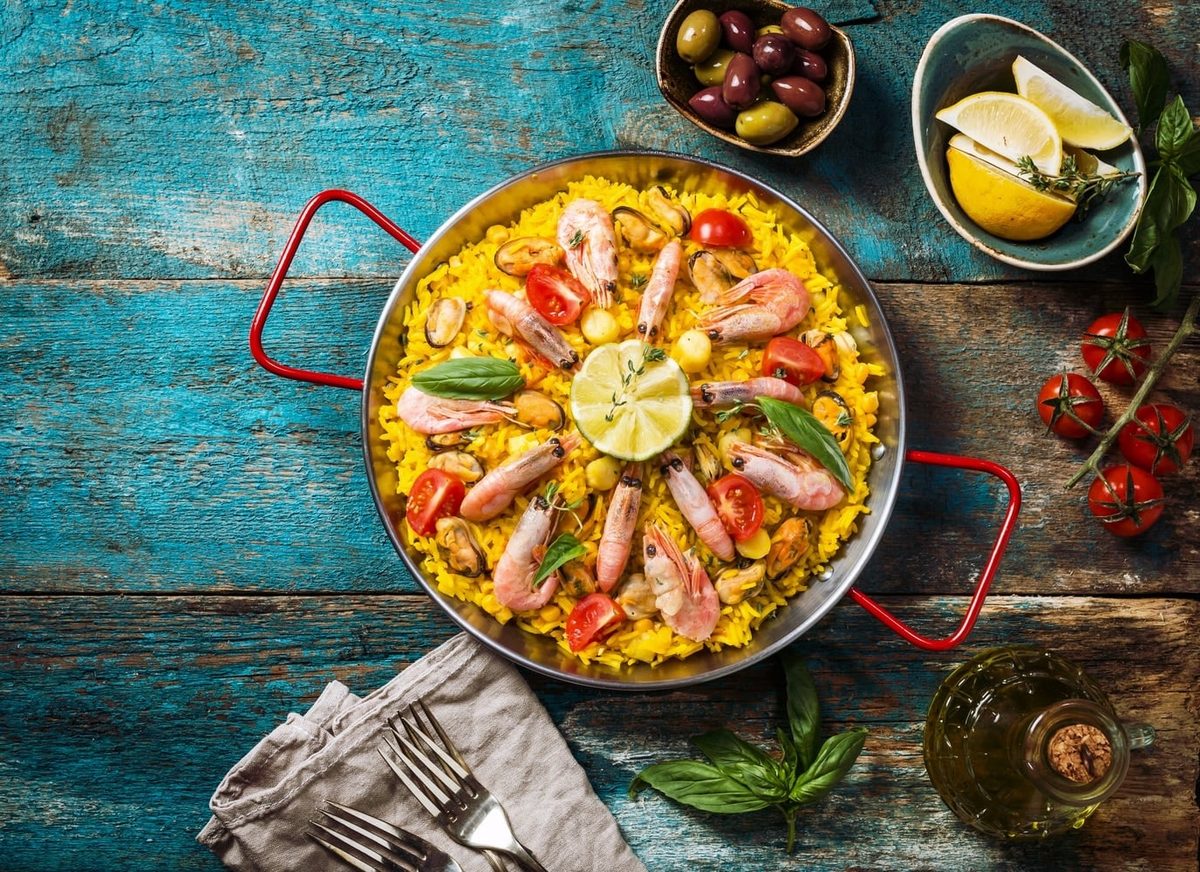
Spanish cooking uses few spices, but it uses them with precision, and several of them are legally protected products with their own rules: pimentón (Spanish paprika, sweet, bittersweet or hot, and in La Vera smoked over oak), saffron from La Mancha, purple garlic from Las Pedroñeras, and sherry vinegar from Jerez. Bay, rosemary, oregano and olive oil fill in the rest.
At a glance
| Seasoning | Protected name | What the rules say | Typical use |
|---|---|---|---|
| Smoked pimentón | Pimentón de la Vera PDO | Dried over holm oak and/or oak fires1 | Sausages and cured meats1 |
| Sun-dried pimentón | Pimentón de Murcia PDO | Sun- or hot-air-dried, not smoked2 | General seasoning |
| Saffron | Azafrán de La Mancha PDO | Stigmas dried by toasting3 | Paella4 |
| Purple garlic | Ajo Morado de Las Pedroñeras PGI | Violet skins, strong smell, pungent taste5 | Nearly everything savory |
| Sherry vinegar | Vinagre de Jerez PDO | Aged at least 6 months; Reserva 2 years; Gran Reserva 10 years6 | Dressings, sauces |
| Bay leaf | 1,8-cineole is the main aroma compound7 | Stews, braises | |
| Rosemary | A sprig in Valencian paella89 | Paella, roasts | |
| Oregano | Spanish samples rich in carvacrol10 | Marinades |
Measured values
4 figures, sourced| Measure | Value | Scope | Source |
|---|---|---|---|
| Moisture after smoke-drying Limit | under 15 % | Pimentón de la Vera PDO specification, fruit dried 10 to 15 days from 80% moisture | assets.publishing.service.gov.uk |
| 1,8-Cineole (bay leaf) | about 32 % of leaf oil | One Italian bay leaf oil sample (Caputo et al.)Sources differ: other studies in the same review give 35% to 59%. | mdpi.com |
| 1,8-Cineole (bay leaf) | 35 to 59 % of leaf oil | Other studies cited in Caputo et al.Sources differ. | mdpi.com |
| Carvacrol (Spanish oregano) | 58.7 to 77.4 % of essential oil | Spanish oregano samples, one study tabulated in a 2020 review (Lombrea et al.) | mdpi.com |
Each figure is quoted as its source states it, with the samples or standard it applies to. Where sources differ, both are shown; nothing is averaged. All measured values
Pimentón (Spanish paprika)
Pimentón comes in sweet, bittersweet (ocal) and hot versions.1 The best known is Pimentón de la Vera from the La Vera area of Cáceres in Extremadura, where the damp climate rules out sun-drying, so the peppers are dried in drying houses with a holm oak and/or oak furnace on the lower floor.1 The specification says drying takes 10 to 15 days, until the fruit’s moisture falls from 80% to under 15%.1 Not all Spanish pimentón is smoked: Pimentón de Murcia is dried in the sun or with hot air.2
Pimentón seasons Spain’s protected chorizos; the Chorizo Riojano PGI, for example, is seasoned with salt, pimentón and garlic.11 The La Vera specification also calls pimentón the best preservative for sausages and cured meats.1
Safety. Smoking adds polycyclic aromatic hydrocarbons (PAHs). Germany’s BfR found high PAH levels in three samples of Spanish smoked paprika powder in 2024, and noted that the EU’s PAH limits for spices do not apply to smoked paprika.12 The BfR advises keeping exposure as low as possible.12
See smoked paprika, paprika and smoked paprika substitutes.
Saffron
Britannica dates saffron cultivation in Spain to the Arabs, around 961.13 Today’s protected Spanish saffron is Azafrán de La Mancha, grown in municipalities of Albacete, Ciudad Real, Cuenca and Toledo; its specification defines it as threads made by toasting the stigmas of Crocus sativus, rather than drying them in the sun.3 The specification describes the infusion’s taste as toasty, mildly bitter and mildly pungent.3
Spain is no longer a big producer: a 2022 AHPA history put its crop at about 2.3 tonnes, behind Iran, India, Greece, Afghanistan and Morocco.14 Britannica notes that a pound of saffron represents about 75,000 blossoms.13 Its paella entry defines the dish as saffron-flavored rice cooked with meats, seafood and vegetables.4
See saffron, why saffron is so expensive, cooking with saffron and paella spices.
Garlic
Garlic is in most savory Spanish dishes; that is common practice. Spain’s protected garlic is Ajo Morado de Las Pedroñeras, a native purple ecotype of Allium sativum grown in 225 localities across Albacete, Ciudad Real, Cuenca and Toledo.5 Its specification describes violet-purple skins, a strong smell and a pungent, stimulating taste, and names allicin as the main source of garlic’s odor and flavor.5 See garlic and garlic powder vs. garlic.
Bay leaves
Bay laurel is native to the Mediterranean.15 The main compound in its leaf oil is 1,8-cineole, at about 32% in one Italian sample and 35% to 59% in other studies.7 Spanish cooks use it in stews, soups and slow braises; that is common practice. See bay leaves and cooking with bay leaves.
Rosemary
Britannica describes rosemary as a common seasoning for meats, vegetables and soups.16 Both official Valencian paella recipes, from Visit València and Spain.info, add a sprig of rosemary.89 See rosemary, cooking with rosemary and dried vs. fresh rosemary.
Oregano
Spanish oregano is strongly carvacrol-type: one study tabulated in a 2020 review found carvacrol at 58.7% to 77.4% of the oil in Spanish samples.10 It is a common seasoning in marinades for meat and fish; that is common practice. See oregano and too much oregano.
Sherry vinegar
Vinagre de Jerez is a protected vinegar from a set area of Cádiz province, including Jerez de la Frontera, El Puerto de Santa María and Sanlúcar de Barrameda, plus Lebrija in Seville.6 It is aged mostly in American oak butts seasoned with wine, including in the criaderas y solera system in which vinegar is drawn from each tier and topped up from a younger one.6 The specification sets three age categories: at least six months for Vinagre de Jerez, two years for Reserva and ten years for Gran Reserva.6
Olive oil
Olive oil is the default cooking fat in most Spanish kitchens; that is common practice. The European Commission reported in 2020 that the EU produces 69% of the world’s olive oil and that Spain, the EU’s biggest producer, averaged 63% of EU output from 2015/16 to 2017/18.17
Related pages
- Paella spices and Mediterranean spices
- Portuguese spices, French spices and Italian spices
- The master list of herbs and spices
Footnotes
-
Pimentón de la Vera PDO product specification. assets.publishing.service.gov.uk · Regulator ↩ ↩2 ↩3 ↩4 ↩5 ↩6
-
Pimentón de Murcia PDO specification, eAmbrosia. ec.europa.eu · Regulator ↩ ↩2
-
Pliego de condiciones, DOP Azafrán de La Mancha, Junta de Comunidades de Castilla-La Mancha. apliagri.castillalamancha.es · Regulator ↩ ↩2 ↩3
-
“Paella”, Encyclopaedia Britannica. britannica.com · Reference work ↩ ↩2
-
Pliego de condiciones, IGP Ajo Morado de Las Pedroñeras, Junta de Comunidades de Castilla-La Mancha. apliagri.castillalamancha.es · Regulator ↩ ↩2 ↩3
-
Pliego de condiciones, DOP Vinagre de Jerez. sherry.wine · Regulator ↩ ↩2 ↩3 ↩4
-
Caputo et al., “Laurus nobilis: Composition of Essential Oil and Its Biological Activities”, Molecules, 2017. mdpi.com · Peer-reviewed ↩ ↩2
-
Traditional Valencian Paella Recipe, Visit València. visitvalencia.com · Publication ↩ ↩2
-
Paella recipe, Spain.info (Turespaña). spain.info · Publication ↩ ↩2
-
Lombrea et al., “A Recent Insight Regarding the Phytochemistry and Bioactivity of Origanum vulgare L. Essential Oil”, Int J Mol Sci, 2020. mdpi.com · Peer-reviewed ↩ ↩2
-
Chorizo Riojano PGI, Foods & Wines from Spain (ICEX). foodswinesfromspain.com · Regulator ↩
-
BfR Opinion 018/2024, “Polycyclic aromatic hydrocarbons in smoked paprika powder”, 2024. bfr.bund.de · Regulator ↩ ↩2
-
“Saffron”, Encyclopaedia Britannica. britannica.com · Reference work ↩ ↩2
-
Touwaide and Appetiti, “Herbs in History: Saffron”, American Herbal Products Association, 2022. ahpa.org · Publication ↩
-
Laurus nobilis, Plants of the World Online, Royal Botanic Gardens, Kew. powo.science.kew.org · Reference work ↩
-
Anoushka Pant, “Rosemary”, Encyclopaedia Britannica. britannica.com · Reference work ↩
-
“Producing 69% of the world’s production, the EU is the largest producer of olive oil”, European Commission, 2020. agriculture.ec.europa.eu · Regulator ↩