Cooking · Profile
Cuban Spices and Seasonings: Garlic, Cumin, Oregano, Bay Leaf and Bitter Orange
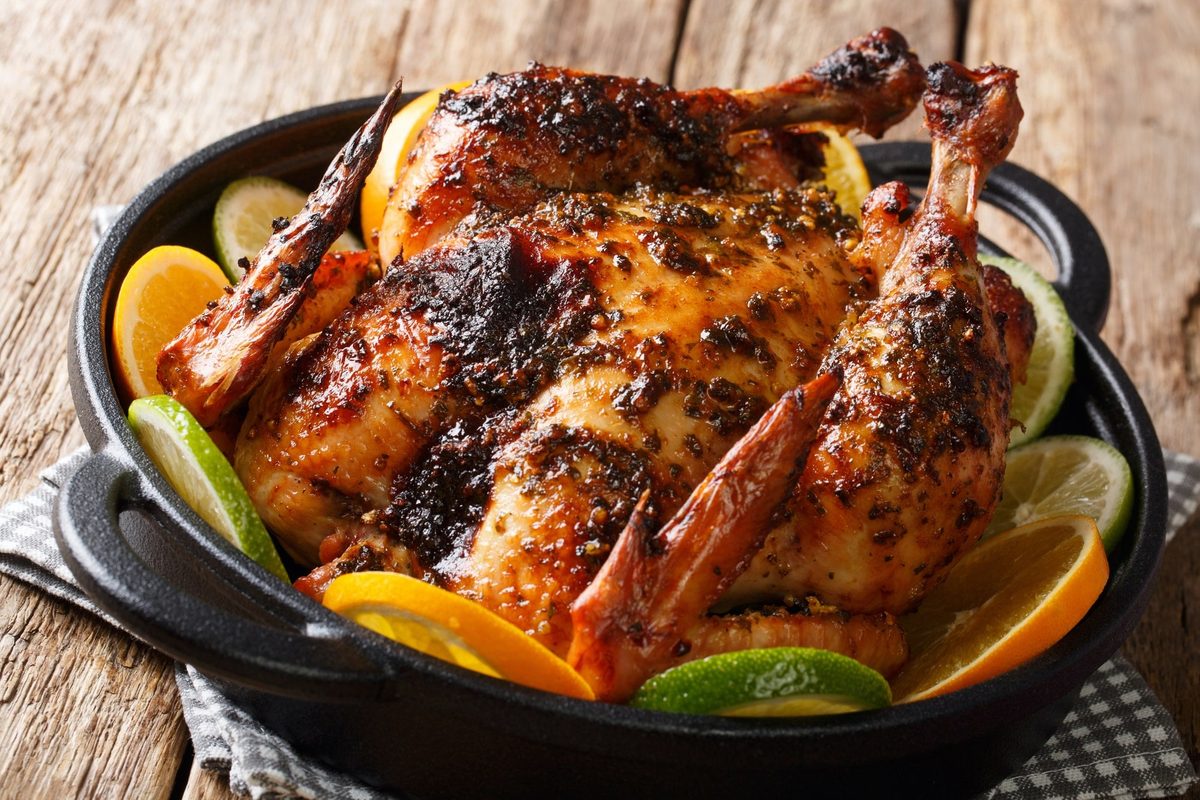
Cuban cooking gets its flavor less from a long spice rack than from a few seasonings used generously: lots of garlic, cumin, oregano and bay leaf, cooked into a slow sofrito or pounded with bitter orange juice into mojo. This page covers each, with recipes from named cooks to show how they come together, and links to our full profiles.
At a glance
| Seasoning | What it does | Where it shows up |
|---|---|---|
| Garlic | The dominant savory note, often in large amounts | Mojo,12 sofrito and black beans3 |
| Cumin | Earthy warmth | Black beans,3 mojo12 |
| Oregano | Herbal, slightly bitter | Black beans,3 mojo12 |
| Bay leaf | Background note in long-cooked dishes | Black beans,3 some mojo recipes2 |
| Bitter (sour) orange | The tart base of mojo1 | Mojo marinades for pork2 |
| Olive oil | Fat and flavor in mojo and sofrito | Mojo,1 black beans3 |
Sofrito: the base
Saveur’s recipe for Cuban black beans puts it plainly: the secret of good black beans, and of many other Cuban dishes, is a slow-cooked sofrito of onions or scallions, garlic and green peppers.3 In that recipe the beans simmer with a bay leaf and a sprig of fresh oregano, and the sofrito is cooked in olive oil with a tablespoon of ground cumin, a dozen scallions, eight cloves of garlic and a green bell pepper before going into the pot.3
Mojo: garlic, citrus, cumin and oregano
Mojo is a garlic-and-citrus sauce used as a marinade and as a table condiment. Here are two named recipes side by side; neither is “the” recipe.
| Maricel Presilla (Saveur)1 | Luz Garcia, via Edible South Florida2 | |
|---|---|---|
| Garlic | 10 cloves | 4 heads |
| Citrus | Bitter orange juice (or lime) plus sweet orange juice | Juice of 11 to 12 sour oranges |
| Cumin | 1/4 teaspoon ground | 1 tablespoon |
| Oregano | Fresh and dried | 1 tablespoon |
| Bay leaf | None | 4 leaves |
| Other | Olive oil, salt | Onion powder, black pepper, sugar, salt, a commercial seasoning blend |
| Used for | Marinade for pork, beef or seafood, or a table sauce | Marinade, best for pork; used for holiday lechón |
Presilla, a culinary historian and chef, notes that Cuban mojo gets its signature tartness from bitter orange juice, unlike Canary Island versions, which use chiles and vinegar.1 She pounds the garlic and salt to a paste in a mortar before adding the liquids, as tradition calls for.1
Garlic
Garlic is used generously: eight cloves in Saveur’s black beans,3 ten in Presilla’s mojo1 and four whole heads in the Garcia family’s mojo,2 all fresh. Garlic powder will work in a pinch but tastes different; that is cooking judgment. See garlic, garlic powder vs. garlic and too much garlic.
Cumin
Britannica describes cumin as especially popular in Asian, North African and Latin American cuisines.4 In Cuban cooking it goes into the black-bean sofrito3 and into mojo.12 Cooks also use it in picadillo (common practice). We found no source for the claim that some Cuban picadillo is made with Jamaican curry powder. See cumin, cumin uses and too much cumin.
Oregano
Oregano is in both mojo recipes above and in the black beans.312 Britannica calls it a key ingredient in Mediterranean and Middle Eastern cuisines and notes that its leaves contain thymol and carvacrol.5 A widely repeated claim says Cuba’s isolation made it a pioneer in oregano farming; no source we found supports it. See oregano, oregano uses and fresh vs. dried oregano.
Bay leaf
Bay laurel is a Mediterranean tree;6 its leaves go into slow-cooked Cuban beans3 and some mojo recipes.2 Cooks also add it to ropa vieja, picadillo and stews; that is common practice rather than a sourced finding. See bay leaves and cooking with bay leaves.
Vinegar and citrus
In Cuban mojo the acid is bitter orange juice, not vinegar.1 We found no source for the claims that Cuba prizes vinegar more than anywhere else in Latin America, or that its usual vinegar is distilled from sugar cane. See too much vinegar for balancing an overly sour dish.
Olive oil
Olive oil is the fat in Presilla’s mojo1 and in the black-bean sofrito.3 The claim that Cuban cooks keep olive oil for flavor and fry mostly in vegetable oil was not found in any source we reviewed.
Chiles
None of the recipes above uses chile. Katzer lists the habanero among the best-known Capsicum chinense types and associates it with Cuba and Yucatán.7 See habanero powder.
Related pages
- Caribbean spices, Spanish spices and Haitian spices
- Adobo seasoning and sazón
- Culantro
- The master list of herbs and spices
Footnotes
-
Maricel Presilla, “Mojo (Cuban Garlic-Citrus Sauce)”, Saveur. saveur.com · Publication ↩ ↩2 ↩3 ↩4 ↩5 ↩6 ↩7 ↩8 ↩9 ↩10 ↩11 ↩12 ↩13
-
“Luz Garcia’s Traditional Cuban Mojo”, Edible South Florida, 2022. ediblesouthflorida.ediblecommunities.com · Publication ↩ ↩2 ↩3 ↩4 ↩5 ↩6 ↩7 ↩8 ↩9 ↩10
-
Saveur Editors, “Frijoles Negros (Cuban-Style Black Beans)”, Saveur, 2007. saveur.com · Publication ↩ ↩2 ↩3 ↩4 ↩5 ↩6 ↩7 ↩8 ↩9 ↩10 ↩11 ↩12
-
“Cumin”, Encyclopaedia Britannica. britannica.com · Reference work ↩
-
Anoushka Pant, “Oregano”, Encyclopaedia Britannica. britannica.com · Reference work ↩
-
Laurus nobilis L., Plants of the World Online, Royal Botanic Gardens, Kew. powo.science.kew.org · Reference work ↩
-
Gernot Katzer, Chiles (Capsicum), Gernot Katzer’s Spice Pages. gernot-katzers-spice-pages.com · Reference work ↩