Spice Substitutes · Substitutes
Tikka Masala Substitutes, Ranked by the Job the Blend Is Doing
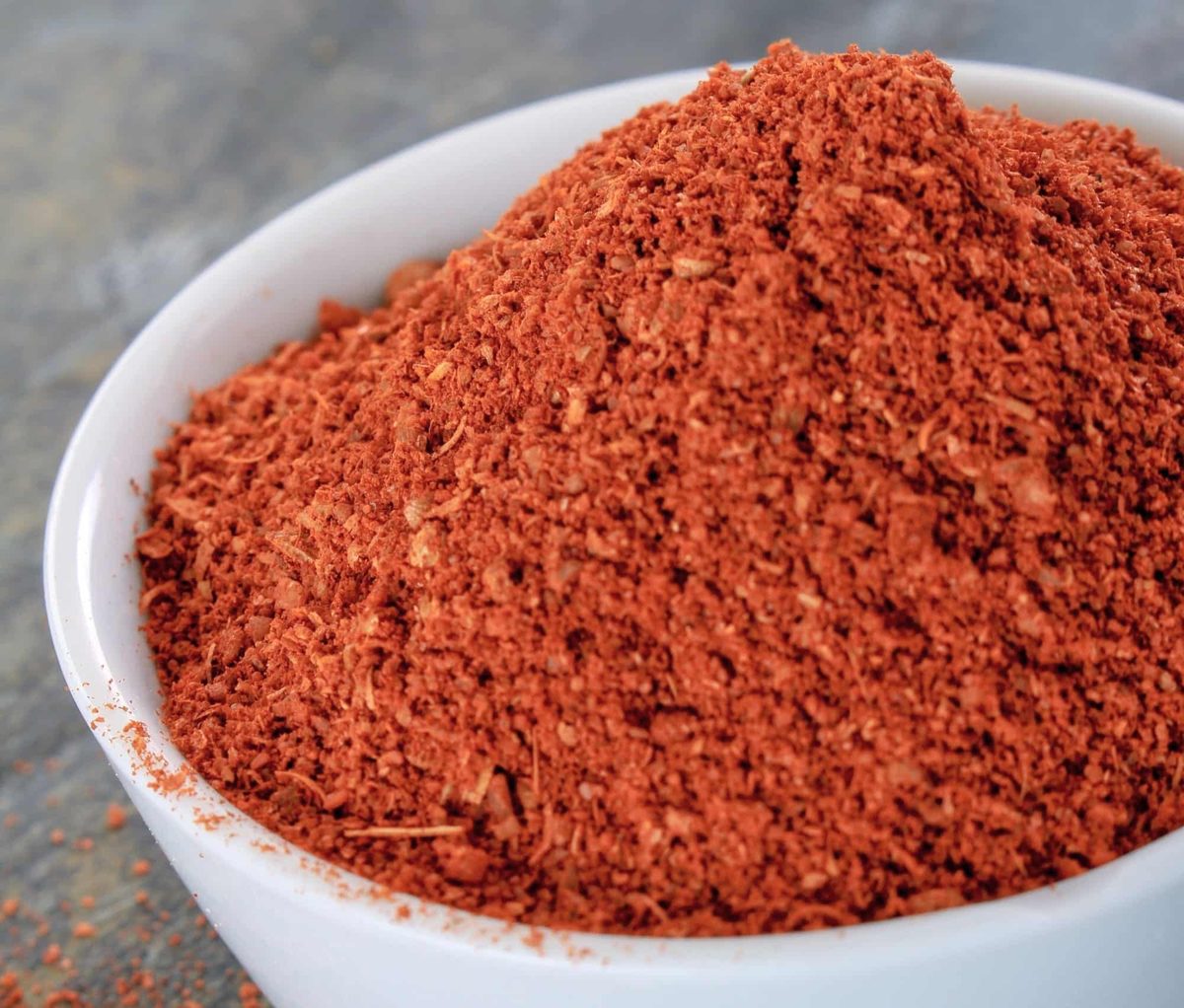
Tikka masala, as a jar or packet, is a shortcut for chicken tikka masala: it puts into one blend the spicing that cooks usually add in two stages, a yogurt marinade for the chicken and a tomato and cream sauce. Tikka comes from the Hindi and Urdu word for a small piece of meat,1 and masala is the Indian term for a spice mixture.2 Recipes and products differ widely, but the two published home recipes we compared both lean on garam masala, chili powder and turmeric.34 That makes garam masala, with paprika and chili, the easiest substitute.
Quick answer
| What tikka masala is doing | Best substitute | Starting amount, per 1 part tikka masala | Treatment |
|---|---|---|---|
| The whole dish, marinade and sauce | A mix in Alfred Prasad’s proportions | 1 part of the mix | Method (proportions Attributed) |
| Warm, aromatic spice in the sauce | Garam masala, plus paprika and chili powder | 1/2 part garam masala plus 1/2 part paprika, chili to taste | Method |
| Marinade for grilled or roasted chicken | Tandoori masala | 1 part, less if salted | Method |
| A curry-style sauce where yellow is fine | Curry powder, plus paprika | 3/4 part curry powder plus a little paprika | Method |
The rest of the page explains each choice.
How the ratios on this page are labeled
Every ratio carries one of four labels.
- Computed: based on a measurable physical relationship, with the source named.
- Attributed: a named source publishes this ratio. We quote it as theirs.
- Disputed: named sources give different answers to the same swap. We show each one and do not average them.
- Method: we found no published ratio. We give a direction and a cautious starting point, and say so.
We found no credible published ratio for replacing a tikka masala blend with anything else. The one Attributed element is a chef’s recipe, used here for its proportions. Every amount is a starting point for tasting.
Blends also differ in what they contain besides spice. Spices, Inc. sells a salt-free tikka masala,5 while McCormick’s seasoning mix lists salt and sugar and contains milk.6 If your recipe was written for a salted packet, you will need to add salt to any of the substitutes below.
If tikka masala is seasoning the whole dish
1. A mix in Alfred Prasad’s proportions
Chef Alfred Prasad’s recipe for Great British Chefs, which serves four with 500 g of boneless chicken thighs, spreads its ground spices across the marinade and two stages of sauce.3 Added together:
| Spice | Total in the recipe | Parts in a mix |
|---|---|---|
| Kashmiri chili powder | 1 1/2 teaspoons | 6 |
| Ground cumin | 1 teaspoon | 4 |
| Ground coriander | 1 teaspoon | 4 |
| Turmeric | 3/4 teaspoon | 3 |
| Garam masala | 3/4 teaspoon | 3 |
| Sweet paprika | 1/2 teaspoon | 2 |
| Ground cardamom | 1/4 teaspoon | 1 |
| Ground kasoori methi (dried fenugreek leaves) | 1/4 teaspoon | 1 |
The amounts are Prasad’s;3 the totals and parts are our arithmetic. Together they come to 6 teaspoons, or 2 tablespoons, of ground spice for four servings.
Amount (Method): Mix the spices in those parts and use the mix in the amount your recipe gives for tikka masala. If the recipe does not say, Prasad’s total of about 2 tablespoons for 500 g of chicken is one chef’s guide.3 Prasad describes his dish as a twist on murgh makhani (butter chicken),3 so his proportions are one version, not a standard.
Why it works: this is how a cook builds the flavor that a jar compresses. The compounds come with the spices: coriander seed oil is 60 to 80 percent linalool and related terpene alcohols,7 cardamom oil is led by α-terpinyl acetate and 1,8-cineole,8 and PROSEA credits fenugreek with a characteristic curry aroma.9 Paprika’s red comes from capsanthin and capsorubin,10 turmeric’s yellow from curcumin,11 and chili heat from capsaicinoids.12
If tikka masala is warm, aromatic spice in the sauce
Garam masala, plus paprika and chili powder
Both published recipes season the sauce with garam masala. Prasad uses it in the marinade and the sauce,3 and delicious. magazine’s version uses garam masala, chilli powder and cumin seeds in the marinade, then garam masala and turmeric in the sauce.4
Where it falls short: garam masala by itself is not red or hot. The Spice House notes that it means warming spices but is not hot like chili peppers,13 and Bong Eats gives the most basic Bengali version as just cardamom, cinnamon and cloves.14 Great British Chefs lists cloves, bay leaf, fennel, cinnamon and cardamom among commonly used spices,15 and Saveur says there are as many versions as there are home cooks.16 So add color and heat separately.
Ratio (Method): No published ratio was found. For each tablespoon of tikka masala, start with 1 1/2 teaspoons garam masala and 1 1/2 teaspoons sweet paprika, then add chili powder a pinch at a time. A pinch of turmeric moves the color toward orange.
Bloom the spices in the cooking fat before adding the tomatoes. America’s Test Kitchen says ground spices added straight to liquid can taste bland and musty, and that blooming takes from 30 seconds to several minutes.17
If tikka masala is a marinade for grilled or roasted chicken
Tandoori masala
Tandoori masala is made for this job: Anjula Devi blends it with yogurt for a marinade, named for the tandoor, a clay oven.18 Anupy Singla’s recipe includes Kashmiri chiles, cardamom, fenugreek and other spices shared with tikka masala blends.19 NPR describes butter chicken, the dish Prasad’s tikka masala riffs on, as tandoori-roasted chicken doused in buttery tomato sauce.203
Where it falls short: some tandoori blends are salted and colored. Woodland Foods lists salt first and colors its blend with beet powder,21 and Singla found Red 40 dye on one store blend’s label.19 Use it for the marinade; the sauce will still want garam masala.
Ratio (Method): No published ratio was found. Use a salt-free tandoori masala 1:1 in the marinade. With a salted blend, start with about half and adjust the salt last.
If a yellow, curry-style sauce is fine
Curry powder, plus paprika
The USDA’s purchasing specification says curry powder should include turmeric, coriander, fenugreek, cinnamon, cumin, black pepper, ginger and cardamom.22 That covers most of Prasad’s spices except the chili and paprika. Britannica says curry powder was adapted by British settlers in India.2
Where it falls short: turmeric makes the sauce yellow rather than orange-red,11 and the USDA list includes no chile, so a plain curry powder may have no heat.22
Ratio (Method): No published ratio was found. Start with about three quarters of the tikka masala amount, add a teaspoon of sweet paprika per tablespoon for color and chili powder to taste.
What isn’t known
- No credible published ratio for replacing tikka masala with any other blend was found.
- No published heat measurement for tikka masala blends was found; heat depends on which chiles go in.12
- Where chicken tikka masala was invented is disputed. delicious. magazine calls its origins a matter of fierce debate.4 A widely repeated story says butter chicken was invented to use up leftover tandoori marinade and so led to tikka masala; we found no source for that sequence.
Related
- Tikka masala, tikka masala vs. garam masala and tikka masala vs. curry powder
- Garam masala, garam masala uses and garam masala substitutes
- Tandoori masala, tandoori masala substitutes and tandoori masala vs. garam masala
- Curry powder
- Paprika, cayenne pepper, cumin, coriander, turmeric, cardamom and kasuri methi
- Good spices for chicken
Footnotes
-
“Tikka”, Merriam-Webster. merriam-webster.com · Reference work ↩
-
“Curry”, Encyclopaedia Britannica, 2026. britannica.com · Reference work ↩ ↩2
-
Alfred Prasad, “Chicken tikka masala”, Great British Chefs. greatbritishchefs.com · Publication ↩ ↩2 ↩3 ↩4 ↩5 ↩6 ↩7
-
“How to make chicken tikka masala”, delicious. magazine, 2014. deliciousmagazine.co.uk · Publication ↩ ↩2 ↩3
-
“Tikka Masala”, Spices, Inc. (product page). spicesinc.com · Merchant ↩
-
“McCormick Chicken Tikka Masala Seasoning Mix”, McCormick (product page). mccormick.com · Merchant ↩
-
Al-Khayri et al., “Essential Oil from Coriandrum sativum: A Review”, Molecules, 2023. mdpi.com · Peer-reviewed ↩
-
Blažeković et al., “Content and Chemical Composition of Essential Oil from Cardamom”, Croatica Chemica Acta, 2025. hrcak.srce.hr · Peer-reviewed ↩
-
C.S. Tawan and N. Wulijarni-Soetjipto, Trigonella foenum-graecum, Plant Resources of South-East Asia (PROSEA). uses.plantnet-project.org · Reference work ↩
-
“Paprika extract”, Chemical and Technical Assessment for the 77th JECFA, FAO/WHO. fao.org · Regulator ↩
-
“Turmeric: Usefulness and Safety”, National Center for Complementary and Integrative Health, 2025. nccih.nih.gov · Regulator ↩ ↩2
-
Bosland and Walker, “Measuring Chile Pepper Heat”, New Mexico State University, 2010. pubs.nmsu.edu · Reference work ↩ ↩2
-
“Garam Masala Substitute”, The Spice House, 2018. thespicehouse.com · Merchant ↩
-
“Bengali Garam Masala”, Bong Eats, 2016. bongeats.com · Publication ↩
-
“How to make garam masala”, Great British Chefs, 2025. greatbritishchefs.com · Publication ↩
-
“Garam Masala” (Madhur Jaffrey’s recipe), Saveur, 2014. saveur.com · Publication ↩
-
“How to Bloom Spices”, America’s Test Kitchen, 2023. americastestkitchen.com · Publication ↩
-
Anjula Devi, “Tandoori Masala”, 15-Minute Indian, via ckbk, 2025. app.ckbk.com · Publication ↩
-
Anupy Singla, “Why Your Tandoori Masala Doesn’t Need to be Bright Red”, Indian As Apple Pie, 2013. indianasapplepie.com · Merchant ↩ ↩2
-
Diaa Hadid and Omkar Khandekar, “Who cooked up butter chicken? A court seeks the answer”, NPR, 2024. kpbs.org · Publication ↩
-
“Tandoori Spice Blend”, Woodland Foods (product page). shop.woodlandfoods.com · Merchant ↩
-
Commercial Item Description A-A-20001C, Spices and Spice Blends, USDA Agricultural Marketing Service, 2023. ams.usda.gov · Regulator ↩ ↩2