Spice Comparisons · Comparison
Tikka Masala vs. Curry Powder: Red and Chile-Led vs. Yellow and Turmeric-Led
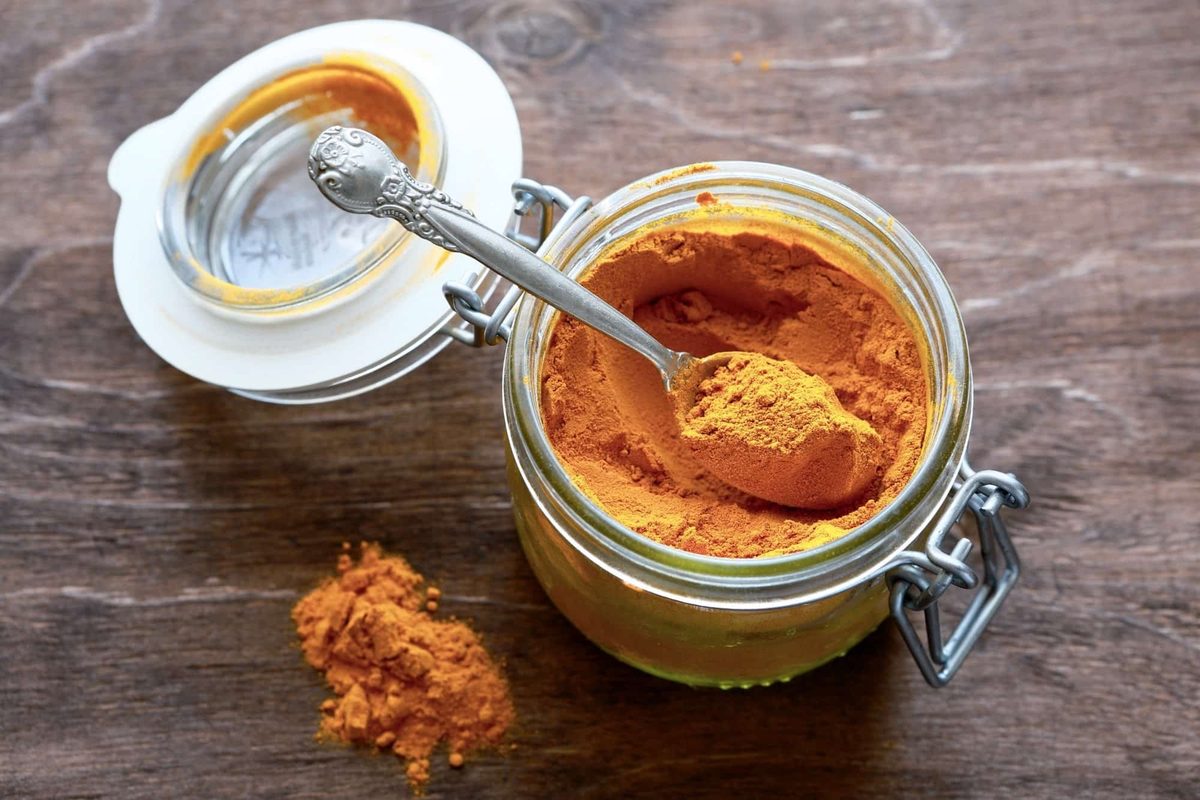
Both are ready-made blends that stand in for spicing an Indian cook would build by hand, and they share cumin, coriander and often turmeric and fenugreek.123 The difference is where each one leads. Tikka masala blends are built for one dish, chicken tikka masala, and lead with chile and paprika for a red, mildly hot sauce.12 Curry powder is a general-purpose base: the USDA’s minimum list for it starts with turmeric and names no chile at all, so it cooks up yellow and may not be hot.34
Side by side
| Tikka masala blend | Curry powder | |
|---|---|---|
| Made for | Chicken tikka masala: marinated, skewered pieces of meat in a spiced tomato and cream sauce15 | Curries in general; Britannica says curry powder let British cooks re-create the flavor of Indian food6 |
| Name | Tikka is from the Hindi and Urdu for a small piece of meat7 | “Curry” from the Tamil kari, “sauce”6 |
| Origin | Disputed: a Glasgow restaurant in the 1970s, or Punjab or older Indian cooking (see below)89 | Adapted by British settlers in India6 |
| Fixed recipe? | No; recipes and products differ widely15102 | No: “there has never been a set combination of spices” (Atlas Obscura)11 |
| Typical spices | Kashmiri chili powder, paprika, cumin, coriander, turmeric, garam masala, cardamom and kasoori methi in Alfred Prasad’s recipe;1 paprika, turmeric, guajillo, garlic, cayenne, black pepper, fenugreek, ginger, cumin and more on Spices, Inc.’s label2 | Turmeric, coriander, fenugreek, cinnamon, cumin, black pepper, ginger and cardamom, as a minimum (USDA purchasing specification)3 |
| Chile | Central: chili powder, guajillo or cayenne in the versions above12 | None on the USDA minimum list; depends on the brand3 |
| Color | Red-orange, from paprika’s capsanthin and capsorubin and chile12 | Yellow, from turmeric’s curcumin134 |
| Other ingredients | Some packets add salt, sugar, starch and milk;10 others are salt-free2 | The USDA specification sets limits of 9.0% moisture and 7.2% total ash3 |
| Official standard | None found | USDA A-A-20001C for US government purchases3 |
| Flavor (editorial) | Warm and earthy, perfumed from cardamom and garam masala, mild chile heat | Earthy and savory; the USDA asks for “a warm bitter taste”3 |
The tikka masala column draws on two recipes and two commercial products; it describes those, not every jar.
The differences that change a dish
Color and heat
Paprika and chile lead the tikka masala blends compared here.12 Paprika’s red comes mainly from capsanthin and capsorubin,12 and chile heat from capsaicinoids.14 Curry powder is colored by turmeric: Prasad and Aggarwal credit it with curry’s distinctive yellow color, and NCCIH says curcumin gives turmeric its yellow.413 Turmeric also appears in tikka masala (Prasad’s marinade and Spices, Inc.’s label both use it),12 but alongside enough paprika and chile to pull the color toward red. No published heat measurement for either blend was found. A curry powder with no added chile, which the USDA specification allows, will be the milder of the two.3
Fenugreek and bitterness
Fenugreek is on the USDA’s curry powder list,3 and PROSEA credits it with a characteristic curry aroma,15 while Britannica describes its taste as strong, sweetish and somewhat bitter.16 Turmeric adds its own bitter, slightly acrid yet sweet note.4 Together they account for the “warm bitter taste” the USDA specification asks of curry powder.3 Tikka masala blends use fenugreek less consistently. Prasad uses ground kasoori methi (dried fenugreek leaves), a quarter teaspoon across the whole recipe; Spices, Inc. lists fenugreek; McCormick’s packet and the delicious. recipe name none.12105 A widely repeated rule says tikka masala uses only the leaves and never the seeds; Spices, Inc.’s label does not say which form it uses, so the products don’t settle that.
Warm spices
Curry powder’s minimum list includes cinnamon and cardamom.3 Tikka masala blends lean on garam masala or its spices: both published recipes use garam masala in the marinade and the sauce, and the two products list cardamom and nutmeg, with Spices, Inc. adding cloves.15102 So the common claim that tikka masala is the “sweeter” blend has some basis in the ingredient lists, but no source measures it.
Shared base
Both lean on cumin and coriander.13 Coriander seed oil is 60 to 80% linalool and related terpene alcohols,17 and cumin oil is 20 to 72% cuminaldehyde.18 Those figures come from separate studies of each spice; no analysis of either finished blend was found.
Where each came from
Curry powder. Britannica says a spice mixture called curry powder was adapted by British settlers in India, while in Indian home cooking the spice mixtures are called masala and made at home.6 Claims that tie its invention to a particular 18th-century date or merchant could not be traced to a source we could open.
Tikka masala. The dish’s origin is contested. Ali Ahmed Aslam said he created it in the 1970s at his Shish Mahal restaurant in Glasgow, making a sauce with condensed tomato soup for a customer who found his chicken tikka too dry; CBS News, reporting his death in 2022, added that there is no way to prove he was the first.8 Delhi chefs and food writers quoted by The Caterer in 2009 called it a Punjabi dish, a Mughlai recipe, or one prepared in India for generations, and the paper concluded that its exact origin remains unclear.9 Alfred Prasad describes his own version as a twist on murgh makhani, or butter chicken.1 A jarred tikka masala blend is newer still: it compresses into one jar the spicing that both recipes above add in two stages.15
Can one stand in for the other?
Yes, with color and heat adjustments. We found no published ratio in either direction, so both are Method starting points. See tikka masala substitutes.
| Swap | Starting amount | Treatment |
|---|---|---|
| Curry powder for tikka masala | About 3/4 as much curry powder, plus 1 tsp sweet paprika per tablespoon and chili powder to taste | Method |
| Tikka masala for curry powder | 1:1 with a salt-free blend, plus a pinch of turmeric; with a salted packet, start with about half | Method |
- Curry powder in place of tikka masala. It covers the cumin, coriander and turmeric but supplies none of the paprika’s red and, if it has no chile, none of the heat.3 The amounts above are the ones our tikka masala substitutes page uses. Expect a yellower sauce.
- Tikka masala in place of curry powder. It covers the base and adds red color and heat. A pinch of turmeric moves the color back toward yellow. Check the label first: McCormick’s packet lists salt and sugar and contains milk,10 so a recipe written for plain curry powder will need less added salt. These are our starting points, not tested ratios.
Either way, bloom the blend in the cooking fat before adding liquid. America’s Test Kitchen says ground spices added straight to liquid can taste bland and musty, and that blooming takes from 30 seconds to several minutes.19
When to reach for each
- Tikka masala for chicken tikka masala and its relatives. Both published recipes follow the same pattern: spice and yogurt for the marinade, then a tomato and cream sauce seasoned again.15 With a single blend, divide it between the two stages. As a dry rub for chicken, paneer or vegetables before grilling, it is common practice rather than a sourced use.
- Curry powder where a recipe calls for it by name, bloomed in oil at the start.19 Regional styles are different products with their own pages: Madras, Jamaican and Japanese curry powder. See also cooking with curry powder and is curry powder spicy?
What isn’t known
- No published heat measurement exists for tikka masala blends or curry powder.
- No source gives a ratio for swapping one for the other.
- Where chicken tikka masala was first made is disputed, and the sources do not settle it.89
- No analysis of either finished blend was found; the compound figures describe the individual spices.
Related
- Tikka masala and tikka masala substitutes
- Curry powder, curry spices and too much curry powder?
- Tikka masala vs. garam masala, garam masala vs. curry powder, Madras curry powder vs. curry powder
- Tandoori masala, curry leaves (a different plant, not curry powder)
- The spices: paprika, turmeric, fenugreek, kasuri methi, cumin, coriander, cardamom
Footnotes
-
Alfred Prasad, “Chicken tikka masala”, Great British Chefs. greatbritishchefs.com · Publication ↩ ↩2 ↩3 ↩4 ↩5 ↩6 ↩7 ↩8 ↩9 ↩10 ↩11 ↩12 ↩13 ↩14
-
“Tikka Masala”, Spices, Inc., product page. spicesinc.com · Merchant ↩ ↩2 ↩3 ↩4 ↩5 ↩6 ↩7 ↩8 ↩9 ↩10
-
Commercial Item Description A-A-20001C, Spices and Spice Blends, USDA Agricultural Marketing Service, 2023. ams.usda.gov · Regulator ↩ ↩2 ↩3 ↩4 ↩5 ↩6 ↩7 ↩8 ↩9 ↩10 ↩11 ↩12 ↩13
-
Prasad and Aggarwal, “Turmeric, the Golden Spice”, in Herbal Medicine: Biomolecular and Clinical Aspects, 2011. ncbi.nlm.nih.gov · Reference work ↩ ↩2 ↩3 ↩4
-
delicious. team, “How to make chicken tikka masala”, delicious. magazine, 2014. deliciousmagazine.co.uk · Publication ↩ ↩2 ↩3 ↩4 ↩5 ↩6
-
“Curry”, Encyclopaedia Britannica, 2026. britannica.com · Reference work ↩ ↩2 ↩3 ↩4
-
“Tikka”, Merriam-Webster. merriam-webster.com · Reference work ↩
-
Caitlin O’Kane, report on the death of Ali Ahmed Aslam, CBS News, 2022. cbsnews.com · Publication ↩ ↩2 ↩3
-
Kerstin Kühn, “Indian experts refute Glasgow’s claim to tikka masala”, The Caterer, 2009. thecaterer.com · Publication ↩ ↩2 ↩3
-
McCormick Chicken Tikka Masala Seasoning Mix, product page. mccormick.com · Merchant ↩ ↩2 ↩3 ↩4 ↩5
-
Rohini Chaki, “The Subversive, Surprising History of Curry Powder”, Atlas Obscura, 2019. atlasobscura.com · Publication ↩
-
“Paprika extract”, Chemical and Technical Assessment, FAO/WHO JECFA, 2008 (rev. 2013). fao.org · Regulator ↩ ↩2
-
“Turmeric: Usefulness and Safety”, National Center for Complementary and Integrative Health, 2025. nccih.nih.gov · Regulator ↩ ↩2
-
Bosland and Walker, “Measuring Chile Pepper Heat”, New Mexico State University, 2010. pubs.nmsu.edu · Reference work ↩
-
C.S. Tawan and N. Wulijarni-Soetjipto, Trigonella foenum-graecum, Plant Resources of South-East Asia (PROSEA). uses.plantnet-project.org · Reference work ↩
-
“Fenugreek”, Encyclopaedia Britannica. britannica.com · Reference work ↩
-
Al-Khayri et al., “Essential Oil from Coriandrum sativum: A Review”, Molecules, 2023. mdpi.com · Peer-reviewed ↩
-
P.C.M. Jansen, Cuminum cyminum, Plant Resources of South-East Asia (PROSEA). uses.plantnet-project.org · Reference work ↩
-
“How to Bloom Spices”, America’s Test Kitchen, 2023. americastestkitchen.com · Publication ↩ ↩2