Cooking · Dish guide
Good Spices for Chicken: Poultry Herbs, Spice Blends and Wet Seasonings
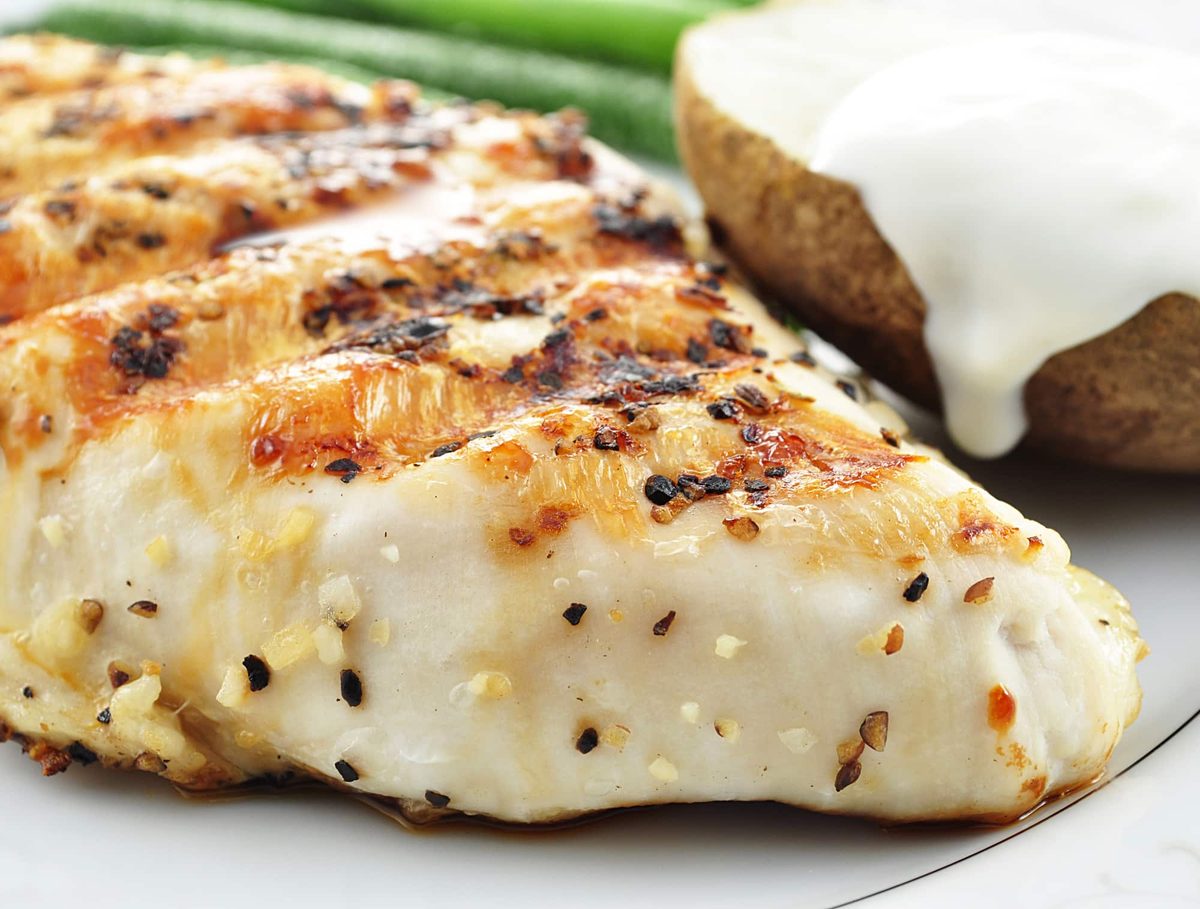
Chicken takes seasoning from almost every cooking tradition, so the more useful question is what job a seasoning does. This page groups the options that way: the classic poultry herbs, ready-made blends (lemon pepper, two curry powders and jerk), and wet seasonings such as pesto and balsamic vinegar. Quantities appear only where a named recipe or maker gives them. Whatever you choose, the USDA’s safe minimum internal temperature for all poultry, from breasts and thighs to wings and ground chicken, is 165°F (73.9°C).1
At a glance
| Seasoning | What it does on chicken | Notes |
|---|---|---|
| Poultry herbs: thyme, sage, marjoram, rosemary | Woodsy, savory backbone | The four herbs in McCormick Culinary’s poultry seasoning2 |
| Bay leaf | Background depth in braises and soups | Brings out the meaty flavor of chicken, says J. Kenji López-Alt; remove before serving3 |
| Lemon pepper | Tart, peppery, salty | Commercial blends add salt, onion and garlic4 |
| Madras curry powder | Yellow color, warmth, some heat | Heat varies by blend56 |
| Vindaloo curry powder | Hot, garlicky curry spice | Savory Spice suggests about 1 tsp per pound of poultry7 |
| Jerk seasoning | Allspice, thyme and chile heat | Chicken is now one of the most common jerk meats in Jamaica8 |
| Pesto | Basil, garlic, cheese and pine nuts | Britannica lists poultry among its usual partners9 |
| Balsamic vinegar | Sweet-tart marinade or glaze | Grape must plus wine vinegar, matured in wood10 |
For cumin, Mexican oregano, achiote and dried chiles, see good Mexican spices for chicken.
The classic poultry herbs
The standard American set shows up in poultry seasoning. McCormick Culinary’s blend lists thyme, sage, marjoram, rosemary, black pepper and nutmeg,2 and because US labels list ingredients in descending order by weight, thyme is the largest part of that blend.11 See poultry seasoning for other makers’ versions.
Timing depends on the herb. America’s Test Kitchen classes thyme and rosemary as hearty herbs to add early in cooking,12 so they suit roasting, braising and rubs. The LSU AgCenter puts basil, parsley, chives and other delicate herbs at the end, a minute or two before the dish is done.13 Basil belongs with chicken in its own right: PROSEA, the Southeast Asian plant reference, lists chicken among the Italian dishes that use the leaves.14
Bay leaf works in anything simmered. J. Kenji López-Alt, speaking to The Splendid Table, says bay leaves bring out the meaty flavors of beef and chicken; he also compares eating one to eating a fish bone, so take it out before serving.3 See cooking with bay leaves, cooking with thyme and cooking with sage.
Lemon pepper
McCormick describes its Lemon & Pepper Seasoning as black pepper, lemon oil and salt with a touch of onion and garlic, and suggests it as a rub on chicken wings.4 Garlic and onion pair well with it partly because many blends already contain them. Salt is the first ingredient on the McCormick label, and McCormick’s Signature Lemon Pepper carries 170 mg of sodium in a 1/4-teaspoon serving,415 so cut back on other salt when you use it.
Lemon pepper wings are a fixture of Atlanta’s wing shops. Atlanta magazine traces the “lemon pepper wet” style to American Deli and describes J.R. Crickets finishing buffalo wings with a heavy shake of the seasoning.16 The flavor is fairly gentle on its own; pairing it with garlic, paprika or extra black pepper is a matter of taste. See lemon pepper substitutes.
Curry powders: Madras and vindaloo
Curry powder is itself a British adaptation: Britannica describes it as a spice mixture adapted by British settlers in India, where cooks make their own masalas at home.17
Madras curry powder. A widely repeated claim says Madras curry powder is mild because it was made for British palates. The history points the other way: Julia Fine, writing for the spice merchant Diaspora Co., notes that 19th-century Madras curry powder was often promoted as spicier than the Bengal and Bombay styles, with recipes heavy on turmeric, chile and cayenne.5 Heat varies by maker; World Spice Merchants rates its Madras blend 2 out of 5.6 The yellow color comes from turmeric, whose curcumin gives the spice its color.18 On chicken it works in a classic curry, in a dry rub or in the flour for fried chicken; those are kitchen uses, not sourced rules.
Vindaloo curry powder. Vindaloo is a Goan dish with Portuguese roots. Lizzy Collingham, writing in Saveur, explains that the name is a garbled pronunciation of a Portuguese dish of meat marinated in wine vinegar and garlic,19 and Tony Jackman notes that the meat is usually pork.20 The curry-house version moved away from the original: Collingham writes that in England the balance of spices was lost under a blistering excess of chiles, while Jackman calls vindaloo a hot curry both in Goa and in Britain.1920
Commercial vindaloo powders differ a lot in heat. Savory Spice calls its blend closer to medium and not as hot as typical vindaloo, while America’s Test Kitchen’s homemade version aims for fiery, complex heat.721 No published heat measurement exists for either curry powder, so neither can be placed on the Scoville scale; check the label or taste first. Savory Spice suggests about 1 teaspoon of its vindaloo seasoning per pound of beef, pork, poultry or fish (their figure, for their blend).7 See vindaloo vs. Madras curry powder and cooking with curry powder.
Jerk seasoning
Jerk is a method as much as a spice mix. Smithsonian Magazine describes it as the way meat is seasoned, smoked and grilled, traditionally over pimento wood, with pimento (allspice) berries and Scotch bonnet peppers as the essential seasonings.8 The original meat was wild boar; chicken, sausage and pork are now the most common on the island.8
It comes in two forms:
| Form | Example | Main seasonings |
|---|---|---|
| Wet paste or marinade | Walkerswood | Fresh Scotch bonnet peppers, escallion (scallion), pimento and thyme22 |
| Dry rub | McCormick Gourmet (Club House) | Thyme, red pepper and allspice, with sugar; suggested for chicken, ribs or seafood23 |
A common way to use the paste is to loosen it with oil, vinegar or soy sauce and marinate chicken before grilling; that is a starting point (Method), not a sourced ratio. Pimento-wood smoke is hard to get outside the Caribbean, so most home versions rely on the seasoning alone. Jerk also works in stews and stir-fries, which is a matter of taste. See jerk seasoning substitutes and allspice.
Wet seasonings: pesto and balsamic vinegar
Pesto. Britannica describes the classic Genoese pesto as basil, pine nuts, garlic, grated Parmesan and olive oil, and lists poultry among the things it commonly tops, along with pasta, vegetables, fish and bread.9 Spreading it on chicken before baking or grilling, or spooning it over cooked chicken, are both kitchen practice rather than a documented tradition. See basil uses.
Balsamic vinegar. According to the consortium that protects it, Balsamic Vinegar of Modena PGI is made from fermented, cooked or concentrated grape must, with at least 10% wine vinegar and some vinegar aged at least 10 years. It matures for at least 60 days in barrels, vats or casks of fine woods, and only vinegar matured for more than three years can be labeled “Aged”. Up to 2% caramel may be added for color stability.10 Its sweet-tart flavor suits a marinade, or it can be reduced to a glaze; both are kitchen uses.
Food safety
- Cook to 165°F. FSIS sets 165°F (73.9°C) as the safe minimum internal temperature for all poultry: breasts, whole birds, legs, thighs, wings, ground poultry and giblets.1
- Don’t rinse raw chicken. FSIS does not recommend washing raw poultry before cooking.24
Related
- Good Mexican spices for chicken
- Spices for chicken soup
- Spices for turkey
- Poultry seasoning
- The master list of herbs and spices
Footnotes
-
“Safe Minimum Internal Temperature Chart”, USDA Food Safety and Inspection Service, updated 2025. fsis.usda.gov · Regulator ↩ ↩2
-
“Poultry Seasoning, 12 oz”, McCormick Culinary. mccormick.com · Merchant ↩ ↩2
-
David Leite with J. Kenji López-Alt, “Bay leaves are an optional ingredient”, The Splendid Table. splendidtable.org · Publication ↩ ↩2
-
“McCormick Lemon & Pepper Seasoning”, McCormick product page. mccormick.com · Merchant ↩ ↩2 ↩3
-
Julia Fine, “From Delhi to Durban: The Many Homes of Madras Curry Powder”, Diaspora Co., 2022. diasporaco.com · Merchant ↩ ↩2
-
“Madras South Indian Curry”, World Spice Merchants. worldspice.com · Merchant ↩ ↩2
-
“Vindaloo”, Savory Spice. savoryspiceshop.com · Merchant ↩ ↩2 ↩3
-
Vaughn Stafford Gray, “A Brief History of Jamaican Jerk”, Smithsonian Magazine, 2020. smithsonianmag.com · Publication ↩ ↩2 ↩3
-
Gregory Lewis McNamee, “Pesto”, Encyclopaedia Britannica. britannica.com · Reference work ↩ ↩2
-
“At the origin of the product”, Consorzio Tutela Aceto Balsamico di Modena. consorziobalsamico.it · Reference work ↩ ↩2
-
21 CFR 101.4, Food; designation of ingredients, US FDA. ecfr.gov · Regulator ↩
-
Liz Bomze, “Our Guide to Fresh Herbs”, America’s Test Kitchen, 2019. americastestkitchen.com · Publication ↩
-
“Flavorful Herbs”, LSU AgCenter. lsuagcenter.com · Reference work ↩
-
“Ocimum basilicum”, PROSEA, via Pl@ntUse. uses.plantnet-project.org · Reference work ↩
-
McCormick Signature Seasonings Lemon Pepper, label via Stop & Shop. stopandshop.com · Merchant ↩
-
“If FX’s Atlanta made you order J.R. Crickets’s Lemon Pepper Wet wings…”, Atlanta magazine. atlantamagazine.com · Publication ↩
-
“Curry”, Encyclopaedia Britannica. britannica.com · Reference work ↩
-
“Turmeric: Usefulness and Safety”, NCCIH, 2025. nccih.nih.gov · Regulator ↩
-
Lizzy Collingham, “Fired Up: The History of Vindaloo”, Saveur, 2014. saveur.com · Publication ↩ ↩2
-
Tony Jackman, “The fascinating history of vindaloo”, Daily Maverick, 2023. dailymaverick.co.za · Publication ↩ ↩2
-
Leah Colins, “Vindaloo Curry Powder”, America’s Test Kitchen, 2020. americastestkitchen.com · Publication ↩
-
“Jerk Seasonings”, Walkerswood Caribbean Foods. walkerswood.com · Merchant ↩
-
“McCormick Gourmet Jamaican Jerk Seasoning”, Club House. clubhouse.ca · Merchant ↩
-
“Washing Food: Does it Promote Food Safety?”, USDA FSIS. fsis.usda.gov · Regulator ↩