Spice Substitutes · Substitutes
Berbere Substitutes, Ranked by the Job Berbere Is Doing
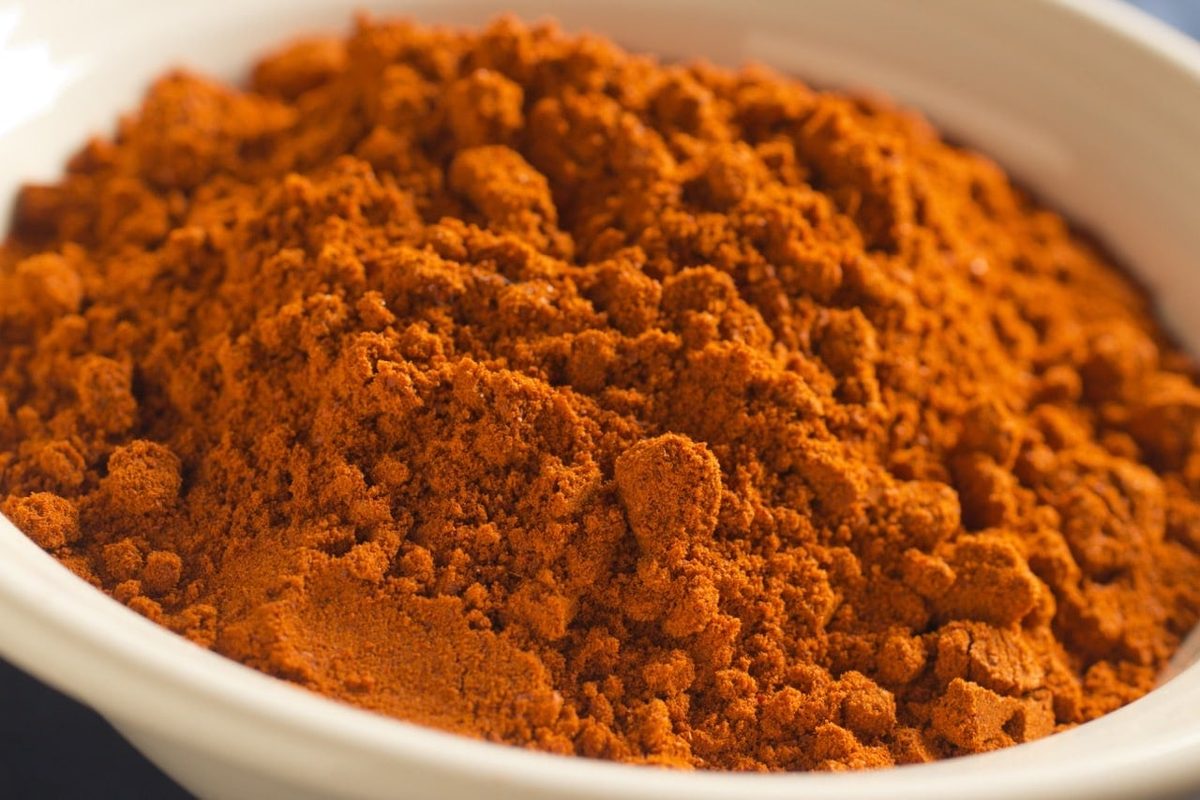
Berbere is the chile-based spice blend at the center of Ethiopian cooking. Saveur calls it essential to many Ethiopian dishes, including doro wot and misir wot.1 Katzer describes it as dried chiles toasted until they darken, with long and black pepper, ginger, coriander, fenugreek and a little ajwain, sweetened with cinnamon, cardamom, cloves and even allspice.2 Every household makes it differently: Marcus Samuelsson has said that every family makes its own and dries it in the sun.3 No other single blend reproduces it, so the best substitute depends on which part of berbere’s job you most need covered.
Quick answer
| What berbere is doing | Best substitute | Starting amount, per 1 part berbere | Treatment |
|---|---|---|---|
| Everything (wots, lentils, stews) | Homemade berbere | 1 part | Method (recipe Attributed) |
| Chile heat and red color | Paprika with a little cayenne | 3/4 part paprika plus a pinch of cayenne, then taste | Method |
| Warm, sweet spice and fenugreek depth | A pinch of fenugreek with cardamom, cloves and cinnamon, added to the chile base | 1/8 part each, then taste | Method |
| A spice blend in a hurry | Ras el hanout plus paprika | 1/2 part each, then taste | Method |
| A chile rub for grilled meat | Suya spice (contains peanuts) | 1/2 part, then taste | Method |
How the ratios on this page are labeled
Every ratio carries one of four labels.
- Computed: based on a measurable physical relationship, with the source named.
- Attributed: a named source publishes this ratio. We quote it as theirs.
- Disputed: named sources give different answers to the same swap. We show each one and do not average them.
- Method: we found no published ratio. We give a direction and a cautious starting point, and say so.
No source we found publishes a ratio for replacing berbere with any other blend or with single spices. Mike Hultquist of Chili Pepper Madness lists ras el hanout, tsire and cayenne as substitutes but gives no amounts.4 Every starting amount below is a Method starting point.
If berbere is doing everything
Make your own
This is the only option that covers every part of the blend. Saveur’s recipe toasts whole spices, then grinds them with dried onion flakes and chiles de árbol and stirs in paprika and ground spices.1 Its base is heavy on chile and onion: half a cup of dried onion flakes, five chiles de árbol and three tablespoons of paprika.1 For the full ingredient list and a comparison with Samuelsson’s near-identical recipe, see berbere seasoning.
Ratio (Method): A homemade blend replaces store-bought berbere at the same amount. Because chile strength varies, taste a new batch before adding the full measure.
If berbere is chile heat and red color
Dried chile is the main ingredient of berbere.2 Katzer describes the chiles as semihot to hot,2 while Samuelsson calls his own blend “a mild chile blend mellowed out with sweet and floral flavors.”3 PepperScale calls berbere typically medium in heat.5 All describe real blends; heat varies from jar to jar.
Paprika with a little cayenne
Both of the American recipes compared on our berbere seasoning page use paprika for bulk and color.1 Paprika gives the red; cayenne gives the heat. Chile heat comes from compounds called capsaicinoids.6 PepperScale’s own berbere recipe takes the same route: a milder form built on chili powder and paprika, with cayenne added for more heat.5 Add cayenne in small steps and taste as you go.
Hultquist lists cayenne as a berbere substitute but gives no amount.4 Used alone, cayenne supplies heat and nothing else.
Ratio (Method): No published ratio. Start with about three quarters of the berbere amount in paprika plus a pinch of cayenne, then taste and add cayenne in small steps.
If berbere is warm, sweet spice and fenugreek depth
The chile base alone tastes flat next to real berbere. What is missing is the layer of fenugreek and sweet spices.
Fenugreek with cardamom, cloves and cinnamon
Fenugreek is one of berbere’s defining ingredients.2 Britannica describes the seed’s aroma and taste as “strong, sweetish, and somewhat bitter,”7 and PROSEA credits its characteristic curry aroma to the compound sotolon.8 Katzer names cinnamon, cardamom, cloves and allspice as the sources of berbere’s sweet tones.2 Coriander, also in the blend,2 adds a mild citrus note; its seed oil is mostly linalool.9
Ratio (Method): No published ratio. To the paprika-and-cayenne base above, add about 1/8 part each of ground fenugreek, cardamom and cinnamon and a small pinch of ground cloves. Because fenugreek is somewhat bitter, add more only after tasting.
If you need a ready-made blend
1. Ras el hanout, plus paprika
Hultquist names ras el hanout first among his berbere substitutes.4 The overlap is in the warm spices: the Oxford Companion to Food lists cumin, coriander, turmeric, ginger, cardamom and nutmeg as ras el hanout’s standard ingredients, with cinnamon and cayenne usually included.10 Coriander, ginger, cardamom and cinnamon are all in berbere.2
Where it falls short: ras el hanout is not chile-led, and its turmeric adds yellow,11 where berbere is deep red. It also lacks fenugreek in the Oxford Companion’s list.10
Ratio (Method): No published ratio. Use about half the berbere amount in ras el hanout and half in paprika, then taste and adjust the heat with cayenne.
2. Gulf-style baharat, plus chile
Gulf-style baharat combines black pepper, chiles and paprika with warm spices such as nutmeg, cloves, cinnamon and cardamom.12 Ottolenghi’s baharat lists paprika, chilli and cayenne.13 It has the pepper and sweet spice of berbere but, like ras el hanout, no fenugreek.
Ratio (Method): No published ratio. Start with about three quarters of the berbere amount and add paprika if the color is too pale.
3. Tandoori masala
Tandoori masala contains several berbere spices. Anupy Singla’s homemade version is built on a cup of whole Kashmiri chiles with coriander, cumin, peppercorns, cloves, cardamom, fenugreek and cinnamon,14 and Woodland Foods’ blend lists fenugreek and cinnamon.15 The name refers to the tandoor, a clay oven.16
Do not choose it for color alone. Singla says the bright red of some store-bought tandoori blends “comes from Food Dyes like Red 40,” and that the blend was originally made “with a leaning towards turmeric and paprika.”14 Many tandoori blends are also salted: Woodland’s lists salt first.15
Ratio (Method): No published ratio. Start with about half the berbere amount, taste for salt and heat, and add paprika for color.
4. Harissa powder
Harissa is chile-led, like berbere. The Spice House’s harissa seasoning lists tomato powder, chiles, kosher salt, garlic, cumin, paprika, pepper, coriander, caraway, fennel and lemon juice powder.17 It adds caraway and lemon, and it has none of berbere’s fenugreek or sweet spices.
Ratio (Method): No published ratio. Start with about half the berbere amount, since it contains salt, and add a pinch of cinnamon and cardamom.
If berbere is a chile rub for grilled meat
Suya spice (yaji)
Suya spice, also called yaji, is a West African blend associated with Nigerian suya.18 Eat Your Books describes it as “ground dried chiles, ginger, peanuts, and more.”19 Hultquist’s recipe adds paprika, garlic and onion powder, white pepper, and ground cloves or nutmeg.18 The chile, ginger and clove overlap with berbere; the ground peanuts do not, and they make suya spice nutty and bulky.
Anyone with a peanut allergy should avoid it: peanuts are a base ingredient.1819
Hultquist’s berbere page also names tsire, which it calls another African blend, as a substitute.4 We did not find a source opened for this page that describes tsire’s ingredients, so we have not described it here.
Ratio (Method): No published ratio. Start with about half the berbere amount, because the peanuts dilute the spice, and taste.
If berbere is a paste
Katzer notes that berbere can be made into a paste, awaze, with water, wine or tej (mead), and served as a table condiment.2 Any of the dry substitutes above can be moistened the same way. This is a cook’s adaptation, not a sourced recipe.
What isn’t known
- No published ratio was found for replacing berbere with any blend or single spice. Hultquist names substitutes without amounts, and a search of other bylined sources found none that give a figure.
- Berbere’s heat is not measured in any source we found. Katzer’s “semihot to hot” and Samuelsson’s “mild” describe different blends.23
- Mitmita, a hotter Ethiopian chile blend, is sometimes suggested as a stand-in. We found no source meeting this site’s standard that describes it, so it is not covered here.
Related
- Berbere seasoning and Ethiopian spices
- Ras el hanout, baharat seasoning, tandoori masala, harissa powder and harissa powder substitutes
- Paprika, cayenne pepper, paprika vs. cayenne and chili powder
- Fenugreek, cardamom, cloves, cinnamon, coriander, ginger and long pepper
- Cooking with cardamom and ground vs. whole cloves
Footnotes
-
“Ethiopian Spice Mix (Berbere)”, Saveur, 2008. saveur.com · Publication ↩ ↩2 ↩3 ↩4
-
Gernot Katzer, “Long Pepper (Piper longum)”, Gernot Katzer’s Spice Pages. gernot-katzers-spice-pages.com · Reference work ↩ ↩2 ↩3 ↩4 ↩5 ↩6 ↩7 ↩8 ↩9
-
Jacqueline Raposo, “Berbere Is Marcus Samuelsson’s Secret Weapon”, Tasting Table, 2016. tastingtable.com · Publication ↩ ↩2 ↩3
-
Mike Hultquist, “Berbere”, Chili Pepper Madness, 2023. chilipeppermadness.com · Publication ↩ ↩2 ↩3 ↩4
-
Matt Bray, “What Is Berbere? The Story Behind The Spice”, PepperScale, 2023. pepperscale.com · Publication · PepperScale is also owned by Matt Bray, the editor of this site. ↩ ↩2
-
Bosland and Walker, “Measuring Chile Pepper Heat”, New Mexico State University, 2010. pubs.nmsu.edu · Reference work ↩
-
“Fenugreek”, Encyclopaedia Britannica. britannica.com · Reference work ↩
-
C.S. Tawan and N. Wulijarni-Soetjipto, Trigonella foenum-graecum, Plant Resources of South-East Asia (PROSEA). uses.plantnet-project.org · Reference work ↩
-
Al-Khayri et al., “Essential Oil from Coriandrum sativum: A Review”, Molecules, 2023. mdpi.com · Peer-reviewed ↩
-
“Ras-el-hanout”, The Oxford Companion to Food, Oxford University Press. app.ckbk.com · Reference work ↩ ↩2
-
“Turmeric: Usefulness and Safety”, National Center for Complementary and Integrative Health, 2025. nccih.nih.gov · Regulator ↩
-
Gernot Katzer, “Paprika (Capsicum annuum)”, Gernot Katzer’s Spice Pages. gernot-katzers-spice-pages.com · Reference work ↩
-
“Baharat”, Ottolenghi (product page). ottolenghi.co.uk · Merchant ↩
-
Anupy Singla, “Why Your Tandoori Masala Doesn’t Need to be Bright Red”, Indian As Apple Pie, 2013. indianasapplepie.com · Merchant ↩ ↩2
-
“Tandoori Spice Blend”, Woodland Foods (product page). shop.woodlandfoods.com · Merchant ↩ ↩2
-
Anjula Devi, “Tandoori Masala”, 15-Minute Indian, via ckbk. app.ckbk.com · Publication ↩
-
“Harissa Seasoning”, The Spice House (product page). thespicehouse.com · Merchant ↩
-
Mike Hultquist, “Suya Spice”, Chili Pepper Madness, 2025. chilipeppermadness.com · Publication ↩ ↩2 ↩3
-
Darcie, “Spice Support: suya (yaji)”, Eat Your Books, 2020. wp.eatyourbooks.com · Publication ↩ ↩2