Cooking · Profile
Brazilian Spices and Seasonings: Dendê, Urucum, Malagueta, Garlic and Bay
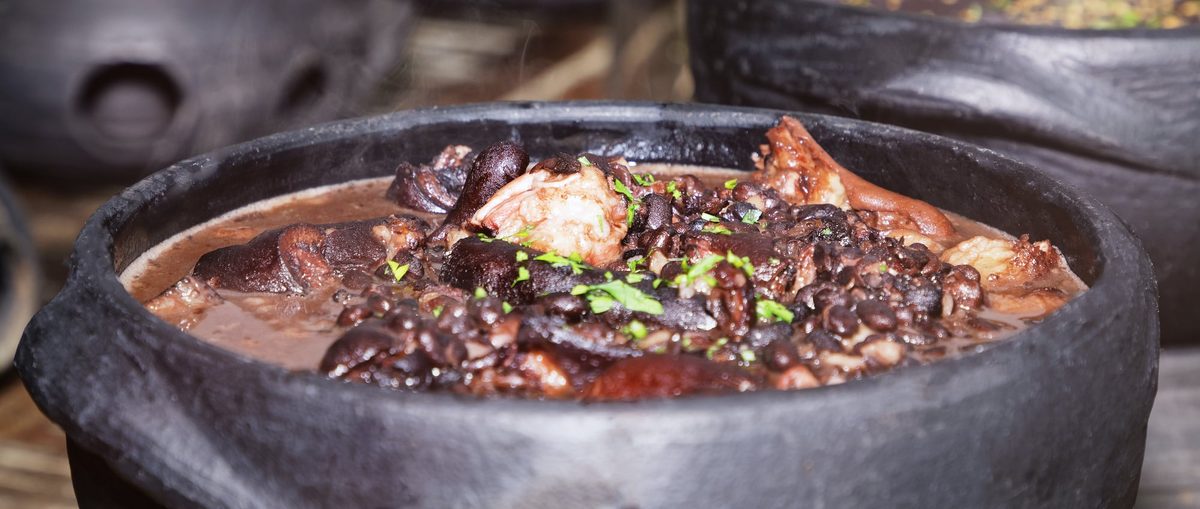
Brazil is a huge country with several regional cuisines, and its seasoning runs from the palm oil and chiles of Bahia to the garlic, onion and bay of everyday bean pots. This page covers the flavorings that come up most, with what the sources say about each and links to our full profiles.
At a glance
| Seasoning | What it is | What it brings | Where it shows up |
|---|---|---|---|
| Dendê | Oil of the African oil palm, Elaeis guineensis1 | Deep red color, rich flavor and a distinct aroma1 | Bahian dishes: acarajé, moqueca, vatapá1 |
| Urucum (annatto) | Seed of Bixa orellana23 | Red-orange color; little or no flavor in the food2 | Coloring for savory dishes |
| Malagueta | A Brazilian chile, Capsicum frutescens4 | Heat | Table sauces and pickled chiles (common practice) |
| Garlic | Fresh bulb | Pungent, savory base | Feijoada and everyday cooking5 |
| Bay leaf | Dried leaf of bay laurel | Herbal background in long-cooked beans | Feijoada5 |
| Cilantro (coentro) | Fresh leaf of the coriander plant | Fresh, sharp herb note | Seafood stews (common practice) |
| Cumin | Dried seed | Earthy warmth | Savory stews (common practice) |
| Black pepper | Dried peppercorns | Heat and aroma | Seasoning throughout; Brazil is a major grower6 |
Measured values
1 figure, sourced| Measure | Value | Scope | Source |
|---|---|---|---|
| Cilantro leaf oil: aldehydes | more than 80 % of volatile compounds | cilantro (coriander) leaf oil, PROSEA | uses.plantnet-project.org |
Each figure is quoted as its source states it, with the samples or standard it applies to. Where sources differ, both are shown; nothing is averaged. All measured values
Dendê (palm oil)
Dendê is the oil of Elaeis guineensis, the oil palm, which originates in West Africa.1 A 2025 study of Bahia’s dendê tradition in the journal Heritage describes how many Bahian palm-oil dishes closely resemble West African ones, and says the oil’s vibrant color, rich flavor and distinct aroma define the comidas de azeite, the “oil foods” of Bahia.1 It is a cooking fat rather than a spice, but in these dishes it carries as much flavor and color as any spice does.
The same study gives the core dishes:1
- Acarajé, a black-eyed pea fritter. In Bahia it is fried only in palm oil, while in Africa peanut oil was sometimes used.
- Moqueca, a seafood stew flavored with coconut milk and dendê.
- Vatapá, a rich paste of bread, peanuts, dried shrimp and dendê.
- Caruru, a thick okra dish.
Dendê belongs to Bahia and the Afro-Brazilian kitchen in particular. We found no source showing it is the preferred frying oil across Brazil as a whole, and no source for the often-repeated description of its taste as floral, nutty or like olive oil.
Urucum (annatto)
Urucum is the Brazilian Portuguese name for annatto; Katzer lists urucú, urucum and açafroa-do-Brasil among its Portuguese names.2 The tree is native from Mexico to tropical South America,3 and South America, including Brazil, is still the main producing area.2
Annatto’s job in the pot is color. Katzer notes that the seeds have a faint fragrance, but that this aroma does not carry into the food they stain.2 A common claim that annatto tastes like nutmeg with a peppery bite is not supported by the sources we checked; treat it as a coloring first. See our annatto seeds and achiote powder profiles, cooking with annatto seeds, and annatto substitutes.
Malagueta and other chiles
The malagueta (also spelled melegueta) is a Brazilian chile that Katzer describes as believed to be the wild form of Capsicum frutescens.4 It should not be confused with melegueta pepper, which Katzer notes is just another name for grains of paradise.4 Katzer also notes that ajíes are known in Brazil.4
In Brazilian homes and restaurants chiles are often served on the side, as pickled peppers in oil or vinegar and as hot sauces, so each diner sets the heat. That is common practice; we found no source for a claim that northern Brazil eats hotter food than the south.
Garlic and bay: the feijoada base
Feijoada, the black bean and pork stew, shows how plain the everyday seasoning base can be. Saveur’s version cooks the beans with crushed garlic and bay leaves, adds a large amount of minced garlic and some onion, and seasons with salt and black pepper; the only chile is black pepper.5 It is traditionally served with garlic rice, sautéed collard greens, a tangy vinaigrette, and farofa, toasted cassava flour, with orange slices on the plate.5
See garlic, bay leaves and cooking with bay leaves.
Cilantro (coentro)
Cilantro is used fresh. Its aroma is dominated by aldehydes, which make up more than 80% of the volatile compounds in the leaf oil.7 It is a familiar finishing herb for Brazilian fish and seafood stews, including moqueca; that is common practice, and we found no source for the claim that it is especially popular along the Atlantic coast or in Bahia. See cilantro, and culantro for its stronger-smelling cousin.
Cumin
Britannica describes cumin as especially popular in Asian, North African and Latin American cuisines.8 It turns up in some Brazilian stews and meat dishes, but we could not confirm the specific dishes often listed for it (cabrito ao molho, barreado) in any source we reviewed. See cumin and cumin uses.
Black pepper
Brazil is one of the world’s big black pepper growers: an AramcoWorld history of the spice says Vietnam, Brazil and Indonesia together produce more than 60% of the world’s pepper.6 The article gives no year for that share. See black pepper.
Cinnamon
Cinnamon is a common topping for Brazilian sweets such as arroz doce (rice pudding) and curau (sweet corn pudding), and some cooks add it to roast chicken. That is common practice; we found no source for it. See cinnamon, Ceylon cinnamon and cassia.
Related pages
- Portuguese spices and Peruvian spices
- Annatto seeds and achiote powder
- Okra spices
- The master list of herbs and spices
Footnotes
-
Queiroz et al., “Bahia’s Dendê and the Forgotten Knowledge: Cultural Heritage, Sustainability, and the Marginalization of Afro-Brazilian Traditions”, Heritage (MDPI), 2025. mdpi.com · Peer-reviewed ↩ ↩2 ↩3 ↩4 ↩5 ↩6
-
Gernot Katzer, Annatto (Bixa orellana), Gernot Katzer’s Spice Pages. gernot-katzers-spice-pages.com · Reference work ↩ ↩2 ↩3 ↩4 ↩5
-
Bixa orellana L., Plants of the World Online, Royal Botanic Gardens, Kew. powo.science.kew.org · Reference work ↩ ↩2
-
Gernot Katzer, Chiles (Capsicum), Gernot Katzer’s Spice Pages. gernot-katzers-spice-pages.com · Reference work ↩ ↩2 ↩3 ↩4
-
Saveur Editors, “Brazilian Pork and Bean Stew (Feijoada Brasileira)”, Saveur, 2012. saveur.com · Publication ↩ ↩2 ↩3 ↩4
-
Jeff Koehler, “Spice Migrations: Pepper”, AramcoWorld, 2021. aramcoworld.com · Publication ↩ ↩2
-
Coriandrum sativum (PROSEA), Plant Resources of South-East Asia. uses.plantnet-project.org · Reference work ↩
-
“Cumin”, Encyclopaedia Britannica. britannica.com · Reference work ↩